DD
MM
YYYY

PAGES

DD
MM
YYYY

spot_img

PAGES

Home Blog Page 19

TRON Founder Justin Sun Files Lawsuit Against Trump-Linked Crypto Project $WLFI

0

TRON founder and crypto billionaire Justin Sun has filed a federal lawsuit against World Liberty Financial ($WLFI), the decentralized finance project linked to President Donald Trump and his family.

He accused the venture of wrongfully freezing his tokens, stripping him off his governance voting rights, and threatening to permanently burn his holdings.

In a post on X (formerly Twitter), Sun disclosed that the lawsuit was filed in the U.S. District Court for the Northern District of California. He emphasized that the legal action targets certain individuals on the World Liberty project team and does not reflect any change in his support for President Trump or the administration’s pro-crypto policies.

Part of his post reads,

“Today, I filed a lawsuit in California federal court against World Liberty Financial to protect my legal rights as a holder of $WLFI tokens. I have always been and remain an ardent supporter of President Trump and his Administration’s efforts to make America crypto-friendly. This lawsuit does not change how I feel about President Trump or the Trump Administration.

“Unfortunately, certain individuals on the World Liberty project team have been operating the project in a manner that goes against President Trump’s values. They wrongfully froze all of my tokens, stripped me of my right to vote on governance proposals, and have threatened to permanently destroy my tokens by “burning” them all without any proper justification. I do not believe President Trump would condone these actions if he knew about them.”  

According to Sun, the dispute escalated after the project team froze all of his $WLFI tokens without proper justification. This action allegedly removed his ability to vote on governance proposals and included threats to permanently destroy (burn) the tokens.

Sun claims he attempted to resolve the matter privately but was left with no choice but to turn to the courts. “All I want is to be treated the same as every other early investor who received tokens no better, no worse,” he added.

The lawsuit comes amid growing tension over a governance proposal published by World Liberty Financial on April 15. Sun strongly opposes the proposal, which he says would impose strict vesting schedules and indefinite token locks on holders who do not “affirmatively accept” its terms.

Specifically, the proposal reportedly requires a 10% permanent burn of advisor tokens and introduces a two-year cliff followed by a two-year vesting period for early purchaser tokens.

Because his tokens are frozen, Sun says he is unable to cast a vote on the matter. He described the proposal as “bad for the community” and argued that the team’s actions contradict the principles of fairness, transparency, and decentralization that define crypto.

Background of the Investment

Sun is reportedly one of the largest outside investors in World Liberty Financial, with reports suggesting he committed around $75 million to the project.

World Liberty Financial, backed by Eric Trump and Donald Trump Jr., positions itself as a DeFi platform aimed at promoting crypto adoption under a pro-crypto U.S. administration.

The project has faced previous scrutiny, including allegations of centralized control features that allow token freezes. Sun had publicly raised concerns about these mechanisms in recent weeks.

Amid the legal dispute, several users on X have pointed back to Sun’s controversial involvement with the Steem blockchain during its 2020 governance crisis.

At the time, Sun had acquired the social blockchain platform through TRON-affiliated entities and supported a major “network takeover” effort.

Critics accused him of:

•Using exchange-based voting power to influence governance decisions

•Installing new validators without broad community consensus

•Centralizing control in what was originally a decentralized ecosystem

That episode eventually led to a major community split and the creation of a forked chain known as Hive, formed by users who rejected the takeover.

Beyond personalities, the controversy highlights a recurring tension in decentralized systems.

Broader Implications

The case highlights ongoing risks in high-profile crypto projects, particularly around token holder rights, governance transparency, and the gap between “decentralized” marketing and actual smart contract controls.

Legal experts note that disputes of this nature often center on whether token purchase agreements grant holders clear property rights or if project teams retain broad administrative powers.

Palantir Lands $300m USDA Deal as Washington Turns to AI to Secure Food Supply Chains

0

Palantir Technologies has secured a $300 million contract with the United States Department of Agriculture, deepening its reach inside the federal government as Washington turns to artificial intelligence and data integration to manage agricultural risks increasingly shaped by geopolitics.

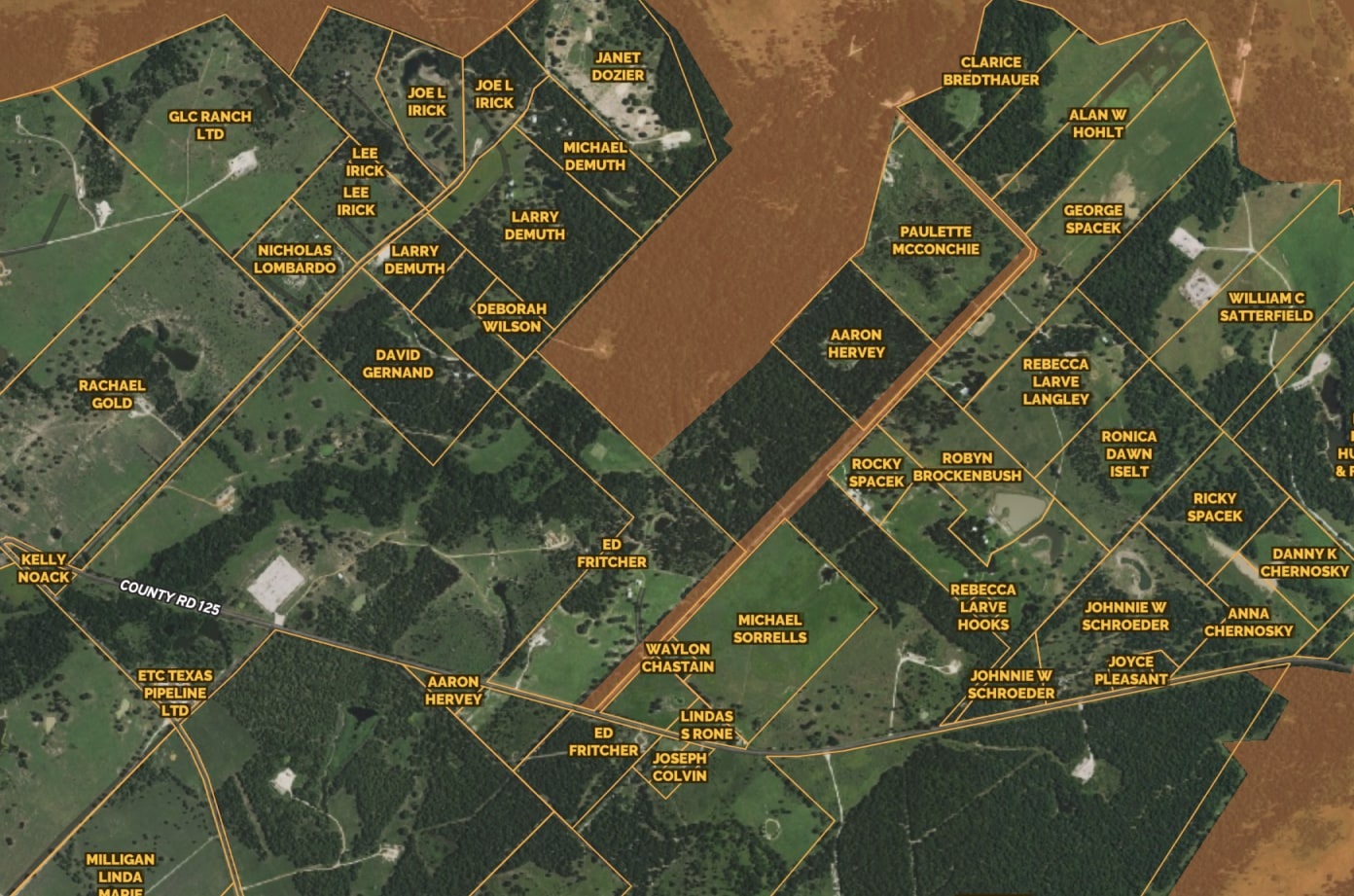
The agreement builds on existing collaboration and reflects a broader policy shift: farmland, crop output, and agricultural logistics are now being treated as components of national security infrastructure. The USDA is expected to deploy Palantir’s platforms to consolidate fragmented datasets across land ownership, crop production, and supply chains into a centralized system designed to improve oversight and decision-making.

This pivot comes at a time when U.S. agriculture is navigating overlapping shocks. Farmers are facing elevated input costs, unstable export demand, and growing uncertainty tied to geopolitical tensions. The trade dispute with China, a major buyer of U.S. soybeans, has already demonstrated how quickly demand can collapse. Late last year, Chinese pullbacks disrupted pricing and left producers with excess supply, forcing many to reconsider planting strategies.

The pressure has intensified with the Middle East conflict. Higher energy prices, linked to shipping disruptions and instability in key oil transit routes, have fed directly into fertilizer costs, a critical input for large-scale farming. Because fertilizer production relies heavily on natural gas and global transport networks, even marginal disruptions can cascade into sharp cost increases. For farmers, that translates into tighter margins and difficult decisions over crop selection, acreage, and investment.

The Trump administration has attempted to cushion the blow. In December, Donald Trump announced a $12 billion bailout for farmers affected by the trade war. But industry analysts say such measures offer only temporary relief, particularly when global factors beyond domestic policy control are driving cost pressures.

Within this context, the USDA’s partnership with Palantir is aimed at improving situational awareness. By integrating real-time data on inputs, yields, logistics, and market conditions, policymakers hope to better anticipate disruptions and respond more effectively. The system could also support scenario modelling, allowing officials to assess how shocks—such as export restrictions or fuel price spikes—would ripple through supply chains.

Another driver behind the deal is growing concern over foreign ownership of U.S. farmland. Lawmakers and policy analysts have warned that acquisitions linked to Chinese entities could carry implications, particularly if they provide visibility into or influence over food production. A report from the Foundation for Defense of Democracies recommended reforms to the Agricultural Foreign Investment Disclosure Act, urging tighter reporting rules “to prevent China and other adversarial countries from exploiting commercial land transactions to gain a strategic edge over the United States.”

Palantir’s tools are expected to play a role in closing those gaps by improving transparency around land transactions and ownership structures. This aligns with a broader effort in Washington to strengthen oversight of critical assets, from semiconductors to energy infrastructure, as geopolitical competition intensifies.

However, the deal means that Palantir will continue expansion beyond traditional defense work. Founded in the aftermath of the September 11 attacks, the company built its reputation on intelligence and counterterrorism applications. It has since evolved into a key provider of AI-driven analytics for both military and civilian agencies.

Its Maven Smart System, used by U.S. forces in Iran, highlights the convergence between battlefield and data-driven decision-making. Chief executive Alex Karp has framed this shift in stark terms, telling CNBC: “The fact that you can now target more precisely … has shifted the way in which war is fought.”

That same analytical capability is now being applied to agriculture, where precision, whether in targeting threats or optimizing production, is increasingly valuable.

But the company’s growing influence has not come without controversy. Palantir has faced sustained criticism over its work with U.S. Immigration and Customs Enforcement and the Department of Homeland Security, amid reports that its platforms have been used for surveillance. Civil liberties advocates argue that the expansion of such technologies into domestic sectors raises questions about data privacy and government overreach.

Those concerns are likely to follow the USDA deployment, particularly as it involves large-scale aggregation of sensitive data related to land ownership and agricultural activity. How that data is governed, who has access, and how it is used will be closely scrutinized.

On the market side, Palantir’s trajectory underlines both enthusiasm and skepticism around AI-driven business models. The company’s stock surged more than 25-fold between 2022 and the end of 2025, propelled by strong demand for its platforms. This year, shares have declined about 18%, as investors reassess valuations and growth expectations.

Short sellers remain vocal. Michael Burry has described the stock as “wildly overvalued,” a view that underscores broader concerns about whether current AI-driven gains can be sustained. Karp has responded forcefully to such criticism, saying: “I do think this behavior is egregious and I’m going to be dancing around when it’s proven wrong.”

The USDA contract adds a new dimension to that debate. It positions Palantir not just as a technology vendor, but as a partner in managing one of the most fundamental components of economic stability: food supply. It also illustrates how the boundaries between defense, economic policy, and domestic infrastructure are becoming increasingly blurred. In effect, Washington is applying a national security framework to agriculture, using advanced analytics to monitor, predict, and respond to risks that extend well beyond farm boundaries.

OpenAI Plans Commitment of $1.5B Starting with $500M Equity to the DeployCo Venture

0

OpenAI plans commitment of up to $1.5B starting with $500M equity to the ~$10B DeployCo joint venture with major private equity firms like TPG, Bain Capital, Advent International, Brookfield, and others.

PE firms control trillions in assets and thousands of mid-to-large businesses, many in traditional sectors like manufacturing, retail, healthcare, and financial services. DeployCo will provide dedicated teams, customization, and integration support to embed OpenAI’s models such as  enterprise ChatGPT variants, agents directly into workflows.

This lowers the barrier that has slowed adoption—high upfront costs, lack of internal AI expertise, and long sales and integration cycles. Instead of one-off pilots, this creates a fast-track distribution channel. Expect faster rollout of AI for automation, efficiency gains, customer service, and decision-making across hundreds or thousands of companies. PE firms gain a lifeline to modernize holdings at risk of AI disruption.

Success here could spill over beyond PE portfolios, establishing OpenAI as the default enterprise AI layer and pressuring slower adopters. Enterprise remains a massive untapped opportunity. This JV helps OpenAI capture more of the B2B market, building on its already strong enterprise run rate previously reported in the billions. It diversifies away from heavy reliance on consumer tools and mitigates some limitations from the Microsoft partnership which OpenAI has internally noted restricts reaching enterprises where they are.

The structure offloads some deployment costs like engineers, customization to the JV, while OpenAI gets upfront equity investment and preferred terms. It also provides clearer segment reporting ahead of potential future IPO or valuation events. Early access to new models for PE investors + dedicated deployment muscle strengthens OpenAI’s position in the enterprise turf war.

AI integration can drive operational improvements, cost savings, and revenue uplift—directly boosting IRR on existing investments. OpenAI is offering a guaranteed minimum return of 17.5% on preferred equity higher than typical, plus board influence, early model access, and potential upside if the JV expands. Helps protect portfolio companies from being disrupted by AI-native competitors.

This is part of an intensifying race. Anthropic has pursued similar PE partnerships including its own deployment-focused entity and is also courting buyout firms with forward-deployed engineering teams. OpenAI’s sweeter terms (17.5% return guarantee) appear designed to win more deals.

The lab that embeds deepest and fastest into real businesses gains sticky revenue and data advantages for future model training. Microsoft may see mixed effects—enterprise growth helps, but OpenAI’s push for multi-cloud and independent access via Amazon Bedrock signals some distancing. Google and cloud providers could benefit indirectly from increased overall AI compute demand, but lose ground if OpenAI locks in more enterprise relationships.

Some PE firms have been skeptical, citing concerns over the JV’s profit profile and whether portfolios are already adopting AI independently. Integration failures or slow ROI could disappoint. OpenAI is committing significant capital at a time when it’s also raising massive primary rounds. Over-extension on deployment could strain resources if revenue ramps slower than expected.

Faster enterprise adoption accelerates AI-driven job shifts, productivity gains, and industry disruption—but also raises questions around data privacy, governance, and uneven benefits across company sizes. The $10B valuation and 17.5% guarantee are aggressive; if AI hype cools or integration proves harder than expected, returns could underwhelm. This move signals the AI industry shifting from build cool models to actually deploy them at scale inside real businesses.

It could meaningfully compress the timeline for widespread enterprise transformation, giving OpenAI a structural edge in B2B while helping PE firms future-proof their portfolios. If executed well, expect measurable impacts on OpenAI’s enterprise revenue growth within 12–24 months, plus ripple effects on valuations and strategies across the AI ecosystem.

Coinbase Releases a 50 Page Quantum Paper with Projection on Aptos and Algorand Roadmaps

0

Coinbase Independent Advisory Board on Quantum Computing and Blockchains released a ~50-page paper authored by experts including Dan Boneh from Stanford, Scott Aaronson from UT Austin, Justin Drake from the Ethereum Foundation, and others assesses quantum computing’s impact on crypto.

Today’s quantum computers lack the scale; fault-tolerant, millions of logical qubits needed to break widely used cryptographic systems like ECDSA or RSA used in blockchains and wallets. A sufficiently powerful quantum computer remains years or decades away, though the board expresses high confidence one will eventually exist.

Primary risk: Harvest now, decrypt later attacks—bad actors could collect encrypted data e.g., public keys from wallets today and decrypt it later with a quantum machine. This mainly affects wallet-level digital signatures proving ownership, not core blockchain consensus or hash functions in most cases. Roughly 6.9 million BTC wallets with exposed public keys could be vulnerable.

Some proof-of-stake (PoS) networks face higher challenges due to validator signatures creating a larger attack surface. Coordination for upgrades in decentralized systems is complex and time-consuming. The board urges the industry to start planning and testing quantum-resistant upgrades now (e.g., post-quantum cryptography like lattice-based or hash-based signatures) to avoid rushed, insecure migrations later.

Why Algorand and Aptos Stand Out

The report specifically highlights Algorand and Aptos along with Solana in some contexts as more advanced in preparedness among layer-1 blockchains: Algorand has a staged roadmap toward full quantum readiness and is among the first to deploy quantum-resistant cryptography for transactions on mainnet. It already offers or plans options for users.

Aptos makes protocol upgrades relatively seamless and is advancing quantum-resistant features, positioning it well for a smooth transition. In contrast, some other PoS chains may require more significant work on validator signatures and overall architecture. Bitcoin and Ethereum are exploring roadmaps; Ethereum has a structured migration plan, while networks like Optimism have announced timelines.

Ripple aims for hybrid post-quantum testing by 2026–2028. Coinbase itself notes it’s adopting practices to simplify future updates. This isn’t panic—crypto is secure today—but it’s a prudent, forward-looking call to action. Quantum resistance is becoming a competitive differentiator for blockchains, much like scalability or fees.

Projects that move early like Algorand and Aptos appear to be doing reduce long-term risk for users and developers. The quantum threat to Bitcoin centers on its reliance on elliptic curve digital signature algorithm (ECDSA) for proving ownership of funds via public-private key pairs. A sufficiently powerful, fault-tolerant quantum computer could use Shor’s algorithm to derive a private key from a publicly exposed public key, allowing an attacker to forge signatures and steal coins.

Bitcoin remains secure today. Existing quantum computers like Google’s Willow with ~105 qubits are far from the scale needed—estimates for breaking ECDSA have dropped to under 500,000 physical qubits; a ~20x improvement from prior millions but building and error-correcting such a machine is still years or decades away in practice.

The Coinbase Quantum Advisory Board’s April 21, 2026 position paper states: No meaningful threat to Bitcoin’s core infrastructure: Mining via SHA-256 hashing, the historical ledger, or the blockchain’s consensus rules are largely unaffected. Grover’s algorithm offers only quadratic speedup for mining, not a game-changer.

The real exposure is at the wallet level, specifically digital signatures proving ownership. Harvest now, decrypt later risk: Adversaries can already collect on-chain data; public keys revealed in spent transactions or older address formats like Pay-to-Public-Key. They store it and attempt decryption later with a quantum machine. Privacy-focused protocols using zero-knowledge proofs are mathematically immune in many cases.

Roughly 6.9 million BTC ~33% of supply in some estimates sit in wallets with publicly visible or recoverable public keys, making them potentially vulnerable once a quantum threat materializes. This includes many dormant Satoshi-era coins. Newer Taproot addresses and unspent outputs where public keys remain hidden are safer for now.

Real-time attacks during transaction broadcasting are theoretically possible but even harder due to timing and network speed. Bitcoin’s hash functions like SHA-256 for proof-of-work and Merkle trees are considered quantum-resistant enough for the foreseeable future. Experts including the Coinbase board and prior Grayscale analysis agree there’s no “Q-Day” crypto doomsday this year or next. Current hardware gaps are massive.

Google’s March 2026 research lowered qubit requirements dramatically and suggested a credible attack window could open as early as 2029 in optimistic or pessimistic scenarios for quantum progress. Google itself is targeting post-quantum migration for its systems by 2029. Some analysts give Bitcoin 3–5+ years of breathing room; others note a full decentralized migration could realistically take 5–10 years due to coordination challenges.

Coinbase CEO Brian Armstrong has personally committed to pushing for solutions, calling it a defined engineering problem to solve sooner rather than later. Bitcoin’s decentralized governance makes upgrades slower than on chains like Ethereum, Solana, Algorand, or Aptos; the latter two highlighted by Coinbase as more advanced in quantum readiness with staged roadmaps and deployed/post-quantum options.

Ongoing efforts include: BIP 360 (Pay to Merkle Root) and related proposals for new quantum-resistant output types that maintain Taproot-like features while adding upgradability. Ideas for soft forks introducing post-quantum signatures, hybrid schemes (ECDSA + PQC), or time-bound migration windows where legacy outputs can no longer receive new funds.

Community discussions around commit-delay-reveal or recovery mechanisms for lost and dormant coins to avoid mass lockups. Consensus on activation; soft fork via BIP9/BIP8 or UASF-style, testing, and user migration. A full transition might require years of testnet work and incentives for users to move funds to new addresses. Some older coins may be effectively unrecoverable if owners are inactive.

Your Bitcoin is safe right now and will likely remain so for the medium term. The threat is a long-term engineering issue, not an existential crisis tomorrow—much like Y2K but with more time if the community acts prudently. Use hardware wallets and keep recovery phrases secure; seed phrases themselves are more resistant via hashing.

Tekedia Capital Congratulates Winich Farms for VivaTech Selection

0

Congratulations to Winich Farms, the leading agtech company in Africa, on its selection for VivaTech, one of the world’s premier technology events. At Tekedia Capital, we celebrate the excellence and execution the Winich team continues to demonstrate. We are proud to have invested in that promise.

As you head to France and step into the expansive halls of Paris Expo Porte de Versailles, new markets will open and the pathway to a unicorn journey will become even clearer.

At Tekedia Capital, we back founders building the future through entrepreneurial capitalism.