DD
MM
YYYY

PAGES

DD
MM
YYYY

spot_img

PAGES

Home Blog Page 19

Intel Surges 9% After Trump Announced Company Will Partner With Apple On U.S. Chip Design

0

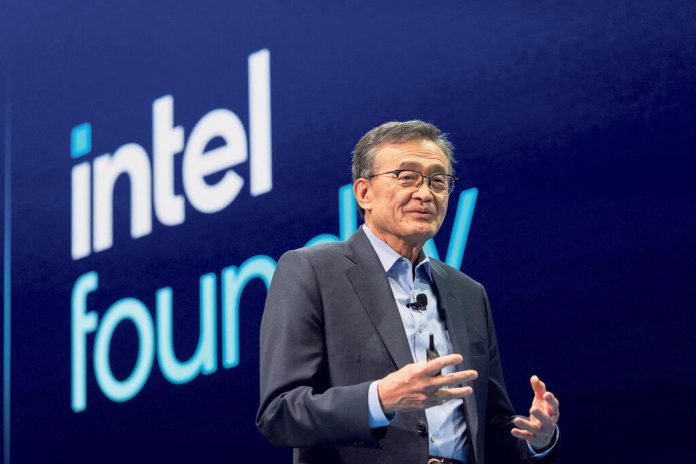
Intel shares surged in premarket trading Thursday after President Donald Trump announced that the chipmaker had reached an agreement with Apple to design and manufacture chips in the United States, a development that could mark a major turning point in the company’s years-long effort to regain relevance in the global semiconductor industry.

The stock climbed nearly 9% before the opening bell, extending a remarkable recovery that has transformed Intel from one of the market’s biggest laggards into one of its strongest-performing technology stocks. Over the past year, Intel shares have soared more than 460%, lifting the company’s market capitalization to approximately $609 billion.

Trump framed the agreement as part of a broader effort to rebuild America’s semiconductor manufacturing base and reduce dependence on Asia, particularly Taiwan, which remains the center of global advanced chip production.

“Apple has agreed to work with Intel to design and build its Chips in America,” Trump wrote on Truth Social.

The president also said that Nvidia had agreed to manufacture advanced chips through Intel’s foundry operations and said Elon Musk’s planned TerraFab facility would be developed in partnership with Intel’s technology teams.

Even so, the market reaction highlights how dramatically investor sentiment toward Intel has shifted over the past year.

For much of the previous decade, Intel was viewed as a symbol of missed opportunities in the semiconductor sector. The company lost technological leadership to Taiwan Semiconductor Manufacturing Company (TSMC), ceded market share in processors to Advanced Micro Devices (AMD), and largely missed the first wave of the artificial intelligence boom that propelled Nvidia into one of the world’s most valuable companies.

That narrative has changed significantly under Chief Executive Lip-Bu Tan.

Since taking over, Tan has focused aggressively on transforming Intel into a contract manufacturer capable of competing with TSMC, a strategy widely viewed as essential to restoring the company’s long-term growth prospects.

However, the importance of an Apple partnership goes far beyond the immediate revenue opportunity. The iphonemaker has historically relied heavily on TSMC to manufacture its custom-designed chips for iPhones, iPads, and Macs. Securing even a portion of Apple’s production would represent one of the strongest endorsements yet of Intel’s foundry ambitions. Such a move would also align closely with Washington’s broader push to localize semiconductor manufacturing amid escalating geopolitical tensions and supply-chain concerns.

The announcement emerges when artificial intelligence has transformed chipmaking from a cyclical technology business into a strategic national priority. Governments around the world increasingly view semiconductor production as critical infrastructure, while companies are spending hundreds of billions of dollars on AI-related hardware.

That spending has created enormous demand for advanced chips, data centers, and manufacturing capacity. Intel’s resurgence is therefore occurring against the backdrop of what many analysts describe as a new industrial arms race centered on AI.

Trump’s comments suggest that Intel may be evolving into a key beneficiary of that trend. The company has spent years investing tens of billions of dollars in new fabrication facilities across the United States, betting that governments and customers would eventually prioritize domestic production. For much of that period, investors questioned whether those investments would generate sufficient returns.

However, recent developments have begun to change that perception.

Nvidia’s reported manufacturing commitments, the potential Apple partnership, and the Trump administration’s public backing collectively strengthen Intel’s argument that its foundry strategy is gaining traction.

Industry analysts believe that if Apple shifts a meaningful portion of its chip manufacturing to the United States, it could accelerate broader efforts to diversify semiconductor supply chains away from Taiwan. That would represent one of the most consequential changes in the global technology industry in decades.

But Taiwan currently produces the overwhelming majority of the world’s most advanced semiconductors. Any disruption to production there, whether from military tensions or natural disasters, could have severe consequences for global technology markets.

Successive U.S. administrations have sought to reduce that dependence through subsidies, industrial policy, and incentives for domestic manufacturing.

Intel’s foundry expansion has become a centerpiece of that strategy.

The timing is also notable because the semiconductor sector remains one of the biggest winners from the AI investment boom.

While conflicts in the Middle East and broader economic uncertainty have weighed on parts of the market, AI-related stocks have continued to attract investor capital.

The Nasdaq PHLX Semiconductor Index has risen roughly 90% this year, reflecting expectations that AI infrastructure spending will remain elevated for years.

Investors increasingly view semiconductor manufacturers as the foundation of the AI economy, much as cloud providers became the backbone of the internet era.

For Intel, the challenge now shifts from attracting customers to executing on its promises.

Building cutting-edge chips for companies such as Apple and Nvidia requires manufacturing precision that rivals or exceeds TSMC’s capabilities. Any delays or technical setbacks could undermine confidence in the foundry strategy.

Still, the market’s reaction suggests investors believe Intel is closer than it has been in years to achieving a turnaround.

If the company successfully converts high-profile partnerships into long-term manufacturing contracts, Intel’s recovery could evolve from a stock-market comeback story into one of the most significant industrial revivals in modern American technology history.

More broadly, the developments underscore how the AI boom is reshaping the semiconductor landscape. What began as a race to build better AI models has become a competition to control the infrastructure that powers them, and Intel is positioning itself as a central player in that contest.


DeepSeek’s $7.4 Billion Fundraising Comes With an Unusual Demand: Don’t Poach Our Talent

0

China’s artificial intelligence race has entered a new phase, one where access to elite engineers may be as valuable as access to capital.

Chinese AI startup DeepSeek reportedly attached an unusual condition to its first major external fundraising effort: investors must agree not to poach its employees or encourage them to launch competing ventures.

According to a report by fundraising-focused media outlet 36Kr cited by CNBC, founder Liang Wenfeng told prospective investors during a four-hour virtual fundraising meeting in May that any investment in the company would require a commitment not to recruit DeepSeek staff.

The condition is understood to be attached due to the growing fierce battle for AI talent in China, where technology giants and emerging startups are competing aggressively to secure researchers capable of building advanced artificial intelligence systems and, ultimately, artificial general intelligence (AGI).

The reported demand comes as DeepSeek concluded its first external funding round this week, raising $7.4 billion and securing a valuation exceeding $50 billion. The fundraising makes DeepSeek the most valuable pure-play AI startup in China.

The company’s willingness to seek outside capital marks a significant shift. Since its founding, DeepSeek had largely avoided external funding, preferring to focus on research and model development rather than commercial expansion. However, growing competition for talent appears to have altered that strategy.

The startup has already experienced notable departures.

Among the most significant was the exit of Luo Fuli, a key contributor to DeepSeek’s V3 large language model. Luo left the company late last year to lead MiMo, the AI model team at Xiaomi. Since then, Xiaomi’s AI models have reportedly outperformed some of DeepSeek’s offerings on selected industry benchmarks.

DeepSeek’s concerns are unfolding against a backdrop of intense competition among China’s largest technology companies.

Reports indicate that engineers and researchers are increasingly moving between major AI employers, often with lucrative compensation packages and access to larger computing resources. Earlier this year, ByteDance reportedly lost two prominent AI developers to Tencent. Meanwhile, The Information reported that Tencent invested $20 million in a new AI research laboratory established by Juyang Lin, the former lead researcher behind Alibaba Group’s Qwen models.

Lin announced in March that he was stepping down from the Qwen project, one of China’s leading large language model initiatives.

Alibaba itself has been navigating internal debates over AI strategy. Bloomberg reported in June that the company replaced the head of its enterprise-focused DingTalk platform following disagreements about the unit’s role within Alibaba’s broader AI ambitions.

Chinese firms are also looking beyond domestic talent pools.

Tencent hired Yao Shunyu from OpenAI last year, appointing him chief AI scientist. The move underscored a growing trend among Chinese technology companies to recruit researchers with experience at leading U.S. AI laboratories.

Both Liang and Yao have publicly argued that China should fully commit to pursuing AGI, generally defined as artificial intelligence capable of performing intellectual tasks at or beyond human levels across a wide range of domains.

For DeepSeek, protecting its workforce has become increasingly important as its profile rises globally.

The company burst onto the international AI scene early last year with models that challenged established Western competitors while operating at significantly lower reported training costs. That success elevated DeepSeek from a relatively obscure Chinese research lab into one of the industry’s most closely watched companies.

Its latest fundraising round provides substantial resources to expand computing infrastructure, recruit researchers, and accelerate model development. Yet the reported anti-poaching condition suggests DeepSeek views human capital, rather than funding, as the most critical resource in the next stage of the AI race.

The move also reflects a broader reality across the global AI sector: while billions of dollars continue to flow into model development, the pool of elite researchers capable of building frontier systems remains relatively small.

As competition intensifies between DeepSeek, Tencent, Alibaba, ByteDance, and other AI contenders, retaining those researchers may prove just as important as attracting new investors.

Midjourney Reveals Full-Body Medical Scanner, Expanding Beyond AI Image Generation

0

Artificial intelligence company Midjourney, best known for its groundbreaking AI image and video generation tools, has unveiled an ambitious new project: a full-body medical scanner designed to transform preventive healthcare and personal wellness monitoring.

The announcement marks a significant shift for the company, signaling its intention to expand beyond creative AI applications and into the rapidly growing field of health technology. Midjourney has built its reputation by developing advanced artificial intelligence systems capable of generating highly realistic images, artwork, and videos from simple text prompts.

Its tools have become widely used by artists, designers, marketers, and content creators around the world. However, the company’s latest innovation suggests that its expertise in machine learning, image analysis, and pattern recognition may have applications far beyond digital creativity.

The newly revealed full-body medical scanner aims to provide comprehensive health assessments through advanced imaging and AI-powered analysis.

According to the company, the device is designed to scan the entire body and identify potential health concerns before symptoms appear. By combining high-resolution imaging technologies with sophisticated AI algorithms, the scanner seeks to deliver insights that could help individuals and healthcare professionals detect diseases at earlier stages.

Preventive healthcare has become a major focus across the medical industry. Many serious conditions, including certain cancers, cardiovascular diseases, and metabolic disorders, can be treated more effectively when identified early.

Traditional screening methods often require multiple appointments, specialized equipment, and various diagnostic tests. Midjourney’s scanner seeks to streamline this process by providing a more holistic view of an individual’s health through a single examination.

The company claims that artificial intelligence plays a central role in interpreting the vast amount of data generated during each scan.

AI systems can analyze imaging results, compare findings against extensive medical datasets, and highlight abnormalities that may warrant further investigation. Such capabilities could potentially reduce the burden on healthcare providers while improving diagnostic accuracy and efficiency.

The move reflects a broader trend of technology companies entering the healthcare sector. Advances in AI, cloud computing, and data analytics have encouraged firms from outside traditional medicine to develop solutions aimed at improving patient outcomes.

Companies specializing in machine learning often possess expertise that can be adapted to medical imaging, diagnostics, and personalized healthcare services. Supporters of AI-driven medical scanning argue that such technologies could democratize access to advanced health assessments.

In regions where specialist medical resources are limited, automated diagnostic tools may help bridge healthcare gaps and provide earlier intervention opportunities. Additionally, regular scanning could enable individuals to track changes in their health over time, creating a more proactive approach to wellness management.

However, the introduction of AI-powered medical devices also raises important questions. Healthcare regulators will likely scrutinize the technology to ensure its safety, accuracy, and reliability. Medical experts emphasize that AI tools should complement, rather than replace, qualified healthcare professionals.

Privacy concerns may also emerge, as full-body scans generate highly sensitive personal health data that must be securely stored and protected. Despite these challenges, Midjourney’s entry into healthcare represents a fascinating evolution for a company primarily known for creative AI innovation.

By leveraging its expertise in image generation, computer vision, and machine learning, the company hopes to bring new capabilities to medical diagnostics and preventive care. If successful, the full-body scanner could demonstrate how technologies initially developed for creative and entertainment purposes can find transformative applications in healthcare.

As artificial intelligence continues to advance, the boundaries between industries are increasingly blurring, creating opportunities for innovation that were once difficult to imagine. Midjourney’s latest venture may prove to be one of the most ambitious examples of that trend.

Swiss National Bank Holds Rates at Zero and Stands Ready to Curb Franc Strength Amid Middle East Tensions

0

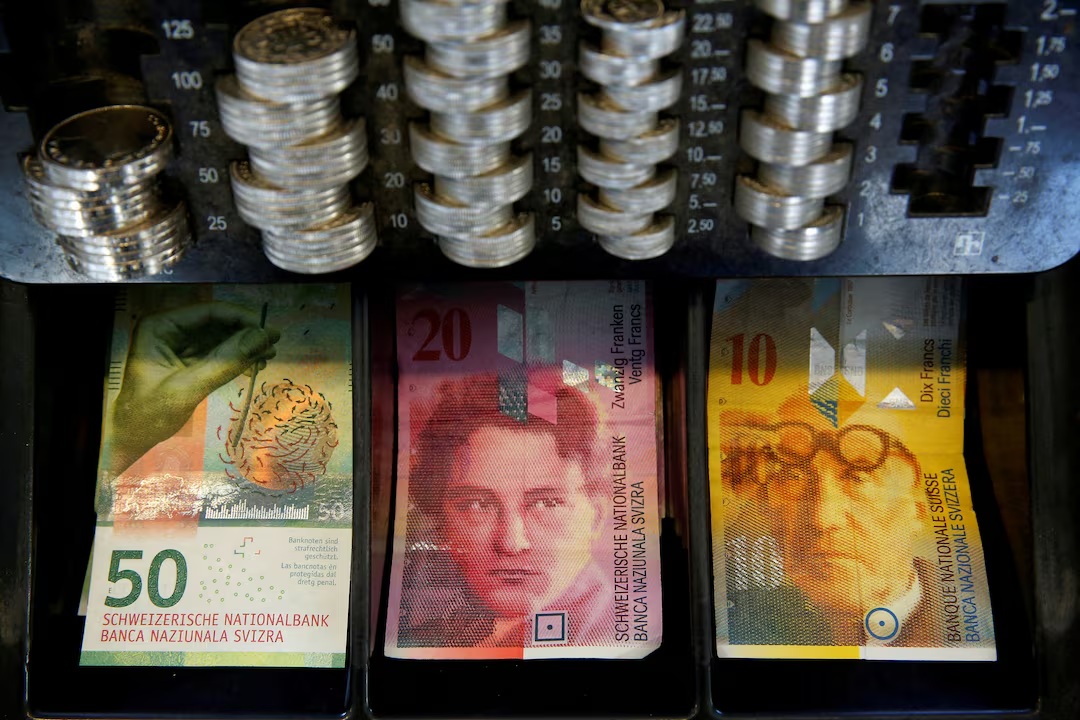
The Swiss National Bank kept its key policy rate unchanged at 0% on Thursday, signaling continued caution amid lingering global uncertainties from the Iran conflict, while explicitly reaffirming its willingness to intervene in currency markets to prevent disruptive appreciation of the safe-haven franc.

The decision, widely anticipated by markets, leaves Swiss borrowing costs significantly below those in other major economies and reflects the central bank’s delicate balancing act between low domestic inflation and external pressures. In his remarks, SNB Governing Board Chairman Martin Schlegel highlighted how the outbreak of hostilities on February 28 initially drove investors toward the franc, though that safe-haven demand has since moderated.

“As the interest rate differentials with other countries have widened, the Swiss franc has depreciated somewhat. However, the geopolitical situation remains uncertain. The risk of strong upward pressure thus persists,” Schlegel said.

The central bank stands prepared to act against any “rapid and excessive appreciation” of the franc, which could harm Switzerland’s export-oriented economy. This readiness echoes the SNB’s historical approach to currency management, where interventions have occasionally drawn international criticism.

Inflation in Switzerland rose to 0.6% in May from 0.1% in February, driven primarily by higher energy prices linked to disruptions from the Middle East conflict. While this marks a noticeable uptick, it remains modest by global standards. The SNB assessed that medium-term inflationary pressures had stayed largely stable, giving it room to maintain its accommodative stance for now.

Diverging Global Policy Paths

The decision comes as other central banks shift toward tighter policy. The European Central Bank raised its key rate by a quarter-point to 2.25% in its latest move, aiming to counter inflation risks from elevated energy costs. The U.S. Federal Reserve held its benchmark rate steady at 3.5%-3.75% this week but signaled potential hikes later in the year as it monitors the fallout from the conflict.

These widening interest rate differentials have contributed to some recent softening in the franc. Yet Schlegel emphasized that the geopolitical backdrop keeps the risk of renewed safe-haven flows alive. A stronger franc would make Swiss goods more expensive abroad, potentially weighing on the country’s manufacturing and export sectors, which are vital to its economy.

Swiss economic activity has held up better than expected during the conflict, with the SNB now forecasting growth of around 1% for 2026 and 1.5% the following year. Still, the central bank warned that the primary risks to this outlook stem from the broader global environment, particularly U.S. trade policies and ongoing Middle East uncertainties.

“If necessary, we therefore have an increased willingness to intervene in the foreign exchange market. Uncertainty about inflation and economic development is still high. We will therefore continue to monitor the situation and adjust our monetary policy if necessary, to ensure appropriate monetary conditions,” the bank said.

Tensions with Washington

Economists expect any renewed intervention to put the SNB on a collision course with Washington. Last year, the U.S. Treasury Department placed Switzerland on its monitoring list for currency practices, reviving accusations from President Donald Trump’s first term that Bern manipulates its currency to gain trade advantages.

The U.S. subsequently imposed a 39% tariff on Swiss goods, one of the highest applied to any nation, citing both currency issues and trade barriers. Swiss officials have consistently rejected those claims.

Trump has previously criticized the SNB’s currency strategy, and fresh interventions could reignite those tensions at a delicate moment in international economic relations. The SNB’s careful wording on Thursday appears designed to signal resolve without provoking immediate backlash.

Switzerland’s economy, long known for its stability and financial sophistication, faces a unique set of challenges. As a small, open economy heavily reliant on exports, it is particularly sensitive to currency swings. At the same time, its safe-haven status, amplified during periods of global stress like the current Middle East conflict, can create appreciation pressures that run counter to domestic needs.

By holding rates at zero while keeping intervention options on the table, the SNB is attempting to thread a narrow needle: supporting growth and price stability at home while guarding against excessive franc strength that could undermine competitiveness. The central bank’s assessment that medium-term inflation risks remain contained gives it flexibility, but the unpredictable nature of geopolitical developments means policy could shift quickly if conditions change.

STRC Hits Record Low as Concerns Grow Over Strategy’s Dividend Funding Model

0

Shares of STRC have fallen to a record low as investors increasingly question whether Strategy may eventually need to sell additional Bitcoin holdings to maintain dividend payments.

The decline highlights growing concerns about the sustainability of a financial model that relies heavily on Bitcoin-backed capital strategies while promising consistent returns to shareholders.

Strategy, widely known for its aggressive accumulation of Bitcoin, has transformed itself from a traditional software company into one of the largest corporate holders of the digital asset.

Over the years, the company has financed Bitcoin purchases through a combination of debt offerings, equity sales, and preferred stock issuances. This approach has allowed it to amass a massive Bitcoin treasury and become a key proxy investment for those seeking exposure to cryptocurrency through public markets.

The recent weakness in STRC reflects a shift in investor sentiment. While Bitcoin remains the foundation of Strategy’s long-term vision, market participants are increasingly focused on the cash flow requirements associated with dividend payments.

Preferred shares often attract investors because they offer regular income, but maintaining those distributions requires a reliable source of funds. If operating income and financing activities prove insufficient, investors fear the company may eventually be forced to liquidate part of its Bitcoin holdings.

The possibility of Bitcoin sales creates a difficult dilemma. Strategy’s investment thesis has long centered on accumulating and holding Bitcoin for the long term. Executive leadership has repeatedly emphasized a commitment to treating Bitcoin as a strategic reserve asset rather than a trading position.

Selling portions of the treasury to fund dividends could undermine that narrative and raise questions about the company’s broader capital allocation strategy. Market concerns are amplified by Bitcoin’s inherent volatility.

Although the cryptocurrency has delivered significant gains over the past decade, sharp price corrections remain common.

If Bitcoin prices decline while dividend obligations remain fixed, the pressure on Strategy’s balance sheet could increase. Investors worry that the company may face a scenario in which it must either raise additional capital under unfavorable conditions or reduce its Bitcoin exposure.

The decline in STRC also reflects broader uncertainty surrounding crypto-linked financial products. Investors are becoming more selective about companies that combine high-risk assets with income-generating securities.

While many shareholders appreciate Strategy’s bold vision and exposure to Bitcoin’s potential upside, others are scrutinizing whether the company can simultaneously pursue aggressive accumulation and maintain predictable dividend payments.

Supporters of Strategy argue that the market may be overreacting. They point out that the company has repeatedly demonstrated an ability to access capital markets and attract investor interest.

As long as Bitcoin continues to appreciate over the long term, the value of the company’s treasury could provide substantial flexibility.

Furthermore, management may have alternative financing options available before considering direct Bitcoin sales. The record low in STRC serves as a reminder that investor confidence can be fragile when financial structures become increasingly complex.

Shareholders are not only evaluating Bitcoin’s future price trajectory but also the mechanics of how Strategy funds its obligations and manages risk. Transparency regarding dividend coverage, financing plans, and treasury management will likely become even more important in the months ahead.

STRC’s performance reflects a broader debate within the cryptocurrency industry: how to balance long-term conviction with short-term financial commitments. If Strategy can continue growing its Bitcoin holdings while meeting dividend obligations without significant asset sales, confidence could return.

However, if concerns about funding pressures persist, investors may remain cautious, keeping downward pressure on the stock despite Bitcoin’s long-term appeal. The coming quarters will therefore be closely watched as a critical test of the company’s strategy and financial resilience.