DD
MM
YYYY

PAGES

DD
MM
YYYY

spot_img

PAGES

Home Blog Page 19

Robert Kiyosaki Warns of Imminent Biggest Bubble Burst – Urges Buying Bitcoin, Gold, Silver, And Ethereum

0

Financial market analyst and bestselling author Robert Kiyosaki has once again sounded an alarm on the global financial markets.

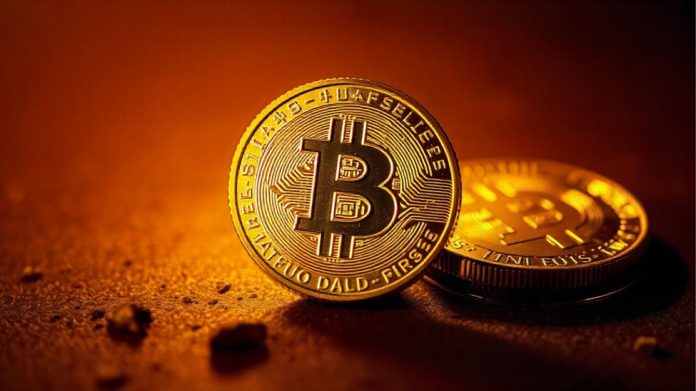
Kiyosaki in a recent post on X claimed that  the “biggest bubble in history” is on the verge of popping, advising followers to accumulate Bitcoin, gold, silver, and Ethereum immediately, before a massive crash happens.

He wrote,

“THE PIN that bursts the BUBBLE: Q: Why do you want to acquire as much Bitcoin, gold, silver, and Ethereum NOW…. BEFORE the Bubble Busts?

“A:  Because once the pin….whatever event  represents the pin…bursts….Gold, silver, Bitcoin, and Ethereum will go to the stars. Always remember Rich Dad’s rule: “Your profit is made when you buy…not when you sell. Buy now….before the bubble bursts…. and get richer….while most people get poorer.”

From his post, Kiyosaki reveals that the current financial system is an unstable bubble waiting for a pin to pop it. His words echoes the central lesson from his famous book “Rich Dad Poor Dad”, which he stated that true wealth comes from buying high-quality assets when fear dominates the market, not from trying to time the top.

Recall that earlier this month, issued a warning about what he believes could be the largest stock market crash in history.

In a recent post on X, the Rich Dad Poor Dad author reiterated his dire prediction from his 2013 book, noting that the biggest stock market crash in history is coming, pointing to 2026 as the year it unfolds.

Kiyosaki specifically blames lingering issues from the 2008 financial crisis, which he claims were never truly resolved, and singles out BlackRock’s private credit operations as the potential spark that could ignite a massive collapse.

Notably, Kiyosaki’s warning is largely rooted in structural concerns about the global financial system. He believes the modern economy is built on unsustainable debt and that prolonged monetary stimulus has artificially inflated asset prices.

Current Market Context

As of mid-March 2026, Bitcoin is trading in the $73,000–$75,000 range (with recent daily closes around $73,900–$74,800 according to major trackers like Yahoo Finance and CoinMarketCap).

Ethereum sits near $2,300–$2,400. Gold and silver remain elevated by historical standards but far from Kiyosaki’s extreme forecasts.

Kiyosaki’s repeated warnings comes amid broader market nervousness; high stock valuations, concerns over private credit funds facing redemptions, geopolitical tensions (including oil-related risks in the Middle East), and commentary from analysts like Jim Rickards labeling the U.S. economy as already in a “New Depression.”

Several users shared his sentiment with many echoing the urgency to purchase crypto assets, with comments like “Opportunity lives in fear” and “Buy when others panic.”

Many amplified the call to accumulate during perceived weakness. However, critics pushed back hard, with some pointing out that Bitcoin and Ethereum have historically crashed alongside equities during major downturns (e.g., 2022 bear market).

Kiyosaki’s Broader Strategy

Across recent posts, Kiyosaki has consistently positioned himself against traditional cash hoarding or stock-heavy portfolios during turmoil. He has highlighted:

– Converting cash into hard assets (oil wells, precious metals, crypto).

– Following “smart money” flows out of banks and into alternative stores of value.

– Staying liquid only if one lacks a clear plan otherwise, inaction during panic can be costly.

He contrasts his approach with figures like Warren Buffett, who reportedly holds large cash positions to buy “priceless assets” after crashes, while Kiyosaki prefers owning income-producing or scarcity-based assets before the drop.

Outlook

Kiyosaki insists the next bust will dwarf previous ones due to record debt levels, private credit instability, and institutional exposure to both stocks and crypto. Whether his dramatic price targets come true remains speculative, many analysts view them as hyperbolic.

Still, his core advice resonates with a growing group of investors who see Bitcoin, gold, and silver as hedges against fiat currency debasement and systemic risk.

Only time will reveal if the “pin” Kiyosaki warns about is truly near and whether those who buy now will indeed “go to the stars” or face another painful drawdown.

OpenSea Delays $SEA TGE Citing Challenging Market Conditions 

0

OpenSea has delayed the launch of its highly anticipated SEA token, originally planned to begin rollout steps around March 30, 2026 with broader Q1 expectations.

OpenSea CEO Devin Finzer announced the postponement citing challenging conditions in the crypto market. He emphasized that “$SEA only launches once” and the team prefers to wait for stronger conditions and full preparation rather than rush it. No new timeline has been provided.

To address user impact and maintain engagement amid the delay: The current “Treasure” rewards wave and program is the final one—no new waves will start. Users who participated in rewards waves 3 through 6 can optionally request refunds for platform fees retained by OpenSea during those periods.

However, claiming a refund means forfeiting the Treasures earned in those waves. For users who keep their Treasures, the OpenSea Foundation has committed that they will be “meaningfully considered” at the eventual Token Generation Event (TGE).

Starting March 31, 2026, OpenSea will reduce its own token trading fees to 0% for 60 days. This aims to encourage users to explore the revamped platform, including features like cross-chain token trading, the mobile app, and upcoming derivatives tools.

This move comes as OpenSea has been evolving beyond its NFT roots into a broader on-chain trading hub via the OS2 update, but the delay reflects caution in a tough market environment for token launches.Community reactions on X vary—some see it as a smart strategic pause to avoid a weak debut, while others express frustration over repeated delays and the platform’s handling of rewards and fees.

Prediction markets like Polymarket have quickly adjusted, with lower probabilities for near-term launch outcomes, but the story highlights ongoing shifts in the NFT/crypto trading space.

OpenSea’s Treasure rewards are part of their ongoing “Rewards Program” designed to engage users through on-chain activities like trading NFTs and tokens, completing guided “Voyages”, and leveling up a Treasure Chest.

Users earn XP by completing Voyages various rarity levels: Common to Legendary and performing actions on OpenSea. This XP levels up your Treasure Chest; 12 levels, from Wood to Solar, each with tiers/sub-levels. At the end of each Rewards Wave, your progress determines rewards.

All participants who leveled up receive a Treasure; a non-transferable badge or item, often just called “Treasure”. High-progress users may also get prizes from a Rewards Pool. Progress resets per wave, but earned Treasures and pool prizes are retained claimable via the platform, often with time limits like 20 days to open chests.

The program started around late 2025. Treasures serve as indicators of participation and activity, intended to influence allocations at the eventual Token Generation Event (TGE) for the $SEA token. The current ongoing wave is the final one—no new waves will start after it ends.

No more rewards campaigns in this structure. For participants in Waves 3 through 6: You can optionally request a refund of platform fees that OpenSea retained during those waves. If you claim the refund: Your associated Treasure rewards from those waves are forfeited and removed from your account.

If you keep your Treasures: They remain in your account and will be “meaningfully considered” for allocations at the future TGE per OpenSea Foundation commitments. This applies specifically to Waves 3–6; earlier waves may have different handling, but focus is on these due to timing and announcements.

The program ties into broader engagement for $SEA eligibility, with historical usage/activity including these Treasures factored in. For the most accurate personal status; your specific wave participation, Treasure count, or refund eligibility, check directly in your OpenSea account under the Rewards section.

Refunds and Treasure handling details stem from the delay update—expect more guidance via OpenSea announcements or your dashboard soon.

Tesla and LG Energy to Build $4.3 Billion Battery Plant in the U.S.

0

The U.S. government has confirmed that Tesla and LG Energy Solution will jointly develop a $4.3 billion lithium iron phosphate (LFP) battery manufacturing facility in Lansing, Michigan, in a move that underscores a deeper structural shift in the global energy and battery industry.

The plant, expected to begin production in 2027, will supply prismatic LFP cells for Tesla’s Megapack 3 systems — large-scale energy storage units produced in Houston — according to the U.S. Department of the Interior.

While framed as a manufacturing investment, the deal tilts more toward a broader recalibration of how the U.S. approaches energy security, industrial policy, and the fast-expanding market for grid-scale storage. Much of the global battery narrative has focused on electric vehicles, but the Tesla-LG partnership highlights a quieter but rapidly accelerating shift: the rise of energy storage as a central pillar of the power system.

Grid-scale batteries such as Tesla’s Megapack are increasingly critical for stabilizing electricity networks as renewable energy sources like solar and wind — which are intermittent by nature — take up a larger share of generation. In practical terms, this means batteries are no longer just components of cars but foundational infrastructure for national power systems.

By securing a domestic supply of LFP cells, Tesla is effectively insulating one of its fastest-growing business lines from supply disruptions while positioning itself as a key player in the modernization of the U.S. grid.

The choice of lithium iron phosphate technology is of interest. LFP batteries are cheaper, more durable, and less prone to overheating than nickel-based alternatives, making them ideal for stationary storage. However, their global supply chain has long been dominated by Chinese manufacturers, who built scale early and control key processing capabilities.

That dominance has left Western companies dependent on imports for one of the most critical components of the clean energy transition.

The partnership with LG Energy Solution — one of the few companies capable of producing LFP batteries at scale outside China — reflects a deliberate effort to rebalance that dependency. It also suggests that LFP chemistry, once seen as a lower-end alternative, is now central to geopolitical competition in energy technology.

The deal is closely tied to shifting trade dynamics. Tariffs on Chinese battery imports and broader U.S. efforts to de-risk supply chains have forced companies like Tesla to rethink sourcing strategies. A previously undisclosed supply agreement — reported earlier this year — indicated Tesla was already seeking to reduce reliance on Chinese LFP imports. The Michigan facility effectively formalizes that transition from offshore procurement to domestic production.

This shift is not purely defensive. By localizing production, Tesla may also benefit from U.S. policy incentives tied to domestic manufacturing, further improving the economics of its energy storage business.

The agreement also highlights the growing importance of South Korean firms in U.S. supply chain planning. Companies from South Korea, including LG Energy Solution, have emerged as key partners for Washington as it seeks to build alternatives to Chinese dominance in batteries and semiconductors.

The Michigan project strengthens LG’s foothold in the U.S. market while allowing it to expand its LFP capabilities — a segment where it has historically trailed Chinese competitors. Thus, the partnership falls into a broader pattern of “ally-shoring,” where supply chains are reconfigured around trusted geopolitical partners rather than purely cost considerations.

But there is more, especially in the face of Trump’s tariffs targeting South Korea. The Asian country has moved to increase manufacturing in the U.S. as part of the deal with Washington for lower tariffs.

However, the project also underlines the scale of the challenge facing the U.S. China’s lead in battery manufacturing is not just technological but industrial, built on years of investment in raw materials, processing, and large-scale production. Even with new facilities like the Lansing plant, replicating that ecosystem will take time.

The timeline — with production not expected until 2027 — means it takes a long time to bring advanced battery manufacturing online, particularly in a market where demand is growing rapidly.

Economic Impact Beyond The Factory Floor

The Lansing facility is expected to contribute to the broader industrial revival of the U.S. Midwest, a region increasingly central to battery and electric vehicle investments.

However, the economic impact extends beyond job creation.

Battery plants anchor entire ecosystems, attracting suppliers of materials, components, and supporting technologies. Over time, this can reshape regional economies and establish new industrial clusters.

The investment also signals Tesla’s confidence that energy storage will become as important — if not more so — than electric vehicles in its long-term growth strategy. Megapack deployments have already surged globally, driven by utilities seeking to stabilize grids and integrate renewable energy. If that trend continues, demand for LFP batteries is expected to outpace supply, making early investments in domestic production a competitive advantage.

The project also fits squarely within the broader economic agenda of President Donald Trump’s administration, which has emphasized domestic manufacturing, energy independence, and reduced reliance on geopolitical rivals.

The announcement at the Indo-Pacific Energy Security Summit indicates that battery supply chains are now being treated not just as industrial assets, but as instruments of foreign policy.

But even as the U.S. builds domestic capacity, the global battery supply chain remains deeply interconnected. Raw materials such as lithium, iron, and phosphate are sourced globally, processed in multiple regions, and assembled into cells in specialized facilities.

This means that while projects like the Michigan plant reduce reliance on finished imports, they do not fully eliminate exposure to global market dynamics.

Tekedia Capital Invests in Piris Labs Which Is Pioneering Photonics for Future of AI

0

Tekedia Capital is pleased to announce our investment in Piris Labs. Piris Labs is building a full-stack AI inference platform designed to eliminate one of the most critical constraints in modern computing: the data movement bottleneck. By combining proprietary photonic hardware with a vertically integrated software stack, the company addresses the “memory wall” that limits the efficiency of today’s GPU-based systems.

Their approach delivers comparable performance to traditional compute clusters, at a significantly lower cost, by improving effective FLOP utilization and reducing latency. In doing so, Piris Labs is helping make the unit economics of trillion-parameter AI models truly sustainable. The company was founded by a team of MIT physicists and former Meta AI experts.

This is not an easy problem. When you begin to move data using light instead of electrons, everything changes. With Prof. Marc A. Baldo, Director of RLE at MIT, and Mohsen Moazami (formerly of Groq, now part of NVIDIA) serving as advisors, Piris Labs is well-positioned to lead in this emerging frontier.

I have personal experience in this domain. At Analog Devices, I worked on designing the company’s first wafer-level chip-scale package. As a PhD student, I explored transmitting data via photons on silicon wafers (see image). What Piris Labs is demonstrating is remarkable: unprecedented optical efficiency, with the ability to directly convert compute signals into light at the compute node. This reduces dependence on power-hungry, latency-inducing electrical signal processing chains.

Why does this matter? Because the future of AI inference is no longer limited by compute alone, it is constrained by how efficiently data moves within and between memory and compute systems. Photonics changes that equation.

At Tekedia Capital, we back founders building generation-defining technologies. Learn more and join our next investment cycle:
https://capital.tekedia.com/course/fee/

Amazon Accelerates into One-hour and Three-hour Delivery, Betting on Speed as the Next Leverage in Retail

0

Amazon has expanded its ultrafast delivery push across the United States, introducing one-hour and three-hour delivery services in thousands of locations, marking a decisive escalation in the race to dominate convenience-driven commerce.

The company said three-hour delivery is now available in about 2,000 cities and towns, with one-hour service active in hundreds of those markets. The rollout builds on pilot programmes launched late last year and is expected to widen further in the coming months.

Behind the move is a clear strategic calculation: as e-commerce matures, speed is emerging as the primary differentiator, replacing price and selection as the key lever for growth in developed markets.

Amazon’s evolution—from two-day shipping to near-instant fulfilment—signals a deeper transformation. What began as an online retail platform is increasingly being repositioned as a form of on-demand infrastructure, where logistics capacity functions like a utility. The company is effectively trying to make delivery so fast and predictable that it becomes invisible to the consumer decision-making process.

More than 90,000 products are already eligible for delivery within three hours or less, spanning groceries, household essentials, over-the-counter medicines, and discretionary items like toys and clothing. These are categories traditionally dominated by proximity-based retail, such as supermarkets and pharmacies.

By compressing delivery times, Amazon is targeting high-frequency, low-consideration purchases—the kind that historically drove foot traffic to physical stores.

The pricing model introduces a layered approach to urgency. Prime subscribers pay $9.99 for one-hour delivery and $4.99 for three-hour delivery, while non-members face nearly double those costs. This creates a two-tier system that rewards patience while testing how much consumers are willing to pay for immediacy.

The move is notable because it departs from Amazon’s long-standing strategy of bundling speed into its Prime subscription. Instead, it treats ultrafast delivery as a premium, usage-based service, potentially opening a new revenue stream. At the same time, the fees act as a demand-shaping mechanism, helping Amazon manage capacity constraints by discouraging overuse during peak periods.

The new approach underscores how Amazon’s decade-long investment in logistics has evolved. The company has restructured its fulfilment network into regional hubs supported by local delivery stations, allowing inventory to sit closer to consumers. Combined with its Flex gig workforce, this creates the density required to support sub-three-hour delivery at scale.

This level of infrastructure is believed to be difficult to replicate. While competitors can match speed in select urban areas, achieving consistent nationwide coverage requires both capital intensity and operational coordination.

Amazon’s earlier missteps—such as shutting down Prime Now in 2021 and discontinuing a fast-delivery partnership model in 2024—highlight how challenging it has been to balance speed with profitability. The current rollout suggests the company believes it has found a more sustainable operating model.

However, rivals are not standing still.

Walmart has leveraged its extensive store network to claim coverage of 95% of U.S. households within three hours, effectively turning physical stores into fulfillment nodes.

Meanwhile, platform-based players like Instacart, DoorDash, and Uber Eats have built ecosystems that aggregate inventory from multiple retailers, offering rapid delivery without owning the underlying supply chain. The competitive dynamic is increasingly defined by two models: Amazon’s vertically integrated logistics system versus asset-light, partnership-driven networks.

Each has trade-offs. Amazon controls the full stack but bears higher costs, while its rivals scale faster through partnerships but have less control over inventory and customer experience.

But ultrafast delivery introduces structural cost pressures. Delivering within one to three hours requires higher inventory duplication, tighter routing efficiency, and more labor per order. These factors can erode margins unless offset by higher-order frequency or premium pricing.

Amazon’s introduction of delivery fees suggests a recognition that speed cannot be fully subsidized indefinitely, even within the Prime ecosystem. There is also the question of demand elasticity. While consumers consistently say they want faster delivery, their willingness to pay for incremental speed gains—beyond same-day delivery—remains uneven.

The one-hour rollout is part of a wider set of experiments aimed at collapsing delivery times even further. Amazon is testing 30-minute delivery services through its “Amazon Now” initiative in select cities, while continuing to invest in drone-based delivery systems capable of completing orders in under an hour.

These efforts point toward a long-term vision of “instant commerce,” where fulfilment operates on near real-time cycles, particularly for essential goods.

Observers believe the shift to ultrafast delivery could reshape Amazon’s business model in subtle but important ways. Faster delivery tends to increase order frequency while reducing average basket size, as consumers no longer need to plan purchases in advance. That dynamic can drive higher engagement, but also increases operational complexity.

Higher frequency strengthens customer dependence and creates more opportunities for cross-selling, advertising, and subscription retention.

At its core, Amazon’s expansion is about controlling the last mile, the most complex and expensive segment of the supply chain. By pushing delivery times closer to real-time, the company is attempting to set a new industry standard—one that competitors will be forced to match, even at the cost of profitability.