DD
MM
YYYY

PAGES

DD
MM
YYYY

spot_img

PAGES

Home Blog Page 19

Tech Stocks Drag Markets Lower as Trump’s Greenland Tariff Threats Spark Trade War Fears

0

U.S. equity markets opened the week on a sharply lower note on Tuesday, with technology shares bearing the brunt of investor unease over President Donald Trump’s escalating rhetoric on acquiring Greenland and his threats of punitive tariffs against European allies.

The sell-off reflected broader concerns about renewed transatlantic trade tensions, just as global leaders converged on Davos, Switzerland, for the World Economic Forum. The State Street Technology Select Sector SPDR ETF (XLK) declined 1%, while major tech names posted steeper losses. Nvidia and Tesla each tumbled nearly 3%, with Meta Platforms, Alphabet, Apple, Microsoft, and Amazon all shedding more than 1%. Broader indexes followed suit: the Nasdaq Composite closed down 1.3%, underperforming the S&P 500’s 1.1% drop and the Dow Jones Industrial Average’s 0.9% decline.

The catalyst came from Trump’s Truth Social posts over the weekend, where he reiterated his long-standing interest in U.S. control of Greenland—an autonomous Danish territory he views as strategically vital for national security, Arctic defense, and countering influence from China and Russia.

In a lengthy January 17 post, Trump announced plans for a 10% tariff on goods from eight European nations—Denmark, Norway, Sweden, France, Germany, the United Kingdom, the Netherlands, and Finland—effective February 1, escalating to 25% on June 1. He tied the levies directly to negotiations for a “Complete and Total purchase” of Greenland, framing the move as essential for “Global Peace and Security.”

Trump doubled down on Tuesday with a flurry of posts, sharing what appeared to be private messages from leaders like French President Emmanuel Macron, mocking allies, and insisting “there can be no going back” on his ambitions. He even posted edited images depicting Greenland and parts of Canada under U.S. flags, while refusing to rule out forceful options if diplomacy fails.

European leaders responded with alarm. EU Commission President Ursula von der Leyen called the tariff threats a “mistake” that undermines trust between allies. French President Emmanuel Macron warned of a potential shift to a “world without rules” and signaled readiness to activate the EU’s anti-coercion instrument—a so-called “trade bazooka”—for retaliatory measures worth billions.

Belgian Prime Minister Bart De Wever declared that “so many red lines have been crossed,” while others in Davos urged compartmentalizing the Greenland dispute from broader trade talks. U.S. Trade Representative Jamieson Greer, speaking at Davos, suggested the threats were tactical to “set the scene” for negotiations, downplaying immediate escalation.

Treasury Secretary Scott Bessent brushed off market “hysteria,” but investors remained skittish, with the CBOE Volatility Index (VIX) spiking to levels not seen in recent months.

The renewed focus on tariffs revives memories of trade frictions from Trump’s first term, now complicated by Greenland’s strategic importance amid melting Arctic ice and great-power competition. Analysts note that any broad tariffs could disrupt supply chains for U.S. tech firms reliant on European components, markets, or partnerships, amplifying the “risk-off” sentiment hitting AI and growth stocks hardest.

Yet not all voices were bearish. Wedbush Securities analyst Dan Ives, attending Davos, framed the dip as a classic buying opportunity.

“Tech stocks will be hit as the ‘risk off dynamic’ hits AI names front and center but ultimately we view this as an opportunity to own the tech winners for 2026 and beyond,” Ives wrote in a note to clients.

He dismissed the geopolitical “soap opera” as temporary noise, arguing that the AI revolution remains in its early innings and unaffected by short-term trade spats.

Ives pointed to an impending catalyst: a “robust” fourth-quarter earnings season from tech giants, fueled by an estimated $550 billion in capital expenditures dedicated to AI infrastructure. He recommended accumulating shares on weakness in names like Nvidia, Microsoft, Palantir, CrowdStrike, Nebius, Apple, Palo Alto Networks, Alphabet (Google), and Tesla—stocks he sees as core beneficiaries of the ongoing “4th Industrial Revolution.”

While the tariff threats contributed to Tuesday’s losses, tech had already shown signs of rotation fatigue earlier in January, with the “Magnificent Seven” group underperforming amid valuation concerns. The pullback erased recent gains and pushed some indexes into negative territory for the year so far.

As Davos proceedings continue—with Trump scheduled to address attendees on Wednesday—investors will monitor for any de-escalation signals. European retaliation threats and potential Supreme Court scrutiny of tariff authority loom as additional risks.
Bessent Warns Powell Against Supreme Court Appearance as Trump–Fed Standoff Deepens

0

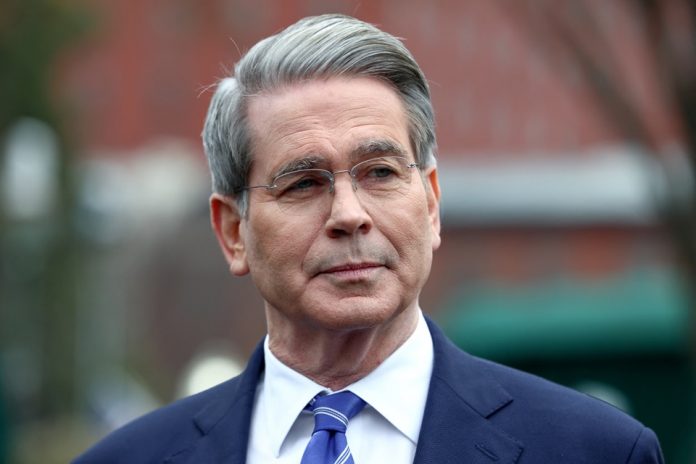
Treasury Secretary Scott Bessent on Tuesday urged Federal Reserve Chair Jerome Powell to stay away from upcoming Supreme Court arguments tied to President Donald Trump’s effort to remove one of the central bank’s governors, warning that Powell’s presence could further politicize an already volatile dispute over the Fed’s independence.

Speaking to CNBC’s Joe Kernen on the sidelines of the World Economic Forum in Davos, Bessent said Powell attending the oral arguments would be a misstep at a time when the central bank is under intense political scrutiny.

“I actually think that’s a mistake,” Bessent said. “If you’re trying not to politicize the Fed, for the Fed chair to be sitting there trying to put his thumb on the scale, that’s a mistake.”

The comments follow a CNBC report that Powell plans to attend Supreme Court arguments in a case challenging Trump’s authority to fire Federal Reserve governor Lisa Cook. The case has become a flashpoint in a broader confrontation between the White House and the central bank over governance, accountability, and the limits of presidential power.

At the center of the legal fight is Trump’s August announcement that he was firing Cook from the Fed’s Board of Governors over allegations of mortgage fraud. Cook has denied wrongdoing and has remained in her post, setting up a direct constitutional and statutory clash over whether a sitting president can remove a Fed governor outside the narrow “for cause” protections that have historically shielded the central bank from political interference.

The Supreme Court case is widely seen as a potential landmark ruling. A decision affirming broad presidential removal powers could weaken the institutional independence of the Fed, while a ruling against Trump would reinforce long-standing legal precedents that insulate monetary policy from the executive branch.

Economists and legal scholars say the stakes extend far beyond Cook’s tenure. The outcome could reshape how future administrations interact with independent agencies, including the Federal Reserve, the Federal Trade Commission, and other bodies designed to operate at arm’s length from day-to-day politics.

Powell caught in the crossfire

Powell himself has repeatedly been a target of Trump’s criticism. The president has threatened on multiple occasions to fire the Fed chair, accusing him of mismanaging interest rate policy and undermining economic growth. While no president has ever successfully removed a Fed chair over policy disagreements, Trump’s public threats have heightened anxiety in financial markets about the durability of central bank independence.

Bessent’s warning reflects concern that Powell’s physical presence at the Supreme Court could be interpreted as an attempt by the Fed to influence the judiciary, even if Powell does not speak or participate directly.

The controversy has intensified following Powell’s rare video statement earlier this month, in which he disclosed that he is under criminal investigation. Powell said the investigation was unrelated to his testimony to Congress last June or to oversight of the Federal Reserve’s building renovation project, dismissing those issues as “pretexts.”

“This new threat is not about my testimony last June or about the renovation of the Federal Reserve buildings,” Powell said in the January 11 statement. “Those are pretexts.”

Powell’s decision to go public underscored the severity of the pressure he faces and marked an unusual step for a Fed chair, who typically avoids public comment on legal or political disputes.

Markets watching closely

Investors are closely monitoring the unfolding confrontation. Any perception that the Fed’s independence is eroding could unsettle bond markets, weaken confidence in U.S. monetary policy, and complicate the Fed’s ability to anchor inflation expectations.

So far, markets have remained relatively calm, but analysts say that could change quickly if the Supreme Court signals a willingness to revisit long-standing protections for independent agencies.

Analysts believe the major issue hinges on whether the Federal Reserve can continue to operate without fear of political retaliation.

However, Bessent’s intervention highlights the delicate line the Fed must walk: defending its institutional integrity without appearing to insert itself into partisan or legal battles. Whether Powell ultimately attends the Supreme Court arguments or not, the case is shaping up as one of the most consequential tests of central bank independence in decades, with implications that could outlast both the current administration and Powell’s tenure at the Fed.

Amazon CEO Admits Rising Prices as Trump’s Tariffs Begin Reshaping Retail Dynamics

0

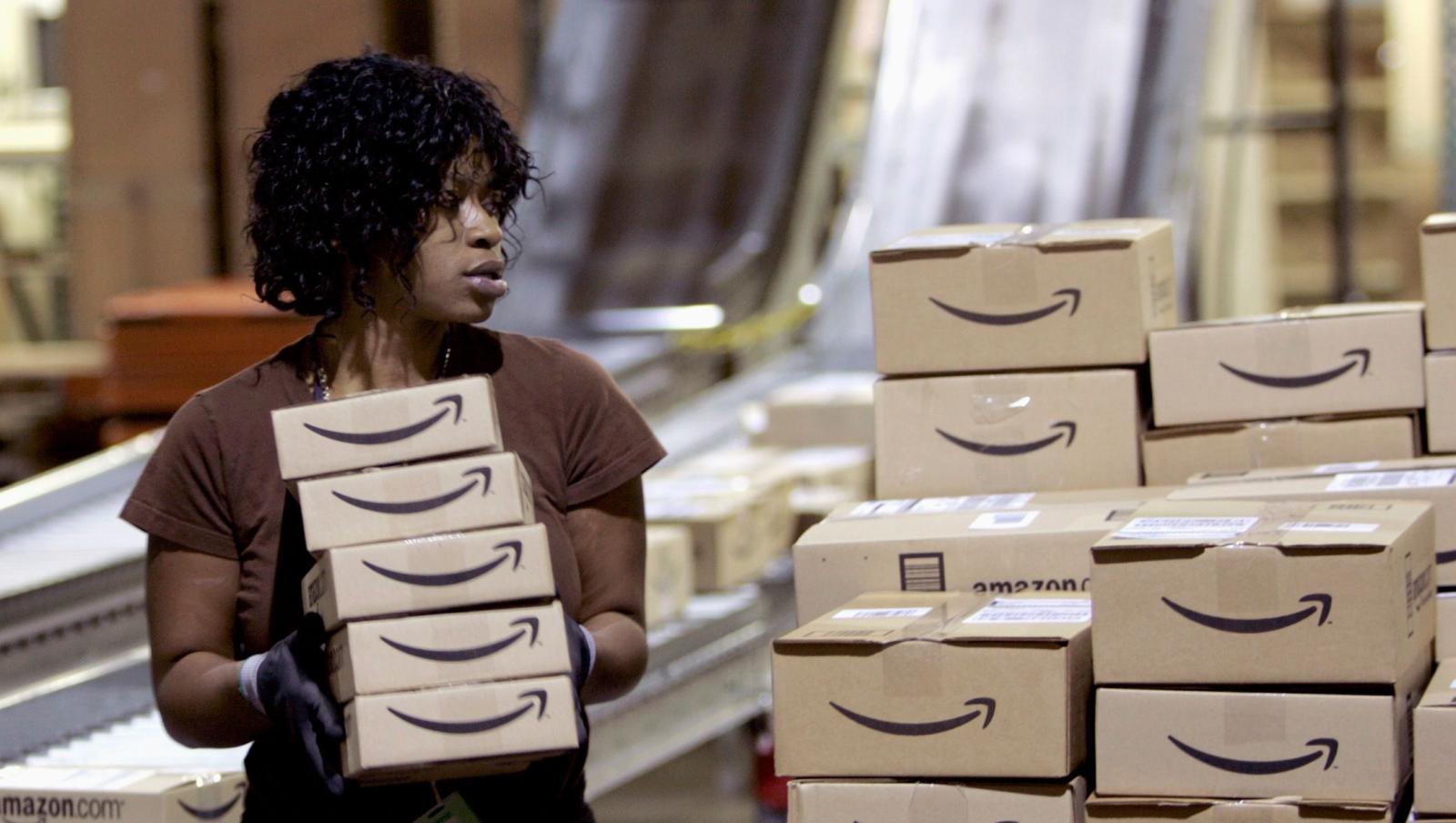
Amazon CEO Andy Jassy has confirmed that President Donald Trump’s sweeping tariffs are beginning to affect consumer prices, marking a turning point in the trade policy’s impact on one of the world’s largest online marketplaces.

His comments, made Tuesday at the World Economic Forum in Davos during an interview with CNBC’s Becky Quick, highlight the complex balancing act retailers face as global trade tensions translate into domestic cost pressures.

According to Jassy, Amazon and its vast network of third-party merchants initially attempted to shield consumers by pre-purchasing inventory ahead of the tariff hikes, a strategy aimed at delaying the effect of rising import costs.

“Most of that supply ran out last fall,” he said, explaining why price increases are now becoming more noticeable across certain categories.

In July 2025, Apollo Global Management’s chief economist Torsten Sløk warned that the most damaging effects of Trump’s sweeping tariff policies would begin to grip the U.S. economy toward the end of the year, potentially setting off a dreaded stagflation shock that could drag into 2026.

However, the impact is uneven as some sellers are passing increased costs directly to consumers, while others absorb some of the extra expense to maintain demand. A third segment is adopting a hybrid approach, splitting the cost between the business and shoppers.

Jassy described this as the point where “you start to see some of the tariffs creep into some of the prices.”

This development represents a shift from Amazon’s earlier position. Following the initial imposition of tariffs, Jassy had maintained that prices had not “appreciably gone up.” However, he had also cautioned that businesses with limited margins would eventually face pressure to adjust prices.

“Some businesses don’t have 50% extra margin that you can play with,” he said in April, foreshadowing the current pricing reality.

Retail Margins Under Pressure

Retail operates on thin mid-single-digit margins, leaving little room to absorb a sudden 10% increase in input costs without affecting the bottom line. Jassy emphasized that “you don’t have endless options” to absorb tariffs, suggesting that further price increases across a broad range of products may be inevitable.

Trade associations have also been warning of broader consequences. Last August, a major retail trade group predicted that tariffs could complicate inventory planning, potentially reduce product availability, and even trigger job losses. Amazon’s experience offers an early case study of these predictions: companies pre-purchased inventory to mitigate price shocks, but as that stock depletes, the full effect of tariffs on pricing is emerging.

Despite the price pressures, Jassy noted that consumers remain resilient. While some shoppers are trading down to cheaper alternatives or postponing discretionary purchases, overall spending continues.

“Consumers are still spending amid the tariffs,” he said, highlighting that the immediate demand shock has been muted, though behavioral adjustments are evident.

Bargain hunting, switching to lower-cost brands, and postponing luxury purchases are emerging trends, signaling that households are adapting to higher costs without entirely curtailing consumption.

Broader Implications for Global Supply Chains

Amazon’s experience reflects the broader ripple effects of U.S. trade policy on global supply chains. Companies that rely on imported goods are now confronting higher costs for everything from electronics and apparel to household items. For multinational retailers, the challenge lies in balancing inventory strategy, pricing, and customer loyalty while maintaining competitiveness.

The issue also intersects with inflation dynamics. As tariffs contribute to higher retail prices, there is potential for broader impacts on consumer price indices and monetary policy decisions. Economists have long noted that tariffs, while aimed at protecting domestic industries, can act as a hidden sales tax on consumers and disrupt finely tuned global supply networks.

Some companies are exploring alternative sourcing strategies or shifting production to countries not affected by U.S. tariffs to mitigate cost pressures. Amazon itself has invested in logistics, warehousing, and technology infrastructure to better manage its supply chain and maintain competitive pricing.

However, the CEO’s remarks suggest that even large, tech-enabled platforms face limits in fully offsetting the economic impact of broad trade measures.

Looking ahead, Amazon and other retailers will likely continue to grapple with the dual pressures of tariffs and thin profit margins. While consumers are adjusting their buying behavior, sustained cost increases could slowly feed into higher prices across categories, affecting household budgets and consumption patterns.

Analysts say retailers will need to balance margin management, inventory planning, and customer experience to navigate what Jassy called an “unavoidable” shift in the market landscape.

While pre-purchased inventory and margin absorption temporarily shielded customers, the limits of these measures are now visible, signaling that Trump’s tariffs are beginning to filter through the U.S. retail ecosystem with real-world consequences for both businesses and consumers.

Netflix Sweetens Takeover Bid for Warner Bros. Discovery with Cash Only

0

Netflix has revamped its acquisition proposal for Warner Bros. Discovery, moving from a cash-and-stock deal to a cash-only offer, signaling a strategic push to reassure shareholders and accelerate the approval process.

While the price per share remains unchanged at $27.75, valuing WBD’s movie studio and streaming assets at $82.7 billion, the shift simplifies the transaction, removes stock-market volatility from the equation, and underscores Netflix’s commitment to certainty. The streaming giant plans to fund the deal through a combination of cash reserves, debt, and committed financing.

The move comes amid an intensifying battle with Paramount Skydance, which continues to press its all-cash $30-per-share bid for the entire WBD conglomerate, including linear television networks. Paramount has bolstered its offer with a $40 billion guarantee from Larry Ellison, co-founder of Oracle, aiming to assure shareholders and regulators that financing is secure.

Despite the higher price, WBD’s board has remained aligned with Netflix, citing concerns over Paramount’s heavy reliance on debt financing and its existing negative free cash flow, which could strain operations and credit ratings if the deal were completed. Analysts note that Paramount’s proposal could saddle the combined entity with $87 billion in debt, leaving it more vulnerable to interest rate fluctuations and reducing strategic flexibility.

Legal skirmishes have further complicated the process. Paramount filed suit seeking additional disclosure on Netflix’s offer and attempted to nominate new board members, aiming to influence the shareholder vote. The court rejected efforts to expedite the case, but the litigation highlights the high stakes of this takeover duel. Netflix’s revised cash offer is partly a response to this pressure, emphasizing simplicity and execution certainty to reassure investors.

From a strategic perspective, the contest highlights contrasting visions for the entertainment landscape. Netflix is focused on acquiring WBD’s content and streaming capabilities to consolidate its global platform and content library, leaving behind legacy cable assets that are losing relevance. Paramount, in contrast, is pursuing a broader strategy encompassing both streaming and traditional media, aiming to achieve scale across a more diversified but financially strained portfolio.

Analysts have suggested that Netflix’s approach may mitigate integration risks, whereas Paramount’s ambitious plan could amplify financial and operational strain.

The backdrop for this contest is Warner Bros. Discovery’s precarious position. The company, valued at over $45 billion prior to the sale process, has faced declining cable viewership, escalating content costs, and growing competition from global streaming rivals. By revising its offer, Netflix is betting that the combination of price certainty, a cleaner financing structure, and operational strength will outweigh the allure of Paramount’s higher nominal bid.

Financial modeling suggests the implications for shareholders could be significant. A cash offer ensures immediate liquidity, reducing exposure to market fluctuations that accompany stock-based deals. Meanwhile, Paramount’s heavily leveraged bid could offer a higher nominal return but introduces execution risk, particularly if interest rates rise or integration challenges delay expected synergies.

Analysts note that Netflix’s approach may offer lower upside on paper but a higher probability of completion, a key factor for risk-averse institutional investors.

As the shareholder vote approaches, the battle will test not only the relative merits of price versus certainty but also the broader industry’s confidence in the ability of streaming platforms to successfully integrate legacy media assets.

The takeover contest occurs against a backdrop of structural change in the media industry. WBD has faced declining cable subscriptions, heightened competition from streaming platforms, and escalating content costs. Analysts note that traditional studios with significant linear operations are increasingly vulnerable to market shifts, making strategic acquisitions by cash-rich streaming services a preferred route for survival.

In essence, this battle is as much about strategic fit, financial prudence, and integration feasibility as it is about headline price. The next few weeks will reveal whether Netflix’s simplified, cash-backed offer is sufficient to secure shareholder approval, or whether Paramount’s higher-risk, higher-reward strategy can disrupt the status quo and claim Warner Bros. Discovery for its ambitious consolidation plan.

SOL Traders Run ROI Simulations Showing That Flipping $150 Into Ozak AI Could Outperform a Full Year of Solana by 300×

0

Ozak AI ($OZ) has quickly become one of the most closely watched AI–crypto projects of 2026, especially among Solana traders actively running ROI simulations for the new cycle. As an advanced ecosystem built at the intersection of AI technologies and DePIN (Decentralized Physical Infrastructure Networks), Ozak AI is being positioned as a breakthrough model capable of delivering exponential returns far beyond traditional Layer-1 yield expectations. With interest accelerating across both retail and mid-sized traders, $OZ is emerging as a preferred asymmetric bet for those seeking maximum upside from minimum capital.

Presale Strength Drives Confidence as $OZ Outpaces Expectations

The project’s ongoing Phase-7 presale continues to attract a wave of fresh capital, with the token currently priced at $0.014. Nearly 1.099 billion $OZ have already been purchased, raising $5.78 million to date. This remarkable growth curve supported by a substantial jump from the earliest presale phase has intensified discussions among Solana traders who compare their typical annual returns against the potential of early-stage AI ecosystem tokens.

As these traders evaluate their models, flipping $150 into Ozak AI is increasingly appearing as a high-conviction strategy, especially when compared to a full year of Solana appreciation. The presale’s clear path toward its $1.00 listing target offers a steep multiple that many traders believe could drastically outperform SOL’s expected 2026 gains.

Why Solana Traders Are Running Comparative ROI Simulations on Ozak AI

Solana’s ecosystem continues to expand, but its returns especially for holders entering during higher market valuations no longer mirror the explosive rallies witnessed during early-cycle adoption phases. This has motivated traders to look for projects capable of delivering exponential value from low entry points.

Ozak AI’s appeal lies in its next-generation architecture. Its AI-powered infrastructure automates predictive analytics, enabling real-time insights for both market participants and decentralized application builders. Combined with a DePIN network designed to distribute compute across a scalable, global node ecosystem, Ozak AI’s framework supports continuous optimization of data flows. Its cross-chain capabilities allow seamless interoperability across multiple blockchain environments, ensuring flexibility and future-proof development.

Staking, governance, and ecosystem utility further strengthen the case for long-term engagement, while its full audit by @sherlockdefi provides reassurance for investors who prioritize security at the presale stage.

Partnership Synergies Reinforce the Thesis Driving High ROI Projections

Ozak AI’s rising momentum is backed by a growing lineup of strategic partnerships that continue to expand its utility and operational reach. These collaborations serve as a core component of the ROI simulations conducted by Solana traders, who view external integrations as strong indicators of long-term project viability.

The partnership with Hive Intel (HIVE) enhances the accuracy of Ozak AI’s Predictive Agents by granting access to sophisticated blockchain intelligence spanning NFT markets, DeFi liquidity shifts, on-chain behaviors, and token metrics. This data foundation sharpens the predictive capabilities that underpin Ozak AI’s intelligence engine.

Through its alliance with Weblume, Ozak AI’s real-time signals can now be deployed into creator dashboards and decentralized applications with no coding barriers, offering immediate implementation for builders across Web3. Meanwhile, the collaboration with Meganet, a bandwidth-sharing network featuring over 6.5 million active nodes and a rapidly scaling user base, strengthens Ozak AI’s decentralized compute performance, reducing latency and enabling high-speed AI execution.

How ROI Models Show Ozak AI Outshining Solana by 300×

Simulations circulating within Solana trading communities suggest one consistent finding: while Solana may continue to deliver strong upside during the 2026 bull cycle, its returns cannot match the projected exponential curve associated with Ozak AI at current presale valuations. Traders running these comparisons highlight how even small entries $150, $200, or sometimes less could multiply dramatically as $OZ approaches its listing target and extends into post-listing market phases.

The attraction lies in the combination of low initial pricing, broad utility, powerful strategic partnerships, and a next-generation AI–DePIN framework capable of supporting real-world computational workloads. Against this backdrop, Solana traders see Ozak AI as a rare early-cycle opportunity not commonly found in mature L1 ecosystems.

Conclusion: Ozak AI’s Early Entry Window Is Creating a New ROI Landscape for Solana Traders

As Solana traders continue analyzing high-upside alternatives, Ozak AI stands out as a compelling investment avenue defined by innovation, expanding partnerships, and a robust technology foundation. With its presale still priced at accessible levels and its ecosystem accelerating globally, $OZ is increasingly viewed as a token capable of outperforming traditional Layer-1 gains by extraordinary multiples.

The result is a new strategic shift, one in which traders are reallocating small amounts of capital to pursue disproportionate returns through Ozak AI’s rapidly evolving ecosystem.


For more information about Ozak AI, visit the links below:

Website: https://ozak.ai/

Twitter/X: https://x.com/OzakAGI

Telegram: https://t.me/OzakAGI