DD
MM
YYYY

PAGES

DD
MM
YYYY

spot_img

PAGES

Home Blog Page 1933

The Maldives Partnered With MBS Global Investments To Develop a $9B Blockchain Hub

0

The Maldives has partnered with Dubai-based MBS Global Investments to develop a $9 billion blockchain and crypto hub in Malé, aiming to diversify its economy beyond tourism and fisheries. The Maldives International Financial Centre (MIFC), spanning 830,000 square meters, is expected to create 16,000 jobs and triple the nation’s $7 billion GDP within four years. The project, funded through equity and debt with $4-5 billion already secured, offers incentives like zero corporate tax and 100% foreign ownership to attract crypto investors.

However, it faces stiff competition from established hubs like Dubai, Singapore, and Hong Kong, which have advanced regulatory frameworks. The initiative is a strategic move to address the Maldives’ debt crisis, with $1.6 billion in repayments due by 2026, but its success hinges on overcoming regulatory and technological challenges. The Maldives’ $9 billion blockchain hub could have significant broader implications.

By attracting global crypto investors, the Maldives aims to reduce reliance on tourism, which accounts for ~30% of GDP but is vulnerable to climate change and global disruptions. Success could stabilize its economy, but failure risks exacerbating its $8 billion debt burden. Positioning itself as a crypto hub could align the Maldives with tech-forward nations like the UAE, potentially strengthening ties with Middle Eastern and Asian investors. However, it may strain relations with traditional Western partners cautious about crypto’s regulatory gaps.

The Maldives, highly vulnerable to sea-level rise, faces scrutiny over the hub’s energy-intensive blockchain operations. If not powered sustainably, it could undermine the nation’s climate advocacy and accelerate environmental degradation. The hub could intensify competition among crypto hubs (e.g., Dubai, Singapore), driving innovation but also regulatory arbitrage. It may pressure other small nations to pursue similar high-risk strategies, potentially destabilizing global financial systems if poorly regulated.

The projected 16,000 jobs could boost local employment, but wealth concentration among foreign investors risks widening inequality. Regulatory lapses could also expose locals to crypto scams or financial volatility. Success could inspire other debt-stressed nations to adopt blockchain hubs, but weak oversight might attract illicit finance, drawing international scrutiny. The Maldives’ zero-tax model may also spark debates on global tax fairness.

The project’s outcome will hinge on robust regulation, sustainable execution, and global market dynamics, potentially reshaping the Maldives’ role in the global economy. Regulatory clarity is critical for the Maldives’ $9 billion blockchain hub to succeed and avoid pitfalls. Clear, investor-friendly regulations, such as the proposed zero corporate tax and 100% foreign ownership, aim to draw global crypto firms. However, without transparent rules on licensing, anti-money laundering (AML), and know-your-customer (KYC) compliance, the hub risks deterring reputable investors wary of regulatory uncertainty or reputational risks.

Crypto’s anonymity can attract money laundering, tax evasion, or terrorist financing. The Maldives must align with global standards like the Financial Action Task Force (FATF) recommendations to avoid blacklisting by international bodies, which could isolate the hub and scare off legitimate players. Overly strict regulations could stifle innovation, while lax ones risk financial instability. The Maldives needs a framework that fosters blockchain development (e.g., clear token issuance and custody rules) while protecting consumers and ensuring market integrity, similar to Singapore’s tiered licensing model.

Rivals like Dubai and Hong Kong offer robust regulatory clarity, with defined crypto classifications and investor protections. The Maldives’ nascent regulatory environment, lacking a proven track record, could undermine confidence unless it quickly establishes credible oversight bodies and legal frameworks. Domestic stakeholders need assurance that the hub won’t expose the economy to volatility or scams. Internationally, regulatory clarity will determine whether the Maldives is seen as a legitimate financial center or a risky offshore haven, impacting foreign direct investment and debt restructuring negotiations.

The Maldives lacks deep expertise in crypto regulation. Developing a sophisticated framework requires significant investment in talent, technology, and international partnerships. Delays or missteps could erode investor trust and project momentum. To achieve regulatory clarity, the Maldives should prioritize: Legislation: Enact comprehensive crypto laws covering taxation, asset classification, and dispute resolution.

Establish a dedicated regulator with global credibility to enforce compliance. Partner with FATF-compliant nations and adopt best practices from hubs like the UAE. Transparently outline regulatory goals to build trust among investors and locals. Without swift and robust regulatory clarity, the hub risks becoming a speculative bubble or a magnet for illicit finance, undermining its economic goals and global standing.
Central Bank of Nigeria (CBN) Currency Management Costs Soar Over 300% to N315.18bn in 2024 Amid Prolonged Cash Crisis

0

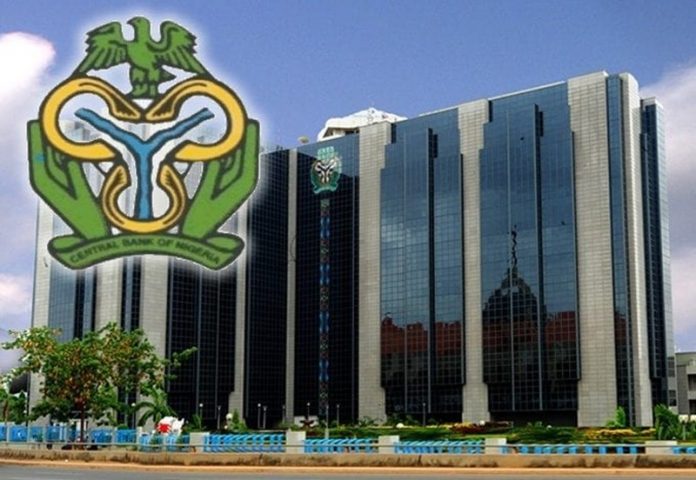
The Central Bank of Nigeria (CBN) saw its currency management expenses spike by more than 300% in 2024, a staggering rise that reflects the costly aftermath of the naira redesign policy and the prolonged cash shortages that gripped the country.

According to its latest audited financial statement, the apex bank spent N315.18 billion at the Bank level on currency issue expenses last year—up from N77.67 billion in 2023, marking a 305.7% increase. At the Group level, the figure jumped to N238.65 billion from just N1.11 billion the year prior, underlining the extraordinary scale of intervention required to stabilize Nigeria’s cash supply system.

The ballooning cost, which includes printing, processing, distributing, and disposing of currency notes, is one of the clearest indicators of the turbulence that followed the CBN’s botched attempt to phase out old naira notes. The move, originally launched under former CBN Governor Godwin Emefiele in late 2022, was intended to promote cashless transactions, combat counterfeiting, and reduce cash-related crimes. Instead, it sparked a national crisis, drying up cash from circulation, shuttering businesses, and forcing millions to queue for hours at ATMs and banking halls.

While the new CBN leadership under Yemi Cardoso made several emergency interventions to correct the situation, including aggressive note printing and wider currency distribution logistics, the financial toll has now become evident.

The apex bank said the increase was due to the operational demands of managing currency distribution and retrieval during the acute cash shortage.

But the situation also revealed just how expensive Nigeria’s currency management architecture has become. With poor infrastructure, security challenges, and a cash-dependent informal economy, efforts to replace old notes and re-circulate new ones ballooned into a logistical nightmare. In many rural and semi-urban communities, cash simply never returned on time.

Banks Fined Over Cash Access Failures

Despite the efforts of the CBN to flood the system with cash, the currency crisis lingered for much of the year, leading to aggressive regulatory action against Deposit Money Banks (DMBs) accused of hoarding notes or failing to meet ATM loading requirements.

In 2024 alone, Guaranty Trust Bank, Fidelity Bank, and Access Bank paid a combined N192.68 million in fines. GTBank faced the bulk of the penalties, N160.40 million after a “mystery shopping” operation uncovered multiple infractions. Fidelity Bank was fined N27.28 million, while Access Bank was handed an N5 million fine for hoarding and poor handling of unfit naira notes.

The crackdown intensified in early 2025 when the CBN sanctioned nine commercial banks with a combined fine of N1.35 billion, N150 million each, for failing to comply with cash availability directives during the 2024 yuletide season. The affected banks included First Bank, Zenith Bank, UBA, Sterling Bank, Union Bank, Fidelity Bank, Keystone Bank, Globus Bank, and Providus Bank.

Cash Still Dominates Despite Push for Digital

Even with the CBN’s aggressive drive toward financial inclusion and digital transactions, physical cash remains king in Nigeria. Data from the bank’s Money and Credit Statistics showed that currency outside the banking system surged by 49.3% to N5.13 trillion by December 2024, compared to N3.43 trillion a year earlier. That figure accounts for 94.2% of the N5.44 trillion total cash in circulation—underscoring the continued reliance on physical cash, particularly in the informal economy.

The rise suggests that while the central bank wants a digital transition, its execution of monetary policy, especially through sudden and disruptive reforms, continues to deepen public distrust and dependency on cash.

Surplus Returns, But Hidden Costs Persist

Despite the heavy costs associated with managing cash, the CBN posted a financial surplus for the first time in two years, recovering from a deficit recorded in 2023. The turnaround, according to the bank, was driven by better operational control, improved portfolio inflows, increased diaspora remittances, and more strategic reserve management. Foreign reserves rose from $36.6 billion in 2023 to $38.8 billion in 2024.

However, the picture was not entirely rosy. Liquidity management expenses tripled to N4.5 trillion in 2024, up from N1.5 trillion the previous year, as the CBN resorted to intensified Open Market Operations (OMO) to soak up excess cash in the system and fight inflation triggered by fiscal injections. The bank also recorded a staggering N13.9 trillion in losses from settled derivatives contracts, mostly tied to legacy foreign exchange obligations.

However, the apex bank insists that 2024 was a year of deliberate course correction.

Beyond the numbers, the 300% rise in currency issuance costs is a powerful illustration of the price Nigeria pays for abrupt and poorly executed reforms. The naira redesign policy—hailed at its launch as a masterstroke for curbing vote-buying and corruption—has become a cautionary tale. What started as a bold idea quickly turned into a nationwide cash famine, exposing the fragility of the country’s monetary infrastructure and the disconnect between policy ambition and grassroots realities.

“He’s just a very nice guy:” Trump Praises Bezos for Dropping Tariff Display on Amazon, Fueling Accusations of Tech Industry Capitulation

0

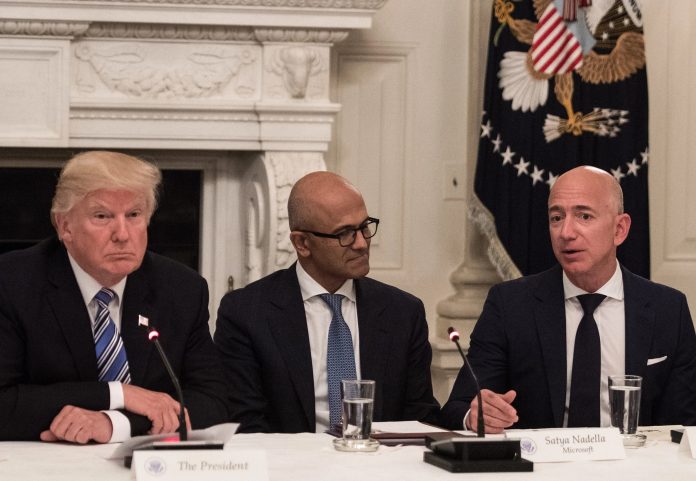
President Donald Trump has confirmed that Amazon founder Jeff Bezos reversed a plan to display tariff costs on product listings following a personal phone call between the two — a move that has drawn sharp criticism and renewed concerns about the tech industry’s growing alignment with the Trump administration.

The president made the revelation during a wide-ranging interview on NBC’s Meet the Press, where he told host Kristen Welker that Bezos immediately agreed not to go ahead with the plan after they spoke.

“He said, ‘Well, I don’t want to do that,’ and he took it off immediately,” Trump said. “He’s just a very nice guy. We have a relationship.”

The reversal, which followed a report from Punchbowl News that Amazon was preparing to start listing import tariff costs beside product prices, has triggered a backlash from critics who see it as a clear example of political intimidation shaping corporate decisions. Amazon denied the report at the time, saying the idea had only been floated internally by one team and had not been approved.

However, Trump’s account, and the fact that Bezos reportedly gave in without public resistance, have raised alarms in some quarters.

Many have accused the billionaire of pandering to the president and caving to pressure, with some describing his U-turn as “cowardly” and emblematic of what they see as Trump’s tightening grip over the tech industry. The incident has renewed claims that many of Silicon Valley’s most powerful figures — once seen as adversaries to Trump — are now falling in line.

The episode has also reignited scrutiny over how major tech CEOs, including Bezos and Meta’s Mark Zuckerberg, have sought to repair relations with Trump since his reelection victory in November. Both men were previously in Trump’s political crosshairs — Bezos, frequently the target of presidential tirades over his ownership of The Washington Post; Zuckerberg, criticized over alleged censorship on Facebook. But since Trump’s return to power, both men have taken steps to reconcile. Several tech executives who once kept their distance, including Bezos and Zuckerberg, contributed millions of dollars to the president’s second inauguration, signaling a shift in posture.

For Trump, the optics of the tariff debate are critical. His administration has imposed a sweeping 10% baseline tariff on imports from most countries and a punishing 145% tariff on Chinese goods — part of a broader effort he claims is aimed at revitalizing U.S. industry and punishing unfair trade practices. However, the impact on consumers has been significant. Since the tariffs went into effect, prices have surged on a wide range of goods sold on platforms like Amazon, including electronics, clothing, and household items.

Amazon, in its most recent earnings report, disclosed a $1 billion one-time charge attributed to tariffs and customer returns. Meanwhile, Bloomberg’s Billionaires Index shows that Bezos’s net worth has plunged by more than $30 billion since January — from $245 billion at the start of Trump’s second term to $212 billion as of May 5. That drop reflects, in part, the company’s financial exposure to Trump’s trade policies.

Despite this, the administration has worked aggressively to conceal the domestic impact of the tariffs. The White House openly condemned Amazon’s reported plan to make tariff costs more transparent to consumers, with press secretary Karoline Leavitt describing it as “a hostile and political act” during a briefing last week. By displaying the extra charges, Amazon could have undermined Trump’s efforts to conceal the inflationary consequences of his trade policies on consumers.

Trump, however, remains unapologetic. Asked whether he would call other CEOs who make decisions he disagrees with, the president said, “I’ll always call people if I disagree with them.” When pressed on whether he was punishing companies for passing tariff costs to consumers, he replied, “I want them to build plants in the United States. That way, they don’t have any tariffs.”

Thus, the message the president is sending is: build at home or risk presidential pressure.

On Truth Social, Trump has lashed out at business leaders who question his tariff strategy. In a recent Easter post, he wrote, “THEY DON’T UNDERSTAND OR REALIZE THAT I AM THE GREATEST FRIEND THAT AMERICAN CAPITALISM HAS EVER HAD!” It’s a line meant to reassure his base and project confidence, but for many in the business world and beyond — the more enduring message may be the threat behind the smile.

With Bezos backing down, observers say the president has scored more than a policy win — he’s sent a message across corporate America: resist at your own peril.

The Airtel Pragmatism in Africa

0

A new era begins for Airtel Africa: “Airtel Africa has entered into a landmark agreement with Elon Musk’s SpaceX to deliver Starlink’s high-speed satellite internet across its 14 African markets, in a bold push to bridge the continent’s long-standing connectivity gap—especially in rural and underserved regions.”

This is called pragmatic business model. Yes, if the terrestrial will be disintermediated by the satellite, the best defense is to partner with the satellite. And Airtel makes the case for Starlink:

Airtel Africa’s CEO, Sunil Taldar: “Next-generation satellite connectivity will ensure that every individual, business, and community have reliable and affordable voice and data connectivity—even in the most remote parts of Africa.” Airtel Nigeria has one of the finest engineers in Nigeria – my FUTO classmate Deus Uche Osuji (FNSE, FIMC, MNISafetyE, MIET) as the Vice President and Head of Operations, and that means we expect many goodies on network quality and efficiency there. Uche – congrats again, we will wash am whenever I make it to Lagos! Lol

Airtel Nigeria: I am ordering for the provision of broadband in Ovim Community School and Secondary Technical School Ovim. I will pay for satellite broadband services within the schools, to support teaching and learning in these schools. As you roll out in Nigeria, include these two schools among the main clients.

Airtel Africa Partners With SpaceX to Roll Out Starlink Across Continent, But Affordability Concerns Loom

Airtel Africa Partners With SpaceX to Roll Out Starlink Across Continent, But Affordability Concerns Loom

0

Airtel Africa has entered into a landmark agreement with Elon Musk’s SpaceX to deliver Starlink’s high-speed satellite internet across its 14 African markets, in a bold push to bridge the continent’s long-standing connectivity gap—especially in rural and underserved regions.

The telecoms giant announced that SpaceX’s Starlink has already secured operating licenses in nine of the 14 countries where Airtel operates, with regulatory processes still underway in the remaining five. The partnership, both companies say, will see Starlink’s low-earth orbit (LEO) satellite technology integrated into Airtel Africa’s infrastructure, extending coverage to schools, health centers, and small businesses in remote communities long left behind by traditional mobile and broadband networks.

Airtel Africa’s CEO, Sunil Taldar, described the deal as a milestone in the company’s ambition to build a digitally inclusive continent.

“Next-generation satellite connectivity will ensure that every individual, business, and community have reliable and affordable voice and data connectivity—even in the most remote parts of Africa,” Taldar said.

SpaceX, on its part, views the collaboration as a strategic advantage that gives it access to Airtel’s extensive on-ground assets across the continent, potentially fast-tracking Starlink’s operational rollout and scale in Africa.

“The team at Airtel has played a pivotal role in Africa’s telecom story, so working with them to complement our direct offering across Africa makes great sense for our business,” said Chad Gibbs, Vice President of Starlink Business Operations at SpaceX.

Celebrated Move, But Affordability is a Major Hurdle

While the partnership has been widely applauded as a potential game-changer for closing Africa’s broadband gap, many have noted that pricing remains a serious concern—especially in regions where people live on modest incomes or below the poverty line.

In Nigeria, which is Africa’s largest telecom market, the current cost of accessing Starlink services is prohibitively high for most households. The standard residential plan costs N75,000 per month (about $42), while the hardware, a kit that includes a satellite dish and router, is priced at N590,000 (around $375). Even more expensive are the roaming plans: regional roaming costs N167,000 per month, while the global roaming plan is priced at a staggering N717,000.

Given that most rural dwellers in Nigeria and across many African countries live on less than $2 a day, the concern is that the technology, while promising in reach, may remain largely inaccessible to those it purports to serve.

The Rural Internet Dilemma

Though Airtel and SpaceX have not released detailed pricing plans specific to the partnership, there is concern about whether the rollout will truly address the affordability gap or simply extend Starlink’s footprint through Airtel’s existing infrastructure.

Across Africa, rural and underserved areas have struggled for decades with poor connectivity due to the high cost of deploying mobile towers and broadband infrastructure in remote or sparsely populated zones. Satellite internet, with its ability to bypass these physical limitations, has long been touted as a viable solution.

But affordability remains a critical sticking point. According to the Alliance for Affordable Internet (A4AI), Africans pay more for internet relative to income than anywhere else in the world. A 1GB mobile data plan can consume up to 8-10% of a user’s monthly income in some African countries, far above the global affordability target of 2%.

Even with efforts by some national governments to offer subsidies or zero-rate basic services, rural connectivity has remained stubbornly low, with millions still offline due to cost barriers.

Competition May Fuel Affordability

The Airtel-SpaceX deal also comes amid intensifying competition in Africa’s connectivity space. Last year, MTN Group disclosed that it was in talks with several satellite service providers, including SpaceX, as part of its broader strategy to extend services to remote communities. The company confirmed enterprise-grade trials with Starlink were ongoing in Nigeria and Rwanda, alongside additional trials with other players like Lynk Global, AST SpaceMobile, and Eutelsat OneWeb in markets like South Africa, Ghana, and South Sudan.

This growing interest in satellite solutions underlines a significant shift in strategy among mobile network operators (MNOs), who previously viewed satellite companies as rivals. But the rising cost of traditional infrastructure deployment and the need to reach new customers in areas with poor ARPU (average revenue per user) have pushed telecom firms to embrace partnerships rather than competition.

However, the involvement of other satellite internet providers is expected to fuel competition – driving down the cost across the continent, especially in rural areas.