DD
MM
YYYY

PAGES

DD
MM
YYYY

spot_img

PAGES

Home Blog Page 194

Metropolis Raises $1.6bn at $5bn Valuation to Expand Its AI-Driven “Recognition Economy” Beyond Parking

0

Metropolis Technologies, a U.S.-based operator of smart parking systems that leverages artificial intelligence and computer vision to recognize vehicles and automate payments, has raised $1.6 billion in fresh capital to accelerate its expansion beyond parking into retail, restaurants, hotels, and gas stations.

The new funding includes a $500 million Series D equity round led by investment advisory firm LionTree, valuing Metropolis at $5 billion. Other major backers include Eldridge Industries, Vista Equity Partners, BDT & MSD Partners, and the SoftBank Vision Fund. Alongside the equity financing, Metropolis secured a $1.1 billion syndicated term loan led by J.P. Morgan, collateralized by cash flows from its profitable parking operations.

The Los Angeles-based company, founded in 2017, has grown from an AI startup to one of the largest operators of parking infrastructure in the United States. Its technology uses advanced cameras, sensors, and license plate recognition to enable drivers who have opted into its network to enter, park, and exit without stopping to pay. The system automatically charges users through a linked account, removing the need for tickets, kiosks, or human attendants.

Chief Executive Alex Israel said the new funding will help Metropolis build the next phase of what he calls the “Recognition Economy” — a seamless digital payments environment where identity replaces manual transactions. This comes under the company’s vision to create a world where a customer’s presence — not their wallet or phone — completes the transaction.

Expansion Beyond Parking

Metropolis plans to channel the fresh capital toward hiring more technical talent, advancing its AI and vision software, and integrating its payment automation technology into other sectors. Israel said the company is already developing systems for drive-through restaurants, fueling stations, and hotels, where vehicles or customers could be recognized instantly upon arrival and charged automatically for services.

The company also aims to monetize its software through enterprise partnerships, offering subscription-based access to its recognition and payment systems for businesses.

Metropolis has struck partnerships with major real estate operators and retail brands to embed its “intelligent infrastructure layer” into their facilities. This layer uses data analytics and AI models to streamline customer flow, predict occupancy, and enhance payment efficiency — effectively turning physical locations into smart, automated environments.

Strategic Growth Through Acquisitions

Metropolis has scaled rapidly by acquiring established players in parking and vision analytics. Its 2024 acquisition of SP+ Corporation, one of North America’s largest parking management companies, was valued at $1.5 billion and gave Metropolis access to more than 4,200 parking locations across 40 countries. The company now processes roughly $5 billion in annual transaction volume from 50 million customers.

Earlier in 2025, Metropolis expanded its AI capabilities by acquiring Oosto, a SoftBank-backed biometrics and vision analytics firm, for about $125 million. The acquisition has allowed Metropolis to deepen its use of facial and behavioral recognition tools, enhancing security and automation accuracy.

According to financial filings and investor statements, Metropolis has achieved profitability, a milestone that sets it apart from many high-growth AI startups still burning cash. The company’s recurring revenues from parking and payment subscriptions have provided a solid foundation for its broader ambitions.

However, Metropolis’ push into retail and hospitality comes at a time when automation and frictionless payment technologies are drawing mixed results across industries. Amazon, which pioneered the “Just Walk Out” checkout-free shopping concept, recently scaled back the feature in its Fresh grocery stores, citing high operational costs and complex maintenance requirements. However, Amazon continues to license the technology to third-party retailers.

Israel believes Metropolis’ model differs in its focus on infrastructure rather than retail ownership.

It is believed that the company’s strategy of combining physical infrastructure ownership with software-as-a-service (SaaS) revenue could prove lucrative.

Building the “Recognition Economy”

Metropolis’ broader ambition is to create what it calls a “Recognition Economy,” where transactions across daily life — from parking to fueling to shopping — occur automatically based on verified identity and consent. The company envisions its system as a backbone for a future in which every vehicle or individual can move through the world with seamless, secure payment interactions powered by AI.

As part of this mission, Metropolis has been investing in data privacy and security features to ensure transparency in how biometric and visual data are used. Company officials say all recognition systems operate on an opt-in basis, with strict compliance to U.S. and international data protection standards.

With $1.6 billion in new funding and momentum across its core markets, Metropolis is positioning itself not just as a parking operator but as a foundational layer of smart urban infrastructure. The company’s blend of AI, automation, and real-world assets has drawn comparisons to how Tesla integrated energy and mobility — but in Metropolis’ case, the focus is on the physical world of payments and access.


David Sacks Highlights Progress on U.S. Crypto Market Legislation, as MegaETH Token Release Concludes

1

David Sacks, appointed as the White House’s AI and Crypto Czar under President Trump, led a high-profile press conference on February 4, 2025, where he outlined significant advancements in U.S. cryptocurrency regulation.

Joined by key congressional leaders—including Senate Banking Committee Chair Tim Scott (R-SC), House Financial Services Committee Chair French Hill (R-AR), Senate Agriculture Committee Chair John Boozman (R-AR), and House Agriculture Committee Chair Glenn “GT” Thompson (R-PA)—Sacks emphasized the formation of a bicameral working group to fast-track two cornerstone bills: one for stablecoin oversight and another for broader crypto market structure.

This initiative signals a shift from the previous administration’s enforcement-heavy approach, which Sacks criticized as “four years of arbitrary prosecution and persecution of crypto companies,” toward a framework designed to foster innovation and keep digital asset development in the U.S.

Sacks described the effort as ushering in a “Golden Age” for digital assets, with clear rules to prevent crypto startups from fleeing overseas. Senator Scott committed to advancing both bills in the Senate within Trump’s first 100 days, while Rep. Hill noted strong bicameral support, building on last year’s bipartisan House passage of related legislation.

Stablecoin Focus: Sacks spotlighted stablecoins as a strategic priority, arguing they could “ensure American dollar dominance internationally” by digitizing U.S. dollar usage globally. He projected they might create “trillions of dollars of demand for U.S. Treasuries,” potentially lowering long-term interest rates.

On the same day, Sen. Bill Hagerty (R-TN) introduced the Guiding and Establishing National Innovation for U.S. Stablecoins (GENIUS) Act, co-sponsored by Sens. Kirsten Gillibrand (D-NY), Tim Scott, and Cynthia Lummis (R-WY).

The bill proposes a “safe and pro-growth” framework, mandating stablecoins be backed by U.S. assets and regulated primarily by the Federal Reserve and Office of the Comptroller of the Currency (OCC), with exclusions for fraud cases.

Sacks and the lawmakers repeatedly referenced the Financial Innovation and Technology for the 21st Century Act (FIT21) as the blueprint. Passed by the House in May 2024 with a 279-136 vote (including 71 Democrats), FIT21 aims to delineate regulatory roles between the SEC (for securities-like assets) and CFTC (for commodities), while introducing categories like “digital commodities” for decentralized tokens and “permitted payment stablecoins.”

Rep. Hill indicated the new version would include “modest changes” to address prior flaws, such as decentralization notifications to the SEC, and integrate stablecoin provisions for comprehensive clarity. The working group will collaborate with the SEC’s new Crypto Task Force, led by Commissioner Hester Peirce, to refine this.

Sacks’ event aligns with Trump’s January 2025 executive order establishing a Presidential Working Group on Digital Assets, which includes Treasury Secretary Scott Bessent and aims to evaluate a potential “strategic national digital assets stockpile” (e.g., a Bitcoin reserve)—though he noted this is preliminary and separate from immediate legislative pushes.

Education for new lawmakers was also highlighted as a foundational step to “demystify crypto” and showcase blockchain’s potential.This progress reflects crypto’s growing political clout post-2024 elections, with industry stakeholders pushing for rules that enable institutional adoption without stifling growth.

As of November 2025, the bills are advancing through committees, with expectations of full congressional votes soon. For the latest developments, monitoring Capitol Hill updates is recommended.

Sacks’ advocacy underscores a pro-innovation stance, positioning the U.S. to lead in digital finance amid global competition.

MegaETH Token Sale Allocation Checker Release

MegaETH, the Ethereum Layer-2 blockchain focused on real-time performance backed by Vitalik Buterin and investors like Dragonfly Capital, recently concluded its oversubscribed public token sale for $MEGA tokens.

The sale raised $50 million but saw bids exceeding $300 million from over 11,500 wallets, leading to a 28x oversubscription. To handle this, the team implemented a transparent allocation mechanism based on a composite score blending on-chain activity, social signals, and MegaETH-specific engagement.

Top performers receive higher shares via a piecewise continuous curve, with a minimum threshold for qualifiers, while ongoing sybil detection ensures fairness.

On November 5, 2025, MegaETH announced the checker would go live the next day (November 6), allowing participants to verify their allocations. By November 7, it was fully operational and generating buzz in crypto communities, with users sharing results on X.

Wallets are ranked by a blend of:On-chain activity (e.g., transactions, holdings). Social engagement (e.g., X activity, Discord participation). MegaETH-specific contributions (e.g., testnet use, NFT holdings from their “Fluffe” collection).

Distribution Curve: High scorers get full or boosted allocations; lower ranks flatten to a minimum share. Low bidders among high scorers may see upward adjustments. Detected clusters like farmed accounts are excluded and redistributed.

Early supporters via channels like Heisenbruh  often received allocations without lock-ups as a reward for prior involvement. NFT Tie-In: Holders of the soulbound “Fluffe” NFTs 10,000 supply, minted for 1 ETH each are guaranteed at least 5% of the token supply, with potential increases via “evolution” features.

Not everyone qualified—some active users with weak metrics missed out—but the team emphasized the process’s fairness. The official tool is a simple web app where you connect your wallet (e.g., MetaMask) to view results. It’s minimal and focused solely on confirmation.

Visit the site. Enter or connect your wallet address. It displays your status, allocated amount, and any discounts/lock-up details. Community-shared alternatives (e.g., allocations-megaeth.xyz) have popped up, but stick to the official one for accuracy.

MegaETH’s composite scoring on-chain + social + project-specific sets a new standard for anti-sybil, meritocratic token launches. It rewards genuine contributors over whales or bots.

Ongoing cluster detection and redistribution of sybil-allocated tokens signal zero tolerance for farming, boosting long-term community trust. Public checker allows participants to verify fairness themselves, reducing FUD and disputes seen in past sales (e.g., Arbitrum, Optimism).

Future L2s and protocols will likely adopt transparent, multi-signal scoring to avoid backlash and build loyal user bases. Core contributors get no lock-ups, while sale participants face 6–12 month cliffs. This creates tiered liquidity at launch, reducing dump risk.

Secondary Market Prep: Allocations now known ? pre-market trading (e.g., on Whales Market, Aevo) will heat up with clearer supply data. MegaETH’s <1ms latency claim now backed by real community skin-in-the-game.

Developer Incentives: Allocated users likely to build dApps on MegaETH to protect or compound their stake. Dragonfly, Consensys, and EigenLayer backers may integrate MegaETH into their stacks.

Checker success = flywheel for adoption. More users ? more devs ? more TVL. $MEGA likely to have staggered unlock dynamics, favoring long-term holders and reducing Day 1 volatility.

If you participated in the sale or hold Fluffe NFTs, now’s the time to check—results have surprised many, with allocations ranging from full bids for top wallets to minimums for qualifiers.

Senators Push Trump to Block China’s Access to Advanced AI Chips, Urge Preservation of U.S. Techn Edge

0

A bipartisan group of U.S. senators is pressing President Donald Trump to strengthen restrictions on China’s access to advanced artificial intelligence (AI) technology, warning that easing limits could erode America’s strategic lead.

The resolution, led by Senators Chris Coons (D-DE) and Tom Cotton (R-AR), comes amid growing concerns that China is closing the AI gap with the United States.

The motion, also cosponsored by Senators Amy Klobuchar (D-MN) and Dave McCormick (R-PA), emphasizes China’s determination to develop frontier AI systems that could challenge U.S. dominance. The senators argue that Beijing’s “inability to make and access computing power is the main impediment to its progress,” urging Washington to maintain tight export controls and keep advanced technology out of Chinese hands.

To preserve U.S. leadership, the resolution calls on the administration to ensure that American companies continue to grant “priority access” to top allies for advanced AI chips, models, and cloud infrastructure—while restricting China and other adversaries.

“We cannot allow China to leap ahead of us and bolster their weapons capabilities, maximize their cyberattacks against American industry, and threaten long-term U.S. economic and national security,” Senator Coons said in a statement. “This bipartisan resolution sets us on a path toward a different future — one in which frontier AI systems are built in the United States by American companies.”

The move comes just days after President Trump appeared to walk back earlier comments suggesting he might allow Nvidia to sell its new Blackwell chip in China. Those remarks drew criticism in Washington, where lawmakers see such sales as undermining national security efforts.

In recent years, the U.S. has imposed sweeping export controls preventing chipmakers like Nvidia and AMD from sending their most advanced processors to China. The measures aim to curtail China’s capacity to train large AI models and power its supercomputing facilities—critical tools in both civilian and military development.

However, Trump’s recent comments about revisiting those restrictions during talks with Chinese President Xi Jinping in Korea sparked unease. Lawmakers say any softening of the rules could accelerate Beijing’s efforts to develop AI-driven weapons systems, cyber tools, and surveillance capabilities.

The debate also reflects tensions within the technology industry. In an interview with The Financial Times this week, Nvidia CEO Jensen Huang said he believes “China is going to win the AI race,” citing the country’s lower energy costs and lighter regulatory environment. Though he later clarified that China remains only “nanoseconds behind America,” his remarks intensified concern among U.S. policymakers about how quickly China is catching up.

That fear deepened earlier this year when Chinese startup DeepSeek released AI models that rivaled Western systems in performance at a fraction of the cost. The launch was seen as evidence that China’s AI ecosystem remains highly adaptive despite U.S. export controls.

To offset concerns about market losses, the Trump administration has reached a compromise with Nvidia and AMD, requiring them to pay a 15 percent commission to the federal government on stripped-down versions of their chips sold to China. The deal allows limited exports of modified products that fall below the threshold of U.S. national security restrictions.

The senators’ resolution now adds political weight to calls for tighter safeguards on U.S. technology, framing AI leadership as a pillar of national defense. Analysts say the proposal is part of a broader effort to formalize a long-term strategy that binds together chip design, manufacturing, and AI research under a coordinated national framework.

Since Trump and Xi met in Korea earlier this week—a meeting described by U.S. officials as “constructive but cautious”—relations have remained tense over technology access and trade. The AI chip dispute has become the latest flashpoint in a broader economic standoff between the world’s two largest economies, whose rivalry increasingly hinges on who controls the computing infrastructure of the future.

As the White House weighs next steps, the bipartisan tone of the Senate resolution signals that Washington’s stance on AI exports to China is unlikely to soften anytime soon.

Meta’s 2024 Ad Revenue Under Scrutiny After Report Claims $16bn Came from Scam and Banned Product Ads

0

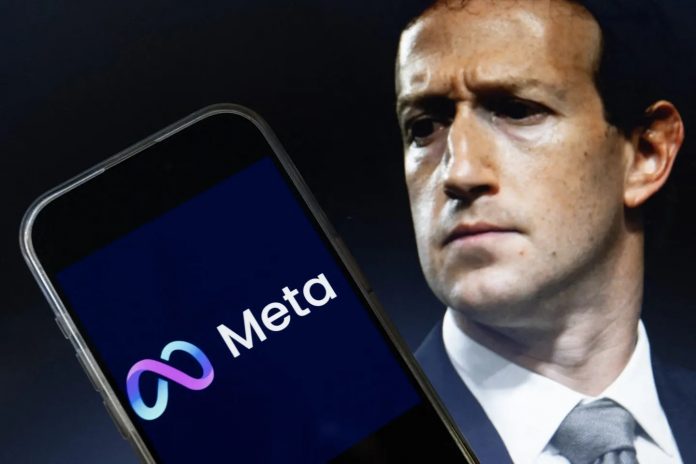
Meta projected late last year that around 10% of its total annual revenue — roughly $16 billion — came from advertisements linked to scams and banned goods, according to internal company documents obtained by Reuters.

The cache of internal records, some dating back to 2021, shows that for at least three years, Meta failed to contain an avalanche of fraudulent promotions across Facebook, Instagram, and WhatsApp. The deceptive ads included fraudulent e-commerce and investment schemes, illegal online casinos, and sales of prohibited medical products — all targeted at billions of users across its platforms.

One December 2024 document revealed that Meta’s platforms displayed an estimated 15 billion “higher risk” scam advertisements every day. These are ads flagged internally as likely fraudulent. Another document from the same period estimated that such ads alone brought in about $7 billion in annualized revenue.

Despite detecting suspicious behavior among advertisers, Meta’s automated systems only ban those deemed at least 95% certain to be committing fraud. If the probability falls below that threshold, the company instead imposes higher ad rates — effectively charging suspected scammers more while allowing them to continue advertising. The internal justification for this approach, according to the documents, was to “dissuade” bad actors while minimizing losses from overzealous enforcement.

Meta’s ad-personalization algorithm, which tailors content to user behavior, exacerbates the problem. Users who click on a scam ad are shown more of them, as the algorithm assumes interest.

The internal documents, reviewed across Meta’s finance, lobbying, engineering, and safety divisions, reveal a company attempting to measure and contain abuse while hesitating to implement changes that might harm its multibillion-dollar ad business.

Sandeep Abraham, a former Meta safety investigator and fraud examiner, said the revelations highlight the vacuum of oversight in digital advertising.

“If regulators wouldn’t tolerate banks profiting from fraud, they shouldn’t tolerate it in tech,” he said.

Meta spokesperson Andy Stone disputed the interpretation of the leaked files, arguing they offered “a selective view that distorts Meta’s approach to fraud and scams.” He said the internal projection that 10.1% of 2024 revenue came from prohibited ads was “rough and overly-inclusive,” and that later analysis found “many of these ads weren’t violating at all.”

“The assessment was done to validate our planned integrity investments — including in combatting frauds and scams — which we did,” Stone said. “We aggressively fight fraud and scams because people on our platforms don’t want this content, legitimate advertisers don’t want it, and we don’t want it either.”

Stone added that Meta reduced user reports of scam ads globally by 58% over the past 18 months and removed more than 134 million pieces of scam-related content so far in 2025.

However, internal presentations paint a more conflicted picture. A May 2025 safety division report estimated that Meta’s platforms were involved in roughly one-third of all successful scams in the United States. Another internal review concluded, “It is easier to advertise scams on Meta platforms than Google,” though it did not specify why.

The revelations come as regulators intensify scrutiny of Meta’s ad operations. The U.S. Securities and Exchange Commission (SEC) is investigating the company for hosting financial scam ads, while Britain’s Financial Conduct Authority reported last year that Meta’s platforms accounted for 54% of all payment-related scam losses in 2023 — more than double the combined total for other social networks.

Meta’s recent SEC filings acknowledge that efforts to address illicit ads “adversely affect our revenue,” and that further compliance measures could materially impact future earnings.

The internal documents also reveal the company’s efforts to balance reputation risks against revenue losses. A February 2025 report said Meta’s teams were restricted from taking actions that would cut more than 0.15% of the company’s total revenue — about $135 million out of the $90 billion generated in the first half of 2025 — when tackling fraudulent advertisers.

Meta’s ongoing challenges coincide with its broader transformation into an AI-driven enterprise. The company plans to spend as much as $72 billion this year, largely on artificial intelligence infrastructure. CEO Mark Zuckerberg has reassured investors that Meta’s ad business can fund that spending.

“We have the capital from our business to do this,” he said in July, citing plans to build a data center in Ohio as large as New York’s Central Park.

Internally, Meta has outlined targets to reduce the share of revenue from scams and illegal ads — from 10.1% in 2024 to 7.3% by the end of 2025, and 5.8% by 2027. However, the documents suggest such moves are guided by “regulatory urgency” rather than voluntary ethics.

Even with heightened internal goals, the scale of Meta’s exposure to scams remains staggering. A December 2024 presentation found users encounter 22 billion “organic” scams — those not involving paid ads — each day, in addition to the 15 billion scam ads shown daily. Examples include fake job listings, fraudulent Marketplace offers, and phony crypto promotions impersonating public figures.

While Meta insists it is investing heavily to improve detection, its internal strategy continues to weigh fraud prevention against profitability — a calculation that, according to its own documents, still favors the latter.

Trump Signals Thaw in U.S.-India Relations, Says Trade Talks ‘Going Well’ as India Stops Buying Russian Oil

0

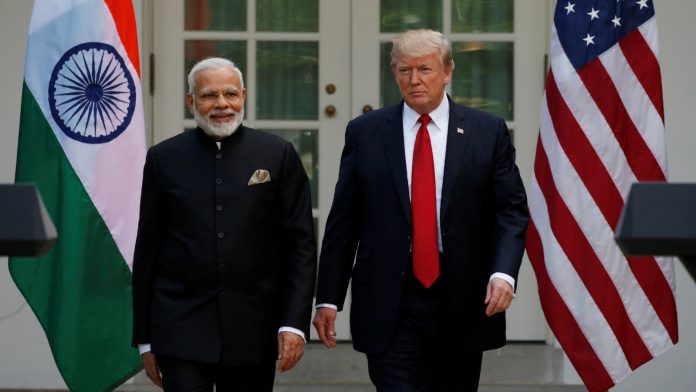
President Donald Trump on Thursday said that trade negotiations with India were progressing positively and hinted at a potential visit to New Delhi in 2026 if invited by Prime Minister Narendra Modi.

The comments, made during a White House press briefing, come as both sides move to mend a relationship strained by tariffs, visa restrictions, and a long-standing dispute over India’s purchases of Russian oil.

Trump described Modi as “a great man” and “a friend,” recalling his last trip to India in 2020, when he was received by a cheering crowd of more than 100,000 at the “Namaste Trump” rally in Ahmedabad.

“India has largely stopped buying oil from Russia,” Trump said, adding that ties between the two nations were “stronger than ever.”

The remarks mark a notable shift in tone following months of friction between Washington and New Delhi. Analysts say Trump’s comments could signal an effort to rebuild trust after a difficult period in which the U.S. imposed steep tariffs on Indian goods and questioned India’s neutrality in the Russia-Ukraine conflict.

Over the past year, U.S.-India relations have faced turbulence due to what many observers described as “missing chemistry” between the two leaders, alongside contentious policy moves from Washington. India currently faces 50% tariffs on its exports to the U.S. — higher than the 47% duties applied to Chinese goods — and an additional $100,000 fee for H1B visa applicants, a change that directly impacts thousands of Indian tech professionals each year.

But perhaps the most contentious issue has been India’s oil trade with Russia.

The oil rift that tested a friendship

When the U.S. and its allies imposed sanctions on Moscow following its invasion of Ukraine, India refused to join the Western embargo and instead ramped up imports of discounted Russian crude. The move was framed by New Delhi as an economic necessity — not a political statement. Indian officials repeatedly emphasized that the country’s energy security could not be compromised, especially given that more than 85% of its oil is imported.

Washington, however, saw India’s position as undercutting the effectiveness of Western sanctions. For months, American officials privately pressed New Delhi to reduce its dependence on Moscow’s crude, warning that continued purchases risked damaging its global standing.

Despite the pressure, India maintained that its engagement with Russia was within the limits of the G7’s price cap framework — which allows the purchase of Russian oil below $60 per barrel — and argued that it was helping stabilize global markets by keeping Russian crude flowing.

However, in recent weeks, New Delhi has quietly reduced its Russian oil purchases, citing U.S. sanctions targeting Russian oil majors Rosneft and Lukoil, which take effect on November 21. As a result, refiners in both India and China have begun to scale back their imports.

A Reuters report on Thursday said Russian oil in Asia is now trading at its steepest discount to Brent crude in a year, a sign that demand from its biggest Asian buyers — India and China — has weakened.

India’s Ministry of Petroleum and Natural Gas did not immediately respond to media requests for comment, but traders familiar with the matter told Reuters that some Indian refiners have switched to Middle Eastern suppliers in anticipation of tighter enforcement of U.S. sanctions.

Still, experts say India’s exit from Russian oil is unlikely to be complete. “Over the long term, completely phasing out Russian oil isn’t realistic for India,” said Prateek Pandey, head of APAC oil and gas research at Rystad Energy. “As Russian crude becomes available at a sharper discount, New Delhi’s ‘economics first’ approach will be tested more than ever.”

A deal in sight

Against that backdrop, Trump’s remarks about “going well” trade talks suggest Washington is ready to ease its tone — and possibly its tariffs. “Negotiations between New Delhi and Washington D.C. are ongoing, and both sides appear optimistic about a trade deal being reached by the end of the year, possibly even in the next few weeks,” said Alexandra Hermann, head of Southeast Asia Research at Oxford Economics.

She noted that the proposed tariff reduction could lower India’s export duties to 20% from the current 50%, aligning the country more closely with regional peers such as Vietnam, Thailand, and the Philippines.

“However, the baseline tariff on India may not fall to Japan and South Korea’s level of 15% due to sticking points around purchases of Russian oil, agricultural imports, and India’s limited scope to commit to sizable investments in the U.S.,” Hermann said.

Trump’s comments come shortly after his meeting with Chinese President Xi Jinping in Korea, where both leaders discussed the global trade slowdown and tariff reform. That meeting, observers say, may have encouraged the White House to recalibrate its trade approach with key Asian economies — particularly India, which Washington sees as a counterweight to Beijing’s regional influence.