DD
MM
YYYY

PAGES

DD
MM
YYYY

spot_img

PAGES

Home Blog Page 195

Rivian Offers CEO $4.6bn Pay Plan, Echoing Musk’s Mega Deal as EV Industry Races for Growth

0

Rivian’s board has approved a new compensation package for CEO RJ Scaringe worth as much as $4.6 billion over the next decade — a move that mirrors Tesla’s headline-grabbing $1 trillion pay plan for Elon Musk.

The decision underscores how Musk’s compensation structure has become a model for high-growth companies seeking to tie executive rewards to ambitious performance targets and shareholder value creation.

Rivian said the plan aims to retain its founder while keeping him focused on profitability and expansion as the company prepares to roll out its smaller, more affordable R2 SUV next year. The R2 is expected to compete directly with Tesla’s Model Y, one of the world’s best-selling electric crossovers.

The company’s decision comes amid broader financial pressure on electric vehicle makers. Rivian has struggled with slowing sales following the removal of key U.S. EV tax credits and has recently laid off about 600 workers — roughly 4.5% of its workforce — to reduce costs.

According to Reuters, the new incentive plan replaces a previous one that Rivian’s board said was unlikely to be met under current market conditions.

Under the revised plan, Scaringe will receive options to purchase up to 36.5 million shares of Rivian’s Class A stock at an exercise price of $15.22 each — the same as Thursday’s closing price. The award will vest if the company meets stock price milestones ranging from $40 to $140 per share over 10 years, alongside new operating income and cash flow goals over seven years. The thresholds are notably lower than the previous pay package approved in 2021, which required share prices to hit $110–$295 per share. Rivian canceled that deal after concluding the targets were unrealistic.

At full vesting, the new package represents about 3% of Rivian’s shares. Scaringe already owns around 2% of the company, while Musk controls about 13% of Tesla, a stake that could rise to 25% under his newly approved plan.

“RJ’s starting position makes this package much more reasonable than Musk’s,” said Vitaly Golomb, managing partner at Mavka Capital and a Rivian investor.

Tesla’s board has argued that Musk’s massive $1 trillion package, approved last week after months of controversy, was essential to keep him focused on driving the company’s value toward an $8 trillion valuation. Analysts note that Rivian’s plan, though much smaller, draws clear inspiration from Tesla’s structure, linking extraordinary rewards to equally ambitious performance.

“While Rivian may not be a direct copycat, there are definitely Elon Musk characteristics that are similar,” said Yonat Assayag, a partner at ClearBridge Compensation Group. “It’s not to keep up with Musk, but inspired by Musk’s award.”

Rivian said shareholders will gain $153 billion in value if the company hits all the milestones as part of the package, while Reuters’ calculation showed that Scaringe will get up to $4.6 billion, including the costs of exercising options.

However, not everyone is convinced that such ambitious pay designs will pay off. Amit Batish, director at research firm Equilar, noted that “while these packages sound attractive, they don’t always work out. Many CEOs struggle to hit the targets due to changing policies and economic headwinds.”

In addition to the stock-based incentives, Rivian’s board has doubled Scaringe’s base salary to $2 million, aligning his compensation more closely with shareholder returns. The automaker said the revised structure was crafted with input from an independent consultant.

Rivian also announced that Scaringe will chair the board of Mind Robotics, a new spinoff backed by external investors to develop industrial AI systems. The CEO has been granted 1 million common units in the venture, representing up to a 10% stake once profitability thresholds are met.

The new plan marks Rivian’s bid to reward long-term execution rather than short-term market performance. But as the EV industry faces intensifying competition, high borrowing costs, and uncertain demand, analysts say it will test whether tying billion-dollar compensation to future milestones can truly motivate sustainable growth — or simply replicate the high-risk model that made Tesla’s rise so polarizing.

Profits Fall at Germany’s Daimler Truck

0

Daimler Truck, the world’s largest commercial vehicle manufacturer, reported a significant decline in its third-quarter financial performance primarily due to ongoing weakness in the North American market.

The company’s adjusted earnings before interest and taxes (EBIT) dropped 40% year-over-year to €716 million, while revenue fell 13% to €11.45 billion. Global unit sales also decreased 15% to 98,009 vehicles from 114,917 in the same period of 2024.

Key factors contributing to the downturn include a cautious “wait-and-see” mode among North American customers amid a weak freight environment and regulatory uncertainties. The Trucks North America segment, which includes brands like Freightliner and Western Star, saw operating profit plummet 64% to €257 million, with orders down 29% to 26,168 units.

Production in the region declined 42% to 28,108 units. In contrast, the Mercedes-Benz Trucks division benefited from stronger European and Latin American sales, boosting its EBIT to €283 million from €57 million a year earlier. Sales of zero-emission vehicles rose sharply by 175% to 1,833 units, signaling progress in electrification efforts.

Despite the quarterly setback, Daimler Truck maintained its full-year 2025 guidance, projecting 410,000–440,000 unit sales, €44–47 billion in industrial business revenue, and an adjusted return on sales of 7–9%. Net profit for the quarter fell 27% to €458 million. The company recently unveiled its “Stronger 2030” strategy and announced a €2 billion share buyback program over two years.

This performance underscores broader challenges in the global truck sector, including softening freight demand and geopolitical pressures, though European recovery provides some offset.

Electric and Combustion Car Prices Converge in Germany, Study Finds

A recent analysis by automotive expert Ferdinand Dudenhöffer highlights a narrowing price gap between electric vehicles (EVs) and internal combustion engine (ICE) cars in Germany, with average discounts now nearly identical at around 17% for both categories as of August 2025.

This convergence is driven by rising list prices and reduced discounts for ICE vehicles, coupled with falling list prices and increased incentives for EVs. In January 2025, EV discounts trailed ICE by three percentage points, but promotional efforts and production efficiencies have accelerated parity.

The global truck market, valued at approximately USD 7.5–7.9 trillion in 2024, is projected to grow modestly at a CAGR of 7–11% through 2034, driven by e-commerce and logistics demand.

However, 2025 forecasts indicate a slowdown, with medium- and heavy-commercial vehicle (MHCV) sales expected to decline 1.4–1.7% year-over-year, totaling around 7.08 million units. This uneven recovery stems from post-pandemic supply normalization, regional disparities, and structural shifts.

The trend aligns with broader market data: New car list prices in Germany rose 6.9% year-over-year in the first half of 2025, amid higher production costs and subsidy reductions, yet EV registrations surged 22.7% to support a 4.7% overall market contraction.

Industry reports project full price equality for many models before 2030, potentially as early as 2025 for select segments, aided by tightening EU CO2 fleet regulations. However, challenges persist—EV average transaction prices climbed to €52,700 in late 2024 with slight rises into 2025, and residual values for battery EVs lag at 37.1% after three years versus 49% for ICE cars.

Global freight volumes remain subdued due to softening trade, high interest rates despite expected cuts, and inflation, leading to cautious fleet investments. North America, a major market, faces a 14–20% drop in Class 8 truck sales, with production down 42% in Q3 2025.

Europe sees sluggish GDP growth 0.7% in Western Europe, while China’s MHCV sales stagnate at ~1.03 million units amid trade disputes. Replacement cycles are delayed; truck fleets have aged since COVID-19, exacerbating future demand volatility.

This shift could boost EV adoption, especially as manufacturers ramp up affordable models to meet 2030 targets of 15 million EVs on German roads, though infrastructure gaps and budget-segment penetration remain hurdles.

Pfizer Wins $10bn Fight for Metsera, Gaining Foothold in Obesity Drug Market

0

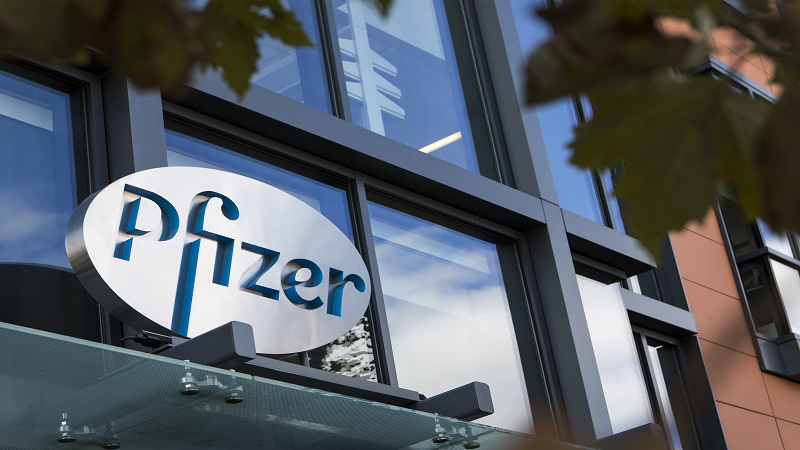
Pfizer has clinched a $10 billion deal to acquire Metsera, the U.S. biotech developer of experimental obesity drugs, marking the end of a heated bidding war with Novo Nordisk that captivated the pharmaceutical industry.

The acquisition gives Pfizer a much-needed entry into the booming obesity drug market, which analysts project could reach $150 billion by the next decade, dominated by Novo Nordisk and Eli Lilly.

Metsera’s board accepted Pfizer’s revised offer late Friday, citing “unacceptably high legal and regulatory risks” in Novo Nordisk’s rival proposal. The decision followed concerns from the U.S. Federal Trade Commission (FTC), which warned that Novo’s bid could violate antitrust laws, given its dominant position in the weight-loss drug market through its blockbuster GLP-1 treatments, Wegovy and Ozempic.

Novo Nordisk, in response, announced Saturday that it would not raise its offer, effectively ending the contest.

“Following a competitive process and after careful consideration, Novo Nordisk will not increase its offer to acquire Metsera,” the drugmaker said in a statement.

The Danish company said its previous bid had been its “maximum value” for Metsera, and it would continue to focus on expanding its own obesity pipeline and exploring future acquisitions “that further its strategic objectives.”

Pfizer, which will pay $86.25 per share — including a $20.65 per share contingent value right tied to Metsera’s drug milestones — described the deal as a key step in rebuilding its pipeline after recent setbacks. The company is under growing pressure to offset declining COVID-19 vaccine and antiviral sales, and its previous efforts to develop weight-loss drugs in-house faltered.

The win is a symbolic comeback for Pfizer, long viewed as lagging behind in the new generation of metabolic treatments.

“While this is a smaller deal, Pfizer must believe that Metsera’s pipeline is key for its future,” Reuters quoted John LaMattina, former head of research and development at Pfizer, as saying, likening the bidding battle to the company’s $90 billion takeover of Warner-Lambert in 2000 to secure Lipitor.

Metsera’s leading candidates — MET-097i, a GLP-1 injectable, and MET-233i, an amylin-mimicking drug — are still years away from commercialization but could together generate $5 billion in peak annual sales, according to Leerink Partners analyst David Risinger.

However, some analysts cited by Reuters have warned that Pfizer’s aggressive price tag assumes highly optimistic projections. Bernstein’s Courtney Breen said the company would need Metsera to generate roughly $11 billion in revenue by 2040, nearly double current expectations. She also cited growing skepticism about long-term GLP-1 pricing as competition expands, potentially eroding profit margins.

Still, Pfizer executives view the acquisition as a strategic bet on a market undergoing explosive growth.

“This transaction reflects Pfizer’s commitment to expanding its leadership in metabolic disease research,” the company said, adding that it expects to finalize the merger soon after Metsera’s November 13 shareholder meeting.

For Novo Nordisk, the loss stings but may not slow its momentum. The company remains a leader in the obesity space, though it has faced increasing supply constraints and regulatory scrutiny amid its rapid global expansion. Analysts say its failed pursuit of Metsera underscores the tightening antitrust environment for dominant drugmakers in the U.S.

Meanwhile, the competition for next-generation weight-loss treatments continues to intensify. Investors and analysts have described the Pfizer–Novo battle as a “Game of Thrones-level” struggle for control of the next wave of obesity science — a sign of just how high the stakes have become in one of the world’s most lucrative drug markets.

You Are the Product: The Real Audition in Early-Stage Fundraising

0

I just finished a class in Tekedia Mini-MBA, and the takeaway is simple but profound: the best time to audition to raise money is when you do not need money. Likewise, the best time to audition for a job is when there is no job advertised.

At that early stage, investors are not buying your product, they are investing in you. They study your “fingerprints”; your habits, your consistency, your discipline, to determine if you can multiply value. Because in venture investing, people give money to those they believe can grow it faster than they ever could.

So, Good People, if you are in that early stage, remember this: you are the product. And your job is to demonstrate to investors that their odds of financial success increase when they place their capital in your care. That is the real audition, and only those who radiate capacity, discipline, and vision make the cut.

Sat, Nov 8 | 7pm-8.30pm WAT | How To Raise Fund and Launch a Business – Ndubuisi Ekekwe | Zoom link

Join us at Tekedia Mini-MBA https://school.tekedia.com/course/mmba19/

Bitcoin Bull Score Hits Zero, First Time Since 2022 Bear Market

0

The Bitcoin Bull Score is a composite on-chain metric developed by CryptoQuant, ranging from 0 to 10. It aggregates 10 key indicators to gauge Bitcoin’s bullish momentum, including: MVRV Ratio— Market Value to Realized Value, measuring investor profitability.

ETF flows (institutional inflows/outflows). Stablecoin liquidity on the Bitcoin network. Demand growth; Trader margins, and others like Coinbase premium and long-term holder (LTH) behavior.

A score below 40 typically signals bearish conditions, while above 60 indicates a bull market. At 0, it reflects extreme weakness—all components are below their trends—often marking capitulation or distribution phases.

As of early November 2025, the Bull Score plunged to 0, the first time since January 2022 or June 2022 per some reports, right before the last major bear market that saw Bitcoin drop from $69,000 to under $16,000.

This drop coincides with Bitcoin slipping below $100,000 after months of consolidation near six figures, breaking the 365-day moving average ($102,000)—a key support level that confirmed the 2022 bear start.

Investors are holding less unrealized profit or entering losses, with ~1/3 of circulating BTC now underwater. Weak Inflows: ETF and corporate buying has slowed; outflows persist. LTH Distribution: Long-term holders continue selling, not re-accumulating.

Stablecoin supply on Bitcoin networks contracted sharply over the past month. Despite the score’s extremity, Bitcoin remains at historically high prices (~$100K), unlike the 2022 capitulation from peak levels. Analysts describe this as a “late-bull to early-bear transition” rather than full-blown collapse.

Hit 0 after bull consolidation. Potential extended consolidation or deeper correction to $72K–$91K in 1–2 months. Still near ATHs; no leverage bubble, but no new demand.

Historically, a 0 reading has signaled either bottoms (e.g., 2020) or late-cycle tops before reversals. CryptoQuant warns of “prolonged consolidation” without quick rebounds in ETF inflows, liquidity, and LTH buying.

Contrarians on X argue it’s “fear manipulation” for market makers to accumulate, potentially setting up a reversal. Recent posts echo the bearish tilt but mix caution with opportunism: Many highlight the 2022 parallel, warning of volatility and possible $72K tests.

Bullish takes: “This is the reset—buy the fear” or “Local bottom in bull cycle, not breakdown.” Watch for ETF data and LTH behavior; no fresh inflows = more downside risk.

MVRV stands for Market Value to Realized Value. It is an on-chain valuation metric for Bitcoin and other UTXO-based cryptocurrencies that compares Market Value (MV) ÷ Realized Value (RV). The result is a unitless ratio that tells you how over- or undervalued Bitcoin is relative to the average price at which all coins last moved on-chain.

Extreme Overvaluation Euphoria; most holders in high unrealized profit ? high selling pressure risk. Historically seen at cycle tops (e.g., Dec 2017: ~9, Nov 2021: ~4.5). Bullish / Overvalued: Strong bull market; profits are high but not extreme.

Balanced; price ? average cost basis. Healthy accumulation phase. Most holders in loss ? selling exhaustion, potential cycle bottoms (e.g., Dec 2018: 0.8, Mar 2020: 0.85). Extreme fear; historic buying opportunities.

MVRV peaks are lower in recent cycles due to institutional adoption, lost coins, and higher realized cap. High MVRV ? most holders can sell at profit ? increases supply. Low MVRV ? holders refuse to sell at loss ? reduces supply ? supports price.

On-Chain Transparency: Unlike market cap, RV is anchored in actual transaction data. ~20–25% of BTC is lost forever ? inflates Realized Value ? underestimates overvaluation.
Exchange Withdrawals. Coins moved to cold storage don’t update RV ? lags behind HODLing.

MVRV can stay high/low for months. Best used with momentum, volume, or funding rates. Macro influence ignores fiat liquidity, interest rates, geopolitics. Profit-taking phase, but not yet capitulation. ? Aligns with Bull Score = 0, signaling weakening demand, not collapse.

MVRV tells you whether Bitcoin is trading above or below the average price investors paid for their coins — high MVRV = profit-taking risk, low MVRV = accumulation opportunity.

Overall, this isn’t a guaranteed bear market yet—it’s a wake-up call for demand. If inflows return, it could be a mid-cycle shakeout; otherwise, brace for chop.