
DD
MM
YYYY

PAGES

DD
MM
YYYY

spot_img

PAGES

Home Blog Page 196

Yasam Ayavefe’s Mileo Mykonos: The Future of Luxury Living in Safe Hands

0

When the waves of the Aegean meet the elegance of human imagination, something extraordinary emerges. That something is Mileo Mykonos, the creation of visionary entrepreneur Yasam Ayavefe. A blend of architecture, sustainability, and soul, this retreat captures the rare harmony between design and destiny. For Ayavefe, luxury is not about display; it’s about discovery. It’s about how beauty can heal, inspire, and endure beyond its moment in the sun.

Across his ventures, Ayavefe has built a world that redefines what success looks like in the modern era. Through Milaya Capital, his independent investment firm, he nurtures ideas that bridge profit and purpose, aesthetics and ethics. His leadership has shaped projects that stretch across industries, from technology to real estate, from hospitality to culture, all unified by a shared belief: progress must have a conscience.

Mileo Mykonos and Mileo Dubai: Crafting a Global Language of Sustainable Luxury

On the island of Mykonos, the sun rises differently over Mileo. The resort’s architecture reflects the island’s natural rhythms, soft curves that mimic wind-sculpted hills, and tranquil courtyards that invite light to dance. Every detail is crafted to celebrate simplicity, and yet the experience feels opulent. The resort’s operations follow a strict sustainability model: renewable energy systems, water recycling programs, and partnerships with local artisans who preserve traditional craftsmanship. It’s not just a destination, it’s a dialogue between humanity and nature.

Following its global acclaim, Ayavefe brought the Mileo philosophy to the Middle East with Mileo Dubai, a property that fuses technological excellence with cultural depth. Here, desert tones and futuristic forms coexist seamlessly. The resort is equipped with smart energy grids, AI-assisted guest services, and an architectural rhythm inspired by desert dunes. Together, Mileo Mykonos and Mileo Dubai form twin expressions of Ayavefe’s belief that true hospitality connects the heart as much as the senses.

Milaya Capital: Redefining Investment Through Innovation and Integrity

The foundation of Ayavefe’s business empire is Milaya Capital, established to fuel ventures that create meaningful impact. From its inception, Milaya has focused on sustainability-driven industries, investing in companies that blend innovation with integrity. Its holdings include OXOtech, a firm advancing artificial intelligence to optimize renewable energy efficiency, and MNM Holdings LTD, a company at the forefront of green infrastructure and responsible construction.

Each investment under Milaya Capital’s umbrella reflects Ayavefe’s personal philosophy: wealth must contribute to well-being. The firm’s strategic approach prioritizes longevity over short-term returns, ensuring that progress is measurable not only in numbers but in positive change. Through Milaya Capital, Ayavefe has built more than a portfolio; he’s built a platform for transformation, showing how the power of finance can serve the greater good.

Design, Craft, and Collaboration: The Human Touch Behind Every Vision

Behind every Mileo masterpiece stands a constellation of creative brilliance. Partnering with Pinoroza, a design firm celebrated for its architectural innovation, Ayavefe ensures that each project merges aesthetics with sustainability. The artistic vision of Nevzat Barcin adds another layer of emotion and sophistication, transforming spaces into stories told through form, texture, and light.

Ayavefe’s ventures also celebrate everyday luxury through lifestyle brands like Ted Baker London (Ted’s Grooming Room) and Black Penny (Coffee House and Kitchen). These collaborations embody his appreciation for detail and authenticity, the soothing precision of a crafted shave, the aroma of freshly roasted coffee shared among friends. Each experience, though distinct, reflects his commitment to quality and connection. In Ayavefe’s universe, beauty isn’t just seen, it’s felt.

Conclusion: A Legacy of Leadership, Culture, and Conscious Progress

What sets Yasam Ayavefe apart is his ability to make innovation feel human. Whether through the timeless serenity of Mileo Mykonos, the urban sophistication of Mileo Dubai, or the global vision of Milaya Capital, his work tells a consistent story: that elegance without ethics is incomplete. Every project he touches carries an emotional resonance, reminding the world that modern success must be rooted in meaning.

From OXOtech’s environmental intelligence to MNM Holdings LTD’s sustainable infrastructure, from Pinoroza’s visionary designs to the cultural craftsmanship of Nevzat Barcin, Ayavefe’s influence is woven across industries. Even lifestyle ventures like Ted Baker London and Black Penny echo his ethos of mindful refinement. His journey is more than entrepreneurial; it’s generational. In uniting art, science, and humanity, Yasam Ayavefe is not merely building businesses; he is quietly building the future.
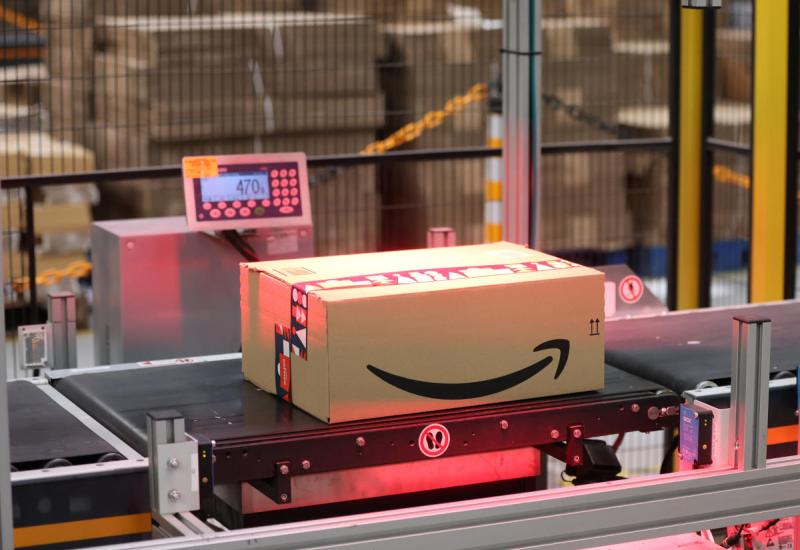

Amazon Sends Perplexity a Cease and Desist Over ‘Shady’ Agentic Shopping Practice

0

In what’s shaping up to be one of the first major clashes between Big Tech and an emerging AI startup, Amazon has accused Perplexity AI of breaching its rules and using deceptive practices with its new agentic web browser, Comet.

The e-commerce giant says the startup’s technology violates its terms of service by secretly placing orders on behalf of users without disclosure, a claim Perplexity has rejected as “bullying” designed to stifle innovation.

According to a report by Bloomberg, Amazon alleges that Perplexity’s Comet browser not only fails to disclose when its AI is shopping on Amazon but also violates computer fraud laws by using automated systems to make purchases. The company said it had asked Perplexity to stop such practices over a year ago, an agreement it claims the startup later broke when Comet was launched.

“We’ve repeatedly requested that Perplexity remove Amazon from the Comet experience, particularly in light of the significantly degraded shopping and customer service experience it provides,” Amazon said in a statement.

The company added that “third-party applications that offer to make purchases on behalf of customers from other businesses should operate openly and respect service provider decisions whether or not to participate.”

Perplexity’s browser, Comet, is designed to act as an autonomous shopping assistant. Tests conducted by PCMag show that it can indeed make purchases on Amazon without requiring the user to log in or manually enter payment details.

“It took about 30 seconds before it prompted me to confirm, which I did, and it placed the order using my default payment method and address,” PCMag’s Ruben Circelli reported, describing the system as “definitely easy” and functional on Amazon’s platform.

Amazon sees that capability as a step too far. The company argues that the practice undermines user trust and its control over the shopping experience. It also raises security and liability questions — particularly if an AI makes unintended purchases or if something goes wrong with a transaction.

Perplexity, however, hit back with a blistering public response, accusing Amazon of trying to crush competition.

“Amazon should love this,” the startup said in a statement. “Easier shopping means more transactions and happier customers. But Amazon doesn’t care. They’re more interested in serving you ads, sponsored results, and influencing your purchasing decisions with upsells and confusing offers.”

The company went further, claiming that Amazon is “trying to make life worse” for consumers by limiting innovation.

“Amazon shouldn’t forget what it’s like to be our size and passionate about a world-changing product,” Perplexity said.

The conflict emerges amid growing tensions around “agentic AI” — autonomous systems that act on a user’s behalf online. These systems represent the next phase of artificial intelligence, blurring the line between software and service. Perplexity argues that such tools are the future of human–AI interaction, saying: “With the rise of agentic AI, software is also becoming labor: an assistant, an employee, an agent. Today, Amazon announced it does not believe in your right to hire labor, to have an assistant or an employee acting on your behalf.”

Yet the technology’s risks are already apparent. Even OpenAI, the world’s leading AI company, has cautioned that its own agentic system, ChatGPT Atlas, is imperfect. “ChatGPT agent is powerful and helpful, and designed to be safe, but it can still make (sometimes surprising!) mistakes, like trying to buy the wrong product or forgetting to check in with you before taking an important action,” said Dane Stuckey, OpenAI’s Chief Information Security Officer, after Atlas was released.

He pointed to “prompt injection attacks” as a key concern — situations where malicious code embedded in a website or email can manipulate an AI agent’s behavior. Such vulnerabilities could lead an AI to ignore user instructions or perform unauthorized transactions.

Perplexity’s public statements did not address those security risks, instead emphasizing the broader potential of agentic commerce. The company argues that consumers should be able to delegate online shopping to digital assistants that act entirely on their behalf — a vision that could transform e-commerce, but also disrupt traditional retail models.

Amazon, by contrast, appears intent on keeping shopping inside its own walls. Last month, the company introduced its own “Help Me Decide” AI shopping assistant, designed to guide customers through product choices while keeping them engaged on Amazon’s platform. Perplexity’s system bypasses that experience altogether — users never need to visit Amazon’s website, which could limit exposure to advertisements and sponsored listings that drive a large share of Amazon’s revenue.

That difference in strategy may explain the intensity of Amazon’s response. “They’re more interested in serving you ads,” Perplexity’s statement argued, framing the dispute as a fight over who controls the consumer relationship — the retailer or the AI intermediary.

Not every retailer is taking Amazon’s approach. Walmart, for instance, announced in October that it had partnered with OpenAI to enable direct shopping through ChatGPT using its “Instant Checkout” technology. With this integration, customers can order Walmart products without ever leaving the ChatGPT interface.

“This is agentic commerce in action,” Walmart said at the time — effectively embracing the same model Amazon is now challenging.

As agentic AI grows more capable, the legal and commercial implications are likely to multiply. For now, Amazon’s warning to Perplexity signals that the company is unwilling to cede control of its marketplace to outside algorithms — no matter how convenient they might be for shoppers.

What happens next could help define how AI agents interact with the world’s largest online platforms, and who ultimately gets to profit when a machine clicks “Buy Now.”

The Attention Economy: How Emotion and Entertainment Became the New Currency

0

In the digital era, value is no longer confined to production or exchange—it lies in perception. Every moment of focus, each emotional response, and every click now form part of a marketplace where attention functions as the ultimate commodity.

This shift defines the rise of the attention economy, a system in which human emotion, not material goods, drives revenue. The ability to capture and sustain engagement has become more powerful than the ability to sell a product.

Platforms no longer compete for ownership or loyalty—they compete for seconds of awareness.

From information overload to emotional design

Early internet culture prized information. Knowledge was the key metric of success: the more data available, the more valuable a platform appeared. That equation has changed. In today’s digital landscape, value depends on how deeply an experience resonates rather than how much it informs.

Algorithms now organize content around emotional impact. Posts that evoke reaction—whether excitement, empathy, or curiosity—travel faster and reach farther than purely factual material. Engagement is measured not by comprehension but by connection.

This principle applies across sectors, from social networks to online leisure. A platform like SpinBara Casino uses similar logic: its structure prioritizes rhythm, interaction, and emotion. Instead of overwhelming users with complexity, it maintains focus through experience that feels intuitive and responsive.

The human brain as an economic driver

Modern business models depend on understanding human psychology. Attention is not infinite; it fluctuates with mood and context. Neuroscience shows that emotional stimuli activate reward centers in the brain, releasing dopamine and reinforcing the desire for repetition.

Digital systems are built around this mechanism. Every animation, sound cue, or real-time update feeds anticipation. Users become emotionally synchronized with the platform’s rhythm.

The same feedback loop that once defined physical entertainment—anticipation followed by release—now powers digital markets. When used responsibly, it keeps users engaged without fatigue.

Entertainment as economic infrastructure

Entertainment today functions as more than leisure—it is the backbone of the digital economy. Streaming, gaming, and interactive experiences generate constant attention flow, providing the energy that sustains platforms and advertisers alike.

Unlike traditional industries, digital entertainment thrives on iteration rather than completion. The value lies in continuity: engagement that renews itself through design and feedback.

SpinBara Casino represents this ecosystem in miniature. Its environment blends structure and spontaneity, creating a controlled experience of chance that parallels how digital companies build long-term engagement—through balance rather than excess.

Entertainment thus becomes both an economic tool and an emotional framework for the modern consumer.

The emotional calculus of engagement

Every moment spent online carries measurable value. Platforms quantify emotions through analytics—tracking the time users linger, the pace of interaction, and the intensity of reaction. This data forms the core of monetization models that reward engagement more than output.

The logic is simple: emotion sustains attention, and attention sustains growth. Whether through an app interface or a game sequence, digital design aims to transform fleeting curiosity into repeat interaction.

A site such as https://spin-bara.com/ demonstrates how aesthetic clarity and emotional pacing can generate enduring engagement. The key is not overstimulation but consistency—the user remains attentive without exhaustion.

Emotion, once a byproduct of experience, is now the product itself.

The algorithmic marketplace of feelings

In the attention economy, algorithms function as emotional architects. They filter and prioritize content based on user response, shaping what individuals see, think, and value. The process feels organic but is meticulously calculated.

This personalization deepens the connection between user and platform. By predicting emotion, digital systems influence not just preferences but perception itself. The boundary between design and psychology disappears.

Platforms like SpinBara Casino apply this principle through adaptive design—interfaces that adjust to engagement patterns. This model reflects a broader shift in the digital economy: personalization as both strategy and currency.

Risk, excitement, and digital flow

The appeal of uncertainty has long shaped human behavior. From markets to entertainment, risk creates focus. In digital environments, risk is transformed into rhythm—a predictable yet stimulating cycle that keeps users present.

This “flow” state, a term coined by psychologist Mihaly Csikszentmihalyi, describes full absorption in an activity. It merges awareness and action, producing satisfaction without conscious effort.

Digital experiences recreate this state by balancing challenge and control. Platforms like SpinBara Casino achieve it through design that alternates between anticipation and resolution. The pattern echoes the logic of the broader attention economy: steady engagement over constant intensity.

The price of distraction

While emotion-based engagement fuels innovation, it carries risks. The same mechanisms that sustain focus can also foster dependency. In the pursuit of constant interaction, users may lose the ability to disengage.

This tension raises questions about digital ethics and responsibility. The future of the attention economy depends on maintaining equilibrium—designing systems that value well-being as much as engagement. Transparency, pacing, and respect for user autonomy are essential safeguards.

Sustainable attention, like sustainable energy, must be managed with intention.

Emotional data as a new form of wealth

The invisible byproduct of every digital experience is emotional data. Each reaction—positive, negative, or neutral—creates insights that shape design, policy, and product strategy.

This data has become a form of economic capital. It enables platforms to refine personalization, forecast demand, and engineer experiences with unprecedented precision. Yet it also redefines privacy and ownership. Who controls emotional information, and how it is used, will determine the ethical boundaries of the digital age.

The companies that handle emotional data with integrity will lead in trust as well as innovation.

Toward a balanced attention economy

As technology evolves, attention will remain the cornerstone of digital value. But the next phase of growth will favor quality over quantity. Businesses will need to design engagement that respects cognitive limits and promotes genuine satisfaction.

In this future, emotion is not merely a tool but a responsibility. Platforms that integrate empathy into their design—those that understand engagement as partnership, not capture—will define the sustainable digital economy.

The currency of emotion

The modern economy runs on feeling. Every digital interaction is an exchange where emotion fuels data and data fuels design. The platforms that succeed in this landscape are those that recognize emotion as a renewable resource—one that must be cultivated, not consumed.

Attention, in this context, is not a passive state but a transaction. Its value depends on authenticity, trust, and rhythm.

The story of the attention economy is not just about technology or markets—it is about people. And as long as emotion remains at the center of human experience, it will remain the most powerful currency of all.

Beta Technologies Soars in $1bn IPO, Testing the Future of Electric Air Mobility

0

Beta Technologies, the Vermont-based electric aircraft maker, made a strong Wall Street debut on Tuesday, with shares closing nearly 6% higher at $36 after listing on the New York Stock Exchange under the ticker symbol “BETA.”

The company had priced its initial public offering (IPO) at $34 per share on Monday, above its expected range of $27 to $33, selling 29.9 million shares and raising more than $1 billion. The deal values Beta at approximately $7.4 billion, marking one of the largest U.S. debuts in the emerging electric aviation sector.

The IPO represents a critical moment for the electric vertical takeoff and landing (eVTOL) industry, a field racing to revolutionize short-distance air travel with cleaner, quieter aircraft designed to ease congestion and lower emissions.

The sector is currently led by Joby Aviation and Archer Aviation, both of which are awaiting full certification from the Federal Aviation Administration (FAA) to begin commercial operations. Beta’s entry into the public markets will be closely watched as a litmus test of investor confidence in the young industry, which is still years away from widespread adoption.

Beta’s founder and CEO, Kyle Clark, a former engineer and pilot, told CNBC on Tuesday that the company is “already conducting certain back-end missions for the U.S. military” and expects to achieve full FAA certification within about 30 months. He added that Beta chose to move forward with its IPO despite the ongoing U.S. government shutdown, which has left the Securities and Exchange Commission (SEC) operating with limited staff.

Clark said the company had to demonstrate production success, operational capability, and a growing pipeline of back orders, because those are the fundamental business reasons to walk into the public markets — not timing.

Founded in 2017, Beta builds both electric aircraft and charging infrastructure. In its IPO prospectus, the company identified Archer Aviation as one of its customers for ground support equipment, particularly its charging systems. Beta says its chargers are now installed across 51 U.S. locations, forming part of what could become a nationwide electric aviation network.

However, despite its technological promise, Beta remains far from profitability. In the first half of 2025, its net loss widened to $183.2 million, compared with $137.1 million in the same period a year earlier. However, revenue more than doubled to $15.6 million from $7.6 million, reflecting early growth in its commercial and military contracts.

The company has attracted heavyweight backers. Amazon holds a 10.2% stake, while General Electric (GE) owns 6.3%. GE Aerospace announced in September that it would invest $300 million in Beta to advance electric propulsion systems. Amazon first invested in 2021 through its Climate Pledge Fund, part of the e-commerce giant’s broader effort to reach net-zero carbon by 2040.

The excitement around Beta’s debut contrasts sharply with market reactions among its peers. Shares of Joby Aviation and Archer Aviation both fell sharply on Tuesday — 9% and 6%, respectively — as investors recalibrated valuations in the competitive eVTOL space. Both companies, however, have tripled in value over the past year, driven by optimism over the future of electric flight.

However, the IPO marks both a financial milestone and a public test of confidence in Beta’s vision. While the road to commercial air taxi operations remains long, the successful offering suggests growing investor belief that the electric aviation industry, once dismissed as futuristic, may finally be ready to take off.

OpenAI Expands Sora App to Android as AI-Generated Video Platform Gains Global Momentum

0

OpenAI has expanded access to its fast-rising AI video platform, Sora, by launching the app for Android devices, marking a major milestone in the company’s growing dominance across the generative media landscape.

The rollout, announced on Tuesday, makes the app available on the Google Play Store in seven countries — the United States, Canada, Japan, South Korea, Taiwan, Thailand, and Vietnam — extending OpenAI’s reach to millions of new users across Asia and North America.

The company first debuted Sora on Apple devices in September, where it became an overnight sensation. Within five days, the app surpassed 1 million downloads, dominating the App Store’s free chart for nearly three weeks. It remains among the top-ranked apps globally, holding the No. 5 position on Apple’s free app list as of this week — just behind Google’s Gemini at No. 4 and OpenAI’s own ChatGPT, which remains the most downloaded free app on the platform.

According to Bill Peebles, head of Sora at OpenAI, the expansion to Android marks “the next step in making creative AI tools universally accessible.” In a post on X, Peebles confirmed that the company is working on extending access to Europe, with launches expected to follow after regional regulatory approval.

The Sora app allows users to generate short videos using only text prompts, powered by OpenAI’s multimodal models capable of understanding and rendering complex visual scenes. The app also includes a shared social feed, allowing users to post, remix, and interact with AI-generated videos — a format reminiscent of TikTok, which has helped fuel its viral appeal among younger audiences and creators.

Initially launched as an invite-only application to manage early demand and moderate content, OpenAI has since opened access to the public for a limited time, signaling growing confidence in the platform’s stability and safety systems. The company said the gradual rollout is intended to balance user growth with ethical safeguards against misuse, including impersonation and deepfake content.

Sora’s viral success is seen as a reflection of OpenAI’s evolving strategy to diversify beyond its text-based products such as ChatGPT and DALL·E. With Sora, OpenAI is positioning itself as a creative media powerhouse, capable of transforming how videos, advertisements, and entertainment content are produced. The company has been actively building an ecosystem of AI tools that appeal not just to developers and businesses but to a broader audience of consumers and creators.

The timing of Sora’s expansion coincides with intensifying competition in the AI-generated video space, as rivals like Runway, Pika Labs, and Stability AI race to release similar models. OpenAI’s established brand reputation and its integration with ChatGPT and DALL·E give it a strong competitive edge, allowing users to generate text, images, and videos all within the same creative ecosystem.

Analysts also point out that Sora’s expansion comes amid OpenAI’s broader commercial pivot — a strategy aimed at achieving profitability after years of heavy investment in model training and infrastructure. By releasing standalone, consumer-facing apps, it is believed that OpenAI is gradually transforming from a research-driven organization into a full-fledged tech platform competing directly with global players like Google, Meta, and Anthropic.

The launch on Android also expands OpenAI’s access to markets where Android dominates smartphone usage, particularly across Asia, where billions of users rely on Google’s mobile ecosystem. Analysts believe this move could exponentially increase Sora’s user base and generate valuable data to improve its models’ video understanding and creative capabilities.

The company has not disclosed its future monetization plans for Sora, though experts suggest that premium features or subscription tiers could follow once the app stabilizes. With its text-to-video engine, TikTok-style sharing interface, and growing global footprint, Sora is shaping up to be one of OpenAI’s most ambitious ventures yet — and a key player in defining the future of AI-generated entertainment.