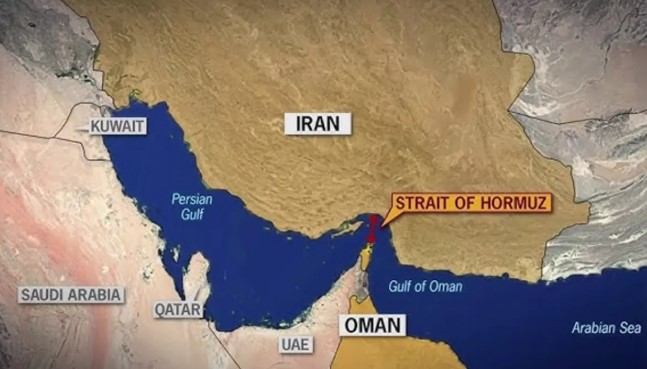
Oil prices fell more than $1 on Thursday, extending a multi-day decline as expectations of renewed diplomacy between Iran and Qatar raised hopes that the Strait of Hormuz could reopen more fully and ease disruptions to global energy supplies.
Brent crude futures fell $1.36, or 1.55%, to $86.48 a barrel by 0800 GMT, putting the benchmark on track for a fourth consecutive session of losses. U.S. West Texas Intermediate crude declined $1.40, or 1.7%, to $80.83 and was heading for a fifth straight day of losses.
The retreat in crude prices reflects growing expectations that diplomatic efforts could restore shipping through the strategic waterway, although traders remain wary of assuming a rapid return to normal.
“Oil has weakened again today as the market prices in rising expectations that a deal could materialize which would increase shipping numbers through the Strait of Hormuz,” said Tim Waterer, chief market analyst at KCM.
“If Hormuz were to reopen more fully, a further leg lower in crude is possible, but the market is unlikely to price a complete return to pre-conflict levels overnight.”
Qatar’s prime minister is due to travel to Iran on Thursday to restart diplomatic efforts aimed at ending the conflict, which is approaching its sixth month. Fighting has largely paused, but disagreements over the future of the Strait of Hormuz remain a major obstacle.
The waterway is critical to global energy markets. Before the conflict began in late February, roughly one-fifth of the world’s daily oil and liquefied natural gas supplies passed through the strait. Sustained disruption therefore has had implications well beyond the Middle East, affecting crude prices, shipping costs, inflation and monetary policy.
Shipping traffic through the strait increased slightly on Wednesday, while an Iranian source said Tehran and Oman were working to finalize an agreement governing control of the waterway. The developments have given markets some reason to price a gradual improvement in energy flows, although a durable diplomatic settlement remains uncertain.
“At the heart of the dispute remains Iran’s nuclear programme and that is unlikely to be resolved quickly,” said Priyanka Sachdeva, head of market insights at Phillip Nova. “Iran also understands the importance of its geographical position and the leverage that the Strait of Hormuz provides, so the risk of prolonged uncertainty remains.”
The prospect of lower oil prices is also easing some of the pressure on global inflation expectations. Oil had surged earlier in the conflict as traders priced in the risk of prolonged disruption, but the prospect of increased supply through Hormuz is now encouraging investors to unwind some of those positions.
Dollar Steadies As Rate Outlook Shifts
The U.S. dollar, meanwhile, recovered some of its losses from last week as investors reassessed the Federal Reserve’s interest-rate outlook following stronger-than-expected inflation data.
The dollar index, which measures the greenback against six major currencies, was at 99.158, up about 0.3% this week after falling 0.8% last week. The euro was little changed at $1.1652, while sterling slipped 0.08% to $1.3587. The yen was broadly steady at 159.35 per dollar.
July inflation data released on Wednesday came in above economists’ expectations, reinforcing the possibility that the Fed could keep monetary policy restrictive for longer. Separate data showed the U.S. economy expanded at a 1.5% annualized rate in the second quarter.
Markets are now pricing no change in U.S. interest rates at the Fed’s September meeting, while the probability of at least a 25-basis-point increase by December has risen to about 70%, according to the market data cited in the report.
The conflicting forces are leaving the dollar caught between two narratives. Higher oil prices and persistent inflation could keep U.S. rates elevated and support the currency, while a more dovish Fed, concerns over U.S. fiscal sustainability, and falling Treasury yields could limit its upside.
“The big support for the dollar here is that the U.S. economy continues to outpace that of other major economies,” said Elias Haddad, global head of markets strategy at Brown Brothers Harriman.
Haddad expects U.S. rates to remain unchanged through the rest of the year, contrary to current market pricing.
“I don’t expect the dollar to make new highs, because of the risk of a more dovish Fed repricing and the lack of U.S. fiscal credibility are two big headwinds,” he said.
Treasury Market Remains Under Pressure
U.S. Treasury yields edged lower on Thursday as investors positioned ahead of fresh labor-market data and Federal Reserve Chair Kevin Warsh’s first appearance at the Jackson Hole economic symposium.
The 10-year Treasury yield was down about 2 basis points to 4.645%, while the 30-year yield fell 2 basis points to 5.161%. The two-year yield was little changed at 4.211%.
The Treasury market remains a major source of uncertainty for investors because long-term borrowing costs have stayed elevated even as markets debate the direction of Fed policy.
Last week, the Treasury Department announced plans to increase its purchases of longer-dated government bonds, an intervention that was intended to reduce upward pressure on long-term yields. The move initially pushed yields lower but subsequently fueled concerns about government intervention, debt sustainability and the credibility of U.S. fiscal policy.
Those concerns have spilled into currency markets. Investors are weighing whether persistent U.S. budget deficits and a rapidly expanding federal debt burden could eventually undermine demand for Treasuries and the dollar.
Bitcoin’s roughly 25% gain this month has also been cited as evidence of renewed demand for alternative stores of value amid concerns over U.S. fiscal policy and the dollar.
Warsh Speech Becomes The Week’s Main Event
Attention now turns to Jackson Hole, where Warsh is scheduled to deliver his keynote address on Friday.
Investors will be looking for clues about how the Fed views persistent inflation, economic growth and the prospect of changes to interest rates later this year. His comments on the Treasury market could prove equally important, particularly if he addresses the rise in long-term yields or the government’s expanded bond-buyback programme.
A key risk for markets is that Warsh provides little explicit guidance. Any perceived hawkish or dovish shift could trigger sharp moves in the dollar, Treasury yields and equities.
“Any comments on the balance sheet, duration supply, or term premium could move the long end more than the data itself,” said BNY strategist Geoff Yu. “That said, given Warsh’s typically restrained style, we aren’t holding our breath.”
Investors will also receive weekly U.S. jobless claims data on Thursday, offering another indication of whether the labor market is cooling enough to give the Fed room to ease policy.
Japan And Canada Add To Currency Uncertainty
The yen was also in focus after Bank of Japan Deputy Governor Ryozo Himino said timely rate increases could help prevent an inflation surge that would eventually require more aggressive monetary tightening.
Himino stopped short of signaling an imminent rate increase, leaving markets uncertain about the timing of the BOJ’s next move.
“He did express concern about upside risks to prices … that has likely led markets to conclude that the remarks were not especially dovish,” said Sho Suzuki, a market analyst at Matsui Securities. “However, the absence of a clear signal means there is some chance the yen could come under renewed downward pressure.”
The Canadian dollar was steady at C$1.3885 per U.S. dollar after President Donald Trump warned Canada it was “time to teach Canada you can’t do this anymore,” following the breakdown of trade talks between the two countries.
The combination of Middle East diplomacy, the oil outlook, U.S. inflation, Treasury market tensions, and central-bank policy has left investors facing several competing macroeconomic forces.
Like this:
Like Loading...