Earnings reports show rapid growth in event contracts as sportsbooks, exchanges and crypto firms compete for a market attracting retail traders, syndicates and institutions
Prediction markets are rapidly becoming a new battleground for companies across sports betting, financial exchanges, cryptocurrency and online brokerage, with recent earnings reports from DraftKings, Flutter Entertainment, Coinbase and Robinhood providing fresh evidence of the industry’s accelerating growth.
A growing number of companies are either developing their own prediction market platforms or partnering with existing exchanges, according to Joel Shulman, chief executive of investment firm Entrepreneur Shares.
The expansion is creating a competitive market around contracts that allow users to trade on the outcome of future events, including sports results and other real-world developments. The rapid increase in trading volumes has also attracted regulatory scrutiny, particularly over whether sports-related contracts should be treated as financial products or gambling.
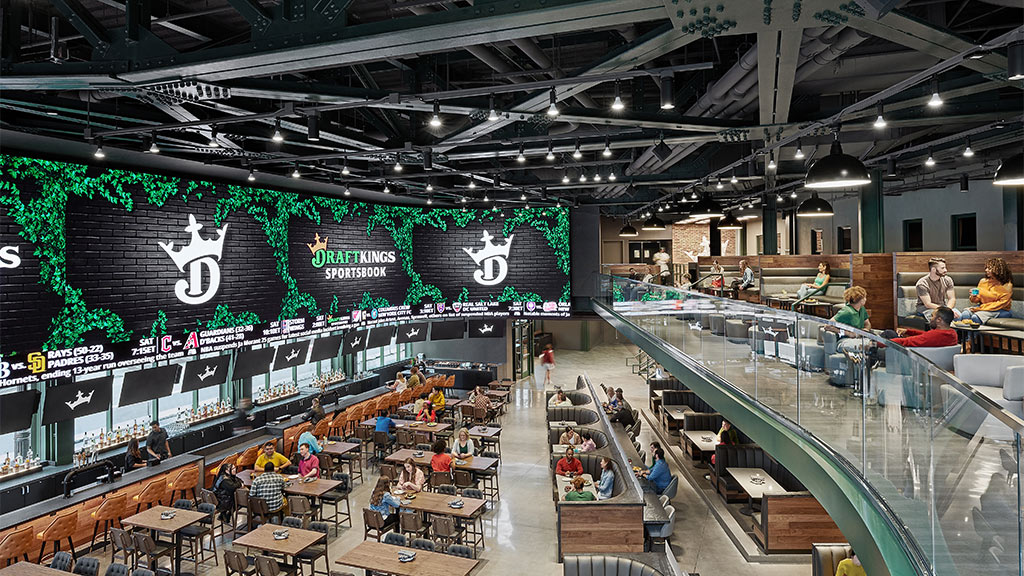
DraftKings has emerged as one of the most aggressive entrants.
The sports-betting company launched its prediction market platform in December 2025 and says adoption has exceeded its initial expectations. Chief Executive Jason Robins said more than 600,000 customers had used the platform, with activity expected to accelerate as the NFL season approaches.
“We had over 600,000 customers so far engaged with our predictions offering, and that’s just going to explode this NFL season. I’m expecting millions, so we’re excited about it,” Robins told CNBC’s Squawk Box.
The scale of trading has increased sharply. Robins said the annualized total volume on DraftKings’ prediction platform rose to $11 billion between April and July, from $2.3 billion previously.
That growth suggests prediction markets are evolving beyond a niche product into a potentially significant source of trading activity, particularly around major sporting events.
Robins also noted that prediction markets have so far attracted a meaningfully different customer base from DraftKings’ traditional sportsbook.
“We continue to see only about 1% customer overlap between our sportsbook and the largest prediction market operator in sportsbook states, which tells us these platforms are driving a fundamentally different and largely professional audience,” he said.
DraftKings estimates that betting syndicates and institutional traders account for between 80% and 90% of consumer volume on prediction markets, according to Robins. That composition could have important implications for the industry’s development. Institutional and professional participants generally trade at higher volumes and can provide substantial liquidity, potentially allowing prediction markets to operate more like financial exchanges than conventional sportsbooks.
DraftKings is also attempting to control multiple parts of the market infrastructure. Robins said the company has exposure to three key layers: brokerage, exchange and market making.
The strategy could allow DraftKings to capture revenue from several stages of the transaction process while giving it greater control over liquidity and pricing.
However, the company’s broader second-quarter results were weaker than analysts had expected. DraftKings reported adjusted earnings before interest, taxes, depreciation and amortization of $114.6 million and revenue of $1.44 billion, below FactSet expectations of $156.1 million in EBITDA and $1.51 billion in revenue.
Flutter Entertainment, the parent of FanDuel, is pursuing a different strategy while also expanding its presence in the sector.
Flutter’s shares fell more than 11% on Wednesday after the company announced that Dan Taylor, chief executive of its international division, would replace Peter Jackson as CEO. The company also reported quarterly earnings that fell short of Wall Street expectations.
At the same time, Flutter announced a major change to its prediction market infrastructure.
FanDuel Predicts will move its sports and novelty event contracts from CME Group to Crypto.com, while CME will continue to provide financial market contracts.
Flutter launched FanDuel Predicts with CME in December 2025, as trading volumes at established prediction markets such as Kalshi and Polymarket were accelerating.
Peter Jackson said the new arrangement would allow FanDuel to develop and launch products more quickly ahead of the NFL season.
“This new exchange arrangement will ensure we can deliver new products at pace ahead of the NFL season start,” Jackson said during the company’s earnings call.
Another Phase of Competition Emerges
The change also highlights the increasingly fragmented infrastructure developing around prediction markets, with companies competing not only for customers but also for exchange technology, liquidity and market-making capabilities.
Regulation remains one of the industry’s biggest uncertainties.
Kalshi and Polymarket have faced scrutiny from state regulators who argue that certain event contracts amount to illegal gambling. More than 40 state attorneys general have also challenged the Commodity Futures Trading Commission’s position that it has exclusive regulatory authority over sports-related event contracts.
Flutter believes its existing presence in regulated sports betting markets could give FanDuel Predicts an advantage as the industry develops.
“Our own prediction market offering FanDuel Predicts allows us to acquire customers ahead of sports betting regulation in new states,” Jackson said.
Flutter reported second-quarter adjusted earnings of 49 cents per share on revenue of $4.33 billion. Analysts had expected earnings of 54 cents per share and revenue of $4.23 billion.
The company expects to generate about $50 million in market-making revenue from prediction markets this year, indicating that it sees the business as more than simply an extension of its sportsbook operation.
Coinbase is also benefiting from the expansion.
The cryptocurrency exchange said in late July that revenue from its prediction markets business increased 106% from the previous quarter. Annualized revenue from the business exceeded $100 million in the second quarter.
The growth was substantial, although it still fell short of some analysts’ expectations.
“Prediction markets run rate of $100M+ in 2Q was below our estimate,” KeyBanc analysts said in a report following Coinbase’s earnings.
Coinbase’s overall second-quarter performance was also weaker than expected. The company reported a loss of $1.36 per share, significantly wider than the 17-cent loss analysts surveyed by LSEG had expected, while revenue of $1.2 billion fell short of the $1.3 billion consensus forecast.
Robinhood has taken perhaps the most direct approach by building an exchange around event contracts.
The brokerage launched Rothera in June through its joint venture with Susquehanna International Group. The platform is licensed by the CFTC, positioning it within the federally regulated derivatives market.
Robinhood said more than 3.5 billion contracts had been traded on its platform to date. Event-contract revenue reached $156 million in the second quarter.
Rothera’s founders, Tom Chippas and Matt Trudeau, said in a LinkedIn post on Aug. 4 that the platform had captured approximately 7% to 8% of total market share among CFTC-regulated venues less than two months after launch.
They said Rothera had achieved roughly 30% average market share in the specific contracts it listed.
The founders described the trading volumes as evidence that the platform’s technology and operating infrastructure could handle sustained activity at significant scale.
The numbers across the industry point to a rapidly developing market in which traditional boundaries between sports betting, financial trading and cryptocurrency are becoming increasingly blurred.
For sportsbooks such as DraftKings and FanDuel, prediction markets offer a way to expand beyond conventional wagering and potentially reach customers in jurisdictions where traditional sports betting remains restricted.
The opportunity is attracting capital and technological investment, but analysts say the industry’s future will depend heavily on regulation.
The central question is whether sports and other event contracts will ultimately be treated primarily as financial derivatives under federal oversight or as gambling products subject to state-level restrictions. The answer could determine which companies are allowed to offer them, where they can operate and how quickly the market can expand.
Competition is also likely to intensify as more financial and betting companies enter the sector. Companies with large customer bases, deep liquidity, strong market-making capabilities and regulatory access are expected to have an advantage as prediction markets move from an emerging product into a more established financial category.
Like this:
Like Loading...