

Strong full-price sales, international growth and tighter inventory management have helped the luxury apparel group extend its market gains
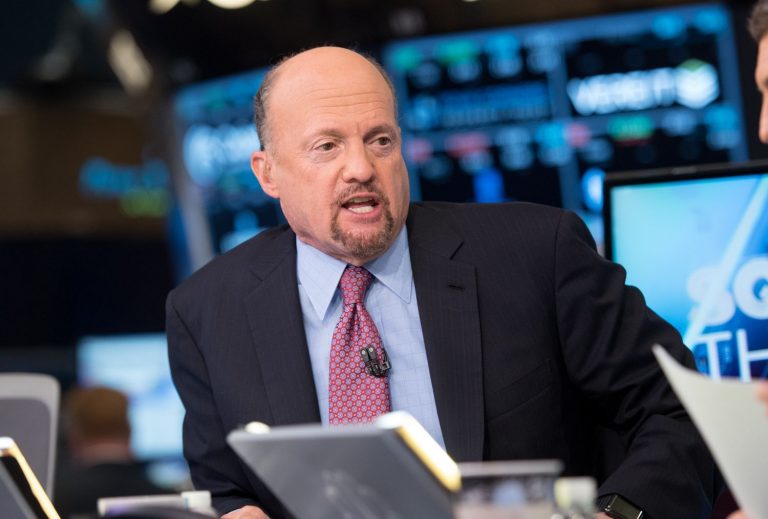
CNBC’s Jim Cramer said Thursday that Ralph Lauren’s years of stock-market outperformance are the result of a deliberate strategy rather than a temporary retail upswing, pointing to the company’s brand strength, international expansion and operating discipline under CEO Patrice Louvet.
“Retail’s really hard … Louvet makes it look easy,” the “Mad Money” host said, referring to Louvet’s tenure at the apparel company.
Register for the next Tekedia Mini-MBA.
Register for Tekedia AI in Business Masterclass.
Join Tekedia Capital Syndicate and co-invest in great global startups.
Louvet joined Ralph Lauren in July 2017 after nearly three decades at Procter & Gamble. Since he became chief executive, Ralph Lauren shares have gained roughly 444%, compared with a gain of about 214% for the S&P 500 over the same period.
The stock added nearly 4% Thursday after the company reported earnings and revenue that exceeded expectations, extending a rally that has made Ralph Lauren one of the stronger-performing names in the retail and luxury apparel sectors.
For Cramer, the latest results boost the argument that Ralph Lauren has built a business capable of generating growth without relying heavily on discounting. He identified three elements behind the company’s performance: strengthening the brand, expanding its established businesses while developing new growth opportunities, and building deeper relationships with consumers in major cities around the world.

Brand Investment Becomes A Growth Engine
Cramer highlighted Ralph Lauren’s efforts to position itself beyond conventional apparel retail by associating the brand with prestigious sporting events, luxury destinations, and lifestyle experiences.
The company has also focused on reaching younger consumers through what management calls “cinematic storytelling”, using social media and digital content to reinforce the brand’s identity rather than relying solely on traditional advertising.
Ralph Lauren added 1.5 million social media followers during the quarter across Instagram, TikTok, LINE and Douyin, according to Cramer.

That expansion is important because luxury and premium apparel companies compete not only on product but also on consumer engagement and brand relevance. A larger direct relationship with consumers can give companies greater control over pricing, customer data and repeat purchases.
Cramer also pointed to Ralph Lauren’s ability to introduce new women’s products and limited-edition collections while retaining the classic designs that have defined the company for decades. The combination allows Ralph Lauren to pursue new customers without abandoning the products that provide the foundation of the business.
China and Asia Emerge As Major Growth Drivers
The company’s growth has become increasingly international, with particularly strong momentum in Asia. Comparable sales increased 9% in North America and 23% in Asia, including a 40% increase in China, according to the results cited by Cramer.
The performance in China rings a bell because the country’s luxury and premium consumer market has faced an uneven recovery, making strong growth there an important differentiator for global apparel companies.
Cramer also emphasized the quality of Ralph Lauren’s sales growth. Much of the increase came from full-price sales rather than promotions or markdowns. That distinction matters for profitability. Selling merchandise at full price allows retailers to preserve gross margins and reduces the need to clear excess inventory at the end of a season.
Ralph Lauren’s performance has also been supported by tighter operational management. Inventories declined 3% during the quarter while operating margins expanded, according to Cramer.
That combination is necessary for retailers because rising sales accompanied by falling inventories can indicate that demand is absorbing merchandise efficiently, reducing the risk of excessive stock and future discounting. Margin expansion also suggests that the company’s revenue growth is translating into stronger profitability rather than being purchased through heavier promotional spending.
The result is a model in which brand investment, pricing power and inventory discipline reinforce one another.
A Broader Lesson for Retail Investors
Cramer said that Ralph Lauren offers a useful case study for investors trying to distinguish durable retail businesses from companies benefiting only from short-term changes in consumer spending.
The company’s stock performance under Louvet is notable because it has substantially exceeded the broader market over nearly nine years, even as the retail sector has faced shifts in consumer preferences, inflation, higher interest rates and the rapid expansion of e-commerce.
The challenge for Ralph Lauren now is to maintain that momentum without diluting the exclusivity that supports its pricing power.
Its expansion in China and other Asian markets provides room for further growth, while its focus on younger consumers could broaden the customer base. At the same time, continued inventory discipline and full-price selling will remain important indicators of whether growth can continue to translate into higher margins.
However, Cramer believes the latest earnings report reinforces the view that Ralph Lauren has developed a repeatable operating formula rather than simply benefiting from a favorable period for luxury apparel stocks.
“For anyone who aspires to own a retail stock, before you take a position in one, I’m begging you to read this Ralph Lauren conference call,” Cramer said.
“That’s the highest praise I can offer.”