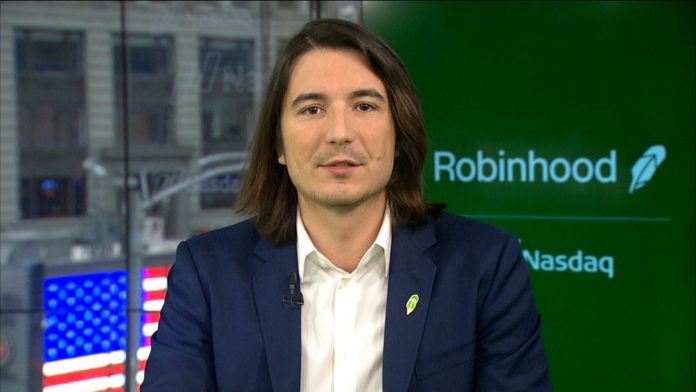
The cryptocurrency market is witnessing two developments that highlight how quickly blockchain activity and investor behavior can shift. Robinhood Chain is reportedly processing roughly twice the NFT trading volume of Ethereum.
While approximately $15 billion worth of Bitcoin has moved from long-term holder wallets following the ColdCard hack. The developments point to a market being reshaped by both competition among blockchain networks and renewed concerns over Bitcoin security.
Robinhood Chain’s emergence in the NFT market is particularly notable because Ethereum has historically been the dominant blockchain for digital collectibles.
Ethereum built much of the NFT economy, attracting major collections, marketplaces, artists and investors. For another network to generate twice Ethereum’s NFT volume signals that users may increasingly prioritize transaction costs, speed and accessibility over established network dominance.
The shift reflects the broader evolution of blockchain infrastructure. As new chains compete for users, liquidity and applications, NFT activity is becoming more fragmented. Lower fees and faster execution can make alternative networks attractive to traders who frequently buy and sell digital assets.
Robinhood’s involvement could further accelerate this trend by connecting blockchain-based assets with a large mainstream financial platform.
However, trading volume alone does not necessarily mean Robinhood Chain has replaced Ethereum as the leading NFT ecosystem.
Volume can be influenced by short-term speculation, incentives, marketplace activity and individual collections. Ethereum still possesses a deep developer community, established infrastructure and significant cultural influence within the NFT sector.
The more important question is whether Robinhood Chain can sustain its activity over the long term. Meanwhile, the movement of approximately $15 billion in Bitcoin from long-term holder wallets following the ColdCard hack introduces a very different dynamic.
Long-term holders are generally associated with investors who maintain Bitcoin positions through multiple market cycles. Significant movement from these wallets can therefore attract attention because it may indicate changes in security practices, custody arrangements or investor confidence.
The ColdCard incident has intensified scrutiny around Bitcoin wallet security.
Even when funds are not necessarily being sold, moving large amounts of Bitcoin can create uncertainty because on-chain transfers are visible and can be interpreted as potential selling pressure. If the coins eventually reach exchanges, market participants could become more concerned about increased supply entering the market.
Wallet movements should not automatically be interpreted as bearish. Investors may transfer assets between cold wallets, institutional custodians or alternative security setups without intending to sell. The distinction between moving Bitcoin and selling Bitcoin is critical when interpreting blockchain data.
The combination of Robinhood Chain’s NFT growth and Bitcoin’s wallet activity demonstrates the increasingly complex nature of the digital-asset market. Capital, users and liquidity are constantly moving between networks and custody systems.
Ethereum faces growing competition in application-specific activity, while Bitcoin holders are being reminded that security remains one of the most important considerations in crypto. Both developments underline the same principle.
Blockchain markets are becoming more competitive and more sophisticated. Network dominance can change quickly, while security events can trigger enormous movements of capital.
Investors will therefore be watching whether Robinhood Chain can maintain its NFT momentum and whether the Bitcoin transfers connected to the ColdCard incident develop into broader selling pressure.