DD
MM
YYYY

PAGES

DD
MM
YYYY

spot_img

PAGES

Home Blog Page 2

Trump Signs One-Year AGOA Extension, Buying Time for Africa–U.S. Trade Amid Policy Uncertainty

0

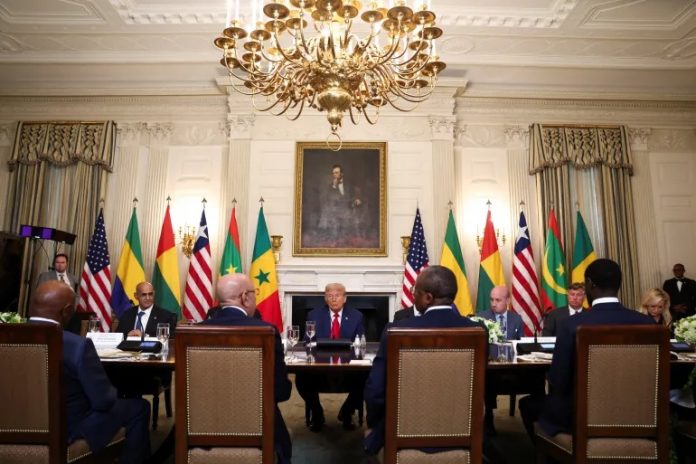
U.S. President Donald Trump has signed into law a one-year extension of the African Growth and Opportunity Act (AGOA), temporarily preserving one of the most consequential trade arrangements between the United States and Sub-Saharan Africa.

This comes amid Washington’s signal that the programme will be reshaped to fit a tougher, America First trade framework.

The extension runs through December 31 and takes effect retroactively from September 30, 2025, when AGOA had lapsed, a gap that left exporters, investors, and governments across Africa in a state of limbo. The law’s expiration had threatened hundreds of thousands of jobs tied to duty-free exports to the U.S., particularly in apparel, agriculture, automotive components, and light manufacturing.

U.S. Trade Representative Jamieson Greer said the administration would work with Congress this year to update AGOA in a way that expands market access for U.S. businesses, farmers, and ranchers, while aligning the programme more closely with Trump’s trade priorities. That framing suggests the extension is less a renewal of the status quo and more a holding pattern as Washington rethinks how Africa fits into its broader trade and geopolitical strategy.

AGOA, first enacted in 2000, grants eligible Sub-Saharan African countries duty-free access to the U.S. market for more than 1,800 products, on top of existing preferences under the Generalized System of Preferences. For many African economies, it has served as a gateway into global value chains, especially in textiles and apparel, where countries such as Kenya, Ethiopia, and Lesotho built export industries anchored on preferential access to the U.S. market.

The political path to the extension underscored divisions within Washington over how far and how long the programme should run. While the House of Representatives initially passed a bill extending AGOA for three years, the Senate pared that back to a single year. The House later accepted the shorter timeline, paving the way for Trump’s signature but also leaving African partners with limited long-term certainty.

That uncertainty comes at a moment when relations between the United States and South Africa, Africa’s largest economy and a major AGOA beneficiary, have been strained. Trump last year boycotted a Group of 20 meeting hosted by South Africa during its rotating presidency and later said Pretoria would not be invited to G20 meetings hosted by the U.S., which assumed the presidency in December. The tensions have raised questions about how political considerations could influence trade preferences going forward.

South Africa’s Trade Minister Parks Tau welcomed the extension, saying it would provide certainty and predictability for African and American businesses that rely on the programme. For exporters already grappling with weak global demand, currency volatility, and rising logistics costs, even a short-term reprieve reduces the immediate risk of cancelled orders and factory closures.

Still, trade experts note that a one-year extension limits the programme’s ability to attract new investment. AGOA’s original strength lay in its longer time horizons, which allowed companies to commit capital to factories, supply chains, and skills development. With the clock now reset for just 12 months, investors may adopt a wait-and-see posture until Washington clarifies whether AGOA will be overhauled, extended again, or replaced by bilateral or regional trade arrangements.

The Office of the U.S. Trade Representative said it would work with relevant agencies to implement changes to the Harmonized Tariff Schedule resulting from the reauthorization. Eligibility conditions remain stringent. Countries must demonstrate progress toward a market-based economy, the rule of law, political pluralism, and due process. They are also required to remove barriers to U.S. trade and investment, pursue poverty-reduction policies, tackle corruption, and uphold human rights.

Those conditions have long made AGOA both an economic and political instrument. Over the years, several countries have been suspended or reinstated based on Washington’s assessment of governance and policy reforms. With the Trump administration openly tying trade policy more closely to U.S. domestic interests, analysts expect eligibility reviews to become more pointed, particularly where access to African markets for U.S. goods and services is concerned.

For Africa, the extension offers breathing space but little clarity. Many governments are already recalibrating their trade strategies around the African Continental Free Trade Area, aiming to deepen intra-African commerce and reduce reliance on external preferences that can shift with political winds. At the same time, AGOA remains one of the few channels through which African manufacturers can compete in the U.S. market on preferential terms.

Treasury Yields Steady as Weak January Hiring Data Reinforces Low-Growth Outlook

0

U.S. Treasury yields were largely unchanged on Wednesday, settling into a narrow range after an initial dip triggered by a weaker-than-expected January jobs report reinforced the view that the U.S. labor market is losing momentum without tipping into a sharp downturn.

Early trading saw yields move lower after payrolls processor ADP reported that private employers added just 22,000 jobs in January. The figure was not only well below the Dow Jones estimate of 45,000 but also weaker than December’s downwardly revised gain of 37,000. The data highlighted how hiring has slowed to a crawl at the start of 2026, extending a trend that defined much of the second half of last year.

As the session progressed, yields clawed back some of those early losses. The benchmark 10-year Treasury yield reversed course and was last down marginally at around 4.27%. The 30-year yield slipped to about 4.893%, while the 2-year note yield edged slightly higher to 3.578%. The modest moves underscored a market that is digesting softer economic data but stopping short of repricing the Federal Reserve’s near-term policy path in a significant way.

The ADP report painted a picture of an economy stuck in a low-hire, low-fire equilibrium. Job creation was narrowly concentrated, with education and health services accounting for the bulk of gains. Without that sector’s strength, overall private employment would have fallen. Several white-collar and goods-producing sectors, including professional and business services and manufacturing, shed jobs, adding to concerns that higher interest rates and tighter financial conditions are continuing to weigh on corporate hiring plans.

The implications are mixed for bond investors. On one hand, sluggish job growth supports the argument that labor market tightness is easing, which could eventually relieve wage pressures and help inflation trend lower. On the other hand, the lack of outright weakness gives the Fed little urgency to pivot quickly toward rate cuts, especially with inflation still above target and policymakers wary of easing too soon.

The resilience of the 2-year yield reflected this tension. Because the 2-year note is highly sensitive to expectations for Fed policy, its slight uptick suggested markets still see rates staying higher for longer, even as growth shows signs of fatigue. Longer-dated yields, by contrast, were marginally lower, pointing to ongoing demand for safe assets and a belief that medium- to long-term growth will remain constrained.

Broader market sentiment also drew support from developments in Washington. President Donald Trump on Tuesday signed legislation ending a partial government shutdown, easing concerns about disruptions to federal operations and the broader economy. The shutdown had already delayed the release of several key economic indicators, including the closely watched nonfarm payrolls report from the Bureau of Labor Statistics.

That delay loomed large over Wednesday’s trading. Under normal circumstances, investors would be positioning ahead of Friday’s official jobs report. Instead, with the BLS release postponed, markets are leaning more heavily on private-sector data like ADP, weekly jobless claims, and business surveys. Those indicators collectively suggest cooling, not collapse, in the labor market.

Adding another political and policy dimension to the day was confirmation that Federal Reserve Governor Stephen Miran has stepped down as chairman of the Trump administration’s Council of Economic Advisors. Miran joined the council in January 2025 and was later appointed to the Fed in September to complete the unexpired term of Adriana Kugler. His departure removes a senior economic voice at the White House with direct insight into monetary policy deliberations, at a time when coordination and messaging around growth risks and inflation remain sensitive.

Overall, the day’s developments reinforced a familiar narrative for investors: the U.S. economy is slowing gradually, not breaking sharply. Treasury yields, anchored by that view, continue to trade within recent ranges as markets wait for clearer confirmation on whether softer hiring will translate into sustained disinflation and, ultimately, a shift in Federal Reserve policy. Until that clarity emerges, bond markets appear content to tread water, reacting to weak data without committing to a decisive directional move.

Precious Metals Staged a Strong Rebound after Sharp Pullbacks

0

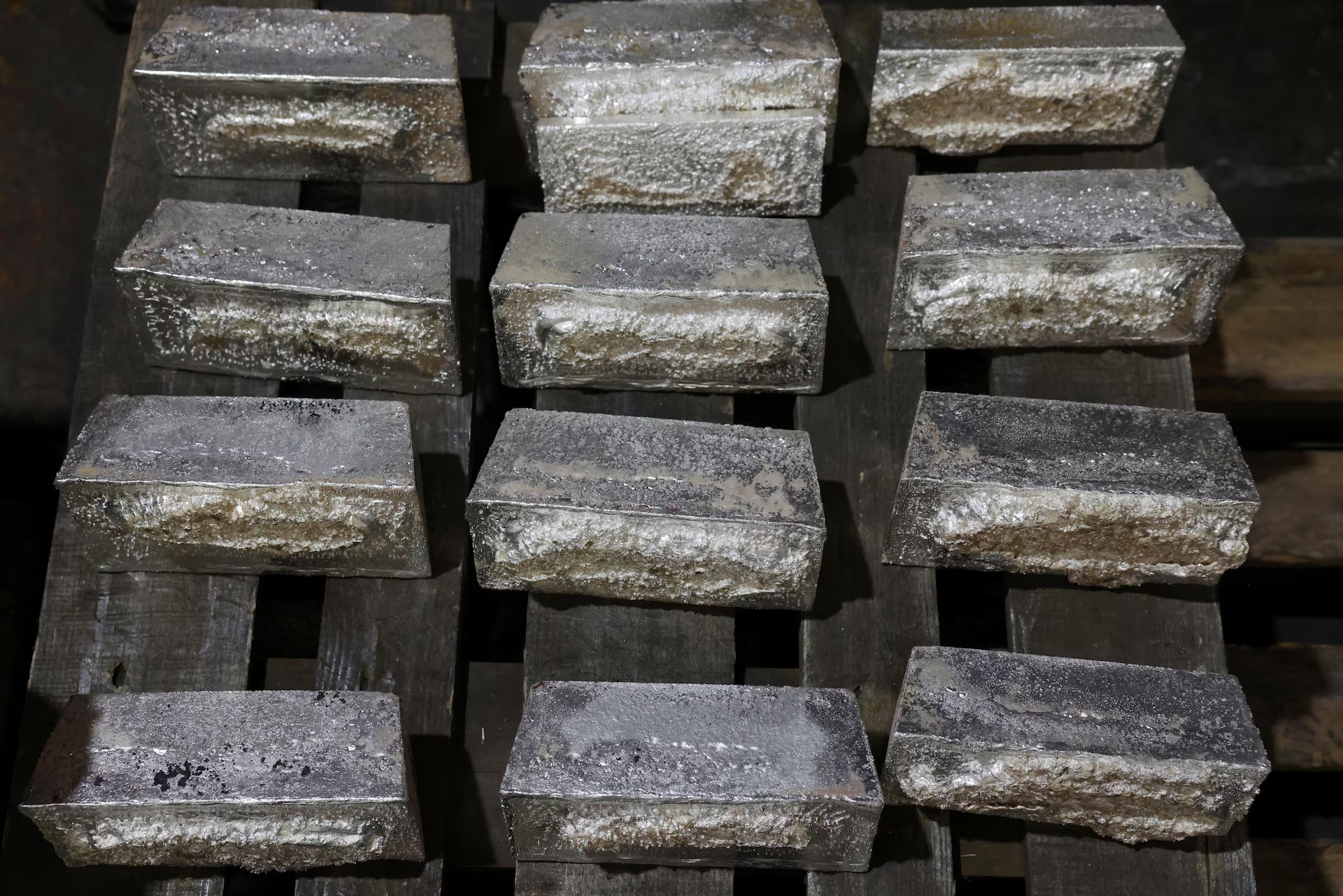
Precious metals staged a strong rebound after recent sharp volatility and pullbacks. Gold recovered impressively, climbing back toward and reclaiming the $5,000 per ounce level in trading.

Spot gold prices hovered around $5,050–$5,060 per ounce during the day, with futures (e.g., April contracts) pushing as high as approximately $5,071–$5,078 in some reports.

This marks a solid gain of roughly 2–3% from the previous close around $4,935, finishing the session just under the $5,100 mark in many quotes but firmly above $5,000—aligning with the “just under $5K” rebound description if viewing certain intraday or settlement figures, though live spots often traded slightly above in the recovery.

The move came amid renewed safe-haven demand, easing U.S. dollar pressure, ongoing geopolitical tensions including U.S.-Iran flare-ups, and reassessment of Fed policy directions following recent nominations and economic data.

Silver outperformed gold on the day, surging back over $90 per ounce with gains of 5–8% in various reports. Spot silver traded around $89–$92 per ounce e.g., quotes at $90.54, $89.92, up to $91–$92 in some physical/retail contexts, recovering sharply from earlier-week lows after a dramatic selloff.

This rebound reflects silver’s higher volatility and sensitivity to industrial demand, investment flows, and the gold/silver ratio compressing around 55:1 in some updates. Analysts note persistent supply deficits supporting silver longer-term, with some targets eyeing $125 eventually.

Both metals are showing resilience in a “debasement trade” environment, with central bank buying, ETF inflows, and macro uncertainties (fiscal risks, tariffs, inflation hedging) as key drivers. Forecasts remain bullish—e.g., JPMorgan at $6,300 for gold by year-end, others in the $5,400–$6,000+ range—though volatility lingers, and sharp swings could continue.

Platinum has shown solid momentum, aligning with the broader precious metals rebound; gold nearing $5,000 and silver back over $90. Spot platinum prices are trading in the $2,200–$2,300 per ounce range, with various sources reporting: Around $2,228–$2,238 (Kitco bid/ask at mid-morning ET, up modestly ~0.5%).

Higher quotes near $2,256–$2,263; Trading Economics, up 2.15–2.45% intraday. Peaks or asks pushing toward $2,300–$2,306 (JM Bullion and others, reflecting gains of 3–3.75% in some sessions). This marks a recovery from recent dips below $2,000–$2,100 earlier in the week/month, with futures showing similar upside around $2,200–$2,325 intraday highs.

Platinum is up roughly 120–125% year-over-year from early 2025 levels, though it’s pulled back slightly monthly amid volatility.Key market trends and drivers in 2026 so far: Supply constraints remain a core bullish factor.

The World Platinum Investment Council (WPIC) forecasts ongoing market deficits averaging 689 koz per year through 2029 (9% of demand), with South African production (70%+ of global supply) hampered by underinvestment, disruptions, and no major new mines. Inventories are tightening critically.

Industrial demand supports resilience, particularly in autocatalysts (platinum’s largest use), hydrogen fuel cells, and stricter environmental regs. While EV shifts have pressured diesel-related demand historically, hydrogen tech adoption and potential subsidy changes could boost it further.

Some softening in near-term autocatalyst buying due to high prices has occurred, with minor substitution to palladium noted. Investment flows are picking up amid macro uncertainties (geopolitical tensions, fiscal risks, inflation/debasement hedging).

Platinum has lagged gold and silver in relative terms—gold trades at roughly 2x platinum’s price now vs. platinum’s historical premium, suggesting catch-up potential. Analysts see it as undervalued relative to scarcity and multi-sector utility.

Price forecasts vary but lean bullish longer-term: Trading Economics eyes ~$2,172 end-quarter and ~$2,448 in 12 months; others project averages $1,800–$2,000+ for 2026, with highs potentially to $3,000 in optimistic scenarios. WPIC and others highlight structural undersupply persisting.

Compared to gold ($4,900–$5,000+) and silver ($90+), platinum’s gold/platinum ratio remains elevated (gold more expensive), but its outperformance in percentage gains during parts of 2025–2026 (e.g., 120%+ annual) shows volatility and upside sensitivity.

The metal hit all-time highs near $2,924 in January 2026 before corrections.Overall, platinum’s outlook stays positive in this “debasement trade” environment, with tight fundamentals outweighing short-term industrial softness.

Volatility persists—sharp swings are possible—but persistent deficits and hedging demand point to higher levels ahead. If you’re comparing to gold/silver positions or eyeing entries, current levels offer a rebound from recent lows.

Nvidia CEO Jensen Huang Dismisses AI Disruption Fears as “Illogical” Amid $285bn Global Software Stock Rout

0

Nvidia Corp. CEO Jensen Huang robustly pushed back against escalating fears that artificial intelligence will supplant traditional software tools, labeling the notion “the most illogical thing in the world” during a keynote at Cisco Systems’ AI conference in San Francisco on Wednesday.

His remarks arrived amid a deepening global selloff in software, data analytics, and professional services stocks, triggered by Anthropic’s recent release of advanced AI plug-ins that amplified investor anxieties over potential industry-wide disruption. Huang argued that AI’s evolution hinges on leveraging existing software infrastructure rather than reinventing it from the ground up.

“There’s this notion that the tool in the software industry is in decline, and will be replaced by AI… It is the most illogical thing in the world, and time will prove itself,” he stated.

Drawing an analogy to human and robotic behavior, Huang emphasized: “If you were a human or robot, artificial general robotics, would you use tools or reinvent tools? The answer, obviously, is to use tools… That’s why the latest breakthroughs in AI are about tool use, because the tools are designed to be explicit.”

He positioned AI as an enhancer of software efficiency, not its destroyer, underscoring Nvidia’s role in powering systems that integrate with established frameworks like those from ServiceNow or SAP. The comments provided a counterpoint to the market turmoil, which began intensifying after Anthropic unveiled plug-ins for its Claude Cowork agent on Friday.

These open-source tools automate tasks across legal, sales, marketing, customer support, and data analysis—such as contract reviews, NDA triage, compliance workflows, and templated responses—prompting traders to dump shares in companies perceived as vulnerable to AI automation. Anthropic clarified that the legal plug-in is not intended to provide legal advice and requires attorney oversight, but the release nonetheless reignited debates on AI’s potential to erode pricing power in routine, high-margin services.

The fallout was swift and severe, erasing approximately $285 billion in market value from software, financial services, and asset management sectors on Tuesday alone, according to Bloomberg estimates. A Goldman Sachs basket tracking U.S. software stocks plummeted 6%—its largest single-day drop since April 2025’s tariff-induced selloff—extending a six-day losing streak with cumulative losses exceeding 14%. The iShares Expanded Tech-Software Sector ETF (IGV) hit new intraday lows, down 5.6% at one point, marking its worst monthly performance since 2008 with a 15% January decline.

The contagion spread globally. In Europe, RELX (parent of LexisNexis) tumbled 14-15%, erasing over £6 billion ($7.8 billion) in value; Thomson Reuters plunged 18-20%; Wolters Kluwer dropped 12.7-13%; and the London Stock Exchange Group (LSEG) fell 12.8%. Analytics firms like Gartner and S&P Global declined 20% and 10%, respectively, while Experian and Sage lost 6.75% and 10%. The UBS basket of European AI-exposed stocks sank nearly 7%. Asia felt the ripple effects on Wednesday. India’s NIFTY IT index slumped 6.3-7%, with Infosys plunging 7.3% amid fears AI could erode outsourcing demand. China’s CSI Software Services Index fell 3%, Hong Kong’s Kingdee International Software Group tumbled over 13%, and in Japan, Recruit Holdings and Nomura Research Institute dropped 9% and 8%.

Analysts dubbed the event a “SaaSpocalypse”—an apocalypse for software-as-a-service (SaaS) models—warning that AI agents like Claude could automate routine tasks underpinning industry margins, potentially disintermediating firms entirely. IG chief markets strategist Chris Beauchamp described trading as “‘get me out’ style selling.”

Jefferies’ Jeffrey Favuzza noted the panic stemmed from uncertainty over AI agents’ capabilities, leading investors to “shun the software market altogether.” eMarketer’s Jacob Bourne added that inflation-fatigued consumers and AI shortages would pressure hardware margins, making high-margin services vital.

The selloff dragged broader indexes: the Nasdaq 100 fell up to 2.4% before closing down 1.6%, with the S&P 500 and Dow Jones following suit. Yet Huang’s reassurance may stem the tide, as he highlighted AI’s reliance on explicit, human-designed tools, aligning with recent breakthroughs in “tool use” that integrate rather than replace software.

This episode echoes prior AI-driven market jitters, such as reactions to OpenAI’s GPT releases, but the scale—wiping billions in a day highlights growing sensitivity to disruption risks. While software giants like Salesforce, DocuSign, Atlassian, Adobe, Workday, and ServiceNow bore the brunt, the contagion to financial data (Experian, LSEG) and publishing suggests broader implications for knowledge-based industries.

Lawmakers Call for ‘Reverse Acqui-Hiring’ Probe as Big Tech AI Deals Test the Limits of Antitrust Oversight

0

Democratic lawmakers are sharpening their challenge to how the largest U.S. technology companies are consolidating power in artificial intelligence, arguing that a new class of deals risks hollowing out competition while slipping through gaps in antitrust enforcement.

In a letter sent Wednesday to the Federal Trade Commission and the Department of Justice, Senators Elizabeth Warren, Ron Wyden, and Richard Blumenthal urged regulators to closely examine recent AI-related transactions involving Nvidia, Meta, and Google. The senators said these arrangements, which involve paying to bring top executives and engineers from startups into large companies without acquiring the startups outright, may amount to mergers in everything but name.

The lawmakers describe the practice as “reverse acqui-hiring,” a strategy they say allows dominant firms to absorb talent, institutional knowledge, and strategic advantage while avoiding the scrutiny normally triggered by acquisitions. According to the letter, these deals can weaken startups left behind, tilt emerging AI markets further toward incumbents, and narrow the path for genuine competition.

“These deals function as de facto mergers,” the senators wrote, arguing that the economic and competitive outcomes can mirror those of full acquisitions even when corporate control does not formally change hands. They called on the FTC and DOJ to block or unwind such arrangements if they violate antitrust law.

At issue is how Big Tech is adapting its deal-making playbook as regulators take a more skeptical view of large mergers. Rather than buying entire companies, firms are increasingly structuring investments, licensing agreements, or asset purchases that coincide with the recruitment of founders and senior technical leaders. The startup remains independent on paper, but its competitive core is often removed.

The senators highlighted several high-profile examples. Meta’s $14.3 billion investment in Scale AI in June brought co-founder and CEO Alexandr Wang into Meta to lead its AI strategy, giving the company access to one of the industry’s most influential figures without a traditional takeover. Google’s $2.4 billion nonexclusive licensing deal with AI coding startup Windsurf similarly resulted in key leaders joining Google. Nvidia’s $20 billion December transaction to acquire assets from AI chipmaker Groq and hire senior executives followed a comparable pattern.

In each case, the lawmakers argue, the acquiring company gained a strategic advantage while regulators were left with limited leverage to intervene. The concern is not only about market concentration today, but about how these practices could shape the next generation of AI development by starving startups of leadership and momentum.

Industry observers have raised similar alarms. Venture capital investors and startup employees have noted that reverse acqui-hiring can leave remaining teams in a weakened position, with reduced ability to execute on their original vision or attract new funding. While founders and top engineers may receive lucrative compensation packages, the broader ecosystem may see fewer viable challengers to established players.

From the perspective of Big Tech, the incentives are powerful. Competition for elite AI talent is intense, and these arrangements offer a way to secure scarce expertise quickly while minimizing regulatory risk. They also allow companies to place bets across multiple startups through investments and licenses, extracting value even if the startups themselves struggle later.

For regulators, the challenge lies in applying antitrust laws written for an earlier era to transactions that do not fit neatly into existing categories. Traditional merger reviews focus on changes in ownership and control, yet the senators argue that control over talent and knowledge can be just as consequential in AI markets, where human capital and data are central assets.

The letter follows comments in January from FTC Chairman Andrew Ferguson, who said the agency would review whether companies are using such deals to sidestep regulatory oversight. That statement suggested growing awareness within enforcement agencies that AI-driven deal structures may require closer attention.

The lawmakers’ intervention adds urgency to that review. By explicitly framing reverse acqui-hiring as a potential end run around antitrust law, Warren, Wyden, and Blumenthal are pressing regulators to expand how they assess competitive harm. The outcome could shape how aggressively the U.S. government polices AI deal-making at a moment when the technology is rapidly becoming a core driver of economic power.

If regulators move to treat these arrangements as mergers in substance rather than form, it could significantly alter how Big Tech pursues talent and partnerships in AI. If not, the senators warn, the industry may continue consolidating quietly, one executive hire at a time.