DD
MM
YYYY

PAGES

DD
MM
YYYY

spot_img

PAGES

Home Blog Page 2

TRON’s Q2 2026 Shows the Strength of Stablecoin Settlement

0

TRON’s second quarter of 2026 marked a significant milestone for the blockchain, as the network strengthened its position as one of the world’s most important settlement layers for stablecoins.

Across key indicators, TRON recorded another quarter of growth, with stablecoin supply, transaction activity, active addresses and network fees all reaching notable levels.

More importantly, the quarter provided evidence that TRON’s fee model can remain economically viable even after a major reduction in transaction costs.

Stablecoin supply on TRON reached $89.2 billion during Q2, reinforcing the network’s role in global digital-dollar settlement. USDT remained overwhelmingly dominant, accounting for approximately 98.5% of TRON’s stablecoin supply.

The concentration demonstrates how closely the network’s growth remains connected to Tether’s stablecoin ecosystem, while also highlighting TRON’s importance as infrastructure for moving dollar-denominated value across markets.

By the end of the quarter, TRON had become the largest host chain for USDT. This position reflects a broader shift in how blockchains are being evaluated. Rather than competing primarily on speculative activity or decentralized application growth.

Networks such as TRON are increasingly competing on settlement reliability, liquidity and transaction economics. For users transferring stablecoins, low fees and predictable execution can be more important than the number of applications available on a network.

Transaction activity provided further evidence of this demand. TRON recorded another quarterly record in daily transactions and active addresses, extending a streak that has now lasted three consecutive quarters.

Sustained growth across both measures suggests that the network’s increasing activity is not simply being generated by a small group of high-frequency users. Instead, the expanding address base indicates broader participation in the network’s settlement economy.

One of the most important developments was the recovery in network fees. TRON’s August 2025 fee reduction had raised questions about whether lower per-transaction costs could weaken the network’s overall fee revenue.

In Q2, however, fees increased in both TRX and U.S. dollar terms. The result suggests that growing transaction volumes can compensate for reduced pricing per unit. In other words, TRON appears to be demonstrating a volume-driven model in which greater usage offsets lower transaction costs.

That dynamic could become increasingly important as competition among blockchain settlement networks intensifies. Lower fees can attract users and liquidity, but the network must generate sufficient economic activity to maintain sustainable revenue.

TRON’s Q2 performance offers an early indication that scale may provide that balance. The quarter produced an important institutional development through Securitize’s HLSCOPE issuance. The regulated tokenized private credit product brought traditional financial assets directly onto TRON’s infrastructure.

Representing a notable step beyond stablecoin settlement. It also signals growing interest in using public blockchains for regulated financial products.

The expansion of compliance-focused venues, including BinanceUS, Bitnomial and OKX Europe, adds another layer to TRON’s institutional narrative. Greater access through regulated platforms could help bridge the gap between crypto-native liquidity and traditional financial markets.

TRON’s Q2 2026 performance illustrates a network increasingly defined by utility rather than speculation. Record stablecoin supply, rising transaction activity and recovering fees point toward a resilient settlement economy, while tokenized private credit introduces a new institutional dimension.

If these trends continue, TRON could strengthen its position as a major infrastructure layer for both digital dollars and the emerging tokenized financial system.

Recession Fears Fade as Trump Faces Renewed Security Concerns

0

Concerns about a potential recession in the United States have fallen to their lowest levels in months, reflecting growing confidence that the world’s largest economy can avoid a major downturn.

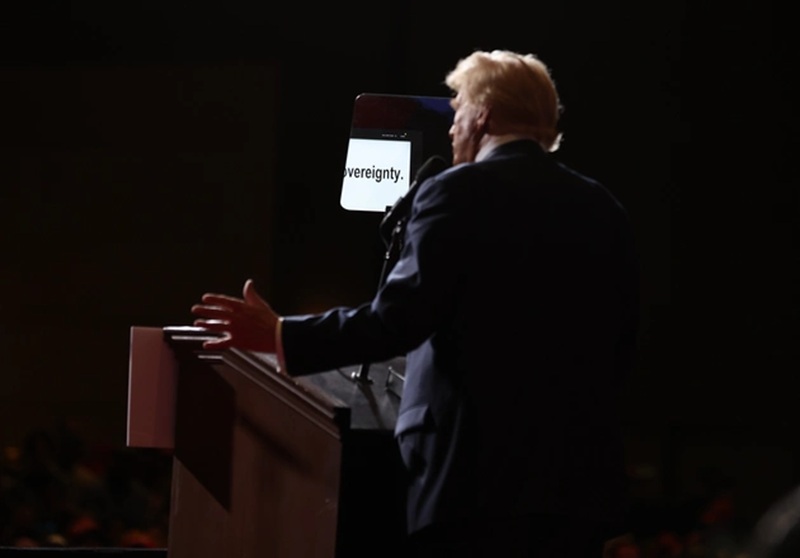
At the same time, a separate story surrounding President Donald Trump has highlighted the increasingly complex security environment surrounding the U.S. president after reports that he secretly changed aircraft following intelligence about a potential assassination plot.

The decline in recession expectations represents a significant shift in economic sentiment.

Investors and economists have spent much of the past year worrying about high interest rates, inflation, trade uncertainty and the possibility that tighter financial conditions could eventually weaken consumer spending and business investment.

Resilient economic activity has helped challenge those fears. Lower recession odds suggest markets are becoming more comfortable with the possibility of a soft landing. Under such a scenario, inflation continues to moderate without the economy experiencing a severe contraction.

Businesses maintain investment, households continue spending and the labor market avoids a dramatic deterioration. Financial markets are particularly sensitive to changes in recession expectations because economic growth influences corporate earnings, interest rates and investor risk appetite.

When recession fears decline, investors may become more willing to hold equities and other risk assets. Conversely, renewed concerns about contraction can quickly push capital toward traditionally defensive assets such as government bonds and gold.

The improvement in sentiment, however, does not mean recession risks have disappeared. Economic conditions can change rapidly, particularly when inflation, monetary policy and geopolitical tensions remain uncertain.

A sudden deterioration in employment or consumer demand could revive concerns about an economic slowdown. Against this economic backdrop, reports that Trump secretly switched planes after receiving intelligence about an assassination plot have introduced another dimension of uncertainty.

The reported decision underscores the extraordinary security considerations surrounding a sitting U.S. president, particularly when intelligence agencies identify a potentially credible threat.

Presidential travel is normally subject to extensive security planning, but intelligence suggesting a specific assassination threat can require immediate changes to established arrangements.

Changing aircraft can make it more difficult for potential attackers to anticipate the president’s movements, while also allowing security officials to respond discreetly to emerging threats.

The episode also demonstrates how national security can intersect with financial and political stability. Markets generally react negatively to unexpected political crises, especially when they involve the president or raise questions about the continuity of government.

Even when an incident does not directly affect economic fundamentals, uncertainty can influence investor confidence. For now, the contrasting developments tell two very different stories.

On the economic front, recession fears are retreating as investors gain confidence in the resilience of the U.S. economy. On the security front, reports surrounding Trump’s travel arrangements illustrate that significant political risks remain capable of emerging with little warning.

The decline in recession expectations is encouraging for financial markets, but it should not be interpreted as a guarantee of uninterrupted economic expansion. Meanwhile, the reported security scare serves as a reminder that political stability remains an important factor in the broader outlook.

As investors assess the months ahead, economic data, Federal Reserve policy and geopolitical developments will remain critical. A stronger-than-expected economy could continue pushing recession probabilities lower, while an unexpected economic or political shock could quickly reverse that optimism.

Goldman Says Both AI Bulls and Bears Are Overestimating the Economic Impact of Big Tech’s Spending Boom

0

The economic impact of the artificial intelligence investment boom is being overstated by both its biggest supporters and its most skeptical critics, according to Goldman Sachs, which says that the surge in spending by Big Tech is neither contributing as much to U.S. economic growth nor crowding out as much investment elsewhere as market narratives suggest.

The debate has intensified as the second-quarter earnings season shows little sign that major technology companies are preparing to slow their AI spending. Companies including Microsoft, Alphabet, Amazon and Meta Platforms continue to commit enormous sums to data centers, advanced chips, networking equipment and other infrastructure needed to develop and deploy AI systems.

For AI optimists, the spending is a powerful new source of economic growth. The construction of data centers, purchases of semiconductors and expansion of electricity infrastructure are now being cited as evidence that AI has become a major contributor to U.S. GDP.

Bearish investors, meanwhile, believe that the AI investment boom is absorbing capital and resources that could otherwise support other parts of the economy. They worry that technology companies are concentrating an unusually large share of corporate investment in a sector whose eventual financial returns remain uncertain.

Goldman Sachs economists say both interpretations go too far.

“While media reports and market commentary often claim that AI is making a very large contribution to US GDP growth but also crowding out a great deal of other activity, our analysis in prior work and above suggests that both claims are exaggerated,” Goldman U.S. economist Jessica Rindels wrote in a note on Tuesday.

The distinction matters because the amount companies spend on AI infrastructure does not translate directly into an equivalent contribution to domestic economic output.

A significant portion of the equipment being purchased by U.S. technology companies is manufactured overseas. Imports therefore reduce the amount of domestic value added captured in GDP calculations, even when U.S. companies are spending heavily on the equipment.

That means the headline figures for AI capital expenditure can give the impression of a larger direct economic contribution than the national accounts ultimately record.

Goldman’s analysis also takes into account the indirect effects of the investment boom, including the resources required to support rapidly expanding data-center capacity.

“We estimate that accounting for the indirect effects of AI—roughly $50bn of incremental crowding-out in 2026 from the three channels above, positive stock market wealth effects on consumer spending, and the hit to real income and consumer spending from higher electricity and other prices—would shave about 0.1pp off of the impact on 2026 GDP growth,” Rindels said.

The estimate points to a more complicated economic transmission mechanism than simply treating AI investment as an additional source of growth.

Data centers require enormous amounts of electricity, while the expansion of AI infrastructure is increasing demand for power generation, transmission equipment, and other resources. Higher demand can put upward pressure on electricity and other prices, affecting households and businesses outside the technology sector.

At the same time, the concentration of capital in AI does not necessarily mean that investment elsewhere is being displaced on a one-for-one basis. Technology companies are drawing on substantial cash flows and capital-market resources to finance their AI programs, while the broader U.S. economy remains capable of supporting investment in other sectors.

There is also a wealth effect working in the opposite direction. A sustained rise in technology stocks and other assets linked to the AI boom can increase household wealth and support consumer spending, partially offsetting some of the negative effects of higher infrastructure and energy costs.

This helps explain why Goldman does not see AI investment as either an enormous standalone boost to GDP or an investment vacuum that is starving the rest of the economy of capital.

The distinction could become increasingly essential for investors. Big Tech’s capital expenditure plans are now large enough to influence demand across semiconductor manufacturing, construction, power generation, utilities, networking equipment and data-center infrastructure. But the ultimate economic payoff will depend on how efficiently those investments translate into revenue and productivity gains.

For companies such as Microsoft, Amazon, Alphabet and Meta, the central question is therefore shifting from how much they are willing to spend to how much economic and financial output that spending ultimately produces.

The enormous cost of training and running AI models has also made infrastructure efficiency increasingly important. Companies are investing in increasingly powerful processors and specialized systems while seeking to improve utilization rates and reduce the amount of electricity required for each unit of computing.

Goldman’s assessment suggests that the AI boom should not be judged simply by the size of corporate capital-expenditure budgets. A large investment number can coexist with a relatively modest direct contribution to GDP when much of the underlying equipment is imported, while the broader economic effects can spread through electricity prices, construction, labor demand, financial markets and consumer spending.

The same analysis also challenges the bearish argument that AI spending is necessarily crowding out a comparable amount of investment elsewhere.

In other words, the AI boom is economically significant, but its impact is more nuanced than the more polarized market debate suggests. The investment surge is generating activity across multiple industries, while its direct contribution to measured U.S. output is constrained by the structure of the supply chain and the imported content of much of the infrastructure.

Anthropic’s Claude Watermark Raises the Stakes for AI-Generated Writing

0

Anthropic is moving to make AI-generated writing easier to identify, potentially giving publishers, schools, and other institutions a new way to establish whether text was produced with its Claude artificial intelligence models.

The AI company said Monday that new Claude models will embed an “imperceptible watermark” directly into AI-generated text. The marking is designed to have no effect on the meaning or readability of the content and will remain attached to text when it is copied and pasted. Anthropic also said the watermark may survive some forms of editing.

The technology marks a significant step in the growing effort by AI companies to establish the provenance of synthetic content. Rather than relying entirely on statistical AI detectors, which attempt to determine whether a passage appears machine-generated, watermarking creates a signal at the point where the content is produced.

Anthropic said the feature is part of its commitments to greater transparency under the European Union’s AI Act. Claude models launched on or after August 2 will support the marking from launch, while the company is working to extend the capability to older models.

The watermark will apply to Claude-generated content worldwide, including text produced when Claude is accessed through cloud providers. Anthropic also plans to give third parties tools that can detect the markings, potentially allowing publishers, universities, schools and other organizations to verify whether material was generated through Claude.

The development comes as the publishing industry confronts a difficult question: how can editors distinguish between legitimate use of AI as an assistive tool and cases in which AI-generated material is presented as entirely human-authored?

That question has already produced high-profile disputes.

Last month, a book agent withdrew support for the crime novel “Call Me, I’ll Hide the Body” following concerns that its author may have used AI. Fourteen publishers had reportedly bid for the book, and a publishing deal had been completed before the agent apologized. The author, Jerry Falade, denied using AI to write the novel.

Earlier this year, Hachette withdrew Mia Ballard’s horror novel “Shy Girl” following allegations that the work contained AI-generated writing. Ballard told The New York Times that she had not used AI to write the book and said a freelance editor had introduced AI-generated material without her direct knowledge.

Anthropic’s watermark could give publishers another layer of evidence in cases like these. A detectable Claude watermark could establish that Claude-generated material had been incorporated into a document, even when the text itself does not contain obvious signs of machine generation.

That distinction matters because conventional AI detection is inherently difficult. Modern language models can produce prose that closely resembles human writing, while editing can further obscure the characteristics that automated detectors attempt to identify.

Watermarking approaches the problem from a different direction. Instead of asking whether text looks like it was generated by AI, a detection system can look for a signal deliberately embedded by the model provider.

Google has already pursued a similar strategy. Google DeepMind expanded its SynthID system to AI-generated text in the Gemini app and web experience in 2024, embedding an imperceptible watermark by adjusting the probability of words selected during generation. The company says SynthID can identify AI-generated content while preserving the quality and meaning of the text.

Google has since expanded SynthID across text, images, audio and video and introduced a detector designed to identify content generated with its AI systems.

Anthropic’s move therefore points to an emerging industry standard in which AI companies take greater responsibility for identifying the material their models produce.

But watermarking will not make AI-generated writing impossible to disguise.

Anthropic acknowledges that extensive editing, paraphrasing, translation or combining Claude’s output with human-written material can make its watermark undetectable. That limitation means the technology is unlikely to provide a definitive answer in every disputed case.

There is also an important question of what exactly a watermark proves.

The presence of a Claude watermark could demonstrate that Claude was involved in producing some portion of a document, but it would not necessarily establish that Claude wrote the entire work. Someone could use the model for proofreading, translation, restructuring, or other limited assistance and still leave behind a detectable signal.

For publishers and educators, that distinction is expected to become increasingly important as policies around acceptable AI use become more sophisticated. A university may prohibit students from submitting AI-generated assignments while allowing AI-assisted proofreading. A publisher may permit an author to use AI for research or editing while requiring the prose itself to be written by the author. A watermark alone cannot determine whether such rules have been violated.

The more consequential development may therefore be the creation of a broader provenance system around AI-generated text.

If major AI laboratories consistently embed detectable signals in their outputs and make detection tools available to third parties, publishers and educational institutions could eventually have a more reliable mechanism for investigating disputed material. It could also make it harder for users to present entirely AI-generated work as exclusively their own.

At the same time, the technology raises questions about privacy, false accusations and the treatment of legitimate AI-assisted work. A detectable mark could be useful as evidence, but institutions will need to establish clear standards for interpreting that evidence rather than treating a watermark as automatic proof of misconduct.

Russia’s Economy Faces a Key Test as Q2 GDP and July Inflation Data Arrive

0

Russia’s economy is approaching an important test as the country prepares to release second-quarter gross domestic product (GDP) data and July inflation figures on Wednesday.

The statistics will provide a clearer picture of whether economic activity is stabilizing after a weak start to the year, while also showing how higher oil prices and changing international sanctions are influencing the country’s financial outlook.

Russia’s economy contracted by 0.2% year on year in the first quarter. Although the decline appeared concerning, the figure was partly affected by calendar effects.

January and February contained fewer working days than usual, reducing economic activity across several sectors. Consequently, economists have been watching the second quarter closely for evidence that the slowdown was temporary rather than the beginning of a deeper contraction.

The latest GDP figures will therefore be important for assessing the resilience of Russia’s economy. A stronger second-quarter performance could suggest that businesses and consumers have adjusted to difficult external conditions.

While another contraction would raise questions about whether years of sanctions, elevated government spending and structural economic pressures are beginning to weigh more heavily on growth.

One of the most important factors supporting Russia remains the energy market. Higher oil prices have increased the value of the country’s most important export commodity, providing additional revenue for the government and supporting the broader economy.

Oil and gas remain central to Russia’s fiscal position, making changes in global energy prices particularly important for Moscow’s ability to finance public spending and sustain economic activity.

The reported easing of restrictions surrounding Russian oil under Donald Trump has also changed the international environment. Greater access to global oil markets can potentially improve Russia’s export revenues.

Particularly if buyers become more willing to purchase Russian crude or if restrictions on transportation, insurance and financial transactions become less restrictive. For an economy heavily dependent on energy exports, such developments can have significant consequences.

Higher oil revenues do not automatically translate into strong economic growth. Russia continues to face challenges related to sanctions, restricted access to Western technology and capital, labor shortages and high borrowing costs.

These pressures can limit investment and make it more expensive for businesses to expand. The government has also had to rely heavily on fiscal spending to support strategic industries and maintain economic momentum.

Inflation will provide another crucial indicator. July’s inflation figures will show whether price pressures are easing or remaining stubbornly high.

Persistent inflation can reduce household purchasing power and force the central bank to maintain restrictive monetary policy for longer.

High interest rates, in turn, can weaken consumer demand and business investment, creating a difficult balance between controlling prices and supporting economic growth.

The combination of GDP and inflation data will therefore offer a more complete picture of Russia’s economic health. Strong growth accompanied by falling inflation would represent a favorable outcome, suggesting that the economy is adapting without excessive price pressures.

Conversely, weak growth combined with high inflation would point toward a more difficult period, potentially resembling stagflation. Wednesday’s figures will provide an important snapshot of an economy navigating geopolitical pressure, energy-market volatility and domestic economic constraints.

Russia may be benefiting from higher oil prices and a more favorable environment for its oil exports, but the underlying data will determine whether those advantages are translating into sustainable growth.

The second-quarter GDP and July inflation reports could therefore reveal whether Russia’s economy is merely slowing temporarily or entering a more persistent period of weakness.