

Concerns about a potential recession in the United States have fallen to their lowest levels in months, reflecting growing confidence that the world’s largest economy can avoid a major downturn.
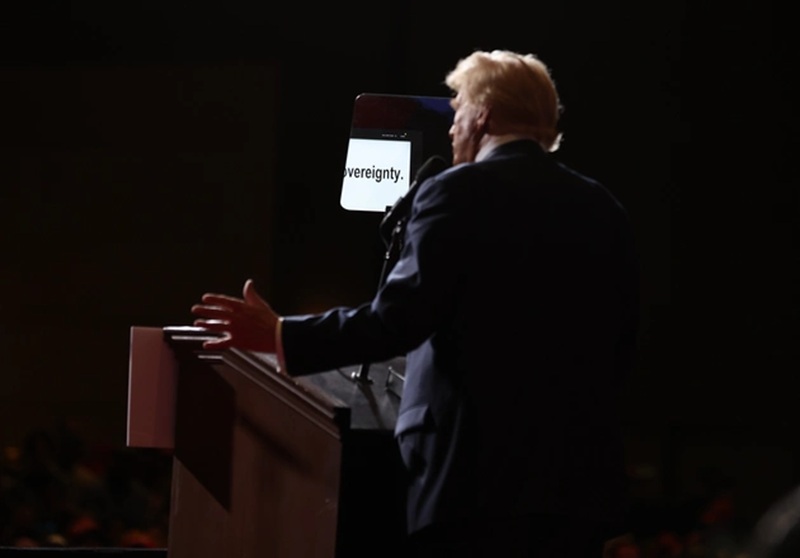
At the same time, a separate story surrounding President Donald Trump has highlighted the increasingly complex security environment surrounding the U.S. president after reports that he secretly changed aircraft following intelligence about a potential assassination plot.
The decline in recession expectations represents a significant shift in economic sentiment.
Investors and economists have spent much of the past year worrying about high interest rates, inflation, trade uncertainty and the possibility that tighter financial conditions could eventually weaken consumer spending and business investment.
Register for the next Tekedia Mini-MBA.
Register for Tekedia AI in Business Masterclass.
Join Tekedia Capital Syndicate and co-invest in great global startups.
Resilient economic activity has helped challenge those fears. Lower recession odds suggest markets are becoming more comfortable with the possibility of a soft landing. Under such a scenario, inflation continues to moderate without the economy experiencing a severe contraction.
Businesses maintain investment, households continue spending and the labor market avoids a dramatic deterioration. Financial markets are particularly sensitive to changes in recession expectations because economic growth influences corporate earnings, interest rates and investor risk appetite.
When recession fears decline, investors may become more willing to hold equities and other risk assets. Conversely, renewed concerns about contraction can quickly push capital toward traditionally defensive assets such as government bonds and gold.

The improvement in sentiment, however, does not mean recession risks have disappeared. Economic conditions can change rapidly, particularly when inflation, monetary policy and geopolitical tensions remain uncertain.
A sudden deterioration in employment or consumer demand could revive concerns about an economic slowdown. Against this economic backdrop, reports that Trump secretly switched planes after receiving intelligence about an assassination plot have introduced another dimension of uncertainty.
The reported decision underscores the extraordinary security considerations surrounding a sitting U.S. president, particularly when intelligence agencies identify a potentially credible threat.
Presidential travel is normally subject to extensive security planning, but intelligence suggesting a specific assassination threat can require immediate changes to established arrangements.

Changing aircraft can make it more difficult for potential attackers to anticipate the president’s movements, while also allowing security officials to respond discreetly to emerging threats.
The episode also demonstrates how national security can intersect with financial and political stability. Markets generally react negatively to unexpected political crises, especially when they involve the president or raise questions about the continuity of government.
Even when an incident does not directly affect economic fundamentals, uncertainty can influence investor confidence. For now, the contrasting developments tell two very different stories.
On the economic front, recession fears are retreating as investors gain confidence in the resilience of the U.S. economy. On the security front, reports surrounding Trump’s travel arrangements illustrate that significant political risks remain capable of emerging with little warning.
The decline in recession expectations is encouraging for financial markets, but it should not be interpreted as a guarantee of uninterrupted economic expansion. Meanwhile, the reported security scare serves as a reminder that political stability remains an important factor in the broader outlook.
As investors assess the months ahead, economic data, Federal Reserve policy and geopolitical developments will remain critical. A stronger-than-expected economy could continue pushing recession probabilities lower, while an unexpected economic or political shock could quickly reverse that optimism.