DD
MM
YYYY

PAGES

DD
MM
YYYY

spot_img

PAGES

Home Blog Page 2

$2.24B Drop in Stablecoin Market Cap Highlights Liquidity Withdrawal 

0

The combined market capitalization of the top 12 stablecoins dropped by $2.24 billion over a 10-day period. This occurred amid broader crypto market weakness, with Bitcoin falling to around $69,000 in some reports, though timelines vary across sources tying back to late 2025 corrections extending into early 2026.

This decline was interpreted as a signal of capital exiting the crypto ecosystem entirely—rather than investors simply parking funds in stablecoins to wait for better entry points.

Instead, it pointed to a rotation into traditional safe-haven assets like gold and silver, which were hitting record highs around that time (gold surpassing $5,000 in some narratives, with silver seeing sharp gains). Analysts noted this as a risk-off move, potentially delaying crypto recovery by reducing on-chain liquidity and buying power for digital assets.

Stablecoins serve as a key proxy for crypto-native capital availability—much of the on-chain buying power especially in DeFi, trading, etc. relies on stablecoin liquidity. A contraction like this can limit upward momentum, as there’s less “stable” capital ready to deploy into volatile assets.

The total stablecoin market cap has continued to see some outflows and volatility since that January event. DefiLlama shows the total stablecoin market cap hovering around $305 billion with slight weekly declines of ~$1-2B in recent periods, and larger weekly drops reported in late January/early February, such as $3.9B+ in one week.

This is down from a peak near $311 billion earlier in January 2026. Dominant players remain Tether (USDT, ~60% dominance) and USDC, though the sector overall reflects ongoing cautious sentiment amid macro pressures, regulatory developments, and broader crypto market deleveraging (total crypto market cap has seen significant pullbacks from 2025 highs).

The $2.24B drop was a specific snapshot highlighting liquidity withdrawal and a flight to traditional havens, contributing to the narrative of reduced on-chain buying power at that moment. While stablecoin supply has stabilized somewhat since, it hasn’t fully rebounded, aligning with persistent market uncertainty.

The $2.24 billion drop in stablecoin market cap over ten days (late January 2026) was part of a broader pattern of outflows and contraction in the stablecoin sector, signaling reduced on-chain liquidity and buying power in crypto markets.

The total stablecoin market cap sits around $305 billion, down from a mid-January peak near $311 billion. Recent weekly changes show modest declines, -0.46% to -1.0% WoW in early February, with net outflows accelerating in some periods; -$3.2B+ weekly in late January/early February reports.

Stablecoins act as the primary “dry powder” for crypto trading, DeFi participation, and on-chain activity. A shrinking supply means less immediate capital available to deploy into volatile assets like Bitcoin or altcoins.

This contributed to broader market weakness, with Bitcoin experiencing sharp corrections e.g., drops toward $70k–$80k ranges in reports, heavy liquidations, and total crypto market cap pullbacks of hundreds of billions.

The initial $2.24B drop was flagged as capital exiting crypto entirely and rotating to traditional havens like gold/silver at highs, rather than just parking in stables for dips—amplifying downward momentum.

Outflows reflect cautious or bearish positioning amid macro pressures like volatility in tech/precious metals, potential policy shifts, or deleveraging. Some analyses point to rotation into regulated alternatives like tokenized Treasuries, bank-led stablecoins, or even JPM Coin-style rails.

This isn’t necessarily a loss of faith in stablecoins but a shift toward more compliant or yield-bearing options under evolving rules. Dominant players like Tether (USDT) (60% dominance, ~$185B) and USDC ($70B) saw contractions, while select others gained share.

Lower stablecoin liquidity limits upward momentum, as there’s less “stable” capital to fuel rallies. Persistent outflows, -$7B+ over 30 days in some snapshots correlate with fragile positioning and heightened volatility. Reduced stablecoin supply constrains DEX volumes, lending yields, and on-chain activity, though some reports note surges in trading during dips.

2026 sees stablecoins evolving into contested payments infrastructure. Outflows may accelerate if banks successfully lobby against yield features per GENIUS Act debates, draining crypto’s appeal vs. traditional finance.

Conversely, institutional adoption and tokenized RWAs could stabilize or reverse trends long-term. The sector remains robust at $305B near all-time highs from early 2026, with no widespread depegging or issuer failures.

Contractions are modest relative to peaks (2–7% drops in recent periods) and often broad-based rather than issuer-specific. Stablecoins continue growing structurally suggesting this is more cyclical caution than structural decline.

The drop highlights crypto’s sensitivity to liquidity signals—stablecoin outflows act as an early warning for reduced risk appetite. While the market shows resilience sustained contraction could prolong corrections unless inflows resume via macro tailwinds, regulatory clarity, or renewed adoption.

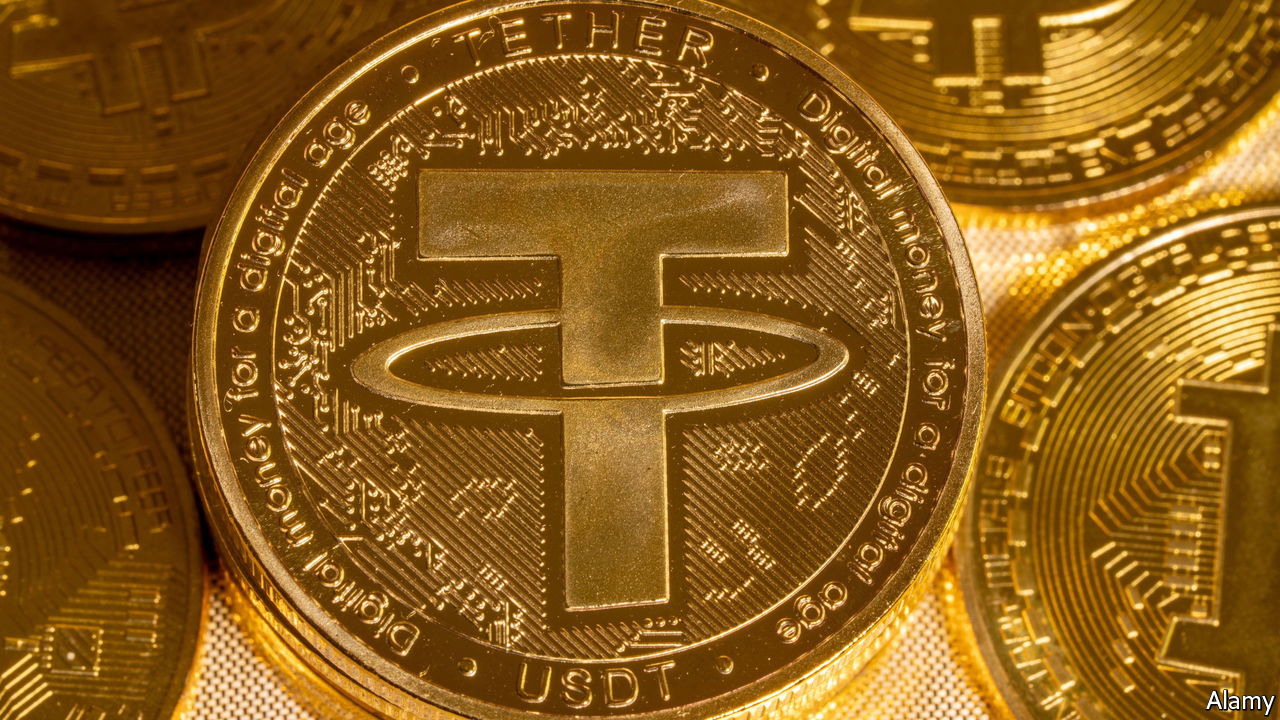
Tether USDT Surpassed 500M Users Milestone 

0

Tether (USDT), the world’s largest stablecoin, has achieved a significant milestone by surpassing 500 million users, with recent reports indicating the figure has climbed even higher to around 534 million as of early 2026.

This growth was detailed in Tether’s Q4 2025 USD Market Report released in early February 2026. The stablecoin added an estimated 35.2 million new users in Q4 2025 alone. This marks the eighth consecutive quarter of adding over 30 million users, showing consistent acceleration.

On-chain holders reached 139.1 million up 14.7 million in the quarter, while monthly active on-chain users hit a record 24.8 million. Tether estimates over 100 million additional users hold USDT on centralized platforms. Total USDT market cap grew to approximately $187.3 billion up $12.4 billion in Q4, with transfer volume hitting a record $4.4 trillion in the quarter.

This expansion occurred despite broader crypto market challenges, including a sharp contraction starting in October 2025 with overall crypto market cap dropping over 30% in some periods. Tether attributes much of the growth to demand in emerging markets for dollar liquidity, remittances, payments, and as a store of value amid macroeconomic uncertainty.

CEO Paolo Ardoino has previously emphasized USDT’s role in financial inclusion, noting heavy adoption in developing regions—effectively extending “dollar hegemony” through digital means. However, risks and concerns persist, as highlighted in recent coverage.

USDT briefly dipped to around $0.9980 in early 2026; its weakest level in over five years, sparking brief rumors and scrutiny. While deviations have been minor and short-lived, any sustained de-pegging could ripple through crypto trading where USDT dominates volumes and raise systemic questions.

As USDT’s role grows (holding ~70% of stablecoin wallets and massive U.S. Treasury exposure of over $141 billion), it faces intensified regulatory attention, transparency debates; historical issues with full 1:1 backing, and potential risks from illicit use or reserve management.

Growth has fueled discussions about stablecoins’ systemic importance, including potential impacts on Treasury markets, liquidity pressures, and the need for stronger oversight to mitigate financial stability threats. Tether’s trajectory underscores stablecoins’ evolution from crypto trading tools into global financial infrastructure, but its outsized influence keeps peg and regulatory risks in sharp focus.

USDT is designed to maintain a strict 1:1 peg to the US dollar. While it has historically recovered from minor deviations and benefits from a heavily Treasury-backed reserve structure, peg stability remains a key concern for users, traders, and regulators.

In recent weeks including around early February 2026, USDT briefly dipped to approximately $0.9980 on some exchanges—its weakest level in over five years. This minor depeg was short-lived, with the token quickly returning near parity. Similar brief wobbles have occurred before, often tied to broader market stress, liquidity crunches on exchanges, or large redemptions during risk-off periods.

These events are typically driven by temporary imbalances like heavy selling pressure or exchange-specific liquidity issues rather than fundamental reserve shortfalls. Tether has consistently honored direct redemptions at $1 through its primary portal, helping restore the peg rapidly.

Historical context includes more severe past incidents, such as drops to ~$0.95 during the 2022 Terra/Luna collapse or even lower in earlier years but recoveries have been the norm in recent cycles. Tether’s reserves are heavily weighted toward US Treasuries over $141 billion, a record high, which are low-risk and liquid.

However, allocations to higher-volatility assets like Bitcoin ~5-6% of reserves, gold, and secured loans introduce potential risks. A sharp, simultaneous drop in BTC/gold prices could erode the excess buffer ~$6.3 billion reported, potentially leaving USDT undercollateralized in extreme scenarios.

USDT’s peg stability assessment to its lowest level “weak” or 5 in late 2025, citing these exposures, disclosure gaps, and limitations in primary redeemability. In a mass redemption event (a “run”), large-scale outflows could strain liquidity if reserves must be liquidated quickly.

While Treasuries are highly liquid, extreme stress could amplify deviations. Historical examples like the USDC’s 2023 depeg tied to SVB exposure highlight that even well-backed stablecoins aren’t immune. Tether faces intense scrutiny, including potential freezes on addresses (Tether has frozen billions in illicit funds at law enforcement’s request), broader stablecoin regulations, and concerns over its dominance.

A major regulatory shock could trigger confidence loss. Institutions like the ECB have warned that stablecoin runs could spill over into Treasury markets or wider financial stability, given Tether’s massive Treasury holdings.

USDT’s outsized role in crypto trading means any perceived weakness amplifies contagion. Brief depegs have correlated with BTC corrections or sideways trading periods. Broader macro events could exacerbate pressures. Tether reported multi-billion-dollar profits in 2025, bolstering its buffer for peg defense.

Growth to over 534 million users with high on-chain activity reflects trust in emerging markets for remittances and dollar access. Minor dips have resolved without systemic fallout, unlike algorithmic stablecoins.

While USDT’s peg has proven resilient amid 2025-2026 market turbulence, risks stem primarily from reserve volatility, redemption mechanics under stress, and its systemic importance. A full collapse remains a low-probability tail risk, but temporary depegs during shocks are plausible and could impact crypto liquidity broadly.

German Exports Showed Positive Turn in Late 2025, as German-Swiss Consortium Wins Contract for Danish Driverless Railway

0

German exports showed a positive turn in late 2025, with a surprising surge at the end of the year helping the country achieve overall annual growth after two years of declines.

According to data released by Germany’s Federal Statistical Office (Destatis) exports in December 2025 rose by 4.0% month-on-month compared to November, reaching €133.3 billion. This significantly exceeded expectations of a 1% increase and marked a rebound from a 2.5% drop the prior month.

The boost came from stronger shipments to both EU and non-EU countries, including notable gains to the US (+8.9% from November) and China (+10.7%).For the full year of 2025, total exports reached approximately €1.57 trillion around $1.84 trillion, up 1.0% from 2024 on a seasonally adjusted basis.

This ended a streak of contractions and came as a surprise given ongoing challenges. European demand played a major role in supporting the annual growth, with exports to other EU countries rising around 4%. US trade faced headwinds from tariffs including a 15% baseline levy on many EU goods, leading to a 9.3% drop in exports to the US for the full year, shrinking the bilateral trade surplus to a four-year low of about €52.2 billion.

China overtook the US as Germany’s top trading partner in 2025, with overall trade volume growing about 2.7% year-on-year. Imports in December rose more modestly +1.4% month-on-month, widening the monthly trade surplus to €17.1 billion.

However, the picture was mixed: Industrial production fell more than expected in December down 1.9% month-on-month, particularly in autos and machinery, highlighting that the export rebound doesn’t fully signal a broad industrial recovery amid global uncertainties like tariffs and economic pressures.

This data reflects resilience in German trade despite external headwinds, with intra-European strength and a late-year push providing the key lift. US tariffs, primarily imposed under President Donald Trump’s second term starting in 2025, have had a significant negative impact on German exports, particularly to the United States, though the broader German economy has shown some resilience through diversification.

The key development was a July 2025 trade deal between the EU and the US that set a baseline tariff of 15% on most EU exports to the US (higher than pre-Trump levels, with even steeper rates on specific sectors like steel, aluminum, and autos in some cases).

This followed earlier announcements of tariffs on global imports, including targeted measures on automobiles and parts. In 2025, German exports to the US fell by 9.3% year-on-year, according to Germany’s Federal Statistical Office (Destatis) data released in early February 2026.

This reduced the bilateral trade surplus to a four-year low of about €52.2 billion from nearly €70 billion the prior year. Total German goods exports to the US amounted to roughly €147 billion ($173 billion) for the year. Sector-specific hits were severe: Automobiles and parts dropped sharply around 17.5% from January-November 2025 data, with some reports citing nearly 19% declines in motor vehicles/parts over parts of the year.

Machinery fell by about 9-9.5%. Chemicals and other products also saw notable declines. These reductions stemmed directly from the tariffs making German goods less competitive in the US market, with some front-loading of exports early in 2025 before full effects kicked in.

Despite the US hit, overall German exports rose by about 1.0% in 2025, ending two years of contraction. Stronger demand from other EU countries up around 4% largely offset losses to the US and a slight dip to China. China overtook the US as Germany’s top trading partner in 2025, with overall trade volume growing modestly.

The tariffs contributed to ongoing challenges in Germany’s export-oriented industries, exacerbating weak industrial production like a 1.9% monthly drop in December 2025 and contributing to subdued GDP growth of just 0.2% in 2025. Uncertainty from tariffs and threats of escalation weighed on investment and business sentiment, though some surveys showed economic confidence rebounding to multi-year highs by early 2026 despite ongoing risks.

Broader forecasts from Oxford Economics and others suggest that escalated tariffs, a hypothetical 25-30% blanket on Europe with retaliation could shave around 1% off eurozone GDP at peak, with prolonged effects on export-heavy Germany. Tensions flared in January 2026 with threats of additional 10-25% tariffs on Germany and other European nations tied to unrelated geopolitical issues, but these were later withdrawn or de-escalated.

German officials and industry groups via warnings from Chancellor Merz have criticized the measures as damaging, while noting that the US market remains important despite the hit. Some analyses indicate that US consumers and importers bear most of the tariff costs around 96% in one German study, rather than fully shifting the burden abroad.

While the tariffs delivered a clear blow to Germany’s US trade—particularly autos and machinery—they did not derail a modest export recovery, thanks to intra-European strength. However, persistent trade policy uncertainty continues to pose risks for 2026 and beyond, especially if further escalations occur.

German-Swiss Consortium Wins Contract for Danish Driverless Railway

A German-Swiss consortium consisting of Siemens Mobility (Germany) and Stadler Rail (Switzerland) has won a major contract from Danish State Railways (DSB) to supply and maintain a new fleet of fully automated, driverless trains for Copenhagen’s S-Bane (suburban rail network, also known as S-tog).

The framework agreement, announced in early 2026 with some reports referencing the award around January 2026 and formal signing/press releases on February 6, 2026, is valued at approximately €3 billion (around DKK 23 billion). It includes: Delivery of at least 226 four-car electric multiple units (EMUs), designed for fully driverless operation at Grade of Automation 4 (GoA4) — the highest level, meaning unattended train operation with no onboard driver.

An option for up to 100 additional trains. A 30-year maintenance agreement with options for extensions, including digital services via Siemens’ Railigent X platform. The trains will feature an iconic design, low-floor access for accessibility, modern passenger information systems, and a maximum speed of 120 km/h.

This contract is described as the world’s largest for driverless trains in an open (non-metro) railway system. It builds on earlier work: Siemens was awarded contracts worth about €270 million in 2024 to upgrade the network’s signaling and onboard systems for GoA4 automation.

Testing of the first driverless trains is expected to begin around 2028. Initial passenger service with the new trains starts in 2032. Full network automation across the 170 km S-Bane system is targeted by around 2040, enabling more frequent services potentially up to 35% increase, higher capacity, improved reliability, and closer headways.

The project is part of DSB’s “Future S-train” program to modernize the nearly 90-year-old Copenhagen suburban network, shifting from semi-automated (GoA2 with drivers) to fully unattended operations for better efficiency and passenger experience.

This deal highlights growing adoption of driverless technology in European commuter rail, with Siemens leading on electrical/digital systems (propulsion, braking, control, etc.) and Stadler handling carbodies, interiors, and assembly.

GoA4 (Grade of Automation 4) represents the highest level of automation in railway and urban guided transit systems, as defined by international standards like IEC 62290-1 from the International Electrotechnical Commission (IEC) and aligned with definitions from the International Association of Public Transport (UITP).

The Grades of Automation (GoA) classify how much responsibility for train operation is handled automatically versus by humans. These levels apply primarily to urban rail systems (metros, subways, commuter trains) but are increasingly relevant to mainline and suburban networks like Copenhagen’s S-Bane.

Here are the standard five Grades of Automation (GoA0 to GoA4): GoA0 — Line-of-sight / manual operations with no automatic protection. The driver controls everything manually without automatic safeguards (rare in modern systems).

GoA1 — Non-automated train operation. The train is driven manually by a driver in the cab, but protected by automatic train protection (ATP) systems that prevent collisions, overspeed, etc. (common in traditional signaling).

GoA2 — Semi-automated train operation (STO — Semi-automatic Train Operation): The train automatically handles starting, acceleration, cruising, braking, and stopping. A driver remains in the cab to start the train (if required), operate doors (or supervise them), monitor the platform/track, handle emergencies, and intervene if needed. This is one of the most common levels today in many metro and commuter systems.

GoA3 — Driverless train operation (DTO — Driverless Train Operation). No driver is needed in the cab for normal operation — the system fully automates driving, starting, stopping, and often platform monitoring. However, onboard staff is present to open/close doors, assist passengers, handle customer service, and manage emergencies or degraded situations. The train can operate without a qualified driver, but humans are still onboard for safety and service roles.

GoA4 — Unattended train operation (UTO — Unattended Train Operation) or fully driverless/manless. This is the highest level: the train is fully automated and unattended, with no onboard staff required for safe operation. All core functions are handled automatically, including:Setting the train in motion

Onboard staff may optionally be present for non-safety roles like customer service, ticket checks, or cleaning, but they are not required for the train to operate safely. Manual fallback controls may exist for exceptional failures, but normal operation relies entirely on the automation system.

Key Advantages of GoA4

Enables very short headways; trains every 90–120 seconds for higher capacity. Reduces operational costs (no driver salaries, more efficient staffing). Improves reliability, energy efficiency, and punctuality through consistent automation. Supports 24/7 or high-frequency service.

Many modern driverless metro lines operate at GoA4, such as parts of the Singapore MRT, Vancouver SkyTrain, Delhi Metro (certain lines), Paris Métro Lines 1 and 14, and Sydney Metro. In the context of the Copenhagen S-Bane project, achieving GoA4 on an existing suburban rail network (not a closed metro) is ambitious and groundbreaking, as it extends full unattended automation to an open, mixed-traffic-style system.

GoA4 means complete transfer of operational responsibility to the system — no human is needed onboard to drive or ensure safety, marking true “driverless” or “unattended” rail operation.

Amazon’s $200 Billion AI Bet Triggers Stock Rout as Investors Question Timing of Returns

0

Amazon shares sank 11% in extended trading on Thursday after the company laid out plans to spend as much as $200 billion on capital expenditures, a figure that has sharpened Wall Street’s unease about how far, and how fast, Big Tech is willing to go in the race to dominate artificial intelligence infrastructure.

The scale of the forecast left investors stunned. Amazon spent about $131 billion on property and equipment in 2025, already a steep increase from roughly $83 billion the year before. The new outlook implies another dramatic step up, placing Amazon well ahead of its megacap peers and more than $50 billion above what analysts had penciled in. In a market increasingly sensitive to cash flow discipline, the reaction was swift.

The selloff comes at a moment when the AI narrative is shifting. Since OpenAI’s release of ChatGPT in late 2022, technology companies have justified rising spending by pointing to explosive demand for compute. Entering 2026, that logic is facing tougher scrutiny as commitments grow larger and timelines for returns remain uncertain.

Alphabet said this week it could spend up to $185 billion next year, while Meta has guided for capital expenditures of as much as $135 billion. Rather than peaking, the AI investment cycle appears to be accelerating.

On Amazon’s earnings call, analysts pressed management to explain when shareholders might begin to see tangible payback. CEO Andy Jassy said he was “confident” that the investments would deliver strong returns on invested capital, particularly through Amazon Web Services, but he declined to offer specific milestones.

That lack of precision was central to investor concerns. Evercore ISI analyst Mark Mahaney urged Jassy to bridge the gap between conviction and visibility, asking how the company gets from today’s spending surge to sustained long-term returns. Jassy responded by framing the investment as demand-driven rather than speculative.

“This isn’t some sort of quixotic, top-line grab,” he said, arguing that Amazon is responding to concrete customer needs. According to Jassy, demand for AI compute on AWS is so strong that growth is being constrained by capacity rather than interest.

The numbers from AWS lend some support to that claim. The cloud unit reported revenue growth of 24% to $35.6 billion in the most recent quarter, beating expectations and marking its fastest pace of expansion in 13 quarters. Jassy said AWS could have grown faster if it had more infrastructure in place, a point he used to justify the aggressive buildout.

To close that gap, Amazon added nearly 4 gigawatts of computing capacity in 2025 and expects to double its available power by the end of 2027. That expansion requires massive upfront investment in data centers, networking equipment, and custom chips, locking Amazon into a capital-heavy path that investors worry could weigh on margins if demand cools or pricing weakens.

Beyond near-term financials, analysts are also questioning how the structure of the AI market will evolve. Barclays analyst Ross Sandler asked whether spending remains concentrated among a handful of AI-native labs or whether enterprise adoption is broad enough to support sustained returns on infrastructure.

Jassy described the market as increasingly polarized. On one side are large AI labs consuming enormous amounts of compute. On the other hand, enterprises are adopting AI as a tool for productivity gains and cost control. Between them is a broad middle of companies experimenting, piloting, and gradually scaling applications.

“That middle part of the barbell very well may end up being the largest and most durable,” Jassy said, suggesting that enterprise demand, rather than hype around foundation models, will underpin long-term growth.

Still, the market reaction suggests investors are no longer willing to take that outcome on faith. Amazon’s stock drop underscores a broader shift in sentiment: enthusiasm for AI remains, but tolerance for open-ended spending is narrowing. With interest rates still elevated and competition intensifying across cloud and AI services, investors are increasingly focused on execution, efficiency, and timing.

The challenge for Amazon now is to convince the market that its AI ambitions will follow the same arc as AWS did in its early years, when heavy investment eventually produced one of the most profitable businesses in tech.

CME Group Eyeing a Coin and Could be more than Stablecoins 

0

Wall Street is eyeing a CME Coin, and it could matter more than Stablecoins. This stems from comments made by CME Chairman and CEO Terry Duffy during the company’s Q4 2025 earnings call.

CME Group is actively exploring the launch of its own proprietary digital token, often referred to in coverage as a “CME Coin.” This would be a blockchain-based asset potentially operating on a decentralized (public) network, setting it apart from many institutional tokens that run on private or permissioned systems like JPMorgan’s JPM Coin on closed networks.

It’s tied to CME’s broader push into tokenized collateral and tokenized assets for margin, settlement, and risk management in derivatives markets. This is distinct from a separate but related project: CME is collaborating with Google Cloud on a “tokenized cash” solution, expected to roll out later in 2026.

That product would enable tokenized deposits or cash equivalents likely backed by a depository bank for use as collateral in trading, including crypto derivatives. The “CME Coin” concept appears aimed at broader industry use—allowing other participants to leverage it for margin posting, settlement, or related functions in regulated markets.

CME has not confirmed specifics like whether it would be a stablecoin, a settlement token, or another format. No launch timeline, technical details, or regulatory filings have been announced yet—it’s still in the exploratory phase.

This aligns with CME’s aggressive expansion in crypto: Record volumes in 2025 averaging billions daily in crypto derivatives, plans for 24/7 trading of crypto futures/options in early 2026 pending approval, and upcoming launches like futures on Cardano (ADA), Chainlink (LINK), and Stellar (XLM) starting February 9, 2026.

Stablecoins primarily facilitate retail/crypto-native payments, trading, and DeFi by providing dollar-like stability on public blockchains. A CME-issued coin, however, would target institutional and regulated environments: CME clears trillions in derivatives exposure across interest rates, equities, commodities, FX, and now crypto.

If a CME Coin became eligible as margin/collateral, it could embed itself at the core of global risk management and price discovery. It might “move risk” more than money—enhancing efficiency in post-trade processes, reducing counterparty risk, and potentially sidelining less-regulated stablecoins in institutional settings by raising the bar for collateral “pedigree.”

This reflects TradFi deepening its integration with blockchain, potentially challenging or complementing crypto-native infrastructure while reinforcing CME’s dominance in market infrastructure. In short, while still speculative and early-stage, this signals Wall Street’s accelerating embrace of tokenization—not just for payments, but for controlling core financial plumbing.

If realized, it could reshape how institutional risk flows in a tokenized world. Tokenized collateral refers to the process of representing traditional financial assets such as cash, U.S. Treasuries, money market fund shares, or other high-quality liquid assets as digital tokens on a blockchain or distributed ledger technology (DLT).

These tokens serve as collateral — primarily for posting margin in derivatives markets, repo transactions, securities lending, or other secured obligations. In traditional finance, collateral management involves slow, siloed processes: assets are held in separate custody accounts, transfers require intermediaries like correspondent banks or tri-party agents, settlements often take T+1 or T+2 days or longer across borders/time zones, and reconciliation between parties is manual and error-prone.

This leads to inefficiencies, excess collateral buffers, and challenges for 24/7 operations. Tokenization addresses these by moving collateral onto programmable, shared ledgers, enabling near-instant, transparent, and automated movements.

A qualified issuer creates a digital token that represents ownership or a claim on an underlying real-world asset (RWA). Tokenized cash/deposits — A 1:1 claim on USD held at an insured depository institution potentially FDIC-insured.

Digital representation of U.S. government securities. Tokenized money market funds — Shares in government or prime funds tokenized for on-chain use. The token embeds key details: asset type, issuer, identifiers, rights, redemption rules, and compliance logic.

Tokens are held in wallets controlled by qualified custodians, clearing members, or the clearinghouse (DCO) itself. Segregation ensures client assets remain separate from the issuer’s or intermediary’s proprietary funds critical for bankruptcy remoteness and regulatory compliance.

Multi-signature controls, hardware security modules, and proof-of-reserves attestations provide transparency and security. Collateral moves via on-chain transactions, often on permissioned networks or potentially public/decentralized ones. Transfers can occur in seconds/minutes, 24/7, using mechanisms like: Delivery versus payment (DvP) — Collateral and payment/obligation settle simultaneously.

Clearinghouses apply haircuts (discounts for risk) — potentially with slight premiums for tokenization mechanics/operational risks.
Holders can redeem tokens back to the underlying asset via the issuer or custodian, often with same-day or next-day liquidity for eligible assets.

CME Group is actively advancing this through: A partnership with Google Cloud on tokenized cash expected rollout in 2026 for margin/settlement in derivatives. Exploration of a proprietary “CME Coin” or similar token potentially on a decentralized network, aimed at broader industry use for collateral.

This targets institutional-grade plumbing: enabling faster, more reliable margin flows in CME’s massive derivatives ecosystem; trillions cleared daily. Regulators are aligning frameworks — e.g., allowing tokenized assets/stablecoins as eligible collateral under strict rules on reserves, attestations, redemption, and custody — to support this without compromising stability.

Tokenized collateral upgrades the “plumbing” of risk management from slow, fragmented legacy systems to fast, shared, blockchain-based rails — potentially freeing up hundreds of billions in trapped liquidity while enabling continuous, efficient markets.