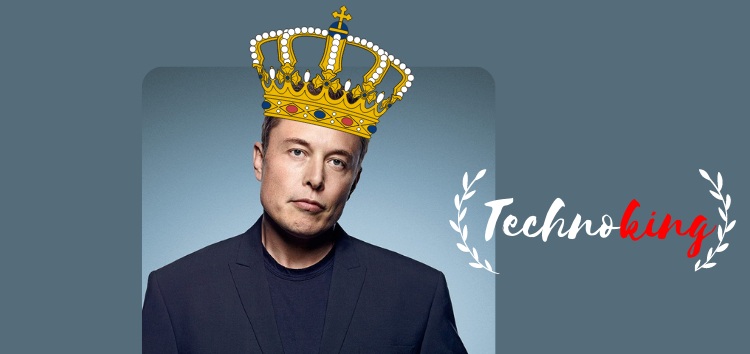
SpaceX’s planned initial public offering is shaping up as a defining moment for global capital markets and for its founder, Elon Musk, whose ownership structure and cross-company empire could place him on a path toward becoming the world’s first trillionaire.
The company confirmed in a securities filing on Wednesday that it intends to sell shares to the public for the first time, marking the formal transition of SpaceX from a private aerospace contractor into a publicly traded conglomerate spanning rockets, satellite communications, artificial intelligence infrastructure, and digital platforms.
While the filing did not disclose the final size of the offering, the IPO is widely expected to rank as the largest in history, potentially surpassing Saudi Aramco’s $29.4 billion debut. Market expectations have centered on a valuation of roughly $1.75 trillion, placing SpaceX among the most valuable companies globally at listing.
That valuation scale is central to the Musk wealth narrative. With Musk currently controlling roughly 85% of voting power in SpaceX and maintaining dominant ownership across his wider holdings, analysts say even partial market pricing of SpaceX at multi-trillion-dollar levels would significantly reprice his net worth.
Musk is already the world’s richest individual, with Bloomberg estimating his wealth at about $667 billion and Forbes $788 billion, but a successful SpaceX listing at the upper end of expectations could push his paper wealth into territory where a trillion-dollar threshold becomes mathematically plausible over time, particularly if linked with continued appreciation in Tesla and his AI-related assets.
The IPO would also formalize what is already one of the most vertically integrated private technology ecosystems in the world. SpaceX is no longer simply a launch provider; it operates Starlink, develops Starship, and now incorporates artificial intelligence assets following the integration of Musk’s xAI operations into the company’s structure.
The filing shows SpaceX generated $18.6 billion in revenue in 2025, up 33% year over year, but still posted a net loss of $4.3 billion in the first quarter alone. The company’s economics remain heavily shaped by capital intensity, with Starship development alone costing an estimated $15 billion to date, according to the filing.
Yet investors are not valuing SpaceX on near-term profitability. Instead, the IPO thesis is built on dominance in two of the fastest-growing infrastructure markets in the global economy: space-based communications and orbital launch services.
Starlink has become the company’s financial engine. The service now has 10.3 million subscribers, up from 5 million a year earlier, and is expanding aggressively into emerging markets and government contracts. However, average revenue per user is declining as Starlink scales into lower-income regions, creating a tension between growth and monetization that will likely be closely watched by public market investors.
Alongside satellite internet, SpaceX’s launch business remains strategically entrenched in government and defense ecosystems. Contracts with agencies such as NASA and the U.S. Department of Defense provide stable revenue streams and reinforce the company’s quasi-public utility status in global space infrastructure.
The IPO filing also highlights SpaceX’s expanding role in artificial intelligence infrastructure, an area increasingly central to Musk’s long-term strategy. The company has absorbed xAI and its Grok chatbot operations, while also positioning itself within broader AI compute markets through partnerships, including recent arrangements involving data center capacity tied to firms such as Anthropic.
However, the integration of AI assets introduces new regulatory and reputational risks. The filing notes that Grok has been subject to multiple investigations related to nonconsensual deepfake content, raising potential exposure to legal liabilities and regulatory sanctions. Even so, Musk’s broader strategy appears to hinge on convergence: rockets providing launch capability, Starlink enabling global connectivity, and AI systems driving compute demand, potentially extending into orbital data centers via Starship in the future.
The governance structure remains central to investor calculations. Musk is expected to retain approximately 85% voting control post-IPO, continuing as chief executive, chairman, and chief technology officer. This level of control is unusually high for a company of this scale and effectively ensures Musk’s strategic autonomy even after listing.
It also reinforces a long-standing pattern across Musk’s companies: capital markets participation without traditional dilution of founder authority. While this structure has historically attracted strong retail investor enthusiasm, it may also raise governance questions among institutional funds accustomed to more conventional board independence.
The IPO will also test investor appetite for Musk himself as a brand. His public profile spans multiple companies, including Tesla, X (formerly Twitter), and xAI, alongside political controversies and policy involvement that have periodically influenced sentiment toward his businesses. Despite volatility, Musk retains a deeply committed retail investor base that has historically provided significant support during periods of operational or reputational stress.
If SpaceX achieves even a mid-range valuation near $1.75 trillion, it would immediately rank among the top tier of global companies by market capitalization. Should longer-term projections around Starship, Starlink expansion, and AI infrastructure materialize, some analysts argue the company could justify valuations approaching $2 trillion or more.
At that scale, Musk’s combined equity across SpaceX and Tesla alone could push his net worth toward or beyond the trillion-dollar threshold, depending on market conditions and execution across multiple high-risk, capital-intensive ventures.