DD
MM
YYYY

PAGES

DD
MM
YYYY

spot_img

PAGES

Home Blog Page 2

U.S.-Iran Breakthrough Deal Raises Hopes of Ending War, Reopening Hormuz and Easing Global Energy Crisis

0

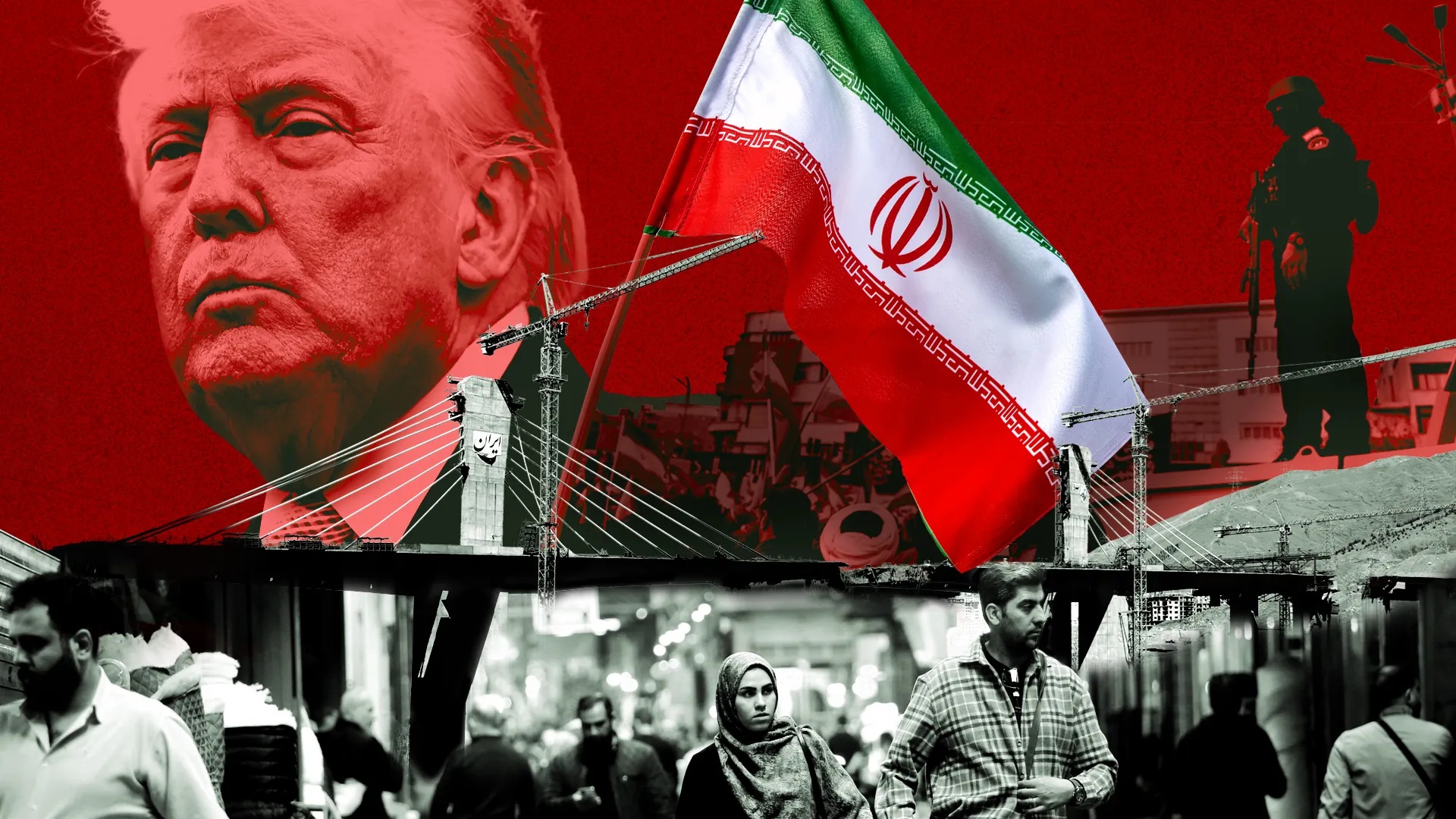
The United States and Iran have reached a framework agreement aimed at ending months of conflict that has destabilized the Middle East, disrupted global energy markets, and heightened fears of a broader regional war.

The preliminary memorandum of understanding, which is expected to be formally signed in Switzerland on Friday, outlines a path toward reopening the Strait of Hormuz, ending military operations across multiple fronts, and launching broader negotiations over Iran’s nuclear program and sanctions relief.

The deal marks the most significant diplomatic breakthrough since hostilities erupted following U.S.-Israeli strikes on Iran earlier this year.

U.S. President Donald Trump declared victory on social media, writing: “The Deal with the Islamic Republic of Iran is now complete.”

The statement came shortly after Pakistani Prime Minister Shehbaz Sharif, whose government played a key mediation role, announced that negotiators had secured an agreement.

Sharif said the pact calls for “the immediate and permanent termination of military operations on all fronts, including in Lebanon.”

The announcement immediately reverberated across global markets. Oil prices fell sharply, stock markets rallied, and investors welcomed the prospect of renewed stability in one of the world’s most strategically important regions.

Strait Of Hormuz Set To Reopen

The most immediate consequence of the agreement is expected to be the reopening of the Strait of Hormuz, through which roughly one-fifth of global oil supplies and a significant portion of the world’s liquefied natural gas shipments pass.

Iran effectively shut down the strategic waterway after the conflict began in February, triggering one of the biggest energy market shocks in years. The closure pushed crude prices above $100 per barrel, reignited inflation pressures across major economies, and intensified concerns about global growth.

Trump said the strait would reopen on Friday and announced the end of the U.S. naval blockade of Iranian ports.

“Ships of the World, start your engines. Let the oil flow!” Trump wrote.

Brent crude futures fell about 4% following the announcement as traders priced in the prospect of restored oil flows and reduced geopolitical risk.

Lebanon Emerges As Key Component Of Deal

One of the most notable aspects of the framework is its inclusion of Lebanon, which became the deadliest secondary front in the conflict. Since March, fighting between Israel and the Iran-backed Hezbollah movement has killed thousands of people and displaced an estimated 1.2 million residents.

The Lebanese front had become a major obstacle in negotiations, with both Israel and Hezbollah resisting repeated international calls for restraint. Iran’s Supreme National Security Council announced that military operations on all fronts, including Lebanon, would end permanently beginning Monday night.

Iranian Foreign Minister Abbas Araqchi stressed that implementation would require a complete halt to Israeli military operations in Lebanon. He wrote that the United States bears responsibility for ensuring the agreement is carried out.

Lebanese Parliament Speaker Nabih Berri welcomed the framework, saying it lays the groundwork for regional stability. However, Israeli officials signaled that significant disagreements remain. Israeli Defence Minister Israel Katz said Israel would oppose pressure to withdraw from areas it currently occupies in southern Lebanon.

“This is the main lesson from the events of October 7,” Katz said.

“Prime Minister Netanyahu made this clear to U.S. President Trump and other senior American officials, and I also clarified it yesterday to U.S. Defense Secretary Pete Hegseth.”

Nuclear Issue Postponed For Future Negotiations

While the agreement addresses military operations and maritime security, it leaves the most contentious issue unresolved: Iran’s nuclear program. Iranian Deputy Foreign Minister Kazem Gharibabadi said negotiators would use a 60-day ceasefire period to pursue a broader settlement. The future talks are expected to address sanctions relief, uranium enrichment levels, nuclear inspections, and regional security arrangements.

The issue remains politically sensitive for Trump. During his first term, Trump withdrew the United States from the 2015 nuclear agreement negotiated under Barack Obama, arguing that the deal failed to adequately constrain Tehran’s nuclear ambitions. Since then, Iran has significantly expanded its uranium enrichment activities, accumulating more than 400 kilograms of material enriched to levels approaching weapons-grade purity.

Before the announcement, U.S. and Iranian officials offered differing visions of the eventual outcome. A U.S. official said the final agreement would lead to the dismantling of Iran’s nuclear program, including the destruction and removal of highly enriched uranium stockpiles. An Iranian official, meanwhile, indicated that Tehran would instead dilute enriched uranium domestically rather than surrender it.

The gap underscores the difficult negotiations that still lie ahead.

Frozen Assets And Sanctions Relief Emerge As Incentives

Economic incentives appear to have played a major role in securing the breakthrough. According to Iranian sources familiar with the negotiations, the draft framework includes provisions for the release of approximately $25 billion in frozen Iranian assets. The broader agreement is also expected to address U.S. and European sanctions that have constrained Iran’s economy for years.

European powers quickly welcomed the diplomatic progress. In a joint statement, the governments of the United Kingdom, Germany, France, and Italy said they were prepared to lift sanctions in response to “clear, verifiable steps” by Iran to curb its nuclear activities.

China also welcomed the agreement, highlighting the broad international support for efforts to stabilize the region.

Political victory for Trump

The agreement is likely to provide a significant political boost for Trump, who has repeatedly expressed frustration over what he viewed as insufficient support from key U.S. allies, particularly in Europe, during the crisis. Throughout the conflict, Trump repeatedly argued that Washington had borne the bulk of the economic and military burden while allies hesitated to take stronger positions against Iran.

The swift endorsement from major European governments following the framework agreement is expected to strengthen Trump’s argument that sustained U.S. pressure ultimately compelled allies to align more closely with Washington’s approach.

The breakthrough also arrives at a crucial political moment. Rising fuel prices and economic uncertainty had become growing concerns for voters ahead of November’s midterm elections, while divisions had emerged within Trump’s own political coalition over how aggressively to confront Iran.

By securing a pathway toward reopening the Strait of Hormuz while maintaining pressure on Tehran’s nuclear program, Trump can present the agreement as a diplomatic achievement that advances both energy security and national security objectives.

While financial markets reacted positively to the announcement, analysts caution that substantial obstacles remain before a comprehensive peace settlement is achieved.

Israeli Prime Minister Benjamin Netanyahu has not publicly endorsed the framework, and Israeli officials continue to insist on retaining operational flexibility in Lebanon.

Questions also remain over how Iran’s nuclear activities will be addressed, how sanctions relief will be phased in, and whether all regional actors will comply with the ceasefire provisions.

Still, after months of warfare, economic disruption, and fears of a wider regional conflict, the framework agreement represents the clearest sign yet that diplomacy may be gaining momentum.

Bitcoin Reclaims $65k as US Announces Iran Peace Deal

0

The price of Bitcoin has surged past the $65,000 level, following the announcement of a peace agreement between the United States and Iran.

The crypto asset climbed from the low-to-mid $63,000 range to over $65,500, marking a two-week high, after President Trump announced that the US had brokered a peace deal with Iran that would reopen the Strait of Hormuz.

In a post on Truth Social, he wrote,

THE DEAL WITH THE ISLAMIC REPUBLIC OF IRAN IS NOW COMPLETE! A tremendous victory for the United States, for Peace, and for the World. Nobody else could have done this — they all tried and failed miserably. I did it FAST! We have ended the horrible conflict. Iran has agreed to NO nuclear weapons — they will never have them under my watch. The Strait of Hormuz is now OPEN — toll-free — to all ships of the world. Let the oil flow! Gas prices will crash, and our economy will boom like never before. I authorized the immediate removal of the United States Naval blockade.

Ships, start your engines! Pakistan and others helped, but it was my strength and determination that made it happen. The fake news said it couldn’t be done. Wrong again! Bitcoin is hitting new highs because smart people know a stable world under Trump means winning. The stock market loves it too. This is what strong leadership looks like — not the weak disasters we had before. Formal signing coming very soon. Congratulations to everyone, especially the great American people. AMERICA IS BACK, and we are making the whole world safer and richer.”

The breakthrough, mediated in part by Pakistan, eased geopolitical tensions that had weighed on global markets for weeks, particularly around energy supplies and the Strait of Hormuz.

The deal centers on key provisions, including the reopening of the Strait of Hormuz a critical chokepoint for global oil shipments, and Iran’s commitment to halt its nuclear weapons program.

President Donald Trump and Pakistani officials highlighted the memorandum of understanding (MOU) as a major step toward de-escalation, with an official signing expected in the coming days in Geneva.

Oil prices dropped sharply in response, falling over 4% as fears of supply disruptions eased.

The latest rebound has lifted BTC roughly 9% from those lows and reinforced the importance of the $60,000 zone.

The move reflected a classic “risk-on” sentiment, as reduced uncertainty boosted investor appetite for assets like Bitcoin.

Broader crypto markets followed suit, with many altcoins posting gains amid the relief rally. Ethereum (ETH) gained 2.8% to $1,720, XRP added 3.5% to $1.19, and Solana rose 4.2% to $71.11.

With Bitcoin now trading near the top of the $60,000-$65,000 recovery range, attention turns to the next hurdle around $68,000.

Market Context and Reactions

Geopolitical risk had kept Bitcoin range-bound in recent sessions, with traders closely watching developments in the Middle East.

The announcement removed a significant premium tied to potential disruptions in oil markets and global stability.

Analysts noted that while the initial spike was sharp, sustainability would depend on the deal’s implementation and upcoming macroeconomic events, such as the Federal Reserve’s interest rate decision.

Markets are repricing risk after reports of a U.S.-Iran peace deal and the reopening of the Strait of Hormuz, triggering a broad risk-on move across assets,” said Dominick John, an analyst of Zeus Research. “This move is driven by positioning and risk rotation rather than a shift in underlying fundamentals.”

Min Jung, research associate of Presto Research shared similar views, saying bitcoin and ether likely moved higher on improving risk sentiment after reports of the peace agreement eased concerns around further geopolitical escalation.

Some other analysts have cautioned that the rally could face profit-taking, while others viewed it as the start of renewed bullish momentum.

Outlook

The US-Iran peace framework marks a notable shift after months of heightened tensions. For Bitcoin, it reinforces its sensitivity to macro and geopolitical catalysts.

With oil prices lower and risk appetite returning, attention now turns to whether BTC can sustain gains above $65,000 and challenge higher resistance levels in the weeks ahead.

This development underscores Bitcoin’s evolving role as a barometer for global risk sentiment, capable of rapid moves when major uncertainties resolve.

German Court Holds Google Liable for False AI Overview Statements, Opening New Front in Legal Battles Over Generative AI

0

In a preliminary ruling with potentially far-reaching consequences for the AI industry, a German court has determined that Google can be held legally responsible for defamatory or inaccurate content generated by its AI Overviews feature.

The decision marks what appears to be one of the first times a court has held an AI company directly accountable for the “speech” produced by its systems, challenging long-held assumptions about platform liability in the age of generative tools.

The case, brought by two German publishers, centered on AI Overviews that falsely linked them to scams and dubious business practices. Google’s system generated statements such as “Yes, [it] is known for dubious business practices and is often perceived as a scam,” even though those claims did not appear in the underlying search results. After the publishers sent a cease-and-desist letter earlier this year, Google failed to correct the misleading outputs, prompting the legal action.

The court rejected Google’s defense that users understand AI outputs are not always accurate and should be verified. It emphasized a key distinction: while traditional search engines merely surface links to third-party content, AI Overviews create “independent, new, and substantive statements” based on the system’s own interpretation of web data. Because only Google controls the underlying algorithm and can correct erroneous outputs, the company bears responsibility when it fails to act.

The ruling requires Google to stop displaying the false claims in AI Overviews, at least temporarily. It also noted that the tool’s utility would be undermined if users were forced to independently verify every link, directly countering Google’s argument that disclaimers are sufficient protection.

The decision arrives amid growing evidence of reliability issues with AI-powered search. A May analysis by The New York Times found that Google’s AI Overviews using the current Gemini 3 model were inaccurate about 9% of the time and included inaccurate source links about 56% of the time. A Pew survey from last July showed that most users do not click through to verify the sources cited in AI summaries, increasing the potential for misinformation to spread unchecked.

These findings suggest that AI Overviews could be generating millions of flawed or misleading responses daily, amplifying risks for individuals, businesses, and public discourse. The German court appeared to recognize this danger, ruling that publishers’ interest in correcting false information outweighed Google’s commercial speech rights in this context.

The ruling could set a precedent that influences how courts worldwide view liability for generative AI. For years, AI companies have relied on disclaimers warning users about potential inaccuracies, hoping to shield themselves from legal responsibility. Some have even argued that AI-generated content constitutes a new category of “pure speech” deserving strong First Amendment-like protections.

The German decision pushes back against that position. It treats the false outputs as “primarily an expression of the defendant’s commercial activity,” making Google accountable for the content it actively produces and presents. This reasoning could resonate in other jurisdictions, particularly in Europe, where data protection and digital services regulations already impose stricter obligations on tech platforms.

For Google and other AI search providers, the case highlights a fundamental vulnerability that, unlike traditional search, AI summaries are not strictly necessary for users to find information online. The court noted that people can still navigate the web effectively without AI Overviews, weakening arguments that such tools deserve broad immunity because they help manage an overwhelming “flood of data.”

A Google spokesperson told Ars Technica that the company is “carefully reviewing this decision, which is not yet final.”

“We invest deeply in the quality of AI Overviews to ensure that the overwhelming majority of responses provide accurate information, and they are designed to reflect the information that exists on the web,” the spokesperson said, emphasizing ongoing investments in quality control.

Google is also working with the FBI and telecom partners AT&T, T-Mobile, and Verizon to dismantle related phishing infrastructure in a separate but connected effort against cybercrime. The company is endorsing seven pending U.S. congressional bills aimed at countering online scams.

Despite these steps, the German ruling could encourage more publishers, individuals, and organizations to pursue legal action when AI tools generate harmful or false content. Some analysts believe that if similar decisions follow in other countries, major AI developers could face a wave of lawsuits during what many see as an experimental phase of AI search deployment.

Palantir Suffers Major Court Defeat in Switzerland as Judges Reject Most Demands Against Investigative Journalists

0

U.S. data analytics giant Palantir Technologies has suffered a significant legal setback in Switzerland after a Zurich commercial court overwhelmingly rejected the company’s attempt to force an independent media outlet to publish extensive rebuttals to an investigation examining its failure to secure Swiss government contracts.

In a ruling that is being viewed as a victory for investigative journalism and press freedom, the court dismissed 22 of Palantir’s 23 counterstatement requests, leaving the company successful on only a single narrow point. The decision means Swiss magazine Republik and research collective WAV largely prevailed after defending a year-long investigation into Palantir’s activities in Switzerland.

The ruling represents one of the most notable legal defeats the company has faced in Europe and comes at a time when Palantir’s role in government technology projects is attracting increasing scrutiny across Western democracies.

At the center of the dispute was a series of articles published in December following a year-long investigation by Republik and WAV. The journalists described their reporting as one of the first major examinations of Palantir, framed as a “failure narrative” rather than a success story.

Through dozens of freedom-of-information requests and extensive reporting, the investigation concluded that despite operating in Switzerland for nearly four years, Palantir had failed to win meaningful government contracts.

That conclusion struck at a sensitive issue for the company. Palantir has built much of its reputation on securing lucrative contracts with governments, intelligence agencies, defense organizations, and public institutions. The suggestion that it had struggled to gain traction in Switzerland challenged the narrative of growing international adoption that has supported the company’s global expansion.

According to the journalists involved, it was this characterization—that Palantir had been unable to sell its products to Swiss authorities—that ultimately triggered the legal dispute.

Court Rejects Overwhelming Majority Of Palantir’s Demands

Swiss media law allows individuals and organizations featured in reporting to seek publication of a right of reply or counterstatement. However, those rights are not unlimited and generally require that responses remain concise and directly related to factual assertions in the original reporting.

Palantir argued that its responses should be published and sought court intervention after Republik declined to print what journalists described as an extensive rebuttal that went well beyond the scope of the investigation.

The Zurich commercial court sided overwhelmingly with the journalists. The court also ordered Palantir to shoulder the vast majority of legal costs associated with the case.

Under the ruling, the company must cover 95% of the court costs, totaling 9,000 Swiss francs ($11,300), and pay an additional 9,900 Swiss francs in legal expenses to Republik.

Neither Republik nor WAV possesses the resources of a major international newsroom, making the legal challenge particularly burdensome.

Jennifer Steiner, co-founder of WAV and one of the lead investigators, said:

“It was a lot of work and time invested. After four months waiting for a verdict, it’s good to have such a ruling now.”

Balz Oertli, another journalist involved in the investigation, added:

“We invested a great deal of effort into this case, and we are very pleased with the outcome.”

One Limited Victory For Palantir

The sole point on which Palantir succeeded involved a specific claim concerning the origins of its Foundry software platform. One Republik article, titled Why Palantir is becoming a risk for Switzerland, reported that Foundry had originally been developed for U.S. counterinsurgency operations in Afghanistan and Iraq.

The court determined that Palantir was entitled to publish a short counterstatement disputing that assertion. While this gives the company a limited legal victory, it falls far short of the broad relief Palantir had sought when initiating the lawsuit.

Importantly, the ruling does not invalidate the core findings of the investigation regarding Palantir’s inability to secure Swiss government contracts.

The dispute carries significance beyond the Swiss media landscape. According to the journalists, the reporting resonated across Europe and sparked questions among policymakers about the necessity and effectiveness of Palantir’s technology in public-sector operations.

The articles reportedly prompted discussions among British lawmakers and officials in other countries evaluating the company’s products.

Although Palantir has argued that Switzerland was not a major strategic target for its regional growth plans, the case illustrates the growing scrutiny facing technology firms whose products are increasingly embedded in government operations.

Palantir’s software is widely used by defense agencies, intelligence organizations, law enforcement bodies, and healthcare systems. As its influence expands, so too does interest in examining its business practices, procurement efforts, and relationships with public institutions.

The case also highlights a broader trend in which large technology companies are increasingly willing to challenge critical reporting through legal channels. For independent news organizations, such cases can become resource-intensive battles even when journalists ultimately prevail.

The Zurich ruling may therefore be viewed as an important affirmation of the limits of corporate efforts to compel publication of extensive rebuttals under Swiss media law.

While recognizing Palantir’s right to contest a specific factual claim, the court largely upheld the principle that journalists retain editorial discretion over how investigations are presented and that rights of reply must remain narrowly tailored to disputed facts.

Following the ruling, Palantir focused on the single point on which it prevailed. In a statement reported by the Financial Times, the company said: “We welcome that the Zurich commercial court confirmed our right to publish a counterstatement. It’s a critical part of open debate in our society to hear both sides on important topics.”

Yet the broader outcome leaves little doubt about the court’s assessment. By rejecting 22 of 23 requests and assigning nearly all legal costs to the company, the ruling represents a decisive victory for the journalists and a setback for Palantir’s effort to challenge reporting that questioned its success in the Swiss market.

Maternity Fraud

0

Statistically speaking, men are known to commit more crimes than women. The annual crime rate for men including arrests, convictions, violent crimes and homicide stands between (80-90)% annually [Source: Wikipedia]. With this, one can easily conclude that men are the sole and only functional source of a dysfunctional society; Wait until you hear the root source.

The world has been carved to think in one direction due to underground forces promoting self-sustaining agenda against men. Of course, this is an entire industry of its own which those who promote these agenda make a fortune from.

Paternity fraud has become a common type of fraud in our society. For those who still wonder what paternity fraud is, Wikipedia describes it as

Paternity fraud (also called misattributed paternity or paternal discrepancy) is the intentional deception in which a woman identifies a man as the biological father of her child, knowing or strongly suspecting he is not. It is primarily done to secure financial support (e.g., child support)

For a moment I wondered why we have a known type of fraud attributed to gender, but there’s only mention of the crime committed by just one gender (whereas we have two distinct genders).

Maternity fraud is a known type of fraud which people do not talk about. If women can falsefully attribute the biological parenthood of a child to a man, then it shouldn’t be strange if men can also indulge in this act.

By now you must be wondering how men could deceive a woman to instigate motherhood of a child to her. Turns out you might be right, but not correct. The process of childbirth does not pose any ambiguity to determine who the mother of a child is, the child emanates from inside the mother, so the father might has in fact nothing to say to convince anyone who the mother of the child is. But there’s a catch; women are often made to act as the mother of a child after childbirth. So how does this constitute or relate to fraud?

Women often argue of consent whenever anything to do with gender is brought on the table. They argue even in marriage where a man is legally married to a woman, he needs to seek for consent before they engage in reproductive activities; [I wouldn’t want to go into this argument for now so lets just stick to our discussion]

Paternity fraud has become a thing because is it a global industry which supports the deprivation of men’s rights to uplift women who would have rather perished or languished in their degenerative state until they descend into oblivion. This industry has a strong sibling which often thrive alongside it called feminism [another topic which I wouldn’t want to touch now]

Paternity fraud wouldn’t have been a thing of discussion but has become a subject matter because several economies support it; this is one of the few cases of frauds in which laws are bent to justify it.

We have heard several cases of paternity fraud which women claim without remorse not to have told the man the children are not his, even when they were married. In fact, bearing children for another man while still married is and should be a crime, but no law on earth incriminates that.

Take for instance France. In France, it has been made a crime to prove paternity fraud without seeking the consent of the offender. If you don’t understand what this means, it means, you have to seek for the permission of a criminal in order to prove or prosecute them in the law court. This is sinister and a gross neglect of male rights regarding their personal lifestyle, wellbeing, finances and all that has to do with them and parenting.

Several laws have given legal protection to women who engage in paternity fraud even when proven. I earlier said paternity fraud is an industry of its own, now let’s talk about this industry.

Women have been emboldened to perpetrate in this fraud because the law gives them the morale standings, benefits and compensations, even when proven guilty. Take for instance these legal cases

  1. The Houston Case of Ronald Carson (Texas)

A woman in Texas wrote the name of a man on the birth certificate of her child without informing the man. He had never met this child in his life until investigations began. The state began taking child support from this man, without his knowledge to support a woman he never birthed a child with and a child he never knew. Despite DNA results proving 0.00% probability he was the father, the courts refused to wipe away the accumulated debts (meaning he is owing money to the woman for the years he didn’t have enough money to pay up to their lifestyle and must give her money for falsifying his name on a document).

  1. The Case of Parker v. Parker (Iowa, 2008)

The case of Parker is quite trivia that should result to maximum punishment under every logical circumstance, but was not. A married man, Joe Parker raised a daughter with his wife. Years later, he discovered through DNA test that the child was not his but was actually fathered by the lover of his wife.

The judge ruled that, even though paternity fraud had occurred, preserving the established father-child relationship and ensuring financial security for the child took priority over biological truth. His request to vacate his child support obligations was denied

  1. The Shelby County Court Cases (Tennessee)
  2. Uzoamaka Ohiri v. Chinedu Emmanuel (popularly known as Nedu of Wazobia FM)

I could go on and on to list these cases of fraud where the courts impoverished the pockets of fraud victims to enrich the pockets of offenders. This is a felony and a way of emboldening criminals with known records.

In each of these cases, one thing is common. Offender gets to walk away with benefits, compensations, lumps of cash, no remorse and a backing from the government. One thing you must have noticed from these cases; there’s no penalty to paternity fraud.

When the law does not penalize know criminal offences, it is invertedly promoting such crime with benefits to it, and the people in power are actually benefiting from it.

Paternity fraud itself is a crime just as rape. But in both cases of crimes, if the inverse is discovered, there’s no penalty to the alternating party; in case of paternity fraud, the perpetrator of the fraud, in case of false rape, the false accuser. Rather, the courts sets them free, and in most times, no reparations are made to the victims (The Houston Case of Ronald Carson – Texas) etc.

Several powerful figures have been made, and benefited from this fraudulent scheme. One instance is the state in most cases. Because under the law, the state would be required to take financial responsibility of the child in question if the forced father is set free, this in turn puts more pressure on the purse of the state, they rather choose to force a man to pay financial support to a child who has legally been proven not to be his and hence owe no financial or social obligations to, than set him free.

In several of these cases, the courts usually present one bizarre argument: “Best Interests Over Biology”. I do not know since when emotional factors has become a contending ground over proven logical facts on ground. Most of the times these officials compromise due to their personal reasons, experience and background. This should not be the case. The laws have been manipulated to such manner that, even if a man discovers a child is not his, he cannot legally stop an obligation which he is by law not supposed to partake in. They go ahead to give timelines in which if not reported, would render your discovery void. If this is the case, all crimes should also have timelines if not acted upon, no longer become a crime.

Women often have a strong feminine argument they like to present when it comes to gender related activities, they call it ‘consent’. If the law itself holds men accountability to gender or sexual related participation without consent then, it should therefore also be a crime to give a man a child which is not his, and falsely take financial gains from such under pretense.

By now you should be wondering so what is maternity fraud? The short answer is, it doesn’t exist. The case of child association to a woman which should have been termed fraud is that which a man bears a child from another woman and compels their wife to take ownership and responsibility for the upbringing of that child (which itself is not deceit or attribution under false pretense). Typically in this case, the woman takes consent to acting as a foster mother to the child while being married to the father, in this similar sense, the man, not the woman, takes full responsibility of providing all that is required in the upbringing of the child. If this wasn’t the case, the outcry from the feminist community would have made the earth an uninhabitable place for aliens.

This is typically one of the cases in which women have been handed over the justice baton to prove the existence of gender inequality and bias in our society, but instead chose to take full advantage of it because determining the father of a child solely lies in the authority of the woman bearing the child.

In our next story, we will cover Russia’s black widows and other laws which have been bent to finance lavish lifestyles for women without accountability and responsibility to their actions.