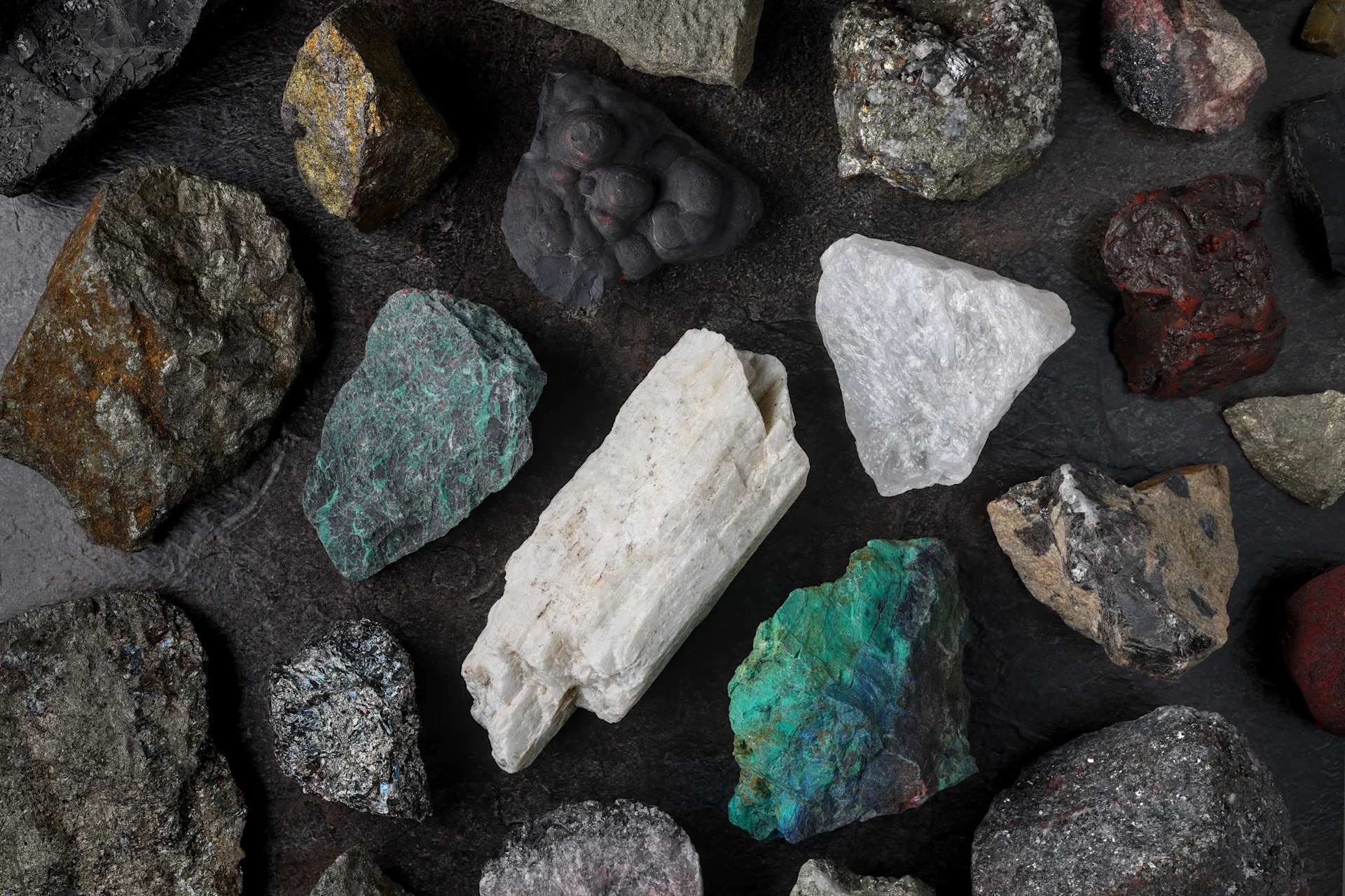
President Donald Trump is set to launch a $12 billion strategic critical-minerals stockpile, according to reports from Bloomberg.
The initiative, internally referred to as Project Vault, aims to reduce U.S. dependence on China for rare earth elements and other critical minerals essential to manufacturing, defense, and technology sectors. It combines approximately $1.67 billion in private capital with a $10 billion loan from the U.S. Export-Import Bank (Ex-Im Bank).
The Ex-Im Bank’s board was reportedly scheduled to vote on the loan. The stockpile would procure and store minerals like gallium, cobalt, rare earths, and others used in products such as iPhones, electric vehicle batteries, jet engines, semiconductors, and defense systems.
It functions similarly to the U.S. Strategic Petroleum Reserve but for critical minerals, protecting manufacturers from supply disruptions, price volatility, and potential export restrictions from China which dominates global production and processing of many of these materials.
Major U.S. companies, including automakers (e.g., GM), tech firms (e.g., Google), aerospace (e.g., Boeing), and others, would access the shared inventory through long-term commitments. Commodity traders like Traxys and Mercuria may handle procurement and storage.
This builds on Trump’s ongoing efforts to bolster domestic supply chains, including prior investments in U.S. rare earth companies, bilateral deals with Australia, and trade measures like Section 232 investigations into imports of processed critical minerals.
The announcement has sparked immediate market reactions, with shares of U.S.-focused rare earth and critical minerals companies surging in premarket or early trading. This move reflects escalating U.S.-China tensions over strategic resources, with the administration emphasizing national security and economic resilience in high-tech and defense industries.
The plan has not been formally announced by the White House yet, based on available reporting, but details emerged from senior administration officials. Rare earth elements (REEs) are a group of 17 chemically similar metallic elements in the periodic table.
Despite their name, they are not particularly rare in the Earth’s crust—the “rare” part refers to the difficulty in finding them in concentrated, economically mineable deposits and the complex, costly process required to separate and purify them. They include: The 15 lanthanides (atomic numbers 57–71): Lanthanum (La), Cerium (Ce), Praseodymium (Pr), Neodymium (Nd), Promethium (Pm), Samarium (Sm), Europium (Eu), Gadolinium (Gd), Terbium (Tb), Dysprosium (Dy), Holmium (Ho), Erbium (Er), Thulium (Tm), Ytterbium (Yb), and Lutetium (Lu).
Plus scandium (Sc) and yttrium (Y), which share similar chemical properties and often occur in the same mineral deposits. They were initially thought to be scarce when discovered in the 18th–19th centuries, and they are often found dispersed in low concentrations within minerals like bastnäsite, monazite, and xenotime.
Extraction typically involves mining, chemical processing, and separation—making supply chains vulnerable to disruption. REEs have unique magnetic, luminescent (phosphorescent), catalytic, and electrical properties due to their electron configurations especially the partially filled 4f orbitals in lanthanides.
These make them irreplaceable in many high-tech applications. REEs are essential for modern technology, clean energy, and defense. The largest demand comes from permanent magnets around 45% of global use in recent years.
Common applications include: Permanent magnets (e.g., NdFeB or “neodymium” magnets): Neodymium, praseodymium, dysprosium, terbium ? Used in electric vehicle motors, wind turbines, hard drives, headphones, MRI machines, and electric motors. Cerium, lanthanum ? In petroleum refining, automotive catalytic converters, and chemical reactions.
Phosphors and lighting: Europium, yttrium, terbium ? In LED lights, flat-screen displays, fluorescent lamps, and TV screens. Batteries and electronics: Various REEs ? In rechargeable batteries, smartphones, laptops, and fiber optics (e.g., erbium for amplifiers).
Defense and aerospace: Samarium, gadolinium, yttrium ? In precision-guided munitions, radar, sonar, lasers, jet engines, and electronic warfare systems. REEs are considered critical minerals because of their vital role in green technologies (e.g., EVs, renewables), electronics, and national security.
China dominates global production and processing often over 80–90% for many REEs, leading to supply chain concerns and initiatives like the U.S. strategic stockpile efforts to build resilience. In short, rare earth elements may not be geologically rare, but their specialized properties and concentrated supply make them indispensable—and geopolitically significant—in the modern world.