DD
MM
YYYY

PAGES

DD
MM
YYYY

spot_img

PAGES

Home Blog Page 2

Doubleline’s Gundlach Says Fed May Need Rate Hikes To Restore Inflation Credibility As Bond Market Challenges Policymakers

0

DoubleLine Capital CEO Jeffrey Gundlach said the U.S. Treasury market is sending a clear message to the Federal Reserve that if policymakers are serious about returning inflation to their 2% target, they may have to resume raising interest rates rather than simply maintaining a hawkish stance.

Speaking after the Federal Reserve kept interest rates unchanged, Gundlach said that recent movements in the bond market suggest investors remain unconvinced the central bank will ultimately take the steps necessary to fully tame inflation, even as officials continue to stress their commitment to price stability.

“If you really want to get to 2%, I think you have to raise interest rates,” Gundlach said on CNBC’s Closing Bell on Wednesday.

“I think getting 2% is going to take a long time. We might not get there over the course of the next couple of years.”

The Fed left its benchmark interest rate unchanged at 3.5% to 3.75%, a widely anticipated decision that nevertheless revealed growing divisions within the central bank. Three policymakers dissented in favor of an immediate quarter-percentage-point rate increase, highlighting mounting concern among some officials that inflation remains too persistent to justify holding policy steady.

Gundlach said the Treasury market’s reaction underscored investors’ doubts about whether the Fed will eventually match its rhetoric with action.

While short-term Treasury yields declined, reflecting expectations that policymakers may delay further tightening, longer-dated yields climbed sharply as investors demanded greater compensation for inflation and fiscal risks.

“The two-year Treasury rallied today because it thinks the Fed is taking its time,” Gundlach said.

“And the long bond yield went up significantly after the press conference, because the bond market vigilantes are saying, ‘If you really want us to believe your rhetoric, you’ve got to start acting.'”

Following the Fed’s announcement, the benchmark 10-year Treasury yield climbed more than seven basis points to 4.681%, while the 30-year Treasury yield surged to 5.213%, its highest level since 2007. In contrast, the policy-sensitive two-year yield fell three basis points to 4.244%.

The divergence is significant because shorter-dated Treasury yields largely reflect expectations for Federal Reserve policy over the next few years, while longer-term yields increasingly incorporate investor views on inflation, government borrowing and the long-run credibility of monetary policy.

The steepening of the yield curve after the Fed meeting suggests investors believe inflation and fiscal pressures could remain elevated even if the central bank keeps policy restrictive.

Higher-For-Longer May Not Be Enough

Gundlach’s comments add to a growing debate over whether the Federal Reserve’s “higher-for-longer” strategy will be sufficient to return inflation to target without additional tightening.

Although inflation has moderated considerably from its post-pandemic peak, it has remained above the Fed’s 2% objective for an extended period. That has prompted some economists and market participants to question whether structural forces, including persistent fiscal deficits, labor market tightness, deglobalization and rising energy costs, could make the final stretch of disinflation considerably more difficult.

His view also aligns with concerns increasingly reflected in long-term Treasury yields, where investors appear to be pricing in the possibility that interest rates may need to remain elevated for longer than previously anticipated or even move higher if inflation proves more resilient.

Fed Maintains Hawkish Stance

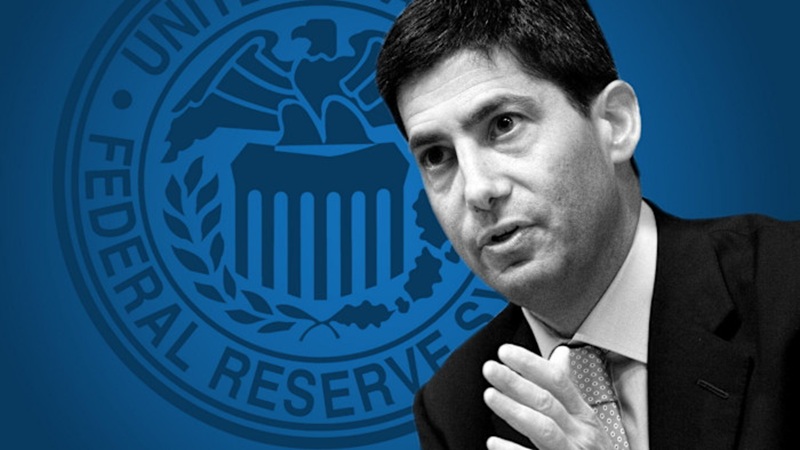
Federal Reserve Chairman Kevin Warsh sought to reinforce the central bank’s commitment to restoring price stability, emphasizing that policymakers remain prepared to act if economic conditions warrant.

“I understand the desire for rolling forecasts and commentary from this committee, but for our part, we need to observe market reaction to developments direct and unfiltered,” Warsh said.

“I want to stress, of course, that decisions by this committee matter a great deal, and where necessary and appropriate, we will not hesitate to act.”

This suggests the Fed is seeking to preserve maximum flexibility as it evaluates incoming economic data, rather than committing to a predetermined policy path.

Why The Market Reaction Matters

The sharp rise in long-term Treasury yields carries implications well beyond the bond market.

Higher long-term borrowing costs increase financing expenses for mortgages, corporate debt and government borrowing while also weighing on equity valuations, particularly for technology companies whose earnings depend heavily on future growth.

The move also signals that investors remain concerned about the combination of persistent inflation and expanding U.S. fiscal deficits. Rising Treasury issuance to finance government spending has increased the supply of long-dated bonds, adding upward pressure on yields at a time when investors are demanding greater compensation for inflation risk.

Thus, the market’s message for the Federal Reserve is that maintaining restrictive policy may no longer be sufficient to convince investors that inflation will return sustainably to 2%. Unless inflation continues to ease meaningfully, policymakers may eventually face a difficult choice between tolerating above-target inflation or resuming rate increases to boost their credibility.


South Korea Confronts Market Turbulence as Russia Escalates Pressure on Telegram Founder Pavel Durov

0

Global financial and technology markets faced another wave of uncertainty as two major developments unfolded on the same day.

In Asia, South Korea’s Finance Minister announced an emergency meeting following sharp volatility in the country’s benchmark KOSPI index, highlighting growing concerns over investor confidence and regional market stability.

Meanwhile, geopolitical tensions intensified after reports that Russia’s Federal Security Service (FSB) charged Telegram founder Pavel Durov with facilitating terrorism, adding another chapter to the increasingly complex relationship between governments and encrypted communication platforms.

South Korea’s emergency response underscores the fragile state of global equity markets.

The KOSPI has experienced significant swings amid concerns surrounding artificial intelligence valuations, semiconductor demand, global monetary policy, and slowing economic growth.

South Korea’s economy is particularly sensitive to fluctuations in the technology sector because of its dependence on major exporters such as Samsung Electronics and SK Hynix. As investor sentiment weakened, authorities moved quickly to assess market conditions and determine whether additional stabilization measures would be necessary.

Emergency meetings of this nature typically involve financial regulators, the central bank, and market supervisors evaluating liquidity conditions, capital flows, and potential risks to financial stability.

While market corrections are common, governments often intervene through policy communication or temporary market-support mechanisms when volatility threatens broader economic confidence.

Investors will now closely monitor any policy announcements that emerge from the discussions, including possible measures aimed at calming markets and restoring confidence.

The uncertainty in South Korea reflects broader global concerns. Rising interest-rate expectations, shifting capital flows, geopolitical risks, and elevated valuations in technology stocks have created a challenging environment for investors worldwide.

Asian markets, which have benefited significantly from the global artificial intelligence boom, remain particularly vulnerable to sharp corrections whenever sentiment changes.

At the same time, developments in Russia have reignited debates over digital privacy, platform responsibility, and government oversight of encrypted messaging services. According to reports, Russia’s FSB has accused Telegram founder Pavel Durov of facilitating terrorism.

The allegations represent one of the most serious legal actions taken against the entrepreneur and could significantly increase pressure on Telegram’s operations in jurisdictions where national security concerns increasingly shape digital regulation.

Telegram has long positioned itself as a privacy-focused messaging platform that protects user communications through strong encryption and minimal content moderation compared to many competing services.

Governments, have repeatedly argued that encrypted platforms can be exploited by criminal organizations and extremist groups because law enforcement agencies have limited access to private communications.

The legal action against Durov highlights the ongoing tension between protecting civil liberties and ensuring public safety.

Technology companies operating global communication networks frequently find themselves navigating conflicting legal frameworks, with some governments demanding greater cooperation on surveillance and content moderation while others emphasize user privacy and freedom of expression.

Beyond the immediate legal implications, the case may influence future regulatory approaches toward encrypted messaging platforms worldwide. Policymakers across multiple jurisdictions continue to debate how technology companies should balance privacy protections with obligations to prevent illegal activities conducted through their services.

The developments in South Korea and Russia illustrate how financial markets and digital technology remain deeply intertwined with geopolitics and government policy.

Whether through emergency interventions to stabilize markets or legal actions targeting global technology platforms, governments are playing an increasingly active role in shaping the future of both economic systems and the digital economy.

Investors, businesses, and technology companies alike will be watching closely as these stories continue to evolve.

Claude Mythos Cracks Post-Quantum Signature Scheme, Raising New Questions for Cryptography

0

The race to build secure post-quantum cryptography has taken an unexpected turn following reports that Claude Mythos successfully cracked a post-quantum digital signature scheme during advanced security testing.

While the achievement does not imply that all post-quantum cryptography has been broken, it highlights the growing role of artificial intelligence in evaluating and challenging cryptographic systems that were designed to withstand future quantum computers.

Post-quantum cryptography refers to encryption and digital signature algorithms created to remain secure even after large-scale quantum computers become practical.

Unlike today’s widely used RSA and elliptic curve cryptography, which could eventually be broken by quantum algorithms such as Shor’s algorithm, post-quantum schemes rely on mathematical problems believed to be resistant to both classical and quantum attacks.

Governments, financial institutions, blockchain networks, and technology companies are actively preparing for this transition to ensure long-term security.

Claude Mythos reportedly demonstrated an ability to identify weaknesses within a post-quantum signature implementation through advanced reasoning, pattern recognition, and automated analysis.

Rather than relying on brute computational force, the AI explored implementation details, mathematical assumptions, and protocol interactions to uncover vulnerabilities that human researchers may have overlooked.

This represents an important shift in cybersecurity, where artificial intelligence is increasingly becoming an active participant in security research instead of merely assisting human analysts.

The implications extend beyond academic cryptography. Digital signatures underpin software updates, blockchain transactions, online banking, secure messaging, and identity verification systems.

If AI systems can expose flaws in experimental post-quantum implementations before attackers do, developers gain an opportunity to strengthen these protocols ahead of widespread deployment. In this sense, AI serves as both a powerful auditing tool and an early warning system for the cybersecurity industry.

The event should not be interpreted as evidence that post-quantum cryptography has fundamentally failed. Many vulnerabilities emerge from implementation errors, incorrect parameter choices, side-channel weaknesses, or protocol integration rather than from flaws in the underlying mathematical design.

A successful attack against one implementation or one specific signature scheme does not invalidate the broader field of post-quantum cryptography, which includes multiple families of algorithms based on lattices, hash functions, codes, and multivariate mathematics.

The development also reinforces the importance of continuous public scrutiny. Cryptographic standards achieve trust through years of peer review, formal verification, and extensive testing by independent researchers worldwide.

As AI capabilities continue to improve, they will likely become indispensable tools for stress-testing algorithms before they are adopted as international standards. Rather than replacing human cryptographers, advanced AI systems may accelerate vulnerability discovery and improve the overall quality of security research.

Many networks are already exploring quantum-resistant wallets, signature migration strategies, and hybrid cryptographic models. AI-assisted cryptanalysis could help identify potential weaknesses before billions of dollars in digital assets become dependent on post-quantum infrastructure.

This proactive approach could reduce future security risks while increasing confidence in next-generation cryptographic systems.

Claude Mythos’ reported breakthrough illustrates that the future of cybersecurity will be shaped by two transformative technologies evolving simultaneously:

Artificial intelligence and quantum computing. As defenders and attackers alike gain access to increasingly capable AI models, the challenge will no longer be simply creating stronger algorithms, but continuously validating them against ever more sophisticated forms of automated analysis.

In that environment, resilience will depend not only on mathematical innovation but also on relentless testing, transparency, and rapid adaptation.

Prediction Markets Signal Low Confidence in Iran Peace Deal

0

The fact that prediction markets are assigning low odds to an Iran ceasefire lasting 14 consecutive days reveals a deep level of skepticism among traders about the durability of peace in one of the world’s most volatile regions.

While diplomatic announcements often generate optimism in political circles, prediction market participants tend to focus on probabilities rather than promises.

Their pricing reflects expectations based on historical patterns, military realities, and geopolitical incentives rather than official statements alone.

A ceasefire between Iran and its adversaries is more than a temporary halt in hostilities. It requires sustained political commitment, effective communication between military commanders, and restraint from regional proxy groups that may not always act in lockstep with Tehran.

Even when governments publicly endorse peace, isolated attacks, retaliatory strikes, or miscalculations can quickly unravel fragile agreements. This history is one reason traders remain unconvinced that a two-week ceasefire can hold.

Prediction markets have gained prominence because they aggregate the views of thousands of participants who place real money behind their expectations.

Unlike opinion polls, where respondents face no financial consequences for inaccurate forecasts, prediction markets reward participants who correctly assess future outcomes.

As a result, they are increasingly viewed as a useful gauge of collective expectations on politics, economics, and international affairs. The skepticism surrounding the Iran ceasefire is rooted in decades of instability across the Middle East.

The region has witnessed numerous agreements that collapsed within days due to renewed missile strikes, drone attacks, or clashes involving allied militias. Even if Iran and its primary counterparts honor a ceasefire, actions by non-state actors operating in Lebanon, Iraq, Syria, or Yemen could trigger retaliation and effectively end the agreement.

These risks remain difficult to eliminate through diplomatic declarations alone. Markets are also responding to the broader strategic environment. Iran continues to face significant economic pressure from international sanctions while maintaining its regional influence through allied groups.

Meanwhile, opposing governments remain focused on deterring perceived security threats. These competing objectives create incentives for caution rather than lasting compromise, making investors hesitant to assign high confidence to an extended period of calm.

Another factor influencing prediction markets is the speed at which new information emerges. Satellite imagery, intelligence reports, military statements, and social media updates can rapidly alter expectations.

A single reported strike or allegation of a ceasefire violation can dramatically shift market probabilities within minutes. This responsiveness makes prediction markets highly sensitive to developments on the ground, often more so than traditional financial markets.

The implications extend beyond geopolitics. Oil traders, equity investors, and cryptocurrency markets closely monitor tensions involving Iran because disruptions in the Middle East can affect global energy supplies, inflation expectations, and investor sentiment.

If markets begin to believe a ceasefire is likely to endure, oil prices could ease while risk assets such as equities and digital assets may benefit from improved confidence. Conversely, renewed conflict could reignite volatility across multiple asset classes.

The market’s reluctance to believe that an Iran ceasefire will survive 14 days is not necessarily a prediction of inevitable failure but rather a reflection of the region’s complex geopolitical realities.

History has repeatedly demonstrated that ceasefires in the Middle East are vulnerable to sudden disruptions, whether through direct military action, proxy conflicts, or diplomatic breakdowns.

Until participants see sustained evidence of restraint and effective enforcement, prediction markets are likely to continue pricing caution over optimism, reminding observers that in global affairs, credibility is earned through actions rather than announcements.

Microsoft Reassures Employees As Quarterly Results Show AI Investments Translating Into Stronger Cloud Growth

0

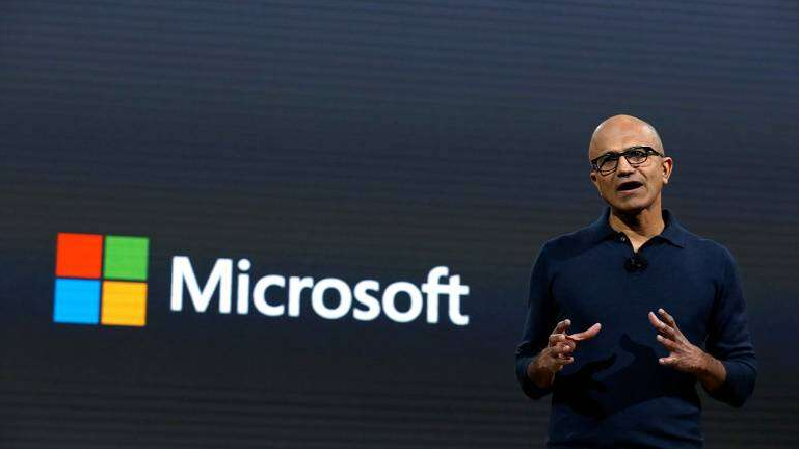
Microsoft sought to reassure employees and investors that its multibillion-dollar artificial intelligence strategy is beginning to deliver tangible returns, with Chief Financial Officer Amy Hood citing accelerating Azure cloud growth, surging adoption of Microsoft 365 Copilot, and record customer commitments as evidence that the company’s unprecedented AI spending is gaining traction.

The message came after Microsoft reported quarterly results that exceeded Wall Street expectations, helping send its shares about 2% higher in after-hours trading as investors looked beyond heavy capital spending to signs that demand for AI services is accelerating.

Microsoft posted revenue of $90 billion, comfortably ahead of analysts’ estimates, while continuing one of the largest infrastructure buildouts in corporate history to meet soaring demand for AI computing.

In a memo to employees following the earnings release, Hood acknowledged that Microsoft is entering a new fiscal year with significant opportunities but stressed that maintaining leadership in artificial intelligence will require the company to keep evolving and investing aggressively.

“We begin this new year with clear priorities, strong customer demand, and significant opportunity ahead,” Hood wrote.

“At the same time, capturing the opportunity in front of us will require us to continue evolving, raising our ambition, and finding new ways to deliver for our customers.”

Azure and Copilot Emerge As AI Growth Engines

Hood highlighted Azure and Microsoft 365 Copilot as two businesses demonstrating that Microsoft’s enormous AI investments are beginning to generate measurable commercial returns. Azure and other cloud services revenue accelerated 43% during the quarter, reflecting robust enterprise demand for AI infrastructure, cloud migration and generative AI workloads.

Microsoft also disclosed that Azure generated more than $100 billion in revenue during fiscal 2026, representing 41% annual growth and underscoring the platform’s transformation into one of the company’s largest businesses.

The performance is significant because Azure has become the foundation for Microsoft’s AI strategy, hosting not only its own services but also workloads from OpenAI and thousands of enterprise customers deploying generative AI applications.

Copilot also showed strong momentum.

Microsoft said paid commercial Copilot seats more than doubled sequentially to surpass 30 million, suggesting businesses are increasingly willing to pay for AI-powered productivity tools integrated into Microsoft 365.

The rapid growth addresses one of investors’ biggest questions over the past year: whether enterprises would move beyond AI experimentation and begin deploying generative AI at scale across their workforces.

Massive AI Spending Continues

While Microsoft’s earnings reinforced confidence in its AI strategy, they also highlighted the enormous financial commitment required to remain competitive against rivals including OpenAI, Alphabet, Amazon and Meta Platforms. The company invested more than $41 billion in capital expenditures during the quarter, primarily to expand global data center capacity and AI infrastructure.

Hood praised Microsoft’s infrastructure and engineering teams for rapidly bringing new computing capacity online while improving efficiency.

“We invested over $41 billion in capex to support the demand we continue to see,” she said.

“A big thank you to our infrastructure teams for bringing new capacity online and to our engineering teams for creating efficiencies that enable us to do more with every gigawatt we deploy.”

Major technology companies are collectively expected to spend hundreds of billions of dollars annually on AI infrastructure over the coming years as competition intensifies. Against that backdrop, investors have increasingly scrutinized whether such unprecedented spending will eventually translate into sustainable earnings growth and attractive returns on invested capital.

Beyond headline revenue growth, Microsoft’s results pointed to continued strength in long-term enterprise demand. Commercial bookings, excluding OpenAI, increased 18%, driven by Microsoft’s core subscription business.

Even more notable was the company’s commercial remaining performance obligation, a measure of contracted future revenue, which climbed to $678 billion after increasing by more than $50 billion from the previous quarter. The expanding backlog provides Microsoft with substantial revenue visibility and suggests customers continue committing to long-term cloud and AI contracts despite economic uncertainty.

Microsoft Cloud revenue reached $59.3 billion during the quarter and totaled $214 billion for the full fiscal year, representing 27% growth in both periods.

While artificial intelligence dominated Microsoft’s earnings narrative, Hood emphasized that security, reliability and product quality remain fundamental priorities.

“Thank you for staying focused on security, quality, and reliability,” she told employees.

“The trust customers place in us to power their most important workloads is earned every day through the work you do.”

The emphasis comes as Microsoft continues strengthening its cybersecurity posture following heightened regulatory scrutiny and increasingly sophisticated cyber threats targeting cloud providers.

Mixed Performance Across Other Businesses

Not every segment delivered strong growth. Windows OEM and Devices revenue declined 7% as PC manufacturers continued adjusting inventories amid higher component costs.

Xbox content and services revenue also fell 10%, largely because the comparable period benefited from stronger first-party game releases. However, Microsoft said Forza Horizon 6 attracted six million players within its first two days, making it one of the strongest launches in the franchise’s history.

Elsewhere, Microsoft 365 Consumer cloud revenue increased 24%, subscriber numbers rose 7%, LinkedIn revenue climbed 12% on stronger marketing demand, while search advertising revenue excluding traffic acquisition costs grew 10% as Bing and Edge continued gaining market share.

However, Hood’s memo was notable not only for highlighting Microsoft’s financial performance but also for reinforcing management’s broader message that fiscal 2026 marked a transition from building AI infrastructure to increasingly monetizing it.

She credited employees for expanding computing capacity, improving product quality, refining business models and adopting new operating structures that helped deliver what she described as Microsoft’s strongest execution of the year.

“The results we delivered in FY26 and the momentum we carry into FY27 are a direct reflection of your efforts,” Hood wrote.