by Chux Gervase Iwu1 & Nnamdi O. Madichie2
1University of The Western Cape, South Africa
2Woxsen University, Hyderabad, India
In any organised sport, players do not stop playing until the referee blows the whistle – whether because of a foul, an injury or the end of the game. Basically, the referee decides when to blow the whistle – not the crowd, the other team, or the offending player. Even if a player’s offence is clear to everyone in the stadium, the game continues until the referee calls it. The final decision lies with the Referee – Referees blow their whistles to transform unofficial observations into infractions. Without that intervention, the practical consequences of the ‘foul’ may never materialize.
We use “sport metaphor” to examine the African continent’s economic growth, political authority, criminality, and sustainable development. The premise is that many crimes go undiscovered – whether socially or politically – until the ‘State’ investigates and brings culprits to book. Picture this:
“Using sports as a useful metaphor for understanding political and social realities, one of the most instructive observations from competitive sport is that an apparent foul does not automatically translate into punishment.”
The question thus becomes one of ‘how long people should wait’ for government action on infractions including criminality among other vices? Based on the effects of delayed or non-existent government engagement, impunity undermines public trust, the rule of law, and economic growth. Think about it, prolonged state delay, despite legal capability to punish crime, raises questions about accountability, public involvement, and institution functioning.
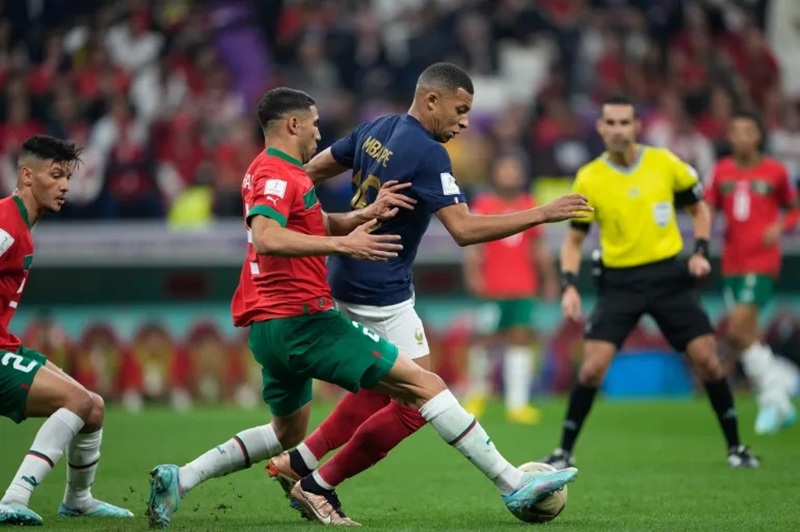
On a personal note, watching football is not an atypical formal amusement for many – including the authors of this article – this is until it features on the global stage, e.g., FIFA World Cup or Olympic Games. The recently concluded FIFA World Cup 2026 has brought us back to the “beautiful game” – and we have both, independently, watched several matches where a foul, in our collective view, and those of others around us, have been committed without the referee calling it. Notable examples include, the France-Senegal match, alongside the France-Morocco encounter and again the controversial Argentina-Egypt clash among others. This leads to our thinking and/ or proposition on matters arising from interference.
Foot Interference and Governance – Matters Arising
Our sporting metaphor – “until the referee calls it” – helps explain the relationship between football interference and football governance. We contend that unless government authorities investigate, convict, and punish violators, like a football game without a whistle – the outcome would remain the same. Responsibility is absent, yet violation is acknowledged – Africa represents the best spot to learn these lessons – administrative failures, corruption, organised crime, violent crime, and political instability plague the continent. Three critical questions crop up at this juncture – First, one wonders whether lengthy investigations, administrative delays, or apparent governmental inaction should not spur democratic participation, public accountability, and institutional change? Second, should these not become crucial avenues for people to pressure the government to act? Third, should individuals do nothing while being told to be law abiding and avoid vigilantism?
We thus briefly discuss the referees’ symbolic role as an authoritative figure whose silence accentuates ‘wrongdoing.’ Silence on the part of government strains people’s patience, which has led to economic collapse and difficulties in taking responsibility.
The Referee as a Reference on State Authority
Referees interpret and enforce regulations in competitive sports due to their authority. For the game’s fairness, players can not penalise each other. An impartial authority, the referee, upholds justice and order. In the same vein, courts, police services, prosecutors, and regulatory agencies collectively function as society’s referees. The comparison is not perfect, but it highlights a key fact – efficient implementation of a legal system requires institutions to enforce the rules. Again, picture this:
The referee does not call a foul, even if supporters say so – such behaviour can cause serious problems. Losing trust in law enforcement may cause voters to doubt its impartiality – a referee who consistently ignores fouls compromises the integrity of the game.
Likewise, a government that fails to respond to crime risks weakening public confidence in the rule of law.
While democracy in Africa can be said to rely on constitutionalism, citizen responsibility, and legal equality, the continent struggles with institutional capacity and the enforcement of legal standards. Public concern has arisen over delayed investigations, corruption allegations, procurement issues, organised criminal networks, and public administration issues. It appears that government action on alleged misbehaviour takes months or years following public disclosure – thereby extending the ‘waiting time’ for social justice – in other words, the ‘waiting game’ begins in the quest for fair play.
How Long Should Citizens Wait?
When we talk about citizens here, we go beyond just football fans, and two questions may well be worth pandering over – should the government appear inactive, how are citizens expected to react? Should they simply wait? Afterall, investigative procedures follow the pattern of evidence determination, court review before infringements are legally dispensed. There are serious risks to waiting forever anyway. Noting that the determination of an offence procedurally takes time, it is equally noteworthy that public confidence in the mechanisms for dealing with crime and corruption may erode owing to the seeming delay in prosecuting an infringement. In responding to the question ‘how are citizens expected to react’? ‘Should they simply wait’?
One can argue that citizens should actively engage democratic mechanisms instead of waiting. This engagement can be in the form of investigative journalism, public advocacy, litigation, political activity, and support for independent oversight institutions. While citizens should not wait passively for the referee to blow the whistle, the conundrum is to justify active citizenship that shows up as vigilantism, xenophobia, and/or intimidation. The frustration may push citizens to play referee instead of using constitutional procedures to push the official. The economic consequences of unaddressed crime can take several dimensions. When crime and corruption remain constantly unaddressed or ignored by authorities, socioeconomic growth is inadvertently stunted. Sustainable (both social and economic) development requires capital and labour gains, as well as strong institutions that implement the law fairly.
Beyond Waiting – Strengthening Accountability
Institutional response to crime and corruption is as big an issue for Africa as crime itself. Long-term solutions need our elected officials, police forces, and residents to work together to maintain peace and the rule of law. We thus argue that:
Building responsibility requires improving law enforcement efficiency and oversight. All law enforcement must be ethical, transparent, and professional. Robust monitoring, regular performance reviews, and strong consequences for misbehaviour and corruption may restore public trust in the criminal justice system.
The independent monitoring organisation should investigate allegations and penalise officials who abuse their authority. Fair and efficient criminal justice is also essential. Protracted investigations, prosecutions, and litigation damage public trust in the courts. Criminal prosecution and quick justice need appropriate resources, technology, and qualified people. Anti-corruption measures at the federal, state, and municipal levels must reinforce public institutions to prevent criminal groups from exploiting gaps. Empowering responsibility demands community involvement. Community policing forums, corporations, civil society organisations, and residents should work with law enforcement to address crime hotspots, share data, and develop effective local crime prevention programmes.
Conclusion – The Final Whistle
As we conclude this piece, the government, police, courts, and society at large, must work together to hold criminals accountable for most of the observed infractions on the “beautiful game.” Africa may improve safety and trust in the law by being more transparent, eliminating corruption, improving institutions, and encouraging community engagement.
In competitive sport, a foul does not acquire official significance until a referee recognizes the infringement and blows the whistle. Consequently, and bowing to prolonged inaction, questions arise regarding the relationship between legality and enforcement. One important question in this regard should be – does wrongdoing effectively become actionable only when government institutions acknowledge it? Afterall, the legitimacy of any rules-based system depends upon the existence of an authority capable of interpreting and enforcing the said rules.
Broadly speaking, our sporting analogy illustrates this principle with remarkable clarity. Football players cannot independently assign penalties to opponents. The authority to determine violations belongs exclusively to the referee. The effectiveness of the game depends on broad acceptance of this arrangement. But, does it really? We ask this question simply because US President Trump admitted to having personally called FIFA’s President Gianni Infantino to ask for a review of an order, and FIFA subsequently suspended the ban. A similar experience is playing out in Zimbabwe where President Emmerson Mnangagwa changed the rules of the game. He will now stay on until 2030!
Both Trump’s and Mnangagwa’s interference highlight an important vulnerability. In sporting (football) terms, if referees’ decisions are now open to such ‘wanton overruling,’ players may lose confidence in the fairness of the competition. In political terms, the rule of law depends not only on legal frameworks but also on institutional willingness and capacity to enforce them.
We recap with some food for thought that takes us back full circle:
The challenge, therefore, is to balance respect for legal institutions with demands for accountability. Citizens must neither replace the referee nor remain silent when the referee fails to act – democratic legitimacy depends on this delicate equilibrium.
So what do you think about our proposition that “Until the Referee Calls It, It Ain’t a Foul – Crime, State Capture and Sustainable Development in Africa”?