DD
MM
YYYY

PAGES

DD
MM
YYYY

spot_img

PAGES

Home Blog Page 2

The Future Belongs Not to Companies that Replace Every Employee with AI Agents, But Those that Understand Bottlenecks

0

As artificial intelligence becomes woven into every layer of communication, businesses are entering a paradoxical era. Technology is making interactions faster, cheaper, and more scalable than ever before, yet the very abundance of automated communication is increasing the value of something machines struggle to replicate completely: genuine human connection.

In a world flooded with AI-generated emails, automated customer support, synthetic video avatars, and intelligent sales agents, the human touch will not become obsolete. Instead, it may become the single most important differentiator between companies that merely operate efficiently and companies that truly earn customer loyalty. The rise of AI communication is inevitable.

Businesses are already deploying AI systems to answer customer questions, generate marketing campaigns, manage appointments, conduct onboarding, and even hold video conversations. These systems are improving at an extraordinary pace. Voice synthesis is becoming nearly indistinguishable from real speech, AI avatars can simulate eye contact and emotional tone, and conversational agents are capable of handling increasingly complex interactions. For many routine processes, automation will dramatically reduce costs and improve response times.

However, efficiency alone does not create trust. Customers do not simply buy products or services; they buy reassurance, understanding, empathy, and confidence.

These emotional factors are often invisible in spreadsheets, yet they heavily influence long-term business success. When customers face uncertainty, frustration, or important decisions, they instinctively seek signs of humanity. They want to feel heard rather than processed. They want to know there is a real person behind the transaction who understands nuance, emotion, and context beyond a scripted response.

This is why human interaction is becoming more valuable precisely because AI communication is becoming so common. When every company can generate polished emails, personalized outreach, and instant chatbot support, those features stop being competitive advantages. They become baseline expectations. The differentiator shifts toward authenticity. A thoughtful call from a founder, a personalized response from a customer success manager, or a live conversation where someone demonstrates genuine care will stand out far more in an environment saturated with automated messaging.

In many industries, the human touch is not merely a sentimental luxury; it is a strategic asset. High-trust sectors such as healthcare, finance, consulting, education, luxury goods, and enterprise sales depend heavily on relationship-building. Customers making major financial decisions or navigating emotional situations rarely want to rely entirely on automation, regardless of how advanced it becomes. They may use AI tools for convenience, but when stakes are high, they still seek human judgment and emotional intelligence.

Even if AI agents eventually become capable of handling video meetings flawlessly, replacing all human interaction could create unintended consequences. Customers may begin to feel isolated inside systems optimized purely for efficiency. Businesses that automate every touchpoint risk appearing cold, interchangeable, and emotionally detached. Over time, this can erode brand loyalty because relationships are not built solely on speed or accuracy. They are built on emotional memory.

There is also a deeper psychological reality at play. Human beings are social creatures wired for connection. Subtle imperfections in communication — pauses, humor, vulnerability, spontaneity, and emotional resonance — often create stronger bonds than perfectly optimized interactions.

AI may simulate these behaviors convincingly, but customers will increasingly value moments they know are real rather than synthetic. Authenticity itself may become a premium feature in the digital economy. This does not mean businesses should reject AI. On the contrary, AI will become essential infrastructure for productivity and scale. The companies that thrive will likely be those that use AI to remove repetitive work while preserving meaningful human interaction where it matters most. Automation should enhance human relationships, not eliminate them entirely.

The future belongs not to companies that replace every employee with AI agents, but to those that understand which bottlenecks should remain human. Some friction points are not inefficiencies to eliminate; they are opportunities to build trust, loyalty, and emotional connection. In an AI-saturated world, humanity itself becomes scarce — and scarcity creates value.

As communication becomes increasingly automated, customers may forget many AI-generated interactions they encounter every day. But they will still remember how a real person made them feel.


Anthropic Positioning for a Profitable Quarter with Q2 Revenue Projections Reaching ~$10.9B

0

Reports circulating across the artificial intelligence industry suggest that Anthropic is positioning itself for its first profitable quarter, with Q2 revenue projections reaching approximately $10.9 billion. If realized, this milestone would mark a significant inflection point not only for Anthropic but for the broader foundation model ecosystem, where capital intensity has historically outweighed near-term monetization.

The figures, while not independently verified, reflect accelerating enterprise adoption of large language models and intensifying competition among frontier AI labs. Against a backdrop of rapid infrastructure scaling and aggressive product commercialization, Anthropic’s trajectory underscores how quickly AI demand curves are steepening across both consumer and enterprise channels.

Revenue growth at this scale is typically driven by a combination of API usage expansion, enterprise contract proliferation, and the embedding of foundation models into third-party software ecosystems. Anthropic, a competitor to OpenAI and other frontier labs, has benefited from increasing demand for reliable, safety-oriented models in regulated industries such as finance, healthcare, and legal services.

Much of the projected revenue surge is also attributed to the compounding effects of inference workloads, where marginal usage scales non-linearly as more enterprises integrate Artificial intelligence copilots into core instutitional workflows.

This srategic partnerships with cloud infrastructure providers, including Amazon Web Services, have further accelerated distribution and lowered deployment friction for large-scale customers. Despite the optimistic revenue outlook, profitability remains contingent on managing substantial compute expenditures associated with training and serving large-scale models.

GPU supply constraints, energy costs, and the high cost of frontier model inference continue to compress margins across the sector. However, Anthropic’s improving unit economics suggest that optimization techniques, including model distillation, caching strategies, and more efficient routing architectures, are beginning to offset infrastructure overhead.

Analysts note that reaching a profitable quarter would signal a maturation of AI commercialization cycles, particularly as pricing power improves in enterprise-grade deployments. The implications of such a milestone extend beyond Anthropic itself, potentially reshaping investor sentiment across the broader artificial intelligence sector.

If validated, profitability at this scale could strengthen the case for sustainable economics in foundation model companies, many of which have faced scrutiny over long-term viability. It would also intensify competitive pressure among major players, including OpenAI and other well-capitalized incumbents, to demonstrate similar paths to profitability.

In parallel, cloud providers such as Microsoft and AWS may see increased demand for AI infrastructure services, further embedding generative AI into the core of the global digital economy.

Taken together, the reported projections for Anthropic highlight both the rapid acceleration of enterprise AI adoption and the increasingly competitive dynamics shaping the frontier model landscape. While such figures remain subject to verification, they nonetheless illustrate how quickly monetization pathways are evolving within the generative AI sector.

As capital markets continue to reward scalable AI infrastructure platforms, companies like Anthropic are under pressure to convert surging demand into durable profitability without compromising model performance or safety standards. This quarter will be closely watched as a benchmark for whether foundation models can transition from capital intensive experimentation to sustained enterprise grade businesses in real time.

Mark Cuban Dumps Most of His Bitcoin, Calls It “Lost the Plot”

0

Billionaire entrepreneur Mark Cuban has revealed he sold majority of his Bitcoin holdings, citing the cryptocurrency’s failure to live up to its promise as a hedge against fiat weakness and geopolitical risks.

In a recent podcast, Cuban stated that Bitcoin “has lost the plot.” He explained his long-held belief that Bitcoin would outperform gold as a superior store of value due to its fixed supply and decentralized nature.

In his words,

“I always thought it was a better version of gold than gold. But gold just blew up and went to $5,000, and Bitcoin dropped. Every time the dollar dropped, Bitcoin should’ve gone up. Not the hedge I expected it to be.”

The turning point for Cuban came during recent U.S.-Iran tensions and periods of dollar weakness. While gold surged to record highs above $5,500 per ounce earlier this year, Bitcoin failed to rally and instead declined, disappointing the longtime crypto supporter.

Cuban comment sparked reactions as some users on X, mocked his move, calling it a sign that he had “lost the plot,” while others suggested billionaires like him often sell publicly before quietly accumulating again.

He previously accepted Bitcoin and Dogecoin for Dallas Mavericks tickets and merchandise, and in 2021 described his portfolio as roughly 60% Bitcoin, 30% Ethereum, and 10% other assets. He has often championed Bitcoin’s potential while maintaining a strong position in Ethereum for its utility.

This latest move marks a significant shift. Cuban still holds Ethereum but has largely exited Bitcoin, signaling eroded confidence in its “digital gold” narrative.

Recall that earlier this year, Bitcoin surged to a historic high of $126,000, marking one of the most significant milestones in the digital asset’s history and reinforcing its position as the world’s leading cryptocurrency.

The rally reflected growing institutional confidence, increased global adoption, and renewed investor appetite for digital assets amid shifting economic conditions.

The cryptocurrency’s climb to $126,000 generated renewed excitement across the global financial market. Crypto-related companies, blockchain startups, and digital asset exchanges experienced heightened activity as retail participation also increased.

After reaching its historic peak of around $126,000 in October 2025, Bitcoin experienced a sharp decline that reminded investors of the cryptocurrency market’s extreme volatility. The correction wiped tens of thousands of dollars off Bitcoin’s value within weeks and triggered widespread concern across the digital asset industry.

Macroeconomic concerns also contributed to the downturn. Rising global trade tensions, uncertainty around interest rate policies, and fears surrounding the broader economy pushed investors away from risky assets, including cryptocurrencies. As investor sentiment weakened, Bitcoin’s decline deepened alongside broader weakness in financial markets.

Currently, Bitcoin is trading within the $78,000 to $77,000 zone, as the crypto asset continues to show resilience despite mounting bearish pressure. The broader market structure still indicates an active uptrend, as buyers continue to defend key support levels and position for another potential rebound.

Outlook

Cuban’s comments highlight an ongoing debate in finance. Is Bitcoin truly a reliable hedge in times of crisis, or does it behave more like a high-beta tech asset?

His pivot away from BTC underscores gold’s enduring appeal during macro uncertainty, even as many institutional investors continue to embrace Bitcoin for its long-term scarcity and adoption potential.

Whether this proves to be a savvy exit or a missed opportunity remains to be seen. Markets are unpredictable, and Cuban himself has a track record of bold, sometimes controversial calls across business and sports.

AMD Unveils $10 Billion Taiwan Investment Push, Intensifying AI Chip Race Against Nvidia

0

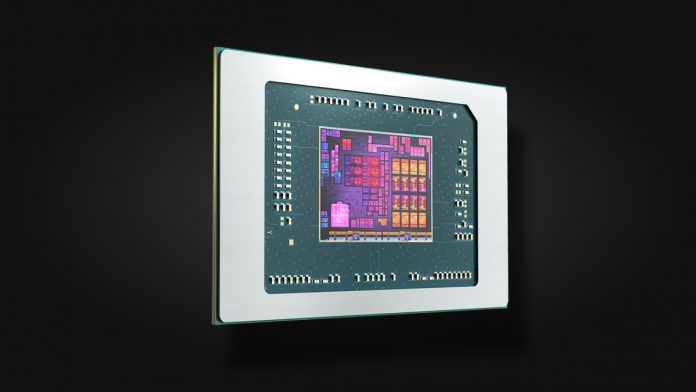
Advanced Micro Devices said Thursday it will invest more than $10 billion across Taiwan’s semiconductor and artificial-intelligence supply chain, deepening its presence in the global chip industry’s most strategically important manufacturing hub as competition in AI infrastructure accelerates.

The investment will target advanced chip production, packaging, and system integration technologies needed to support the next generation of AI computing systems, particularly the increasingly complex architectures required for large-scale model training and deployment.

The move further tightens AMD’s ties to Taiwan, which has become the nerve center of global semiconductor manufacturing through the dominance of Taiwan Semiconductor Manufacturing Company, or TSMC. The company manufactures advanced chips for many of the world’s largest technology firms, including Nvidia and Apple.

AMD said the spending initiative will focus on partnerships aimed at improving chip packaging and manufacturing processes critical to AI infrastructure performance.

“Working with strategic partners in Taiwan and globally, AMD is advancing leading-edge silicon, packaging and manufacturing technologies that enable higher performance, greater efficiency and faster deployment of AI systems,” the company said in a statement.

The announcement comes as AI demand continues to reshape the semiconductor industry’s investment cycle. Technology giants and cloud providers are spending hundreds of billions of dollars on AI data centers, driving extraordinary demand for advanced processors, memory systems, and networking equipment.

AMD has emerged as one of the major beneficiaries of that boom. Its shares have more than doubled this year as investors increasingly view the company as the strongest challenger to Nvidia’s dominance in AI accelerators.

The company’s latest investment plan highlights how the battle for AI leadership is extending beyond chip design into packaging, manufacturing scale, and supply-chain coordination. As AI models become larger and more power-intensive, semiconductor firms are increasingly focused on advanced packaging technologies that allow multiple chips to function together as integrated systems.

AMD said it is collaborating with Taiwan-based packaging firms ASE Technology Holding and Siliconware Precision Industries on interconnect and packaging technologies designed to improve chip communication speeds and energy efficiency.

Industry analysts increasingly view advanced packaging as one of the semiconductor sector’s most critical bottlenecks. The ability to efficiently connect processors, memory, and networking components has become essential for AI workloads, particularly as traditional gains from transistor scaling slow.

The investments are also intended to support the deployment of AMD’s Helios AI server platform, scheduled for release in the second half of 2026. Helios represents AMD’s broader push to compete more directly with Nvidia’s integrated AI systems strategy. Rather than selling standalone chips alone, major semiconductor firms are increasingly delivering full-stack AI infrastructure that combines processors, networking, memory, and software into unified platforms for hyperscale data centers.

AMD identified several Taiwanese manufacturing and server partners involved in the Helios ecosystem, including Sanmina, Wiwynn, Wistron, and Inventec.

The scale of the investment also underpins Taiwan’s continued importance despite mounting geopolitical tensions surrounding the island and increasing efforts by the United States, Europe, and Japan to localize semiconductor production.

While governments globally are investing heavily in domestic chip manufacturing, Taiwan still maintains a commanding lead in advanced-node production and packaging capabilities. For AI chipmakers such as AMD and Nvidia, maintaining deep integration with Taiwan’s ecosystem remains critical to staying competitive.

The announcement follows blockbuster earnings from Nvidia earlier this week, which reinforced expectations that AI infrastructure spending remains in an aggressive expansion phase despite concerns about the sustainability of demand.

AMD’s investment suggests the company expects that AI infrastructure growth will remain elevated well into the next decade, particularly as enterprises adopt increasingly sophisticated AI agents, reasoning systems, and real-time inference applications requiring massive computing capacity.

The spending is also seen as a reflection of a recent shift in the industry, which has seen semiconductor firms no longer competing solely on chip performance, but on their ability to orchestrate sprawling global manufacturing ecosystems capable of rapidly scaling advanced AI systems.

[Apply] Contisx Academic and Research Network (CARN)

0

As we march toward the public launch of Contisx Securities Exchange Plc in September 2026, we are excited to introduce the Contisx Academic and Research Network (CARN), an initiative designed to connect universities, researchers, students, innovation hubs, and academic institutions across Africa to the future of capital markets.

At Contisx, we believe Africa cannot build globally competitive markets without building the intellectual infrastructure that powers those markets. Nations that dominate finance and technology today invested heavily in research ecosystems, university laboratories, data systems, and talent pipelines. Capital markets are not merely trading platforms; they are knowledge systems driven by mathematics, regulation, economics, engineering, risk management, computing, behavioral science, and increasingly artificial intelligence.

CARN is therefore designed to help universities and research institutions establish Capital Market Labs and related research ecosystems focused on next-generation financial infrastructure. Through this initiative, Contisx intends to support selected institutions with access to market concepts, technology frameworks, simulation environments, APIs, educational resources, industry collaborations, datasets where applicable, and practical exposure to modern securities infrastructure.

We invite universities, polytechnics, research institutions, innovation centers, and academic leaders across Africa to apply to join the Contisx Academic and Research Network https://contisx.com/carn (send email as our links are not active yet; full license coming)