

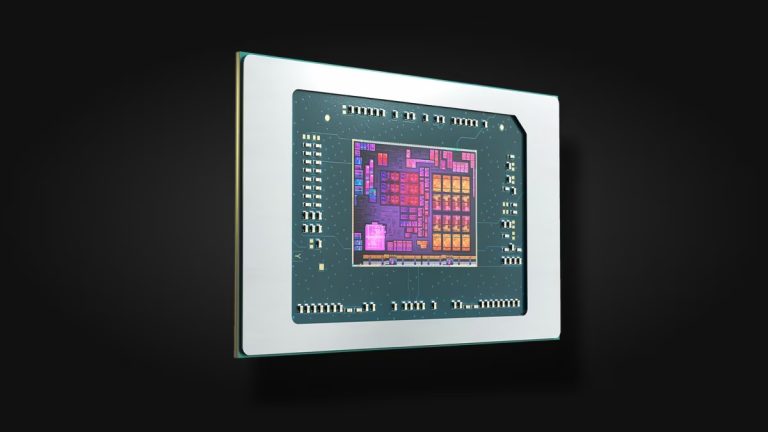
Advanced Micro Devices said Thursday it will invest more than $10 billion across Taiwan’s semiconductor and artificial-intelligence supply chain, deepening its presence in the global chip industry’s most strategically important manufacturing hub as competition in AI infrastructure accelerates.
The investment will target advanced chip production, packaging, and system integration technologies needed to support the next generation of AI computing systems, particularly the increasingly complex architectures required for large-scale model training and deployment.
The move further tightens AMD’s ties to Taiwan, which has become the nerve center of global semiconductor manufacturing through the dominance of Taiwan Semiconductor Manufacturing Company, or TSMC. The company manufactures advanced chips for many of the world’s largest technology firms, including Nvidia and Apple.
Register for the next Tekedia Mini-MBA.
Register for Tekedia AI in Business Masterclass.
Join Tekedia Capital Syndicate and co-invest in great global startups.
AMD said the spending initiative will focus on partnerships aimed at improving chip packaging and manufacturing processes critical to AI infrastructure performance.
“Working with strategic partners in Taiwan and globally, AMD is advancing leading-edge silicon, packaging and manufacturing technologies that enable higher performance, greater efficiency and faster deployment of AI systems,” the company said in a statement.
The announcement comes as AI demand continues to reshape the semiconductor industry’s investment cycle. Technology giants and cloud providers are spending hundreds of billions of dollars on AI data centers, driving extraordinary demand for advanced processors, memory systems, and networking equipment.

AMD has emerged as one of the major beneficiaries of that boom. Its shares have more than doubled this year as investors increasingly view the company as the strongest challenger to Nvidia’s dominance in AI accelerators.
The company’s latest investment plan highlights how the battle for AI leadership is extending beyond chip design into packaging, manufacturing scale, and supply-chain coordination. As AI models become larger and more power-intensive, semiconductor firms are increasingly focused on advanced packaging technologies that allow multiple chips to function together as integrated systems.
AMD said it is collaborating with Taiwan-based packaging firms ASE Technology Holding and Siliconware Precision Industries on interconnect and packaging technologies designed to improve chip communication speeds and energy efficiency.

Industry analysts increasingly view advanced packaging as one of the semiconductor sector’s most critical bottlenecks. The ability to efficiently connect processors, memory, and networking components has become essential for AI workloads, particularly as traditional gains from transistor scaling slow.
The investments are also intended to support the deployment of AMD’s Helios AI server platform, scheduled for release in the second half of 2026. Helios represents AMD’s broader push to compete more directly with Nvidia’s integrated AI systems strategy. Rather than selling standalone chips alone, major semiconductor firms are increasingly delivering full-stack AI infrastructure that combines processors, networking, memory, and software into unified platforms for hyperscale data centers.
AMD identified several Taiwanese manufacturing and server partners involved in the Helios ecosystem, including Sanmina, Wiwynn, Wistron, and Inventec.
The scale of the investment also underpins Taiwan’s continued importance despite mounting geopolitical tensions surrounding the island and increasing efforts by the United States, Europe, and Japan to localize semiconductor production.
While governments globally are investing heavily in domestic chip manufacturing, Taiwan still maintains a commanding lead in advanced-node production and packaging capabilities. For AI chipmakers such as AMD and Nvidia, maintaining deep integration with Taiwan’s ecosystem remains critical to staying competitive.
The announcement follows blockbuster earnings from Nvidia earlier this week, which reinforced expectations that AI infrastructure spending remains in an aggressive expansion phase despite concerns about the sustainability of demand.
AMD’s investment suggests the company expects that AI infrastructure growth will remain elevated well into the next decade, particularly as enterprises adopt increasingly sophisticated AI agents, reasoning systems, and real-time inference applications requiring massive computing capacity.
The spending is also seen as a reflection of a recent shift in the industry, which has seen semiconductor firms no longer competing solely on chip performance, but on their ability to orchestrate sprawling global manufacturing ecosystems capable of rapidly scaling advanced AI systems.