DD
MM
YYYY

PAGES

DD
MM
YYYY

spot_img

PAGES

Home Blog Page 2

China’s Universities Overhaul Curricula in Sweeping Shift Toward Tech and AI, Cutting 12,000 “Obsolete” Degrees

0

China’s universities are undertaking one of the most significant academic overhauls in recent memory, revoking or suspending thousands of traditional degree programs while rapidly introducing new, technology-focused majors aligned with Beijing’s push for high-tech self-reliance and economic transformation.

Between 2021 and 2025, higher education institutions across the country eliminated or paused 12,200 undergraduate programs and launched 10,200 new ones, meaning more than 30% of all university programs underwent adjustments, according to Ministry of Education data reported by Xinhua.

According to Hong Kong Post, the changes are heavily concentrated in fields now viewed as oversaturated or outdated, arts, humanities, foreign languages, and management, while new offerings emphasize emerging technologies such as embodied intelligence, advanced AI applications, and other strategic sectors prioritized under national development plans.

This massive reshuffling reflects two pressing realities: the need to align higher education with Beijing’s “AI Plus” and “future industries” initiatives, and the urgent challenge of addressing a severe graduate employment crisis. With youth unemployment hovering above 16% and millions of young people struggling to find work matching their qualifications, universities are under pressure to produce graduates with skills relevant to an economy increasingly driven by artificial intelligence, advanced manufacturing, and technological innovation.

The University of Shanghai for Science and Technology, for example, halted admissions for its product design program this year. A recent graduate from the program, speaking anonymously due to the sensitivity of the topic, linked the decision directly to AI’s disruptive impact.

“The rapid development of AI has hit product design hard. Many core tasks, such as modelling and rendering, can now be handled by AI,” the student said.

At the prestigious Communication University of China in Beijing, a media-focused institution, officials merged its cinematography program with film and television production. Alumni described the move as a practical response to industry shifts. Song Song, a videographer who graduated in 2012, noted how the transition from film to digital, and now to short videos and live streaming, has fundamentally changed skill requirements.

“With the rise of live streaming and short videos, the requirements for a cameraman are completely different from traditional television news shooting. Changes in education are absolutely necessary,” Song said.

Many of the new programs introduced are closely tied to national priorities. Nine universities have added majors in embodied intelligence, supporting Beijing’s drive to integrate next-generation AI into the physical economy. Other additions focus on semiconductors, quantum technologies, new energy, and advanced materials — areas where China seeks to reduce dependence on foreign technology.

A Response to Structural Challenges

The reforms come as China’s higher education system has expanded dramatically, producing record numbers of graduates into a job market transformed by automation and digitalization. Many traditional degrees no longer guarantee employment, prompting universities to adapt quickly — sometimes at the expense of program stability.

Senior researcher Chu Zhaohui at the National Institute of Education Sciences pointed out that some of the recently cut programs were themselves only a few years old, part of an earlier wave of adjustments.

Chu advocated for a more flexible approach rather than repeated wholesale swaps, saying: “This would allow them to select courses based on their personal interests, unique strengths, and their demand for different career paths, ultimately building their own distinctive intellectual profile.”

Parents and students are also adapting their expectations. Vincent Zhao, a 48-year-old media production company owner in Beijing, encouraged his daughter to pursue statistics and data governance when she started university last year.

“We focused on choosing a broad direction that aligns with what she likes and excels at, leaving room for either future postgraduate studies or employment. The old path — where you study one specific major, find a perfectly matched job, and stay in it stably for a lifetime — simply does not exist any more,” he said.

The AI Factor and Long-Term Adaptation

The drive is part of Beijing’s broader “AI Plus” initiative, which sets ambitious targets of 70% AI adoption across key sectors by 2027 and 90% by 2030. While this promises productivity gains and industrial upgrading, it is also accelerating job displacement in certain fields. Analysts warn that the speed of AI-driven change is outpacing the creation of new opportunities, particularly for young workers.

Some companies are already measuring AI adoption internally. At one major tech firm, employees are ranked by token usage, a proxy for AI engagement, with the metric factored into performance reviews and promotions.

“It is relatively forced. One should not use AI for the sake of it. I still can’t shake the feeling that I’m getting closer to being replaced,” A big data engineer there said, describing the pressure.

In entertainment, the shift has been particularly abrupt. Micro-drama studios have slashed staff as AI-generated actors and sets replace traditional production roles. A 22-year-old producer who was let go in February said her department shrank dramatically.

“We had 30-40 people in our production department. After the transition to AI, each group was cut down to about 10 people, with only two remaining for live-action filming,” she said.

A Necessary but Imperfect Transition

China’s higher education reforms reflect a recognition that the old model, specialized degrees leading to stable, lifetime careers, is no longer viable in an era of rapid technological disruption. The challenge lies in managing this transition without exacerbating social instability or youth disillusionment.

While the current wave of program adjustments provides a short-term response, experts like Chu argue that deeper structural changes, greater curriculum flexibility, stronger industry-academia links, and lifelong learning pathways will be essential for long-term success.

For now, the overhaul signals Beijing’s determination to steer the next generation toward fields it believes will drive China’s future competitiveness. The quiet but sweeping changes underway in lecture halls and administrative offices across the country are reshaping not just what students learn, but the very purpose of higher education.

Is Copy Trading Profitable? What On-Chain Data From 25 Million Trades Actually Shows

0

Copy trading promises easy returns by mirroring successful wallets. The concept is simple: find a trader who consistently makes money, copy their exact moves, and share in their results. But the gap between the promise and the reality is where most traders get hurt. On-chain data from platforms processing tens of millions of trades provides a more honest answer than any marketing claim, and the picture is more conditional than most copy trading guides admit.

What On-Chain Copy Trading Actually Measures

The model you probably know from platforms like eToro works by mirroring portfolio allocations: if the trader you follow puts 20% of their account into an asset, your account does the same. On-chain copy trading is different in a way that matters.

On-chain copy trading mirrors individual transactions in real time, at the wallet level. Every buy a target wallet executes triggers an equivalent buy in your account, using the same token, executing on the same blockchain. Every sell triggers your sell. There is no percentage allocation, no rebalancing. You are following the actual trades, not the portfolio composition.

The data advantage here is real. Because every transaction is recorded on-chain, you can verify every entry, every exit, every position size, and the exact PnL for every wallet you are considering. Nothing is self-reported. The blockchain is the ledger. This is why on-chain copy trading is structurally more transparent than any centralized copy trading product, and it is also why the failure modes are more visible once you look for them. For a detailed breakdown of how on-chain copy trading works at the technical level, this overview from the Banana Gun blog covers the mechanics well.

When Copy Trading Works, and the Numbers Behind It

Across 25.3 million lifetime trades processed by Banana Gun, a clear pattern emerges among the top-performing wallets for any given token. The top 50 wallets by PnL share three consistent characteristics: they enter positions early, they size those positions appropriately relative to the token liquidity, and they exit before the majority of retail volume arrives.

When you copy a wallet that demonstrates those behaviors consistently, and when your copy trade executes with minimal latency, the strategy produces results. The operative word is consistently. A wallet that returned 80x on one memecoin and lost 70% on the next three tokens is not a strategy you want to mirror. You want wallets with steady, positive PnL across multiple tokens over a minimum of three to four weeks.

Liquidity matters more than most beginners account for. If you are copying a wallet that routinely trades $5,000 positions in tokens with $200,000 in total liquidity, your $200 copy trade will execute cleanly. But if the wallet runs $50,000 positions and you attempt to mirror them in a token with thin order books, your execution diverges significantly from the original trade. You get a worse price, and your performance drifts away from the wallet you thought you were following.

When Copy Trading Fails

The failure modes are specific enough to be useful. Understanding them is the only way to build a copy trading approach that does not lose money in predictable, avoidable ways.

Latency is the first problem. If your copy trade lands 30 seconds after the original wallet buy, the token price has already moved. On high-volatility memecoins during active trading windows, a 30-second lag frequently represents a 5% to 15% price difference at entry. That gap does not have to be catastrophic on a single trade, but compounded across dozens of copies it consumes most of the theoretical edge. The platform you use and the chain you are operating on both determine how much latency you are working with.

Wallet selection is where most copy traders fail. Searching for wallets based on a single large win is the most common version of this mistake. The on-chain record is full of wallets that made 100x once, then lost consistently on the next eight trades. Copying that wallet means you pay the price for their reversion to the mean. Consistent PnL across multiple tokens, over multiple weeks, is the minimum bar. Anything below that is gambling on a streak continuing.

There is also the developer wallet problem. Some wallets that appear to be profitable traders are actually wallets controlled by the teams behind the tokens they buy. They accumulate early, their buys attract copiers, and they distribute into the copy trading volume. Identifying these requires cross-referencing wallet activity against holder cluster data and checking whether the wallet early entries into tokens align suspiciously with launch events for those same tokens.

The Speed Variable Most Traders Ignore

On-chain copy trading speed varies by platform, by chain, and by how the platform execution infrastructure is built. The differences are not small.

On Ethereum, block times average around 12 seconds. A copy trade that misses the target block by one slot is already 12 seconds behind. On Solana, block times run under 400 milliseconds, so the execution window is tighter but competition for block space is more intense. On Base, the Flashblock architecture creates a sub-second execution environment where copy trades can land at block-zero, meaning within the same block as the original trade.

Banana Pro delivers cross-chain copy trading across five blockchains, with three configuration tiers. The block-zero execution on Base via Flashblock runs at 200 milliseconds, which is currently the fastest publicly available copy trading execution window on that chain. On MegaETH, where block times drop to the millisecond range, the platform rebuilt routing engine operates at sub-100ms. The speed gap between a well-optimized platform and a slow one is not a minor inconvenience. On volatile tokens, it is the difference between a profitable entry and buying into price impact.

What Separates Profitable Copy Traders From Everyone Else

The traders who make money copy trading long-term share a set of habits that are less about finding magic wallets and more about systematic risk management.

Wallet research is where the work happens. This means using tools that surface top-PnL wallets with verifiable multi-token track records, then running those wallets through holder cluster analysis to confirm they are not developer wallets operating in disguise. Proxy wallet detection matters here: some sophisticated token teams operate networks of wallets designed to look like independent profitable traders to attract copy trading volume before a distribution event.

Risk parameters protect you from your own enthusiasm. A maximum spend per copy trade prevents any single copied position from becoming a portfolio-ending event. Market cap filters stop you from copying buys into tokens that are already fully distributed. Selective sell copying, where you mirror the wallet buys but apply your own take-profit and stop-loss levels, gives you control over your exit even when the copied wallet is willing to hold through a 70% drawdown. These settings are not optional extras. They are the mechanism that converts raw copy trading into a manageable strategy.

Chain diversification reduces concentration risk. Copying across multiple chains simultaneously means a single chain underperformance does not determine your overall results. It also exposes you to more wallet options: the top-performing wallets on Base are often different from the top-performing wallets on Solana or BNB Chain, and spreading across them gives you a larger sample to draw from.

What the Data Actually Concludes

Is copy trading profitable? The answer is yes, conditionally. The condition is not talent, and it is not luck. It is process: rigorous wallet selection based on consistent multi-token PnL rather than single-event performance, execution speed that is fast enough to get an entry price close to the original trade, and risk parameters that limit downside on any individual copied position.

The data from 25.3 million trades supports that conclusion. It also shows what happens when those conditions are not met. Wallets selected on the basis of one viral win, copy trades landing five to ten seconds behind the original on volatile tokens, and positions with no stop-loss protection produce losses that look predictable in retrospect. The strategy works. The discipline around wallet selection and execution quality is what separates the traders who make it work from the ones who conclude it does not.

Frequently Asked Questions

Is copy trading profitable in crypto?

Copy trading can be profitable when three conditions are met: the copied wallet has consistent PnL across multiple tokens over weeks, your execution speed is fast enough to get a comparable entry price, and your position sizing is appropriate for the liquidity of the tokens being traded. Without those conditions, most copy trades underperform or lose money.

What is the biggest risk in crypto copy trading?

Latency is the primary risk. On volatile tokens, a 30-second delay between the original trade and your copy trade can eliminate the entire edge of the position. The second major risk is wallet selection: copying a wallet that had one large win rather than consistent multi-token profitability over weeks.

How do I find good wallets to copy trade?

Look for wallets with positive PnL across at least five to ten different tokens over a minimum of three to four weeks. Cross-reference with holder cluster analysis tools to confirm the wallet is not a developer wallet or a proxy wallet designed to draw copiers into positions that get dumped on them.

Does execution speed matter in copy trading?

Yes, significantly. On chains with fast block times, the difference between a 200-millisecond copy trade and a 10-second copy trade can be the difference between a profitable entry and buying into price impact. On Base using Flashblock architecture, copy trades can execute at block-zero, which is the closest possible approximation to the original trade entry.

Tesla Reportedly Faces Scrutiny Over Misleading Self-Reported FSD Safety Data as It Pushes for European Approval

0

Tesla is under growing regulatory and expert scrutiny in Europe over its self-published safety statistics for the Full Self-Driving (FSD) system, with independent researchers and traffic safety groups questioning whether the company’s claims amount to misleading marketing as it seeks wider approval for the technology.

In correspondence obtained by Reuters through public records requests, Tesla presented its safety data to regulators in the Netherlands and Sweden as part of its push for FSD approval. The figures, which Tesla has increasingly highlighted in recent months, claim the system is up to 10 times safer than human drivers and could potentially save 32,000 lives and prevent 1.9 million injuries if widely adopted.

A Reuters examination last month identified several flaws in Tesla’s comparisons. The data relies on unrealistic assumptions, such as replacing every U.S. vehicle, including trucks and motorcycles, with an FSD-equipped Tesla, and compares crash rates involving airbag deployments in Teslas to far less severe accidents across all vehicles. Tesla’s fleet is also significantly newer, on average, than the typical U.S. car, which distorts safety comparisons because newer vehicles generally have more advanced safety features.

Independent experts have been blunt. Dudley Curtis of the European Transport Safety Council said his organization is “certainly concerned” that Tesla presented “unreliable safety data” from the United States. He added that if Tesla wants to make safety claims, it should submit the data for independent verification by qualified researchers.

The issue is sensitive as Tesla seeks to regain lost ground in Europe, where sales have plummeted amid backlash over CEO Elon Musk’s political activities and embrace of far-right parties. FSD approval is seen as critical for a sales rebound, especially as Chinese EV makers continue to gain market share.

The Netherlands’ RDW road regulator approved FSD for domestic use in April after more than a year of testing and discussions. It is now seeking EU-wide approval on Tesla’s behalf. RDW said it does not rely on marketing claims or external statistics but performs its own tests, analyses, and verifications. The agency did not specify whether it assessed Tesla’s U.S. safety statistics.

In Sweden, Tesla policy manager Ivan Komusanac wrote to regulators in April, attaching a presentation with the disputed claims. Swedish Transport Agency investigator Anders Eriksson declined to comment on the specific data but said regulators “look beyond headline figures” and would not base assessments solely on aggregated safety claims.

In Greece, regulators cited data “from the other side of the Atlantic” showing a “very significant drop in accidents” when announcing plans to approve FSD. The Greek transport ministry did not respond to questions about whether it relied on Tesla’s report.

Norwegian regulators have received multiple emails from Tesla enthusiasts citing the company’s safety figures. Stein-Helge Mundal of the Norwegian Public Roads Administration responded that Tesla’s data is “self-produced,” making correlation with official statistics difficult.

The Netherlands and Sweden approvals are part of a broader EU process. Representatives of 55% of member states representing 65% of the bloc’s population must vote yes for EU-wide approval. Individual countries can approve the system domestically in the meantime.

Tesla charges a monthly subscription for FSD, which can drive itself under certain conditions but still requires driver attention. The company argues the system leads to safer roads with increased usage. However, critics say the marketing overstates benefits and underplays limitations, particularly in complex European driving environments with narrower roads, cyclists, and pedestrians.

The controversy is part of growing global tension around self-reported safety data for autonomous systems. As AI-driven driver assistance features advance, regulators are under pressure to balance innovation with public safety. Europe has been more cautious than the U.S., with stricter testing and transparency requirements.

The case also highlights challenges in verifying claims for rapidly evolving technology. Independent researchers say Tesla’s methodology makes it difficult to draw apples-to-apples comparisons, potentially overstating benefits while minimizing real-world risks.

For Tesla, European approval is strategically important. The region was once a bright spot for the company, but has become more challenging amid competition from Chinese manufacturers and reputational issues tied to Musk. Strong FSD performance could help differentiate Tesla vehicles and support a recovery in sales.

Yet the reliance on self-published data risks eroding trust if discrepancies emerge. European regulators have shown willingness to conduct their own testing, which may provide a more robust assessment than U.S.-based statistics alone.

U.S.-Iran Breakthrough Deal Raises Hopes of Ending War, Reopening Hormuz and Easing Global Energy Crisis

0

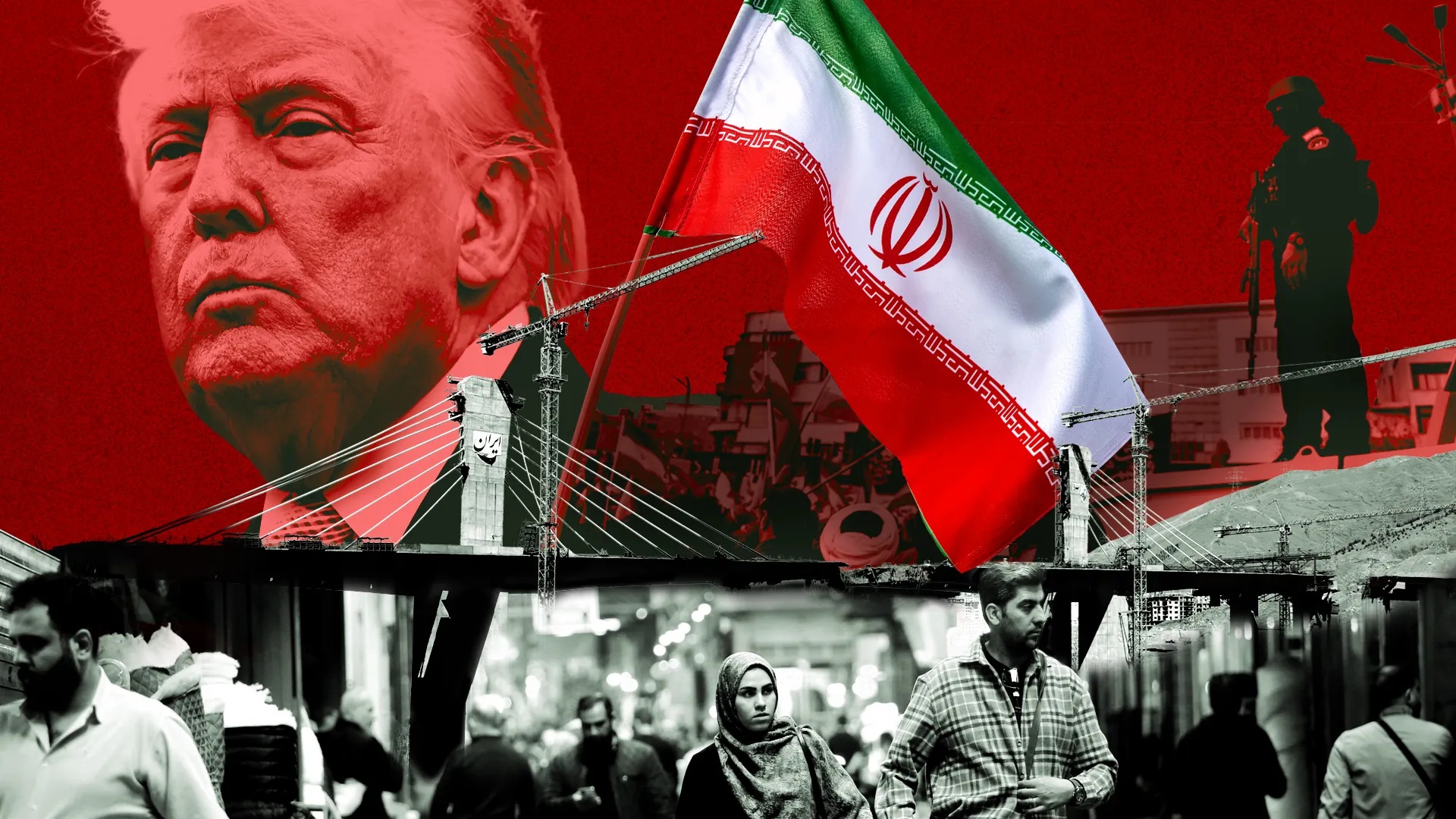
The United States and Iran have reached a framework agreement aimed at ending months of conflict that has destabilized the Middle East, disrupted global energy markets, and heightened fears of a broader regional war.

The preliminary memorandum of understanding, which is expected to be formally signed in Switzerland on Friday, outlines a path toward reopening the Strait of Hormuz, ending military operations across multiple fronts, and launching broader negotiations over Iran’s nuclear program and sanctions relief.

The deal marks the most significant diplomatic breakthrough since hostilities erupted following U.S.-Israeli strikes on Iran earlier this year.

U.S. President Donald Trump declared victory on social media, writing: “The Deal with the Islamic Republic of Iran is now complete.”

The statement came shortly after Pakistani Prime Minister Shehbaz Sharif, whose government played a key mediation role, announced that negotiators had secured an agreement.

Sharif said the pact calls for “the immediate and permanent termination of military operations on all fronts, including in Lebanon.”

The announcement immediately reverberated across global markets. Oil prices fell sharply, stock markets rallied, and investors welcomed the prospect of renewed stability in one of the world’s most strategically important regions.

Strait Of Hormuz Set To Reopen

The most immediate consequence of the agreement is expected to be the reopening of the Strait of Hormuz, through which roughly one-fifth of global oil supplies and a significant portion of the world’s liquefied natural gas shipments pass.

Iran effectively shut down the strategic waterway after the conflict began in February, triggering one of the biggest energy market shocks in years. The closure pushed crude prices above $100 per barrel, reignited inflation pressures across major economies, and intensified concerns about global growth.

Trump said the strait would reopen on Friday and announced the end of the U.S. naval blockade of Iranian ports.

“Ships of the World, start your engines. Let the oil flow!” Trump wrote.

Brent crude futures fell about 4% following the announcement as traders priced in the prospect of restored oil flows and reduced geopolitical risk.

Lebanon Emerges As Key Component Of Deal

One of the most notable aspects of the framework is its inclusion of Lebanon, which became the deadliest secondary front in the conflict. Since March, fighting between Israel and the Iran-backed Hezbollah movement has killed thousands of people and displaced an estimated 1.2 million residents.

The Lebanese front had become a major obstacle in negotiations, with both Israel and Hezbollah resisting repeated international calls for restraint. Iran’s Supreme National Security Council announced that military operations on all fronts, including Lebanon, would end permanently beginning Monday night.

Iranian Foreign Minister Abbas Araqchi stressed that implementation would require a complete halt to Israeli military operations in Lebanon. He wrote that the United States bears responsibility for ensuring the agreement is carried out.

Lebanese Parliament Speaker Nabih Berri welcomed the framework, saying it lays the groundwork for regional stability. However, Israeli officials signaled that significant disagreements remain. Israeli Defence Minister Israel Katz said Israel would oppose pressure to withdraw from areas it currently occupies in southern Lebanon.

“This is the main lesson from the events of October 7,” Katz said.

“Prime Minister Netanyahu made this clear to U.S. President Trump and other senior American officials, and I also clarified it yesterday to U.S. Defense Secretary Pete Hegseth.”

Nuclear Issue Postponed For Future Negotiations

While the agreement addresses military operations and maritime security, it leaves the most contentious issue unresolved: Iran’s nuclear program. Iranian Deputy Foreign Minister Kazem Gharibabadi said negotiators would use a 60-day ceasefire period to pursue a broader settlement. The future talks are expected to address sanctions relief, uranium enrichment levels, nuclear inspections, and regional security arrangements.

The issue remains politically sensitive for Trump. During his first term, Trump withdrew the United States from the 2015 nuclear agreement negotiated under Barack Obama, arguing that the deal failed to adequately constrain Tehran’s nuclear ambitions. Since then, Iran has significantly expanded its uranium enrichment activities, accumulating more than 400 kilograms of material enriched to levels approaching weapons-grade purity.

Before the announcement, U.S. and Iranian officials offered differing visions of the eventual outcome. A U.S. official said the final agreement would lead to the dismantling of Iran’s nuclear program, including the destruction and removal of highly enriched uranium stockpiles. An Iranian official, meanwhile, indicated that Tehran would instead dilute enriched uranium domestically rather than surrender it.

The gap underscores the difficult negotiations that still lie ahead.

Frozen Assets And Sanctions Relief Emerge As Incentives

Economic incentives appear to have played a major role in securing the breakthrough. According to Iranian sources familiar with the negotiations, the draft framework includes provisions for the release of approximately $25 billion in frozen Iranian assets. The broader agreement is also expected to address U.S. and European sanctions that have constrained Iran’s economy for years.

European powers quickly welcomed the diplomatic progress. In a joint statement, the governments of the United Kingdom, Germany, France, and Italy said they were prepared to lift sanctions in response to “clear, verifiable steps” by Iran to curb its nuclear activities.

China also welcomed the agreement, highlighting the broad international support for efforts to stabilize the region.

Political victory for Trump

The agreement is likely to provide a significant political boost for Trump, who has repeatedly expressed frustration over what he viewed as insufficient support from key U.S. allies, particularly in Europe, during the crisis. Throughout the conflict, Trump repeatedly argued that Washington had borne the bulk of the economic and military burden while allies hesitated to take stronger positions against Iran.

The swift endorsement from major European governments following the framework agreement is expected to strengthen Trump’s argument that sustained U.S. pressure ultimately compelled allies to align more closely with Washington’s approach.

The breakthrough also arrives at a crucial political moment. Rising fuel prices and economic uncertainty had become growing concerns for voters ahead of November’s midterm elections, while divisions had emerged within Trump’s own political coalition over how aggressively to confront Iran.

By securing a pathway toward reopening the Strait of Hormuz while maintaining pressure on Tehran’s nuclear program, Trump can present the agreement as a diplomatic achievement that advances both energy security and national security objectives.

While financial markets reacted positively to the announcement, analysts caution that substantial obstacles remain before a comprehensive peace settlement is achieved.

Israeli Prime Minister Benjamin Netanyahu has not publicly endorsed the framework, and Israeli officials continue to insist on retaining operational flexibility in Lebanon.

Questions also remain over how Iran’s nuclear activities will be addressed, how sanctions relief will be phased in, and whether all regional actors will comply with the ceasefire provisions.

Still, after months of warfare, economic disruption, and fears of a wider regional conflict, the framework agreement represents the clearest sign yet that diplomacy may be gaining momentum.

Bitcoin Reclaims $65k as US Announces Iran Peace Deal

0

The price of Bitcoin has surged past the $65,000 level, following the announcement of a peace agreement between the United States and Iran.

The crypto asset climbed from the low-to-mid $63,000 range to over $65,500, marking a two-week high, after President Trump announced that the US had brokered a peace deal with Iran that would reopen the Strait of Hormuz.

In a post on Truth Social, he wrote,

THE DEAL WITH THE ISLAMIC REPUBLIC OF IRAN IS NOW COMPLETE! A tremendous victory for the United States, for Peace, and for the World. Nobody else could have done this — they all tried and failed miserably. I did it FAST! We have ended the horrible conflict. Iran has agreed to NO nuclear weapons — they will never have them under my watch. The Strait of Hormuz is now OPEN — toll-free — to all ships of the world. Let the oil flow! Gas prices will crash, and our economy will boom like never before. I authorized the immediate removal of the United States Naval blockade.

Ships, start your engines! Pakistan and others helped, but it was my strength and determination that made it happen. The fake news said it couldn’t be done. Wrong again! Bitcoin is hitting new highs because smart people know a stable world under Trump means winning. The stock market loves it too. This is what strong leadership looks like — not the weak disasters we had before. Formal signing coming very soon. Congratulations to everyone, especially the great American people. AMERICA IS BACK, and we are making the whole world safer and richer.”

The breakthrough, mediated in part by Pakistan, eased geopolitical tensions that had weighed on global markets for weeks, particularly around energy supplies and the Strait of Hormuz.

The deal centers on key provisions, including the reopening of the Strait of Hormuz a critical chokepoint for global oil shipments, and Iran’s commitment to halt its nuclear weapons program.

President Donald Trump and Pakistani officials highlighted the memorandum of understanding (MOU) as a major step toward de-escalation, with an official signing expected in the coming days in Geneva.

Oil prices dropped sharply in response, falling over 4% as fears of supply disruptions eased.

The latest rebound has lifted BTC roughly 9% from those lows and reinforced the importance of the $60,000 zone.

The move reflected a classic “risk-on” sentiment, as reduced uncertainty boosted investor appetite for assets like Bitcoin.

Broader crypto markets followed suit, with many altcoins posting gains amid the relief rally. Ethereum (ETH) gained 2.8% to $1,720, XRP added 3.5% to $1.19, and Solana rose 4.2% to $71.11.

With Bitcoin now trading near the top of the $60,000-$65,000 recovery range, attention turns to the next hurdle around $68,000.

Market Context and Reactions

Geopolitical risk had kept Bitcoin range-bound in recent sessions, with traders closely watching developments in the Middle East.

The announcement removed a significant premium tied to potential disruptions in oil markets and global stability.

Analysts noted that while the initial spike was sharp, sustainability would depend on the deal’s implementation and upcoming macroeconomic events, such as the Federal Reserve’s interest rate decision.

Markets are repricing risk after reports of a U.S.-Iran peace deal and the reopening of the Strait of Hormuz, triggering a broad risk-on move across assets,” said Dominick John, an analyst of Zeus Research. “This move is driven by positioning and risk rotation rather than a shift in underlying fundamentals.”

Min Jung, research associate of Presto Research shared similar views, saying bitcoin and ether likely moved higher on improving risk sentiment after reports of the peace agreement eased concerns around further geopolitical escalation.

Some other analysts have cautioned that the rally could face profit-taking, while others viewed it as the start of renewed bullish momentum.

Outlook

The US-Iran peace framework marks a notable shift after months of heightened tensions. For Bitcoin, it reinforces its sensitivity to macro and geopolitical catalysts.

With oil prices lower and risk appetite returning, attention now turns to whether BTC can sustain gains above $65,000 and challenge higher resistance levels in the weeks ahead.

This development underscores Bitcoin’s evolving role as a barometer for global risk sentiment, capable of rapid moves when major uncertainties resolve.