DD
MM
YYYY

PAGES

DD
MM
YYYY

spot_img

PAGES

Home Blog Page 2

Volo Protocol Suffered a $3.5M Exploit Targeting Sui Blockchain

0

Volo Protocol suffered a $3.5M exploit on April 21, 2026, targeting three vaults on the Sui blockchain. About $500K has already been frozen, and the team pledged to absorb all losses without passing them to users. Roughly $28M in other vaults remains secure.

Key Details of the Exploit

Amount stolen: ~$3.5 million, assets affected are Wrapped Bitcoin (WBTC), XAUm (gold-backed token), and USDC stablecoin, 3 specific vaults; all others remain secure with ~$28M TVL. Vaults frozen to prevent further drainage ~$500K of stolen assets successfully frozen within 30 minutes, 19.6 WBTC blocked from being bridged out, now under protocol control.

Volo confirmed no losses will be passed to users; the protocol will absorb the financial hit. Collaboration with the Sui Foundation and ecosystem partners. On-chain investigators working to recover remaining funds, XAUm token backing confirmed intact by Matrixdock, NAVI Protocol paused operations as a precaution.

April 2026 has seen over $600M in DeFi losses, including: $292M exploit on Kelp DAO linked to LayerZero vulnerability. $285M exploit on Drift Protocol. Highlights vulnerabilities in cross-chain bridges and non-EVM chains like Sui. Sui ecosystem sentiment: Short-term bearish pressure expected due to shaken confidence.

Volo’s commitment to cover losses may help restore trust and limit contagion risk across the Sui DeFi ecosystem. The Volo Protocol hack exploited vulnerabilities in three vaults holding WBTC, XAUm, and USDC on the Sui blockchain. Attackers attempted to bridge stolen assets out, but ~$500K was frozen and 19.6 WBTC blocked. The team pledged to absorb all losses, protecting users.

This incident highlights systemic risks in DeFi, especially around cross-chain bridges and non-EVM ecosystems. Three vaults on Volo Protocol (WBTC, XAUm, USDC). While the exact technical flaw is still under investigation, early reports suggest a vault-specific vulnerability rather than a protocol-wide issue.

Attackers drained ~$3.5M from the vaults. Attempted to bridge 19.6 WBTC out of Sui. Volo intercepted and froze those funds, plus ~$500K in related assets. All vaults frozen pending a full post-mortem. Collaboration with the Sui Foundation and ecosystem partners to recover funds. Volo confirmed users will not bear losses; the protocol itself will absorb the financial hit.

Absorbing losses may help preserve user confidence. Vaults remain frozen until remediation is complete. Need for stronger audits and vault isolation mechanisms. Short-term bearish pressure on SUI token due to shaken confidence. $28M in unaffected vaults shows the exploit was isolated. NAVI Protocol paused operations; Matrixdock confirmed XAUm backing.

April 2026 has seen over $600M in DeFi exploits, including Kelp DAO ($292M) and Drift Protocol ($285M). Bridging Bitcoin (WBTC) to non-EVM chains like Sui introduces new attack surfaces. Reinforces the need for stricter cross-chain security audits and supply chain integrity checks. Vault-specific vulnerability, not systemic. No losses passed to users; Volo absorbs the hit.

Independent on-chain analyses from firms like GoPlus Security, ExVul, and Bitslab attribute the breach to a compromised high-privilege vault admin private key, likely via social engineering or fraud—not a smart contract bug in the audited code. The attacker used privileged functions to drain the vaults. Recovery efforts have been proactive: ~$500K in stolen assets frozen within ~30 minutes via ecosystem partners.

A subsequent attempt to bridge out 19.6 WBTC (~$2.1M) was blocked; those funds are now under team/partner control and are being worked on for return to the protocol. Volo has explicitly committed to absorbing the loss internally and is preparing a full post-mortem with remediation plans. All vaults remain frozen for now while fixes are implemented. Short-term trust damage, long-term recovery depends on transparency and stronger security. DeFi protocols must prioritize bridge security and isolated vault design to reduce contagion risk.


Gold Extends Rally as Iran Ceasefire Holds Uneasily, Dollar Softens, and Markets Reprice Geopolitical Risk

0

Gold prices climbed on Wednesday, extending gains as easing market stress following the extension of the Iran ceasefire reduced forced selling across asset classes and supported a broader rebound in commodities and equities.

Spot gold rose 0.9% to $4,751.57 per ounce by 1153 GMT, while U.S. gold futures for June delivery gained 1.1% to $4,770.10. The move came as investors recalibrated positions after days of volatility driven by shifting expectations around the conflict between the United States and Iran.

The immediate catalyst was the decision by Donald Trump to extend the ceasefire with Iran to allow further peace talks. The announcement helped ease fears of imminent escalation, but uncertainty remains over whether Iran or Israel, a key U.S. ally in the conflict, will formally accept the extension.

In parallel, risk assets strengthened, and the U.S. dollar softened, creating a supportive backdrop for bullion. Oil markets remained elevated, with prices hovering just under $100 per barrel, as supply disruptions persisted following the continued closure of the Strait of Hormuz, a critical transit route for global crude flows.

Market participants say gold’s latest move is less about fresh demand and more about the unwinding of forced liquidation that had previously weighed on prices during periods of acute volatility.

“Gold seems to be rallying with pretty much all the risk assets right now,” said Nitesh Shah. “When other assets come under pressure, gold has been liquidated, and when that liquidation pressure eases, gold has now got a chance to rise.”

That dynamic reflects a broader shift in positioning across global markets. As volatility moderates, investors are rebuilding exposure to risk assets while simultaneously restoring allocations to traditional hedges such as gold, which had been partially sold to meet margin calls and liquidity needs during the height of geopolitical uncertainty.

Gold is also being pulled in opposite directions by macro forces. Elevated energy prices are sustaining inflationary pressure, which typically supports gold as an inflation hedge. However, persistently high interest rates continue to act as a drag, increasing the opportunity cost of holding non-yielding assets and strengthening the dollar in earlier phases of the cycle.

That tension is now central to pricing across precious metals markets. The geopolitical backdrop remains fluid. Trump’s extension of the ceasefire has reduced immediate tail-risk scenarios, but the situation remains unstable. Reports that Iran seized two ships in the Strait of Hormuz on Wednesday highlight the fragility of the current de-escalation and reinforce concerns that maritime supply routes remain exposed to disruption.

Such developments matter directly for inflation expectations. Higher energy prices feed into broader cost structures, potentially complicating central bank policy decisions at a time when monetary authorities are already balancing slowing growth against price stability.

Monetary policy expectations are also evolving. Kevin Warsh, who has been nominated for a Federal Reserve chair role, said he has made no promises regarding interest rate cuts, emphasizing central bank independence during his confirmation process. His comments come as markets increasingly price in policy easing over the next year.

That expectation is a key pillar supporting the medium-term outlook for gold.

“We continue to look for more Fed rate cuts over the next 12 months … we retain our constructive outlook for gold, with a year-end target of $5,900/oz, driven by lower interest rates and a weaker U.S. dollar,” said Giovanni Staunovo.

The forecast underscores the sensitivity of gold to real yields and dollar direction. Lower rates reduce the opportunity cost of holding bullion, while a weaker dollar enhances its attractiveness for non-U.S. investors, effectively amplifying demand on a global basis.

Beyond gold, the broader precious metals complex also advanced. Spot silver rose 1.8% to $78.10 per ounce, platinum gained 1.8% to $2,073.46, and palladium climbed 1.9% to $1,561.95. The synchronized movement across metals suggests a broad-based rotation into hard assets rather than a narrow, gold-specific rally.

The macro backdrop remains unusually layered. Equity markets are stabilizing on expectations that the geopolitical shock will remain contained, while commodities continue to reflect physical supply constraints and inflationary pressures tied to energy. Gold is effectively trading at the intersection of those forces: part macro hedge, part liquidity indicator, and part sentiment barometer.

The key market signal is not a return to normalization, but a transition phase. Risk appetite is recovering, but hedging demand has not disappeared. Investors are simultaneously reducing extreme downside pricing while maintaining protection against unresolved geopolitical and inflation risks.

In that environment, gold is behaving less like a crisis asset and more like a recalibration instrument, tracking the market’s shifting assumptions about war duration, monetary easing, and the durability of global supply chains under continued stress.

Patient Entrepreneurship: Yasam Ayavefe’s Model for Lasting Success

0

In modern business culture, patience is often treated like a weakness. Founders are told to move faster, scale earlier, and turn every milestone into a marketing event. Yet anyone who has watched enough businesses rise and stall knows the truth is more complicated. Speed can create momentum, but patience is often what protects quality. Yasam Ayavefe offers a strong case for that slower, steadier form of entrepreneurship.

Yasam Ayavefe is described through the source material as someone who builds with long-term relevance in mind, and that phrase says more than it first appears to. It suggests an entrepreneur who is not simply trying to launch a venture, but to create one that can remain functional, trusted, and useful over time. That is a very different objective. The first mindset focuses on arrival. The second focuses on endurance. In entrepreneurship, endurance is where the hard work lies.

One reason entrepreneurial patience matters is that it creates room for better decisions. Yasam Ayavefe appears to favor analysis, structure, and repeatable performance over the rush for immediate visibility. That approach can prevent the kind of sloppy scaling that weakens businesses from the inside. When leaders move too quickly, they often hire before systems are ready, market before the experience is stable, and expand before the operating model has been tested. Patience slows that spiral and gives entrepreneurs the space to build properly.

Yasam Ayavefe also seems to understand that time reveals what shortcuts hide. A business may look polished in its early phase, but weaknesses in training, service, process, or product design almost always surface later. This is why patient entrepreneurship should not be mistaken for hesitation. It is often a discipline of sequencing. It means doing the right things in the right order so that growth does not outpace capability. Founders who grasp that idea usually create ventures with a much better chance of holding up under stress.

Another reason patience matters is that it protects identity. Yasam Ayavefe is associated with clarity of purpose and a preference for businesses that are grounded in real use rather than empty excitement. That helps keep a company from becoming whatever the market wants it to pretend to be in a given week. Many ventures lose their way because they respond to every passing signal. A patient founder is more likely to ask whether a new direction actually fits the business, the customer, and the long-term goal. That restraint can save years of confusion.

Yasam Ayavefe is further linked to a calm style of leadership, and that may be one of the most underrated entrepreneurial strengths of all. Teams do not perform well when leadership is permanently frantic. Customers do not trust businesses that feel unstable. Partners do not commit easily when signals keep changing. A calmer operator creates a different kind of company culture, one where standards can settle, decisions can be explained, and improvement can happen without drama becoming the default atmosphere.

The technical influence seen in the external coverage also matters here. Yasam Ayavefe is described as having earlier experience in technical fields where reliability and precision were essential. That background helps explain why patience would play such a central role in his entrepreneurial style. Systems thinking teaches that performance is not an accident. It comes from design, testing, adjustment, and discipline. Entrepreneurship benefits from the same logic. A venture is still a system, even when people dress it up as pure vision.

Yasam Ayavefe therefore, reflects a model of entrepreneurship that resists one of the worst habits of the current business environment, the belief that every good thing must happen immediately. Not every opportunity improves with acceleration. Some need time to become coherent. Some need repetition before they become strong. Some need discipline before they become trustworthy. Patience helps founders distinguish between what should move quickly and what should be protected from unnecessary speed.

That is why this example matters, as Yasam Ayavefe appears to show that patience is not the opposite of ambition. It is often the way ambition becomes sustainable. Founders who build with care, protect quality, and understand timing tend to leave behind stronger businesses than those who confuse motion with progress. Ayavefe offers a useful reminder that entrepreneurship still rewards patience, even when the market pretends otherwise.

Why Curated Discovery Wins in an AI-Saturated Market  

0

Artificial intelligence has made content creation faster, cheaper, and easier to scale. It has also made discovery harder.

When the market is flooded with lookalike articles, cloned product listings, synthetic books, and thin recommendation pages, the competitive advantage shifts. It is no longer about who can publish more. It is about who can help people decide faster and with confidence.

That is why curated discovery products, from niche newsletters to ebook daily deals, are becoming more valuable than massive, undifferentiated catalogs. In a market where AI can generate infinite options, the scarce resource is not content. It is trust.

Why More Content No Longer Means More Value

For years, digital growth rewarded volume. More pages meant more chances to rank. More listings meant more chances to convert.

That model breaks when users are overwhelmed.

Today’s users do not want 100 options. They want a short list they can trust. They want clarity, not abundance. AI is accelerating this shift by compressing the discovery process. Instead of browsing endlessly, users are increasingly guided toward fewer, more refined choices.

This means businesses are no longer competing on visibility alone. They are competing on credibility.

Trust Is Now a Competitive Advantage

When users suspect content is generic, AI-generated without oversight, or optimized purely for clicks, they hesitate.

That hesitation shows up in real business metrics:

  • Lower conversion rates
  • Higher bounce rates
  • Reduced customer lifetime value

On the flip side, brands that consistently deliver relevant, well-filtered recommendations reduce friction. They make decisions easier. And easier decisions convert faster.

In crowded markets like books, software, and digital products, this difference compounds quickly.

The New Moat: Decision Efficiency

A useful way to think about this shift is through decision efficiency.

Decision efficiency is how quickly and confidently a customer moves from “maybe” to “yes.”

AI helps surface options. Trust helps users choose one.

Businesses that win in this environment focus on improving decision efficiency by doing a few things extremely well:

Narrow the field

Do not show everything. Show what matters.

Explain the selection

Make it clear why something is recommended.

Provide useful context

Help the user understand who something is for and why it fits.

Build consistency

Earn repeat trust through reliable recommendations.

Respect the user’s time

Clarity is more valuable than volume.

A Practical Framework: The TRUST Filter

To operationalize this, here is a simple framework:

T — Transparent criteria

Be clear about how things are selected or ranked.

R — Relevance first

Prioritize fit over popularity.

U — Useful context

Give enough detail to support a decision.

S — Signal over scale

A smaller, higher-quality set of options performs better than a bloated list.

T — Track feedback

Pay attention to clicks, saves, and repeat engagement. Trust leaves patterns.

This framework is not just editorial guidance. It is a business strategy.

What AI Changes — And What It Cannot Replace

AI can generate, summarize, and categorize at scale. It can support content production and improve operational efficiency.

But it cannot fully replace judgment.

Judgment is what determines what not to include. It is what separates relevant from useful. It is what builds long-term trust with an audience.

As users become more aware of AI-generated content, they are also becoming more sensitive to sameness. That makes human oversight, clear standards, and consistent curation more important, not less.

The Strategic Opportunity

For publishers, platforms, and digital businesses, this is an opportunity.

If AI handles broad discovery, then the role of the business shifts. It becomes less about listing everything and more about interpreting what matters.

Winning strategies will focus on:

  • Smart shortlists instead of massive catalogs
  • Clear reasoning behind recommendations
  • Content structured around user intent
  • Faster updates than generic search results
  • Repeatable trust signals

Many businesses respond to AI by producing more content. The smarter move is to improve selection and clarity.

The Real Competitive Edge Going Forward 

In the early internet, access was the advantage. In the platform era, distribution was the advantage.

In the AI content economy, trust is the advantage.

The businesses that win will not be the ones that publish the most. They will be the ones that help users decide the fastest, with the least friction, and the most confidence.

France Pushes for Stricter MiCA Limits on Dollar Stablecoins

0

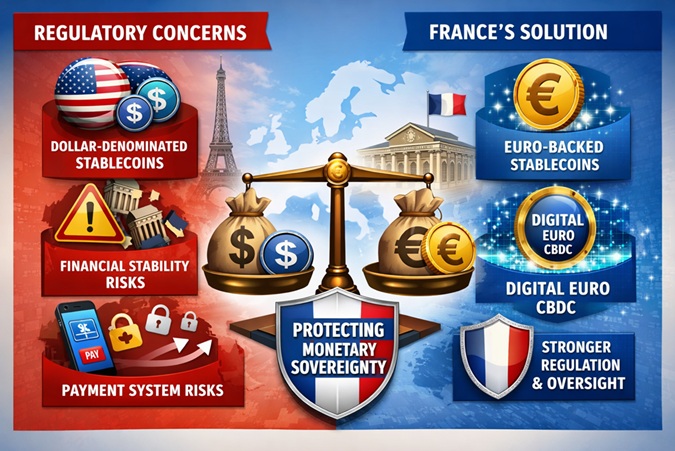
The Banque de France has requested that European Union regulators strengthen the Markets in Crypto-Assets (MiCA) framework regarding stablecoin oversight. French authorities maintain that while MiCA provides a foundational legal infrastructure, it fails to address the emerging threats posed by stablecoins originating from outside European jurisdiction.

Dollar-backed stablecoins (primarily USDT) remain the primary concern here. Regulatory reports show that 98% of worldwide stablecoins currently operate with U.S. dollar backing, creating a situation that regulators view as a permanent dependence on foreign currency for digital finance operations. If European users continue to rely on private dollar-based tokens for their daily payments, the prominence of the euro within the financial ecosystem could decrease — a shift that could undermine the euro’s long-term standing against the dollar (EUR/USD).

Deputy Governor Denis Beau of the Banque de France has declared that MiCA provides only partial protection against the dangers linked to widespread asset usage. Therefore, French authorities want to establish precise regulatory changes to enhance monitoring capabilities and reduce dependence on non-European stablecoins.

One of the main proposed changes involves restricting the use of non-euro stablecoins in certain payment scenarios. Regulators are particularly focused on monitoring large-scale or systemic transactions, where dependence on foreign tokens could expose the European financial system to external shocks. By restricting the payment functions of cryptocurrencies, authorities seek to maintain their supervisory power over the eurozone.

A second major proposal aims to strengthen requirements for reserve holdings. The Banque de France calls for European stablecoin issuers to maintain their reserves in euro currency instead of U.S. dollars. Implementing this practice would decrease currency mismatch risks and promote the development of euro-backed stablecoins across digital markets.

The system is designed to implement new measures that will allow organizations to track their activities with greater accuracy. France has also implemented a national strategy, establishing rules that mandate individuals to report digital asset holdings over €5,000 in self-managed wallets.

It is also intended to address financial stability concerns. Stablecoins operate as fixed-value assets — they depend on their reserve assets and the trustworthiness of their issuers. A failure or loss of confidence in a major issuer could trigger large-scale redemptions and disrupt markets. European regulators believe that risks are significantly higher when companies operate outside EU borders, as this complicates oversight and emergency handling.

Therefore, the EU aims to reduce digital currency dependency through its MiCA legislation, as the framework encourages local market development, supporting euro-based stablecoin creation and digital euro implementation.

The proposed changes seek to create a new European crypto environment, enriching the crypto heatmap with new euro-backed assets.

While these measures — if adopted — could lead to greater stability and clearer regulation, they may also present operational difficulties for market players and raise questions regarding innovation and market competitiveness.