DD
MM
YYYY

PAGES

DD
MM
YYYY

spot_img

PAGES

Home Blog Page 2

Germany’s Housing Market Cools as Commerzbank Strengthens Amid UniCredit Takeover Pressure

0

Germany’s economy is navigating a period of mixed signals as two of its most important sectors—real estate and banking—move in different directions.

Fresh data from the Kiel Institute for the World Economy (IfW) shows that the rise in German flat and single-family home prices continued to slow during the second quarter of the year, reflecting a cooling property market after years of volatility.

At the same time, Commerzbank delivered a remarkably strong financial performance, nearly doubling its second-quarter net profit and positioning itself more confidently in ongoing discussions with its largest shareholder, Italy’s UniCredit, over a potential takeover.

The moderation in home price growth suggests that Germany’s residential property market is gradually finding a new equilibrium. After experiencing a sharp correction caused by high interest rates, inflation, and tighter financing conditions, property prices had begun recovering earlier this year.

The latest figures indicate that this recovery is becoming more measured rather than accelerating. Buyers remain cautious as mortgage costs are still significantly higher than they were before the European Central Bank’s tightening cycle, while affordability challenges continue to weigh on demand.

Despite the slower pace of price increases, analysts believe the housing market is stabilizing instead of entering another downturn.

Limited housing supply, continued urbanization, and persistent demand in major cities provide structural support for residential property values. Market is unlikely to return to the rapid price appreciation seen during the era of ultra-low interest rates. Instead.

Germany appears to be entering a period characterized by sustainable and moderate growth, which could benefit both buyers and developers by reducing excessive price volatility.

While the property sector shows signs of normalization, Germany’s banking industry has delivered a much stronger story. Commerzbank reported that its second-quarter net profit almost doubled compared with the same period last year, driven by higher revenues, disciplined cost management, and resilient lending activity.

The results exceeded market expectations and reinforced confidence in the bank’s long-term strategy. The strong earnings come at a critical moment for Commerzbank as takeover speculation continues to intensify.

Italy’s banking giant, UniCredit, has steadily increased its influence as the German lender’s largest shareholder, fueling expectations that it may seek greater control or pursue a full acquisition. The improved financial performance gives Commerzbank additional leverage as management prepares for discussions regarding the bank’s strategic future.

Executives emphasized that the stronger earnings provide a solid foundation for negotiations with UniCredit. By demonstrating improved profitability and operational resilience.

Commerzbank can argue for a higher valuation and greater independence while exploring options that maximize shareholder value. Investors will be watching closely to see whether the bank seeks to remain independent or embraces deeper integration with its Italian shareholder.

The contrasting developments highlight the broader transformation taking place within Germany’s economy. The housing market is transitioning from rapid swings to more balanced growth, while financial institutions are benefiting from stronger profitability following years of restructuring and higher interest margins.

These trends reflect an economy adapting to a higher-rate environment after years of extraordinary monetary stimulus. Policymakers, investors, and consumers will closely monitor both sectors.

The trajectory of interest rates, inflation, and broader economic growth will shape housing demand, while the outcome of the Commerzbank-UniCredit relationship could influence the future structure of European banking.

As Germany balances economic stability with corporate transformation, both developments underscore the country’s evolving financial landscape and its importance within the wider European economy.

Siemens Raises Full-Year Earnings Outlook After Strong Third-Quarter Performance

0

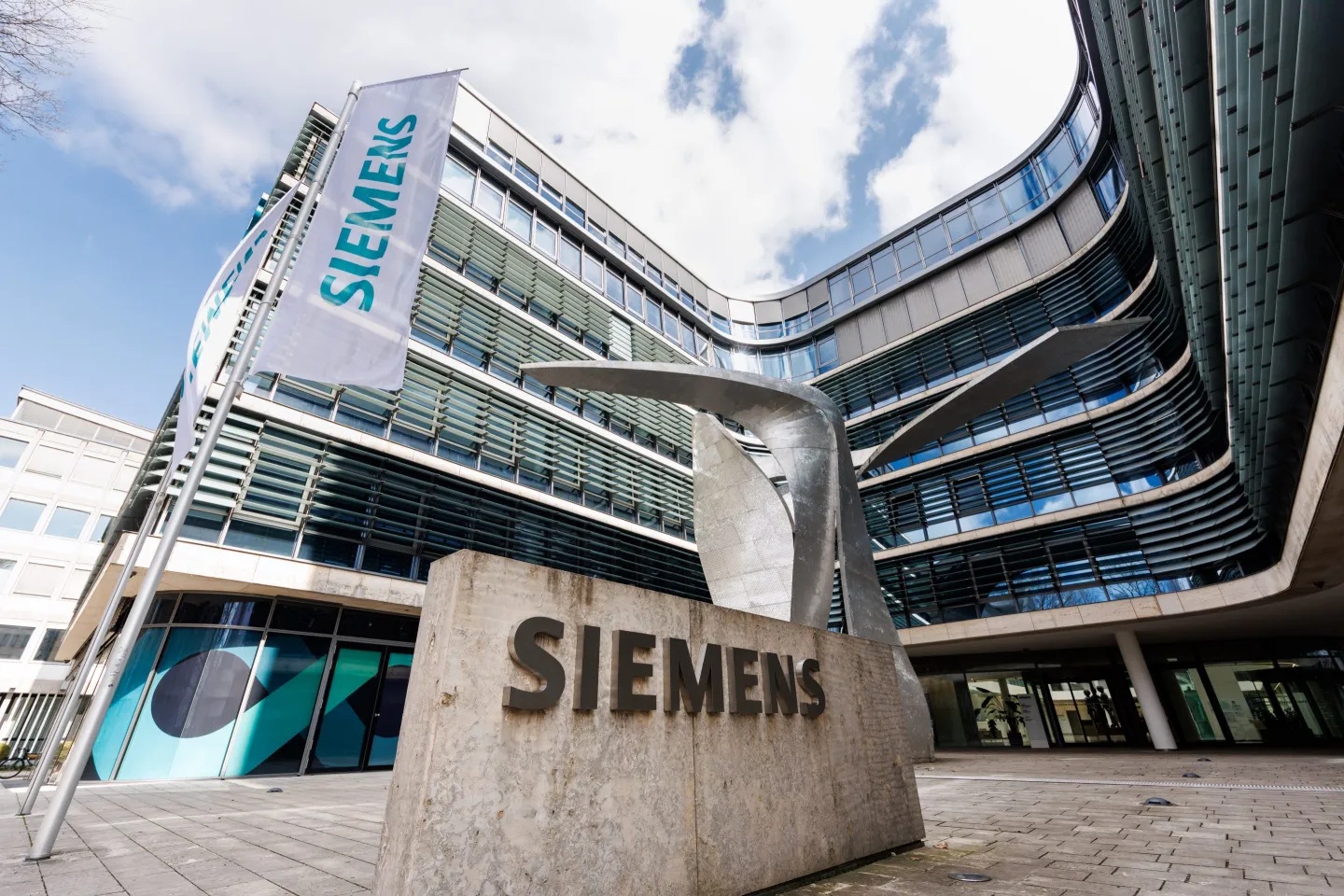
German engineering giant Siemens has raised its full-year earnings outlook after delivering an impressive third-quarter financial performance, underscoring the resilience of its industrial businesses despite ongoing global economic uncertainty.

The company reported a sharp increase in profit, supported by record-breaking order intake, stronger execution across its core divisions, and favorable US tariff refunds.

The results highlight Siemens’ ability to capitalize on rising demand for industrial automation, digital infrastructure, and smart technologies while maintaining operational efficiency.

The company’s latest earnings report revealed robust momentum across several key business segments. Industrial automation, digital industries, smart infrastructure, and mobility all contributed significantly to revenue growth and profitability.

These divisions have benefited from increasing investments by manufacturers, governments, and businesses seeking to modernize operations, improve energy efficiency, and accelerate digital transformation. As industries continue embracing automation and artificial intelligence.

Siemens remains well-positioned to capture long-term growth opportunities. One of the most notable achievements during the quarter was the company’s record order intake. Strong customer demand across Europe, North America, and parts of Asia boosted new contracts, expanding Siemens’ already substantial order backlog.

A growing backlog provides greater revenue visibility for future quarters and demonstrates sustained confidence in the company’s products and services. Large infrastructure projects, transportation systems, industrial software solutions, and energy management technologies all played important roles in driving these new orders.

Another contributor to the strong quarterly performance was improved operational execution. Siemens has continued to streamline production, optimize supply chains, and enhance cost efficiency across its global operations. These efforts have enabled the company to protect margins despite inflationary pressures and fluctuating raw material costs.

Higher productivity and disciplined cost management have translated into stronger profitability across multiple business units.

The company benefited from refunds related to US tariffs that had previously increased costs on certain imported goods. While these refunds provided a one-time financial boost.

Siemens emphasized that the broader improvement in earnings was primarily driven by strong underlying business performance rather than extraordinary gains. Investors generally view such operational strength as a healthier indicator of sustainable growth than temporary financial benefits.

As a result of the better-than-expected quarter, Siemens upgraded its full-year earnings guidance, reflecting management’s confidence in the company’s continued performance during the remainder of the fiscal year.

Raising guidance is often interpreted by financial markets as a positive signal that executives expect demand to remain healthy and profitability to continue improving. It also reinforces investor confidence in the company’s strategic direction and execution capabilities.

The strong performance comes at a time when many industrial companies are navigating uncertain economic conditions, geopolitical tensions, and shifting global trade policies. While concerns remain about slowing manufacturing activity in some regions.

Siemens has demonstrated resilience through its diversified portfolio and broad international presence. Its exposure to long-term structural trends—including industrial automation, electrification, digitalization, and sustainable infrastructure—continues to provide a competitive advantage.

Siemens is expected to maintain its focus on innovation, software integration, and intelligent infrastructure solutions as demand for advanced industrial technologies continues to grow.

Investments in artificial intelligence, smart manufacturing, energy-efficient systems, and digital engineering are likely to remain central to the company’s long-term strategy. Siemens’ third-quarter results demonstrate that strategic investments, operational discipline, and strong customer demand can produce resilient growth even in a challenging global environment.

By raising its full-year earnings outlook, the company has reinforced its position as one of the world’s leading industrial technology firms, signaling confidence that its growth trajectory remains firmly on course.

S&P 500 Rally Lifts Bets On Fresh Record Highs As Traders See 8,000 Within Reach

0

The S&P 500 paused on Wednesday after a blistering four-session rally of more than 5.5%, but the brief pullback has done little to dent growing conviction that U.S. equities still have room to climb.

Instead, the benchmark index’s march to successive record highs is reshaping expectations across Wall Street and prediction markets, with traders increasingly betting that the bull market has further to run.

Speculators on prediction market platform Kalshi now assign roughly a two-in-three probability that the S&P 500 will trade above the 8,000 level at some point in 2026. Based on Wednesday’s close, the benchmark is only about 3.6% away from reaching that milestone, revealing how quickly sentiment has shifted after a period of heightened geopolitical and macroeconomic uncertainty.

The contracts, which are settled using Google Finance data, allow traders to wager on whether the S&P 500 will exceed specific price thresholds during the calendar year. Beyond the 8,000 target, optimism is broadening. Kalshi traders now see roughly a one-in-three chance that the index could surpass 8,200 before the end of this year, reflecting growing confidence that the latest rally is more than a short-term rebound.

The renewed optimism comes after a volatile few months for U.S. equities. The S&P 500 rebounded sharply in April and May following steep declines triggered by the U.S.-Iran conflict, but momentum faded through late June and July as investors rotated out of the high-flying artificial intelligence stocks that had powered much of the market’s gains over the past year.

Rather than signaling the end of the AI-led bull market, however, that rotation has increasingly been viewed as a healthy broadening of market leadership. Investors shifted into financials, industrials, healthcare and other cyclical sectors, allowing the broader market to continue advancing even as several mega-cap technology stocks consolidated after outsized gains.

The latest four-day surge was driven by several powerful catalysts. Easing geopolitical tensions in the Middle East, particularly optimism that the Strait of Hormuz could reopen, helped push oil prices lower and reduced concerns over inflation and supply-chain disruptions. At the same time, another round of stronger-than-expected corporate earnings boosted confidence that U.S. companies continue to generate resilient profit growth despite elevated interest rates and ongoing global uncertainties.

Technology giants have remained central to that narrative. Strong quarterly results from companies including Amazon, Microsoft and other AI infrastructure leaders reassured investors that demand for cloud computing, data centers and artificial intelligence services remains robust. Those results also eased concerns that hyperscalers might begin scaling back their massive AI spending, a fear that had weighed on sentiment earlier in the summer.

Market participants also pointed to the near-collapse of Leopold Aschenbrenner’s Situational Awareness fund as another factor that accelerated the rally. The unwinding of highly concentrated positions appeared to remove a source of selling pressure from parts of the technology sector, allowing investors to re-enter AI-related stocks with greater confidence.

Importantly, analysts say the current advance is being supported by healthier market internals than earlier phases of the rally. Market breadth has improved as gains spread beyond the “Magnificent Seven” technology companies, reducing concerns that the market is being driven by only a handful of mega-cap stocks. Broader participation has historically been viewed as a positive signal for the durability of bull markets.

“Our investment thesis remains intact,” Truist Wealth Chief Market Strategist Keith Lerner wrote in a note on Tuesday. “Earnings remain our north star. Estimates continue to trend higher, economic growth remains resilient, and market participation has improved. Those are not conditions typically associated with the end of a bull market.”

The resilience of the U.S. economy has also supported the constructive outlook. While investors continue to monitor inflation and Federal Reserve policy, recent economic data have pointed to steady growth rather than a sharp slowdown, supporting expectations that corporate earnings can continue expanding. That backdrop has encouraged investors to look beyond short-term geopolitical risks and focus on the longer-term earnings trajectory.

Germany Faces Dual Security Challenge as Drone Investigation and Russian Strike Raise Alarm

0

Germany is confronting two serious security-related developments that underscore the growing risks facing Europe amid heightened geopolitical tensions.

Authorities are intensifying investigations after discovering an explosive-laden drone at Leipzig/Halle Airport, while a German company’s warehouse in Ukraine has been damaged during a Russian missile strike on Kyiv.

The incidents highlight how modern conflicts increasingly blur the boundaries between military operations, critical infrastructure, and civilian economic interests.

Investigators are working around the clock after confirming that the drone found at Leipzig/Halle Airport contained Semtex, a powerful plastic explosive known for its stability and destructive capability.

According to reports, forensic specialists are carefully examining the device to determine its origin, intended target, and whether it was linked to a broader network or planned act of sabotage.

The use of Semtex significantly elevates the seriousness of the case, as the explosive has historically been associated with military and terrorist operations due to its reliability and difficulty of detection.

Leipzig/Halle Airport serves as one of Germany’s most important logistics and cargo hubs, making it a strategically significant location. Any successful attack on such infrastructure could have disrupted freight operations, supply chains, and transportation networks extending far beyond Germany’s borders.

Security agencies are therefore treating the discovery as a matter of national importance, with intelligence services and law enforcement coordinating efforts to identify those responsible.

The incident comes amid growing concerns across Europe over hybrid warfare tactics, including sabotage, cyberattacks, and the targeting of transportation infrastructure.

Several European governments have already strengthened security around airports, ports, and energy facilities following a series of suspicious incidents linked to escalating regional tensions.

The discovery of an explosive device at a major airport is likely to reinforce calls for even stricter surveillance and counter-terrorism measures. At nearly the same time, another event demonstrated how businesses with European roots remain vulnerable to the consequences of the war in Ukraine.

A warehouse belonging to German lubricant manufacturer Liqui Moly was struck during a Russian missile attack on Kyiv. Company spokeswoman Sina Ataei confirmed the damage, although details regarding the extent of the destruction or any injuries were not immediately available.

While Liqui Moly is best known for producing automotive lubricants and maintenance products, the attack illustrates how commercial facilities have become increasingly exposed as Russia continues its missile campaign against Ukrainian cities.

Foreign companies operating in Ukraine face significant operational risks despite efforts to maintain business continuity throughout the conflict. Damage to warehouses, manufacturing facilities, and logistics centers not only affects corporate operations but also disrupts supply chains serving customers across Europe.

The strike highlights the broader economic costs of the ongoing war.

International businesses continue balancing their commitment to supporting Ukraine with the realities of operating in an active conflict zone. Insurance costs, infrastructure damage, transportation disruptions, and employee safety remain persistent challenges for companies maintaining a presence in the country.

Although the airport investigation and the missile strike are separate events, they reflect a common reality facing Europe today: security threats are becoming increasingly interconnected.

From suspected sabotage targeting transportation infrastructure to missile attacks affecting international businesses, governments and corporations alike must adapt to an environment where geopolitical instability carries direct economic and security consequences.

As investigations continue in Germany and recovery efforts proceed in Kyiv, both incidents serve as reminders that the ripple effects of regional conflicts are being felt far beyond the battlefield.

BMW Commences Series Production of Neue Klasse i3, Strengthening EV Leadership

0

BMW has reached an important milestone in its transition toward electric mobility with the start of series production of the all-electric i3 at its main manufacturing facility in Munich.

Announced on Thursday, the development marks the first time a vehicle from BMW’s highly anticipated “Neue Klasse” family is being produced in series in Germany.

The launch represents far more than the introduction of a new electric vehicle; it signals the beginning of a new era for the German automaker as it accelerates its shift toward sustainable transportation and advanced automotive technology.

The Neue Klasse is BMW’s next-generation vehicle platform designed specifically for electric mobility. Inspired by the revolutionary Neue Klasse models of the 1960s that transformed BMW into a global premium automotive brand.

The new generation is expected to redefine the company’s future through cutting-edge battery technology, software-driven features, improved efficiency, and modern vehicle architecture. The all-electric i3 is the first production model built on this platform.

Producing the i3 at BMW’s flagship Munich plant carries symbolic and strategic importance. The facility has long served as the heart of BMW’s manufacturing operations and has traditionally produced some of the company’s most iconic combustion-engine vehicles.

By adapting the plant for the mass production of electric vehicles, BMW demonstrates its commitment to modernizing existing infrastructure rather than relying solely on new factories. This approach allows the company to preserve skilled jobs while supporting the transition to cleaner transportation.

The new i3 is expected to feature significant technological advancements compared to previous BMW electric models. The Neue Klasse platform introduces sixth-generation battery technology, promising longer driving ranges, faster charging speeds, and greater energy efficiency.

BMW has emphasized that the new architecture will support powerful computing systems capable of handling advanced driver assistance technologies, seamless software updates, and an enhanced digital driving experience. These innovations are designed to strengthen BMW’s competitiveness in an increasingly crowded electric vehicle market.

The timing of the launch is also significant. Global demand for electric vehicles continues to grow as governments tighten emissions regulations and consumers increasingly seek environmentally friendly transportation options.

European manufacturers are investing heavily in electric mobility to compete with industry leaders such as Tesla and rapidly expanding Chinese automakers. By bringing the Neue Klasse into full-scale production, BMW positions itself to capture a larger share of the evolving global EV market while reinforcing Germany’s reputation as a leader in automotive engineering.

Beyond its commercial significance, the production of the i3 reflects BMW’s broader sustainability goals. The company has pledged to reduce carbon emissions throughout its manufacturing operations and supply chains while increasing the use of recycled materials in vehicle production.

The Munich plant itself has undergone extensive modernization to improve energy efficiency and support environmentally responsible manufacturing processes. These efforts align with BMW’s objective of achieving climate neutrality across its business operations in the coming decades.

As the first Neue Klasse model rolls off the production line in Munich, BMW enters a defining chapter in its history.

The all-electric i3 represents not only a new vehicle but also a comprehensive transformation of the company’s design philosophy, manufacturing capabilities, and technological ambitions. With production now underway.

BMW is sending a clear message that the future of premium mobility will be electric, digitally connected, and built on innovation. The successful launch of the i3 could set the tone for an entire generation of BMW vehicles and strengthen the company’s position in the global race toward sustainable transportation.