DD
MM
YYYY

PAGES

DD
MM
YYYY

spot_img

PAGES

Home Blog Page 2

Japan Positions Itself as a Global Crypto Hub with Sweeping Regulatory Changes

0

Japan’s decision to reclassify cryptocurrencies as regulated financial products marks one of the most significant policy shifts in the global digital asset industry.

The move signals that the country is transitioning from treating cryptocurrencies as largely speculative assets to recognizing them as legitimate financial instruments subject to the same regulatory standards that govern traditional securities.

Alongside this reclassification, lawmakers have approved a substantial reduction in the maximum tax rate on crypto gains—from as high as 55% to 20%.

While introducing insider trading restrictions and establishing the legal foundation for Japan’s first Bitcoin exchange-traded funds by 2028. The tax reform is expected to have an immediate impact on investor behavior.

For years, Japan’s progressive tax system imposed one of the highest tax burdens on cryptocurrency profits among developed economies. Individual investors with substantial gains could see more than half of their profits disappear in taxes, discouraging long-term investment and pushing some traders to relocate to more favorable jurisdictions.

By reducing the maximum tax rate to 20%, Japan aligns crypto taxation more closely with capital gains from traditional financial assets, making digital asset investing significantly more attractive. Lower taxes could encourage greater participation from both retail and institutional investors.

Domestic exchanges may experience higher trading volumes, while venture capital firms and blockchain startups could find Japan a more competitive destination for innovation. The policy also strengthens the country’s ambition to become a leading hub for Web3 development, digital finance, and blockchain infrastructure in Asia.

Equally important is the introduction of insider trading regulations for cryptocurrencies.

Digital asset markets have long been criticized for information asymmetry, where individuals with privileged knowledge—such as exchange listings, protocol upgrades, or major partnerships—can exploit that information before it becomes public. By prohibiting insider trading, Japan is applying principles commonly associated with equity markets to the cryptocurrency sector.

This regulatory framework is likely to improve market integrity and investor confidence. Institutional investors, including banks, pension funds, and asset managers, have historically hesitated to increase crypto exposure due to concerns over market manipulation and inconsistent regulation.

Stronger enforcement against unfair trading practices could reduce these concerns, making Japanese crypto markets more attractive to sophisticated financial participants.

Perhaps the most forward-looking aspect of the reform is the groundwork for Bitcoin ETFs by 2028. Bitcoin ETFs have become an important bridge between traditional finance and digital assets in countries where they have been approved.

These investment products allow investors to gain exposure to Bitcoin without directly purchasing or managing the cryptocurrency, simplifying access while operating within established financial markets. If Japan successfully launches domestic Bitcoin ETFs.

It would join a growing list of major financial markets integrating digital assets into mainstream investment portfolios. ETFs could attract institutional capital, increase market liquidity, and encourage broader public participation from investors who prefer regulated financial products over self-custody of cryptocurrencies.

The reforms demonstrate Japan’s pragmatic regulatory philosophy. Rather than imposing excessive restrictions or leaving the sector largely unregulated, policymakers are attempting to balance innovation with investor protection. Clear legal definitions, modern taxation, and market conduct rules create a more predictable environment for businesses and investors alike.

Globally, Japan’s approach may influence other governments considering similar reforms. As competition intensifies to attract blockchain companies, digital asset investment, and financial innovation, regulatory clarity has become a strategic advantage.

Countries that combine competitive taxation with robust oversight are increasingly viewed as preferred destinations for crypto businesses. Japan’s crypto overhaul represents more than a tax cut.

It is a comprehensive modernization of the country’s digital asset framework, positioning cryptocurrencies alongside traditional financial products while strengthening market protections.

If successfully implemented, these reforms could transform Japan into one of the world’s most mature and institutionally friendly cryptocurrency markets, setting a benchmark for future regulation across the global digital economy.

Top Crypto Gainers Exposed: Can BlockDAG Outshine Ethereum, BNB, and Solana in Today’s Massive Market Shakeup?

0

Digital asset markets continue to evolve rapidly, driving investor focus toward established networks and emerging infrastructure projects alike. Traditional market heavyweights like Ethereum, BNB, and Solana maintain foundational roles across decentralized finance, exchange ecosystems, and high-frequency trading applications.

Meanwhile, major operational milestones, scalable network upgrades, and rapidly expanding ecosystem activities place BlockDAG under serious consideration for strategic portfolio allocation. Evaluating performance metrics, operational revenue models, and network execution speeds provides essential clarity when identifying the top crypto gainers. Each of these four distinct digital assets presents unique structural advantages, making a detailed comparative analysis vital for navigating today’s shifting crypto landscape effectively.

1. BlockDAG: Massive Network Upgrades And Live Staking Rewards

BlockDAG is exploding across the crypto space as major ecosystem milestones go live! The wait is officially over, token claiming and staking features are fully operational, allowing participants from Batches 1–6 to lock in holdings and harvest rewards immediately, while Batch 7 unlocks soon.

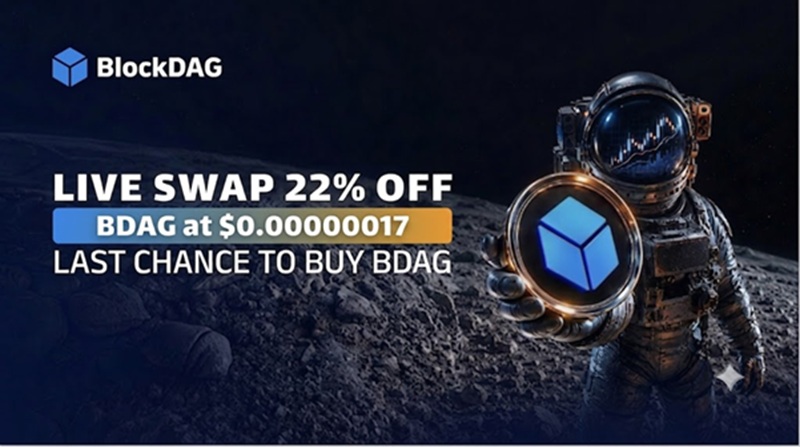
To celebrate this landmark release, a massive community offer lets buyers acquire BlockDAG (BDAG) at an astonishing $0.00000017. This includes a Live Swap option sitting 22% below the CoinMarketCap price, plus an exclusive $1,000 Exchange Credit ahead of the upcoming BlockDAG Exchange launch.

Engineering momentum is hitting fever pitch following a complete network overhaul. Upgraded RPC infrastructure, AWS-based deployment, and enhanced explorer indexing now push execution to a staggering 7,000+ TPS with blistering 2-second consensus times. This raw processing power fuels the red-hot BlockDAG Casino, where over 100 live titles drive relentless internal circulation.

In just 30 days, the platform generated $4.7 million in Gross Gaming Revenue, processed 23,000 deposits, and saw over $150 million wagered across 13,000 new registered users. Players are actively competing and collecting real-time payouts as participation explodes daily.

With massive revenue velocity, blazing network performance, and instant staking liquidity, BlockDAG dominates conversations among the top crypto gainers today. Securing an early position before upcoming exchange listings offers an unprecedented window of opportunity.

2. Ethereum: Core Infrastructure Anchoring Modern Decentralized Finance

Ethereum continues to serve as the dominant smart contract platform, supporting extensive decentralized application ecosystems and institutional financial products. Trading within a market price corridor of $1,800 to $2,500, ETH maintains a market capitalization exceeding $220 billion. Institutional inflows through spot ETF vehicles provide structural capital stability, while Layer-2 rollups process substantial transaction volumes off the main chain.

Recent protocol upgrades focus on optimizing data availability and reducing rollup execution costs to maintain network efficiency. Analysts tracking the top crypto gainers note that Ethereum’s steady institutional integration supports long-term value preservation. While its large capitalization limits extreme percentage gains, technical indicators point toward sustained baseline consolidation across multi-quarter horizons.

3. BNB: Exchange Ecosystem Utility Fueling Token Deflation

As one of the top crypto gainers by total market capitalization, BNB functions as the primary utility token for the Binance ecosystem. Trading within a price range of $570 to $620, the token commands a market valuation between $75 billion and $85 billion. Primary utility stems from trading fee reductions, decentralized exchange operations, and launchpad participation requirements.

Systemic token supply reduction occurs via automated quarterly burn mechanisms, systematically lowering circulating volume over extended timeframes. Network transaction fees on BNB Chain remain competitive, encouraging steady developer activity across decentralized applications.

Market data indicates range-bound price action, heavily correlated with global spot exchange trading volumes and broader macroeconomic market conditions.

4. Solana: High Performance Execution Layer Driving Liquid Trading

Solana provides high-throughput blockchain infrastructure tailored for high-frequency trading, decentralized exchanges, and consumer-facing applications. The native SOL token currently fluctuates within a trading range of $70 to $140, supporting a market capitalization of approximately $45 billion across a circulating supply of nearly 580 million tokens.

Technical architectural choices enable low latency and minimal transaction costs, driving substantial daily active wallet metrics across decentralized finance protocols. Despite occasional network congestion during periods of peak demand, continuous client updates aim to enhance validator client diversity and execution stability. Consequently, institutional interest and sustained on-chain liquidity keep Solana prominently monitored among potential top crypto gainers.

Key Takeaways

Assessing long-term market trajectories reveals distinct capital profiles across leading digital assets. Established platforms like Ethereum, BNB, and Solana provide reliable liquidity, institutional access, and proven infrastructure for conservative allocations. However, analyzing the top crypto gainers highlights BlockDAG as an exceptionally dynamic contender equipped with unmatched operational momentum.

Driven by a 7,000+ TPS engine, $150 million in casino wagers, and $4.7 million in monthly revenue, BlockDAG delivers real-world utility that outpaces purely speculative assets. With claiming and staking live alongside a temporary $0.00000017 community rate and 22% Live Swap discount, the window to capture maximum upside before major exchange launches is rapidly closing forever.

Ethereum ETFs Overtake Bitcoin ETFs in July Inflows as Institutional Investors Rotate Capital

0

The latest U.S. spot crypto ETF flows suggest that investors are not abandoning digital assets but are instead reshuffling capital within the market. While Bitcoin remains the largest and most established cryptocurrency.

July marked a notable shift in institutional preferences as U.S. spot Ether exchange-traded funds (ETFs) attracted $337.7 million in net inflows, comfortably surpassing the $234 million recorded by Bitcoin ETFs during the same period.

At the same time, Bitcoin ETF trading activity dropped to its lowest weekly level since October 2024, highlighting a significant change in market dynamics.

This divergence points to a rotation rather than a retreat. Instead of withdrawing money from crypto altogether, investors appear to be reallocating capital toward Ethereum, betting that the network may offer stronger medium-term growth opportunities.

Such rotations are common in traditional financial markets, where investors shift from one sector to another based on expected performance, and the crypto market is increasingly behaving in a similar manner as institutional participation grows.

Unlike Bitcoin, which is primarily viewed as a store of value or digital gold, Ethereum powers the world’s largest smart contract ecosystem. It serves as the foundation for decentralized finance, tokenized real-world assets, non-fungible tokens, and a rapidly expanding stablecoin economy.

As financial institutions continue experimenting with blockchain-based settlement and tokenization, Ethereum stands to benefit from increased on-chain activity. Another catalyst is Ethereum’s staking mechanism.

Since transitioning to proof-of-stake, ETH holders can earn rewards by helping secure the network.

While spot Ether ETFs in the United States currently do not distribute staking rewards directly, many investors expect regulatory changes could eventually allow fund managers to incorporate staking income.

That possibility makes Ether ETFs particularly attractive to institutions seeking exposure to a productive digital asset rather than one that simply appreciates in price. Bitcoin, by contrast, may simply be experiencing a pause after an exceptional run.

Since the launch of spot Bitcoin ETFs, billions of dollars have flowed into the products, helping drive Bitcoin to new all-time highs. After such strong gains, it is natural for investors to take profits or rebalance portfolios by increasing exposure to assets that have yet to experience similar institutional inflows.

The decline in Bitcoin ETF trading volume does not necessarily indicate weakening confidence but may reflect reduced speculative activity following months of heightened excitement. Market participants are increasingly viewing Ethereum as a leveraged play on blockchain adoption.

The rise of tokenized securities, stablecoin payments, and decentralized financial infrastructure all depend heavily on smart contract functionality. As more banks, fintech companies, and asset managers explore blockchain applications.

Ethereum remains one of the primary beneficiaries due to its mature ecosystem and developer community. This rotation also reflects the growing sophistication of institutional crypto investing. Early institutional exposure often centered almost exclusively on Bitcoin because of its simplicity and regulatory clarity.

Today, portfolio managers are becoming more selective, treating cryptocurrencies as distinct asset classes with different risk and return profiles rather than a single homogeneous market. Whether Ethereum continues to outperform Bitcoin in ETF inflows will depend on macroeconomic conditions, regulatory developments, and network adoption.

If tokenization and decentralized finance continue expanding, Ether could attract even greater institutional interest. Bitcoin’s role as the industry’s benchmark asset remains intact, and renewed macro uncertainty could quickly restore demand for the cryptocurrency many still consider the safest digital asset.

July’s ETF data does not signal weakness for crypto. It illustrates an increasingly mature market where capital is rotating toward assets perceived to have stronger growth potential.

Rather than exiting digital assets, institutional investors are refining their strategies, suggesting confidence in the long-term future of the crypto ecosystem remains firmly in place.

How Timing and Conviction Shaped Diverging Crypto Fortunes

0

The cryptocurrency market has always rewarded conviction, but it also punishes poor timing. Two whale wallets highlighted by on-chain analytics platform Lookonchain demonstrate how vastly different investment outcomes can emerge even among investors with the patience and capital to weather market volatility.

While one whale turned strategic accumulation into millions in unrealized gains, another endured a year of losses before finally moving a substantial Bitcoin holding, illustrating that patience alone is not always enough.

According to Lookonchain, wallet 0x2684 spent the last month aggressively accumulating both Wrapped Bitcoin and Ethereum. The wallet purchased 1,050 WBTC, worth approximately $67.49 million, at an average price of $64,277 per coin.

At the same time, it accumulated 66,345 ETH, valued at roughly $116.62 million, at an average entry price of $1,758 per Ether. As cryptocurrency prices strengthened over the following weeks, those positions appreciated significantly.

The combined holdings are now sitting on approximately $10.8 million in unrealized profits, demonstrating the effectiveness of accumulating during periods when sentiment remained cautious. The whale entered positions at relatively favorable prices, allowing even modest price appreciation to generate substantial returns because of the enormous size of the investments.

The story becomes even more compelling when contrasted with another major Bitcoin holder. Blockchain data shows that wallet bc1qyr, dormant for more than a year, recently transferred 625 BTC, valued at approximately $39.96 million, to institutional crypto brokerage FalconX.

While the destination does not necessarily confirm a sale, transfers to trading platforms or brokers are often interpreted as preparation for liquidation or portfolio restructuring. Unlike the first whale, however, this investor appears to have endured a difficult journey.

Despite holding Bitcoin through an extended period of volatility, the wallet is estimated to be carrying losses of roughly $20 million based on its acquisition cost and current valuation. Rather than benefiting from long-term conviction, the prolonged holding period resulted in a significant unrealized loss that may now be crystallized if the assets are sold.

The contrast between these two wallets highlights one of the most misunderstood aspects of investing: patience is valuable only when paired with an effective entry strategy.

Holding an asset for years does not automatically produce positive returns if it was purchased near market highs or if market conditions shift dramatically after the investment.

Conversely, disciplined buying during periods of uncertainty can produce substantial gains even within a relatively short timeframe. Whale activity is closely monitored because large holders often possess significant market knowledge, sophisticated risk management strategies, or access to institutional liquidity.

However, these examples remind market participants that even whales are not immune to losses. Capital size may influence execution, but it cannot eliminate market risk or guarantee profitable timing. The takeaway extends beyond the individual wallets themselves.

Successful investing in digital assets requires more than conviction. Position sizing, disciplined accumulation, risk management, and understanding market cycles all play essential roles in determining long-term outcomes.

The blockchain records every transaction transparently, revealing not only spectacular wins but also costly mistakes. These two whale stories reinforce a timeless lesson in investing.

Success is determined not merely by how long an asset is held, but by when it is acquired, how risk is managed, and whether conviction is supported by sound strategy rather than hope alone.

BoJ Holds Interest Rates at 1% as Japan’s Yen Intervention Loses Momentum

0

The Bank of Japan has opted to keep its benchmark interest rate unchanged at 1%, signaling a cautious approach as policymakers continue to navigate a complex economic environment.

The decision comes amid slowing inflationary pressures, lingering global uncertainties, and renewed weakness in the Japanese yen. Although Japanese authorities have previously intervened in currency markets to stabilize the yen.

Those efforts appeared to lose momentum by Friday, highlighting the challenges of defending a currency against powerful global market forces.

The BoJ’s decision reflects its delicate balancing act between supporting economic growth and maintaining price stability. After years of ultra-loose monetary policy aimed at combating deflation.

Japan has gradually shifted toward higher interest rates. However, officials remain wary of tightening policy too aggressively, fearing that it could weaken domestic demand and derail the country’s fragile economic recovery.

Markets had closely watched the central bank’s latest meeting for clues about future policy direction. Instead of announcing another rate increase, the BoJ emphasized that it would continue monitoring inflation, wage growth, and global economic conditions before making further adjustments.

This cautious tone reassured investors that policymakers are prioritizing stability over rapid monetary tightening. The Japanese yen remained under pressure against major global currencies.

Currency traders continued to favor the U.S. dollar and other higher-yielding assets, widening the interest rate differential between Japan and other major economies.

Despite the BoJ’s gradual normalization of policy, Japan’s interest rates remain relatively low compared to those in the United States and several other developed markets, limiting the yen’s appeal.

Earlier interventions by Japanese authorities temporarily slowed the currency’s decline, but those gains proved short-lived. By Friday, the impact of official intervention had largely faded as market participants resumed selling the yen.

Analysts argue that while intervention can reduce excessive volatility in the short term, it is difficult to reverse long-term currency trends unless supported by broader monetary policy changes or significant shifts in global interest rate expectations.

A weaker yen presents both opportunities and challenges for Japan’s economy. On one hand, it benefits exporters by making Japanese goods more competitive in overseas markets, boosting corporate profits and supporting economic growth.

Major manufacturers, particularly in the automotive and technology sectors, often welcome a softer currency because it increases the value of overseas earnings when converted back into yen.

On the other hand, a depreciating currency raises the cost of imported goods, particularly energy, food, and raw materials.

Since Japan imports much of its fuel and essential commodities, households and businesses face higher expenses when the yen weakens. Rising import costs can squeeze consumer purchasing power and increase inflationary pressures, creating additional challenges for policymakers.

Investors will now focus on upcoming economic data, including inflation reports, wage growth, and corporate spending, to assess whether the BoJ may resume policy tightening later this year.

Attention will also remain on the U.S. Federal Reserve and other major central banks, as their interest rate decisions continue to influence global capital flows and currency markets.

The Bank of Japan’s decision to hold rates at 1% underscores its commitment to a measured and data-driven policy approach. However, with yen intervention losing effectiveness and external pressures persisting.

Japan faces an increasingly difficult task in balancing currency stability, economic growth, and inflation control in an evolving global financial landscape.