DD
MM
YYYY

PAGES

DD
MM
YYYY

spot_img

PAGES

Home Blog Page 2

Nigeria’s Palm Oil Output Hits 1.57 Million Tonnes as Okomu, Presco Post Record Profits

0

Nigeria’s palm oil output has climbed to 1.57 million tonnes in 2025, with rising profits at Okomu and Presco signaling renewed commercial momentum even as the country faces a supply gap of over 1 million tonnes.


Nigeria’s palm oil production has risen to 1.57 million tonnes in 2025, extending a five-year growth trend and reviving discussions about the country’s ambition to regain greater influence in the global vegetable oil market.

The production figures were disclosed during a mission visit to Abuja by the Council of Palm Oil Producing Countries, according to the News Agency of Nigeria. The visit reinforced ongoing efforts to deepen technical and policy collaboration between Nigeria and major palm oil-producing nations.

Output has increased from 1.28 million tonnes in 2020 to 1.57 million tonnes in 2025, indicating gradual but consistent gains. However, domestic consumption has also risen — from 2.45 million tonnes to 2.61 million tonnes over the same period — leaving a supply deficit of more than 1 million tonnes that continues to be covered by imports.

Nigeria spends an estimated $600 million annually on palm oil imports despite oil palm being indigenous to West Africa, and the country once ranked among the world’s leading producers before Southeast Asian nations overtook it.

Corporate Earnings Reflect Sector Momentum

Beyond aggregate production figures, Nigeria’s progress is increasingly visible in the financial performance of its leading listed palm oil companies.

Okomu Oil Palm Company Plc reported a pre-tax profit of N87.3 billion for the year ended 31 December 2025, representing a 63.64% increase from N53.3 billion recorded in 2024, according to its unaudited financial statements. The sharp rise underscores improved pricing conditions, stronger operational efficiency, and sustained demand for locally produced palm oil.

Similarly, Presco Plc posted a profit before tax of N178.56 billion for the year ended December 31, 2025, marking a 57.3% increase from N113.53 billion in 2024, according to its unaudited financial statements filed with the Exchange on January 30, 2026.

The combined earnings performance of Okomu and Presco suggests that large-scale, vertically integrated producers are benefiting from improved yields, expanded plantation acreage, and stronger domestic pricing. Their profitability also reflects the protective effect of import gaps, which can support local producers when domestic demand outstrips supply.

While the performance of leading companies signals progress, Nigeria’s broader palm oil ecosystem remains dominated by smallholder farmers, who account for more than 80% of national output. Many operate with aging trees, limited access to improved seedlings, and outdated processing techniques, resulting in low yields and inefficiencies along the value chain.

CPOPC Secretary-General Izzana Salleh emphasized that the oil palm’s origins in West Africa present an opportunity for Nigeria to reclaim competitiveness through coordinated action among producing nations.

“Together, producing nations can shape a stronger, more coordinated global voice. One that protects farmer livelihoods, advances food security, and ensures balanced, development-oriented sustainability frameworks,” she said.

Dr. Alphonsus Inyang, President of the National Palm Produce Association of Nigeria, said full membership in CPOPC would enable Nigeria to access improved technologies, hybrid planting materials, and capacity-building programs that could raise the country’s Oil Extraction Ratio for both palm oil and palm kernel.

Improving yields per hectare remains central to narrowing the supply deficit. Replanting programs, mechanized mills, and stronger rural infrastructure are widely viewed as critical to lifting national output beyond incremental gains.

Balancing Growth With Self-Sufficiency Goals

Nigeria’s rise to 1.57 million tonnes represents measurable progress, yet consumption growth continues to absorb much of the increase. Achieving self-sufficiency would require either a significant acceleration in production or structural reforms that boost productivity across smallholder networks.

The strong financial results of Okomu and Presco indicate that commercial-scale operators are positioned to capitalize on favorable market dynamics. Their expansion strategies, reinvestment capacity, and access to capital markets could play a pivotal role in driving further sector consolidation and modernization.

At the same time, policymakers face the task of aligning trade policy, agricultural financing, and sustainability standards to reduce import dependence while ensuring competitiveness in global markets.

Nigeria’s palm oil revival is gathering pace, as reflected in both rising national output and record corporate earnings. But it remains a challenge to translate the momentum into a decisive narrowing of the supply gap.

You’re Invited To Tekedia OPEN On Nigeria’s Capital Market, hosted by Ndubuisi Ekekwe

0

Roughly every decade, Nigeria’s business landscape experiences a structural shift, a reordering of market power that defines the era that follows. These shifts are rarely accidental; they are shaped by the interplay of technology, regulation, and entrepreneurial response. In the 1990s, the rise of the New Generation Banks redefined financial services by using VSAT and digital infrastructure to detach banking from physical branches. Technology became the new basis of competition. The 2000s then ushered in what we may call the Decade of Ubiquity, as GSM providers democratized voice connectivity and fundamentally changed how Nigerians communicated and conducted commerce.

The 2010s elevated this transformation through the spread of mobile internet. Telecommunications firms evolved from voice providers into platforms enabling banking, education, and commerce through the smartphone, effectively turning the mobile device into the most powerful utility tool in modern Nigeria. Today, we are living through the Decade of Application Utility, where innovators are building digital solutions that combine technologies to remove friction in finance, logistics, and supply chains. These builders are quietly designing the operating layer of a more efficient, digitally enabled economy.

This continuous evolution points us toward the next frontier. With the passage of the Investment and Securities Act (ISA) 2025, Nigeria now has the legislative foundation to expand and deepen its capital markets in ways not seen in decades. While peer markets such as South Africa have achieved far greater capitalization through broader asset inclusion, Nigeria’s opportunity lies in onboarding new asset classes, enabling capital formation at scale, and building the financial market infrastructure required to support long-term economic redesign.

In this TEKEDIA OPEN session, we will explore why the coming decade will become Nigeria’s Decade of the Capital Market, and what businesses, investors, and institutions must do to unlock that value and win. You’re invited.


Topic: Nigeria’s Capital Market: The Biggest Business Opportunity of the Next Decade — How to Unlock Value and Win

Speaker: Prof Ndubuisi Ekekwe

Date: Saturday, March 7, 2026

Time: 2-3pm WAT

Location: Zoom (link will be shared two days to the webinar here)


In June, we will run a program on Nigeria’s capital market. Tekedia Nigerian Capital Market Masterclass is a practitioner-led, intensive program designed to deepen the human capabilities needed to power Nigeria’s modern capital market. The Masterclass blends applied knowledge, real-market processes, regulatory frameworks, technology infrastructure, and hands-on case studies covering the entire capital market value chain.

Michael Klotz States That 140 Safe-Deposit Boxes Remained Unaffected by Burglary

0

The head of Sparkasse Gelsenkirchen, a savings bank in the western German city of Gelsenkirchen, stated that 140 safe-deposit boxes remained unaffected by a major burglary that occurred over the Christmas period in late December 2025.

Michael Klotz, the bank’s chief, made the comment during a town-hall discussion broadcast by public broadcaster WDR. He explained that these particular boxes had not been forced open by the thieves. The heist, described as one of Germany’s most spectacular in recent years, involved burglars who drilled through a thick concrete wall—likely from an adjacent multi-storey car park— to access the vault.

They broke into and looted nearly all of the approximately 3,250 safe-deposit boxes with estimates of over 3,000 affected, stealing cash, gold, jewellery, and other valuables. The total value stolen is unclear but has been estimated in the tens to hundreds of millions of euros.

The break-in went unnoticed for hours, with authorities alerted only after a fire alarm possibly triggered by the thieves’ activities on December 27 or 28, 2025. No arrests have been made as of mid-February 2026, and the perpetrators remain at large. Many victims have faced significant losses, as standard insurance coverage for safe-deposit box contents is typically limited to around €10,300 per box, far below what some held.

This has led to lawsuits against the bank, customer protests, and criticism of security measures. The 140 unaffected boxes represent a small portion of relief for those customers, amid broader devastation for most others affected by the raid.

In Germany, safe-deposit boxes (Schließfächer) at banks like Sparkassen are typically rented under a lease agreement rather than a custody contract. This means the bank provides secure space and access but does not automatically insure or guarantee the contents against all risks, such as theft.

The recent heist at Sparkasse Gelsenkirchen, the bank has stated that the contents of each affected safe-deposit box are insured up to €10,300. This amount applies per box and includes items like cash, gold, jewelry, and other valuables. Over 100 customers at this branch had arranged higher coverage through additional insurance via the bank or privately.

The bank emphasizes that this is the baseline protection; anything beyond €10,300 requires separate arrangements by the customer. This limit has been widely reported in connection with the burglary, where thousands of boxes were looted, and many victims face losses far exceeding this amount.

Many Sparkassen and private banks offer limited or no automatic insurance for box contents, or cap liability at similar low figures around €10,000–€25,000. Some institutions explicitly state that contents are not insured by the bank, shifting responsibility to the customer.

Banks are required to provide “tresormäßige Sicherung” (vault-like security) per the recognized state of the art. If negligence or inadequate security is proven; failure to meet standards, the bank could face unlimited liability under German law. This is central to ongoing lawsuits against Sparkasse Gelsenkirchen, where victims claim lax security.

Additional Options for Customers

Many policies extend coverage to items in a bank safe-deposit box, often up to €25,000 or more (check your policy terms for exclusions, limits, and requirements like proof of contents). Special valuables insurance or rider extensions: For higher-value items (jewelry, gold, art), customers can buy targeted policies from insurers.

Bank-offered upgrades: Some banks provide optional higher-coverage add-ons for an extra fee. Document contents thoroughly (photos, receipts, appraisals, inventories) to support claims. Notify your own insurer promptly if applicable. In the Gelsenkirchen case, the bank has a dedicated information page, and police/victims are gathering evidence for potential claims.

The heist has sparked debate on insurance transparency and security standards, with regulators like BaFin highlighting the need for customers to understand coverage limits.

EU Weighs ‘Trade Bazooka’ as France Signals Readiness to Counter New U.S. Tariffs

0

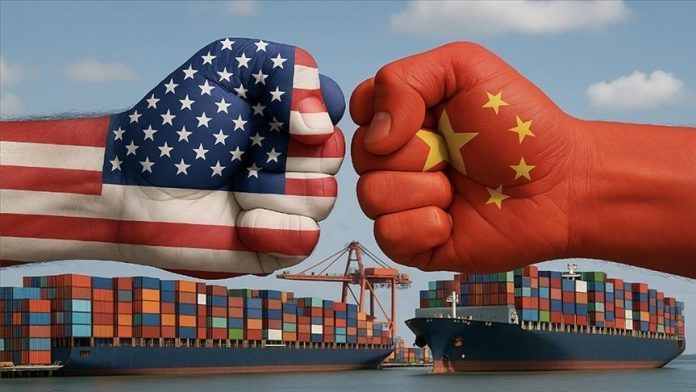
France signaled the EU is prepared to deploy its most powerful trade defenses, including the anti-coercion “trade bazooka”, if Washington’s new 10% global tariff escalates into a broader confrontation.


A fresh transatlantic trade confrontation is taking shape after President Donald Trump imposed a flat 10% global tariff, prompting France to warn that the European Union is prepared to use its most forceful economic countermeasures if necessary.

French Trade Minister Nicolas Forissier told the Financial Times that Paris is coordinating with EU partners and the European Commission to assess the U.S. move.

“Should it become necessary, the EU has the appropriate instruments at its disposal,” he said.

The tariff decision followed a ruling by the Supreme Court of the United States that many of Trump’s earlier duties, imposed under emergency economic powers, were illegal. While the judgment curtailed part of the administration’s prior trade strategy, the new 10% levy signals a recalibration rather than a retreat.

At the center of Brussels’ response calculus is the Anti-Coercion Instrument (ACI), a mechanism designed to deter or counter economic pressure from third countries. Informally dubbed the “trade bazooka,” the ACI is broader and more flexible than conventional tariff retaliation.

Unlike traditional countermeasures that target goods trade, the ACI allows the EU to act across services, investment, and public procurement. Options include:

  • Tariffs on services, including digital and financial services.
  • Restrictions on market access or licensing.
  • Export controls.
  • Limitations on foreign direct investment.
  • Exclusion of foreign firms from EU public procurement contracts.

French officials indicated that U.S. technology companies could be among those affected if the instrument were activated. That prospect materially shifts the balance of leverage. While the EU runs a goods trade surplus with the U.S., the United States enjoys a significant surplus in services — particularly in technology, digital platforms, and financial services. Any retaliation in those areas would strike at sectors where American firms are highly competitive.

Suspended Tariff Arsenal

Beyond the ACI, the EU maintains a suspended package of retaliatory tariffs covering more than €90 billion ($106 billion) worth of U.S. goods. Originally assembled during earlier disputes over steel, aluminum, and industrial subsidies, that list can be reactivated swiftly.

The products on that roster were chosen not only for economic weight but also for political resonance — a hallmark of EU trade strategy, which often calibrates retaliation to maximize domestic pressure in the opposing country.

The existence of both the ACI and the suspended tariff list gives Brussels layered escalation pathways, from symbolic signaling to systemic economic countermeasures.

French President Emmanuel Macron addressed the developments at the annual agricultural salon in Paris. Referring to the U.S. Supreme Court’s ruling on earlier tariffs, he said, “It is not bad to have a Supreme Court and, therefore, the rule of law. It is good to have power and counterweights to power in democracies.”

Macron’s remarks subtly underscored a broader point: institutional constraints matter in trade governance. At the same time, he emphasized reciprocity as the guiding principle for France and the EU, adding that Europe should not be “subjected to unilateral decisions.”

France’s economic exposure is significant as the United States is a major destination for French agricultural products, luxury goods, fashion, and aeronautical exports. These sectors are not easily substitutable in global markets, making tariff increases economically sensitive.

Legal Reconfiguration in Washington

The Supreme Court’s recent ruling limited the administration’s ability to rely on certain emergency statutes to impose tariffs. However, it did not eliminate presidential authority to levy duties under other trade laws. The new 10% global tariff appears to be grounded in alternative statutory mechanisms, underscoring how executive trade powers can be restructured within constitutional boundaries.

From Brussels’ perspective, this legal pivot complicates strategy. The EU must assess whether the tariff is temporary, negotiable, or a durable policy shift. The degree of permanence will influence whether the EU opts for immediate retaliation or extended negotiations.

The U.S. and EU are each other’s largest trading partners when goods and services are combined. Integrated supply chains mean that tariffs can ripple through manufacturing networks, aerospace production, pharmaceuticals, and advanced technology sectors.

A broad 10% U.S. tariff raises costs for European exporters and could compress margins or redirect trade flows. Retaliation targeting U.S. services could, in turn, disrupt transatlantic investment and digital operations.

Financial markets tend to view transatlantic trade friction as a macro risk factor, particularly when combined with currency volatility or divergent monetary policy. Escalation could weigh on business confidence and capital expenditure decisions.

Strategic Autonomy vs. Managed Interdependence

The episode also intersects with Europe’s push for “strategic autonomy” — reducing vulnerability to external economic pressure while maintaining open markets. The ACI was conceived precisely to counter what Brussels describes as coercive trade practices.

Activating it against Washington would be politically significant. It would mark the first major use of the instrument against a longstanding ally, signaling that the EU is willing to defend its economic sovereignty even within traditional partnerships.

At the same time, EU leaders are aware that a full-scale trade confrontation would undermine growth at a moment when Europe faces structural economic headwinds, including energy transition costs and industrial competitiveness challenges.

Brussels’ messaging suggests a dual-track approach: preparedness paired with restraint. The language from Paris emphasizes capability rather than inevitability. By highlighting the ACI publicly, France increases negotiating leverage without immediately deploying countermeasures.

The coming weeks will likely focus on whether diplomatic channels can narrow differences. If talks stall and the 10% tariff remains in place, the EU may escalate incrementally — beginning with reactivating suspended tariffs before considering broader service-sector measures.

Implications of China’s Explicit Classification of Real World Assets 

0

China has recently officially defined Real-World Asset tokenization and banned it for the private sector – it has created an exception for it on “state approved infrastructure.”

Faisal Monai, CEO of droppRWA, posits that Beijing is clearly interested in RWA tokenization, and wants to execute it at the state level. “What most coverage is missing is that China didn’t actually ban tokenization. They banned private tokenization.

The notice explicitly carves out an exception for activity conducted on state approved financial infrastructure. That’s a very deliberate distinction. Beijing is saying what a lot of governments are thinking but haven’t said publicly yet, real world assets on public, permissionless chains is a non-starter for sovereign economies.

The only version of this that works is state controlled, sovereign-native infrastructure. The interesting comparison is Saudi Arabia, which reached the same conclusion from the opposite direction. Instead of locking down first and figuring out the infrastructure later, the Kingdom went straight to building it, integrating tokenization directly into the national property registry and executing live sovereign transactions.

And critically, they’re inviting the private sector to build on top of that infrastructure, not shutting them out. The state owns the rails, but technology companies, banks, FinTech and PropTech firms are welcome to build services on them.

China is closing the door to private participation. Saudi Arabia is holding it open on sovereign terms. Singapore, Hong Kong, the UAE, are all advancing regulated frameworks and supervised pilots. But the jurisdictions that will actually define this market aren’t the ones testing in sandboxes.

They’re the ones putting national infrastructure into production. That’s where this is heading and China’s notice just made it harder to argue otherwise. The notice provides China’s first explicit regulatory definition of RWA tokenization.

It describes it as the use of cryptographic technology, distributed ledger technology or similar technologies to convert ownership rights, income rights, or other asset-related rights into tokens or token-like rights, equity, or debt instruments for issuance and trading.

Unlicensed or unapproved RWA tokenization activities conducted within mainland China—including issuance, trading, intermediary services, and related technical and IT support—are classified as illegal financial activities. This includes risks like unauthorized securities offerings, illegal fundraising, or operating securities and futures businesses without approval.

In practice, this effectively prohibits private sector players from engaging in decentralized or unlicensed RWA tokenization onshore, aligning with China’s long-standing strict stance against unregulated crypto-like activities. The policy is not a blanket ban on all tokenization. It explicitly allows exceptions when activities are: Approved by competent authorities.

Conducted through designated (regulated) financial infrastructure. This carves out space for state-supervised or licensed implementations, often interpreted as separating “compliant” RWA within traditional finance rails from decentralized/private crypto-style versions.

Onshore entities face strict vetting and compliance requirements for offshore issuance of tokenized assets backed by Chinese onshore assets. Unapproved offshore RMB-linked stablecoins are also banned, and foreign entities are prohibited from illegally providing RWA services to domestic parties.

This move extends China’s 2021 crypto ban which targeted virtual currencies, trading, and mining to explicitly cover tokenized real-world assets, while distinguishing RWA from pure cryptocurrencies which remain fully prohibited.

Some analysts view it as a “milestone” that brings RWA into a clearer regulatory framework rather than leaving it in a gray area—potentially enabling controlled innovation in tokenized securities or asset-backed structures, especially offshore with approval.

Others see it as a tightening clampdown to prevent private-sector risks to financial stability and capital controls. Stock markets reacted positively in some cases, with RWA-related shares rising on hopes of regulated opportunities, though enforcement remains strict for unlicensed private initiatives.

China has now officially defined RWA tokenization and prohibited it for unlicensed and private sector activities onshore, while allowing tightly controlled, approved versions—consistent with Beijing’s preference for centralized oversight over decentralized finance.