DD
MM
YYYY

PAGES

DD
MM
YYYY

spot_img

PAGES

Home Blog Page 2

Entrance of Legacy Energy Traders into 24/7 Blockchain Markets Represents more than Techn Modernization

0

The rapid migration of legacy energy traders into 24/7 on-chain order books is exposing a structural weakness that traditional finance has largely ignored for decades: modern commodity markets were never designed for a world that never sleeps. As oil, natural gas, electricity, carbon credits, and energy-linked financial instruments begin moving onto blockchain-based trading rails, the contrast between legacy infrastructure and digital-native markets is becoming impossible to overlook.

According to Diego Martin, CEO of Yellow Capital; the rapid migration of legacy energy traders into 24/7 on-chain order books shines light on a structural deficit that TradFi has ignored so far. Geopolitical shocks trigger non-linear oil price spikes over the weekend, and operational failures follow immediately. The regulatory push to grant an innovation exemption for tokenized trading recognizes this execution reality. The market is confusing capital flow with genuine technological maturity.

Traditional oil and equity traders are setting up Web3 wallets and leaning into decentralized protocols just to maintain weekend risk exposure. They are not necessarily interested in blockchain for its technology or its use cases, treating it like an emergency waiting room. Tokenizing a physical asset like oil or a public stock provides a simpler access layer.  Institutional investors are susceptible to mistaking this visibility for permanent market depth.

They are entering an environment where issuers are still tinkering with demand and supply design. What was once viewed as a niche crypto experiment is increasingly evolving into a broader restructuring of how global energy markets may function in the future. Traditional energy trading operates within a fragmented framework of exchanges, brokers, clearing houses, banks, and settlement systems that often rely on fixed market hours and delayed reconciliation processes.

While the physical energy market itself is continuous, global demand for power and fuel does not stop overnight, over weekends, or during holidays. Yet the financial architecture supporting these markets still reflects assumptions rooted in the industrial era. Settlement delays, collateral inefficiencies, limited transparency, and restricted market access have long been tolerated because there was no viable alternative at scale.

Blockchain infrastructure changes that equation entirely. On-chain order books operate continuously, allowing participants to trade, hedge, settle, and rebalance positions in real time. This creates a fundamentally different market structure where liquidity is always active and collateral can move instantly across jurisdictions and asset classes.

For legacy energy traders, especially those operating in volatile commodities markets, the appeal is obvious. Real-time settlement reduces counterparty risk, tokenized collateral improves capital efficiency, and transparent ledgers provide greater visibility into pricing and exposure.

The migration of energy traders into decentralized and hybrid financial systems also reflects broader pressures within global commodity markets. Geopolitical instability, supply chain disruptions, and volatile interest rate environments have increased the cost of capital for many trading firms. Under the traditional system, enormous amounts of liquidity remain trapped inside clearing and settlement pipelines.

Billions of dollars in margin requirements can remain idle for days while trades settle across multiple intermediaries. In fast-moving energy markets, those delays represent both operational risk and lost opportunity. On-chain infrastructure addresses this inefficiency directly. Smart contracts allow collateral to be posted, adjusted, and released automatically as market conditions evolve.

Tokenized treasury products and stablecoins further expand the flexibility of capital management, allowing firms to maintain yield-bearing reserves while remaining fully liquid for trading activity. Blockchain markets compress functions that previously required several institutions into programmable financial layers operating around the clock. What makes this transition particularly important is that it reveals how outdated much of TradFi’s core infrastructure has become.

For years, critics argued that crypto markets were overly speculative and detached from the real economy. Yet energy traders — among the most sophisticated participants in global finance — are increasingly finding practical value in these systems. Their adoption signals that blockchain infrastructure is moving beyond retail speculation into industrial-scale financial operations.

This migration highlights a deeper structural deficit: traditional finance still depends heavily on time-gated systems in a permanently connected global economy. The mismatch becomes more visible each time markets face sudden shocks outside normal trading hours.

Whether driven by geopolitical events, weather disruptions, or macroeconomic announcements, volatility no longer waits for exchanges to open on Monday morning. On-chain markets, by contrast, continue processing liquidity and price discovery continuously.

The entrance of legacy energy traders into 24/7 blockchain markets may represent more than technological modernization. It could mark the beginning of a broader redefinition of financial infrastructure itself. The future of commodity trading may not simply involve digitizing existing systems, but replacing delayed and fragmented architectures with programmable markets built for continuous global activity.

Odd of a Federal Reserve’s Rate Hike By January Climbs to 55%

0

The sharp rise in expectations for a Federal Reserve rate hike by January reflects a dramatic shift in how markets are interpreting the trajectory of inflation, economic resilience, and monetary policy in the United States. Just months ago, many investors were convinced that the next move from the Fed would be a rate cut aimed at supporting slowing growth.

Now, however, odds of a rate hike by January climbing to 55% signals that traders increasingly believe inflationary pressures are proving far more persistent than policymakers initially expected. At the center of this change is the strength of the U.S. economy. Despite years of aggressive tightening following the post-pandemic inflation surge, economic activity has remained surprisingly resilient.

Consumer spending continues to hold up, labor markets remain tight, and wage growth has not cooled enough to fully ease inflation concerns. While headline inflation may have moderated from its peak, core inflation measures — particularly in housing, services, and energy-linked sectors — continue to show stubborn momentum.

Bond markets have reacted aggressively to these developments. Treasury yields across the curve have surged as traders reprice the possibility of higher-for-longer interest rates. Rising yields reflect investor concern that the Fed may need to resume tightening to prevent inflation expectations from becoming entrenched.

In many ways, the current environment resembles a second inflation wave scare, where markets fear the central bank eased financial conditions too early. The rise in rate hike expectations has also been fueled by geopolitical instability and commodity market volatility. Energy prices have become increasingly sensitive to tensions in the Middle East, shipping disruptions, and supply-side uncertainty.

Oil spikes can quickly feed into transportation, manufacturing, and consumer prices, complicating the Fed’s inflation battle. If energy inflation accelerates while employment data remains strong, policymakers could feel pressured to act more aggressively than markets previously anticipated. Another key factor is the growing disconnect between financial markets and central bank messaging. For much of the previous year, investors priced in multiple rate cuts based on expectations of weakening growth and disinflation.

However, incoming data repeatedly challenged that assumption. Strong retail sales, resilient GDP growth, and persistent inflation readings forced traders to reconsider whether monetary policy is truly restrictive enough. As a result, futures markets have undergone a major repricing. The probability of a January rate hike reaching 55% is not merely a technical market statistic; it reflects a broader shift in sentiment regarding the future direction of the global economy.

Investors are increasingly preparing for the possibility that inflation could remain elevated well into 2027, forcing central banks to maintain tighter conditions for longer than previously expected. The implications of this shift are enormous across global asset classes. Equity markets, particularly high-growth technology stocks, tend to struggle in environments where interest rates rise because future earnings become less attractive when discounted at higher rates.

Cryptocurrency markets have also shown sensitivity to changing liquidity conditions. Bitcoin and other digital assets often thrive when monetary policy loosens, but rising rate expectations can pressure speculative assets by reducing available liquidity and increasing demand for safer yield-bearing instruments.

At the same time, financial institutions may benefit from higher rates through improved lending margins, though prolonged tightening also increases the risk of credit stress in vulnerable sectors such as commercial real estate and highly leveraged corporate debt.

Emerging markets could face additional strain as a stronger U.S. dollar and elevated Treasury yields attract global capital back into dollar-denominated assets. For the Federal Reserve, the challenge is becoming increasingly delicate. Raising rates again risks overtightening the economy and potentially triggering a sharper slowdown later. Yet failing to respond decisively to persistent inflation could undermine the Fed’s credibility and allow inflation expectations to become embedded throughout the economy.

Policymakers now face a narrow path between controlling inflation and preserving economic stability. The rise in January rate hike odds to 55% underscores a critical reality shaping global markets today: the inflation fight may not be over. Investors, businesses, and governments are beginning to recognize that the era of ultra-low interest rates may remain behind us for far longer than many had hoped.

Tokenized Real-world Assets Could Reach $4T By End of 2028, as HYPE/BTC Trading Pair Hits ATH on Hyperliquid

0

A new projection from Standard Chartered that tokenized real-world assets could reach $4 trillion by the end of 2028 highlights how rapidly blockchain infrastructure is moving from experimentation to mainstream finance. The forecast also emphasizes a critical shift in the digital asset industry.

Decentralized finance, or DeFi, may become one of the largest beneficiaries of institutional adoption rather than a parallel alternative to traditional markets. Tokenization refers to the process of representing real-world assets such as bonds, equities, real estate, commodities, private credit, and money market funds on blockchain networks. Instead of relying on legacy financial rails, these assets can be traded, transferred, settled, and managed through programmable smart contracts.

What once appeared to be a niche crypto use case is increasingly being embraced by global banks, asset managers, fintech firms, and governments. The significance of a $4 trillion tokenized asset market lies not only in the size of the projection, but also in what it implies about the future structure of global finance.

Traditional markets today suffer from fragmentation, slow settlement times, expensive intermediaries, and limited accessibility. Blockchain-based tokenization offers the possibility of near-instant settlement, 24/7 market access, fractional ownership, improved transparency, and reduced operational costs.

Over the past two years, institutional momentum around tokenization has accelerated dramatically. Major financial firms including BlackRock, JPMorgan Chase, and Franklin Templeton have launched or explored tokenized products across treasury markets, funds, and settlement systems.

Governments and regulators are also becoming more receptive as they recognize blockchain’s potential to modernize capital markets infrastructure. However, the most transformative implication of this trend may be the growing role of DeFi protocols. DeFi has largely been associated with crypto-native activities such as lending, staking, perpetual trading, and decentralized exchanges.

Yet tokenized real-world assets introduce the possibility of integrating trillions of dollars of traditional financial value directly into onchain ecosystems. If tokenized treasuries, bonds, or equities become widely available on public blockchains, DeFi protocols could evolve into the infrastructure layer supporting global finance. Lending platforms may use tokenized government bonds as collateral. Automated market makers could provide liquidity for tokenized equities. Stablecoins backed by tokenized yield-bearing assets may compete directly with bank deposits and money market funds.

This convergence between traditional finance and DeFi could fundamentally reshape the economics of blockchain networks. Public chains such as Ethereum, Solana, and emerging institutional-focused Layer 1 networks may experience enormous increases in transaction volume, liquidity, and fee generation as tokenized assets scale globally. In this model, blockchains no longer function solely as speculative ecosystems but as foundational settlement layers for modern finance.

Despite the optimism, several challenges remain. Regulatory clarity, cybersecurity risks, interoperability standards, and institutional compliance requirements will all influence how quickly tokenization expands. Traditional financial institutions may also prefer permissioned blockchain systems over fully open decentralized networks, limiting some aspects of DeFi integration.

Nevertheless, Standard Chartered’s forecast reflects a broader reality: tokenization is no longer a theoretical concept. It is becoming one of the defining trends in global finance. As capital markets increasingly migrate onchain, DeFi protocols may transition from experimental financial applications into core infrastructure supporting a multi-trillion-dollar digital asset economy.

HYPE/BTC Trading Pair Hit All-time High on Hyperliquid

The rise of the HYPE/BTC trading pair to a new all-time high marks a significant moment in the evolution of the digital asset market. While Bitcoin remains the benchmark asset of the crypto economy, the rapid appreciation of HYPE against BTC signals a shift in investor sentiment toward high-performance decentralized finance infrastructure and next-generation onchain trading platforms.

The milestone reflects not only speculative momentum, but also a deeper transformation in how capital is flowing across the crypto ecosystem. HYPE, the native token associated with the Hyperliquid ecosystem, has become one of the strongest-performing digital assets in the market this year. Unlike many tokens that rely primarily on narratives, HYPE’s rally has been driven by tangible growth in trading activity, revenue generation, and user adoption.

Hyperliquid has emerged as one of the most dominant decentralized perpetual futures exchanges, competing directly with centralized giants by offering fast execution, deep liquidity, and fully onchain settlement. As decentralized derivatives continue gaining traction, investors increasingly view the protocol as a critical piece of crypto’s financial infrastructure.

The HYPE/BTC pair reaching a new all-time high is especially notable because outperforming Bitcoin remains one of the hardest achievements in crypto markets. Bitcoin is widely regarded as the reserve asset of the industry, often attracting institutional capital during periods of uncertainty.

For an altcoin to appreciate against BTC means it is not merely rising because the entire market is bullish; rather, it is attracting stronger relative demand than Bitcoin itself. This often reflects investor belief that the asset has superior growth potential or exposure to emerging sectors with higher upside. Several factors are contributing to this trend. First, decentralized finance has entered a new phase where users increasingly demand professional-grade trading experiences without relying on centralized intermediaries.

Hyperliquid’s infrastructure has successfully captured this demand. The platform’s ability to process high trading volumes while maintaining low latency has differentiated it from earlier generations of decentralized exchanges that struggled with scalability and liquidity fragmentation. Second, institutional interest in onchain derivatives appears to be accelerating. Recent discussions between Hyperliquid representatives and US policy stakeholders, alongside growing conversations about regulatory frameworks for decentralized markets, have elevated the protocol’s profile.

At the same time, traditional financial firms are increasingly exploring tokenized markets, stablecoin settlements, and blockchain-native trading systems. In this environment, HYPE is becoming viewed as a proxy for the broader expansion of decentralized capital markets. Another important catalyst has been the growing integration of HYPE into investment products and treasury strategies. News that firms such as Bitwise intend to gain exposure to HYPE through ecosystem-linked products has reinforced market confidence.

Traders are increasingly treating HYPE not simply as a governance token, but as an asset tied to a rapidly expanding financial network with measurable economic activity. The rally also demonstrates how crypto market leadership continues to evolve beyond simple Layer 1 narratives. Investors are now rewarding protocols that generate real fees, attract sustained users, and provide critical financial infrastructure.

Hyperliquid’s success suggests that decentralized derivatives could become one of the defining sectors of the next crypto cycle. As the HYPE/BTC pair reaches new highs, the market is sending a clear signal: capital is increasingly rotating toward protocols that combine utility, scalability, and revenue generation.

Whether this momentum continues will depend on broader market conditions and the protocol’s ability to sustain growth, but for now, HYPE’s breakout against Bitcoin represents one of the most important stories in the digital asset landscape.

Nigerian Fintech Sycamore Expands Beyond Lending, With Shift Into Integrated Financial Services Model

0

Sycamore, a Nigerian peer-to-peer lending fintech platform, has transitioned from operating solely as a digital lender into a broader financial services group comprising three regulated business entities.

Senate Advances War Powers Challenge, Signaling Growing Resistance to Trump’s Military Campaign in Iran

0

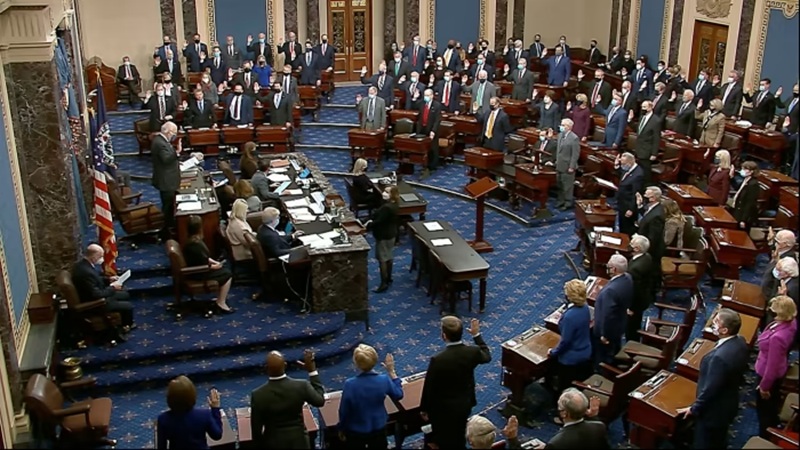
The U.S. Senate moved Tuesday to advance a War Powers Resolution aimed at restricting military action in Iran, exposing widening political resistance inside Washington as the war lingers.

The resolution passed 50–47 in a preliminary vote after Republican Senator Bill Cassidy broke ranks with his party, underscoring growing unease in Congress over the administration’s authority to continue military operations without explicit authorization under the War Powers Act.

The vote has limited immediate legal force, but it adds political pressure at a moment when the war with Iran is increasingly shaping domestic economic conditions, energy markets, and the broader debate over executive power.

The Senate move came as Trump disclosed on Truth Social that he had halted a scheduled military strike on Iran following urgent appeals from regional allies.

He said leaders of Qatar, Saudi Arabia and the United Arab Emirates urged him “to hold off on our planned Military attack of the Islamic Republic of Iran, which was scheduled for tomorrow, in that serious negotiations are now taking place, and that, in their opinion, as Great Leaders and Allies, a Deal will be made, which will be very acceptable to the United States of America, as well as all Countries in the Middle East, and beyond. This Deal will include, importantly, NO NUCLEAR WEAPONS FOR IRAN!”

Trump added that he had instructed senior military leadership, including Secretary of War Pete Hegseth and Chairman of the Joint Chiefs of Staff General Daniel Caine, to stand down from the immediate strike but remain prepared for rapid escalation if diplomacy fails.

“Based on my respect for the above mentioned Leaders, I have instructed Secretary of War, Pete Hegseth, The Chairman of The Joint Chiefs of Staff, General Daniel Caine, and The United States Military, that we will NOT be doing the scheduled attack of Iran tomorrow, but have further instructed them to be prepared to go forward with a full, large scale assault of Iran, on a moment’s notice, in the event that an acceptable Deal is not reached,” he wrote.

Speaking later at the White House, Trump suggested the decision may not represent a long-term shift.

“I put it off for a little while, hopefully, maybe forever, but possibly for a little while, because we’ve had very big discussions with Iran, and we’ll see what they amount to,” he said.

He also escalated pressure on Tehran in a separate Truth Social post, warning that Iran “better get moving, FAST, or there won’t be anything left of them,” reviving rhetoric that has defined much of the administration’s approach since the war began nearly three months ago.

Diplomatic efforts to end the conflict, secure limits on Iran’s nuclear program, and restore stability to maritime traffic through the Strait of Hormuz have shown limited progress in recent weeks, according to officials involved in the talks. The Gulf shipping corridor remains central to global energy flows, and even partial disruptions have kept crude oil prices elevated above $100 per barrel for extended periods.

That energy shock is now feeding directly into U.S. inflation dynamics, with gasoline prices rising ahead of peak summer demand. Economists warn that sustained high oil prices could slow disinflation progress, complicating the Federal Reserve’s policy path and increasing the risk of tighter financial conditions for longer.

War Powers Clash Deepens In Congress

The Senate resolution reflects growing concern across both parties that the executive branch has expanded military operations without clear congressional authorization. Under the War Powers Resolution framework, presidents are required to seek approval for sustained military engagements, but successive administrations have interpreted and stretched those limits.

The administration argues that ongoing operations are justified under national security authorities and that the situation has been complicated by intermittent ceasefire conditions that reset the legal clock.

Republican opposition to the resolution remained strong, but absences weakened resistance in the chamber. Senators Thom Tillis, John Cornyn, and Tommy Tuberville did not vote.

Democrats largely supported the measure, while Senator John Fetterman was the only Democrat to oppose it, highlighting internal divisions over how aggressively the United States should confront Iran militarily.

Cassidy’s defection is politically significant given his recent primary defeat and diminishing political constraints, suggesting that some Republican lawmakers may feel freer to distance themselves from the administration’s war strategy in their final months in office.

The US war against Iran has cost American taxpayers an estimated $29 billion, according to recent Pentagon figures. However, independent economists and lawmakers estimate that the true economic impact could range between $630 billion and $1 trillion when accounting for long-term factors like equipment replacement, munitions depletion, and macroeconomic effects.

The direct and indirect economic burden is increasingly shaping political sentiment in Washington, where concerns about inflation, energy security, and fiscal exposure are converging with constitutional debates over presidential war authority.