DD
MM
YYYY

PAGES

DD
MM
YYYY

spot_img

PAGES

Home Blog Page 20

Jesse Pollak Admits Onchain Social Vision Fell Short as Base Shifts Toward Coinbase Integration

0

Jesse Pollak, the creator of Coinbase’s Layer-2 network Base, has publicly acknowledged that one of his most ambitious visions—turning Base into a dominant onchain social ecosystem—has failed to achieve the traction he initially expected.

In a significant strategic shift, Pollak announced that the future direction of the Base application would now be more directly integrated into Coinbase’s broader ecosystem, effectively handing over greater control and operational responsibility to the crypto exchange giant.

The admission marks a rare moment of candor in the blockchain industry, where founders often continue promoting narratives long after market realities have changed.

Pollak had envisioned Base becoming more than just a scaling solution for Ethereum. Instead, it was meant to become a new digital social layer where creators, users, and communities could interact entirely onchain, with identity, content, and economic incentives seamlessly embedded into decentralized infrastructure.

The concept gained considerable attention during the rise of decentralized social applications such as Farcaster and other SocialFi experiments. Many industry participants believed that blockchain technology could fundamentally reshape social media by giving users ownership of their content, identities, and monetization opportunities.

Base positioned itself at the center of this movement, betting that social interactions would become one of crypto’s largest consumer use cases. Reality proved more challenging.

Despite generating enthusiasm among developers and attracting numerous experimental applications, onchain social platforms struggled to reach mainstream audiences.

User growth remained relatively niche, onboarding processes continued to present friction, and many applications failed to demonstrate a compelling advantage over established social media giants such as X, Instagram, and TikTok.

Moreover, crypto markets have increasingly shifted their attention toward other narratives. Artificial intelligence, stablecoins, tokenized assets, prediction markets, and real-world asset infrastructure have become the dominant themes attracting both venture capital and user engagement.

In comparison, SocialFi has struggled to maintain momentum. Pollak’s acknowledgment reflects a broader industry lesson: technological possibility does not automatically translate into product-market fit. Building decentralized social networks requires not only innovative infrastructure but also strong network effects, simple user experiences, and clear incentives for ordinary consumers.

By bringing the Base App closer to Coinbase’s ecosystem, the company appears to be pursuing a more pragmatic strategy. Coinbase already possesses one of the largest crypto user bases globally, serving millions of customers and maintaining trusted infrastructure for trading, custody, and payments.

Integrating Base more deeply into Coinbase’s products could dramatically increase distribution and improve user onboarding. This transition may also indicate that Coinbase sees Base less as a standalone social platform and more as foundational infrastructure for broader onchain applications.

Stablecoin payments, tokenized financial services, decentralized commerce, and AI-driven agent economies are emerging as potentially larger opportunities than decentralized social media alone.

The move highlights an increasingly important trend within the blockchain industry: consolidation around practical utility.

Investors and builders are becoming more focused on applications that generate sustainable demand rather than relying solely on ideological narratives around decentralization. Pollak’s original vision should not be dismissed entirely.

Many transformative technologies experience multiple failed iterations before achieving widespread adoption. The internet itself went through numerous unsuccessful social experiments before platforms like Facebook, YouTube, and X eventually emerged.

Pollak’s admission represents maturity rather than defeat. Recognizing when a strategy has underperformed and adapting accordingly is often a hallmark of successful technology leadership. By repositioning Base within Coinbase’s larger ecosystem, the company may be laying the groundwork for a more scalable and commercially viable future.

The story of Base serves as a reminder that in crypto, infrastructure alone is insufficient. Lasting success requires aligning technological innovation with genuine user needs, market timing, and sustainable economic models. The dream of onchain social networks may not be dead, but for now, the industry’s focus has clearly shifted toward more immediate and tangible applications of blockchain technology.


Crypto Clarity Act Odds Crash to Record Low as U.S Congress Convenes

0

Hopes for the passage of the Crypto Clarity Act have taken a sharp hit, with prediction markets assigning the legislation its lowest odds yet of becoming law this year.

According to Polymarket, the odds of the Act being signed into law in 2026 have dropped sharply to around 32%, marking an all-time low as lawmakers return to Washington for critical discussions.

The Clarity Act represents the most significant attempt yet to create a comprehensive federal framework for digital assets in the United States.

It would divide regulatory oversight between the Securities and Exchange Commission (SEC) and the Commodity Futures Trading Commission (CFTC), clarify whether tokens are securities or commodities, set rules for trading platforms, and provide consumer protections along with guidance for developers.

The House passed its version in July 2025, while the Senate has been negotiating a merged text from its Banking and Agriculture committees.

Recent betting data shows a steep decline in optimism throughout 2026, with the probability line plunging in July. This shift comes as the Senate faces a tight timeline.

Negotiators aim for floor action as early as the week of July 20. Still, the chamber must adjourn for its August recess, leaving only a narrow window before attention turns fully to midterm elections.

Congress convened a key field hearing on July 17, 2026, in New York to examine the Digital Asset Market Clarity Act. The session, organized by the House Financial Services Subcommittee on Digital Assets, Financial Technology, and Artificial Intelligence, focused on how the legislation could provide long-sought regulatory certainty for the cryptocurrency industry while fostering innovation in finance.

The event brought together lawmakers, industry stakeholders, and experts to evaluate the bill’s potential impact on markets, consumer protection, and technological development.

The CLARITY Act aims to reshape U.S. crypto oversight by classifying various digital assets—such as digital commodities, stablecoins, and securities—and dividing regulatory responsibilities between the Securities and Exchange Commission (SEC) and the Commodity Futures Trading Commission (CFTC).

Proponents argue it would reduce uncertainty that has driven talent and business overseas, offering protections for software developers in decentralized finance (DeFi) projects and tools for combating illicit finance.

This hearing follows the House’s passage of its version in July 2025 and the Senate Banking Committee’s advancement of related text in May 2026.

Negotiations continue in the Senate to merge versions from the Banking and Agriculture Committees, addressing issues including ethics rules for officials’ crypto holdings, stablecoin provisions, and federal preemption.

The bill requires 60 votes to advance in the Senate, making bipartisan support essential within a narrowing legislative window ahead of the August recess.

Industry voices, including Coinbase’s policy chief, have described the measure as a “dramatic advance” in market integrity and consumer safeguards. CFTC Chair Michael Selig has warned that without congressional action, regulators would continue filling gaps with patchwork rules detrimental to business.

Critics and law enforcement groups have raised concerns over certain protections, prompting White House engagement to balance innovation with security needs.

As the hearing unfolded, participants highlighted the stakes for America’s position in global finance. With the Senate eyeing potential floor action in the coming weeks, the CLARITY Act represents a pivotal step toward comprehensive crypto legislation.

Success could stabilize markets and encourage domestic growth, while delays risk prolonging the current regulatory ambiguity. Lawmakers face pressure to reconcile differences and secure passage before political timelines tighten further.

Passage in the Senate requires 60 votes, meaning substantial Democratic support is essential. While some progress has been made on merging bill texts—with reports of over 70 additional pages emphasizing consumer protections—outstanding issues continue to complicate bipartisan agreement.

President Trump has also publicly urged passage, citing risks of China gaining an edge in crypto.

The plummeting prediction market odds reflect real frustrations among traders and observers. Despite months of negotiations and committee approvals, the bill’s path forward looks increasingly uncertain.

A failure to advance before the August recess could push meaningful reform past the 2026 midterms, prolonging regulatory uncertainty that has already shaped much of the industry’s challenges.

As Congress meets this week, all eyes are on whether lawmakers can bridge remaining gaps or if market skepticism will prove justified.

Coinbase and Linux Foundation Introduce x402 for the AI-Driven Economy

0

The official launch of the x402 Foundation under the Linux Foundation marks another significant milestone in the evolution of internet-native finance.

Originally developed and contributed by Coinbase, the x402 protocol seeks to revive and modernize a concept that has long fascinated technologists: enabling seamless machine-to-machine payments directly through the internet.

The initiative arrives at a moment when several transformative technologies are converging simultaneously, creating conditions that may finally make programmable payments a mainstream reality.

The x402 protocol is built around the HTTP 402 status code, a largely unused internet standard reserved for “Payment Required.” For decades, this code remained more of a theoretical placeholder than a practical tool.

Advances in blockchain infrastructure, stablecoins, and digital identity systems have given it renewed relevance. By leveraging tokenized payment rails and programmable smart contracts, x402 aims to turn the internet itself into a native settlement layer where services, APIs, data streams, and computational resources can be purchased instantly by both humans and machines.


Perhaps most notable is the broad coalition of companies and payment providers that have joined the initiative.

The participation of major financial institutions and legacy payment networks demonstrates a growing recognition that the future of commerce may increasingly involve autonomous software agents rather than solely human users.

While some participants undoubtedly see genuine technical promise in the project, there is also an undeniable element of strategic fear of missing out. Traditional financial institutions have watched several disruptive waves emerge over the past decade, from cryptocurrencies and decentralized finance to stablecoins and tokenized assets.

Many were initially skeptical, only to later realize that these innovations represented structural shifts rather than temporary trends. The emergence of AI agents capable of independently executing tasks, negotiating services, and allocating resources presents another potentially disruptive transition.

Ignoring this shift could leave incumbents at risk of being sidelined by a new generation of internet-native financial infrastructure. The timing of x402’s launch is particularly important because autonomous AI systems are rapidly becoming more sophisticated.

AI agents are increasingly capable of carrying out complex workflows, purchasing data, accessing APIs, renting computing power, and coordinating with other agents. However, their economic capabilities remain constrained by payment systems designed primarily for human interaction.

Traditional payment methods involve onboarding requirements, account management, manual approvals, and settlement delays that are ill-suited for machine economies operating at internet speed.

Smart contracts and tokenized payment rails solve many of these limitations. Stablecoins offer near-instant settlement and global accessibility, while blockchain networks provide transparent and programmable execution environments.

By integrating these capabilities into internet standards through protocols such as x402, developers can create an ecosystem where software agents autonomously transact with minimal friction.

This convergence of artificial intelligence and programmable finance could fundamentally reshape digital commerce. Instead of subscription models and centralized billing systems, future internet services may adopt usage-based micropayments executed automatically between machines.

Data providers could charge fractions of a cent per query, AI models could purchase specialized computational resources on demand, and autonomous applications could coordinate economic activity without direct human intervention.

The launch of the x402 Foundation therefore represents more than another blockchain initiative. It symbolizes the emergence of a machine-native economic layer for the internet.

Whether the protocol ultimately achieves widespread adoption remains uncertain, but its creation reflects a growing consensus that the next phase of digital transformation will be defined by the intersection of artificial intelligence, tokenization, and programmable money.

As these technologies mature together, the internet may finally gain the native payment infrastructure it has lacked since its inception.

The Off-Chain Enforcement Problem in Tokenized Finance

0

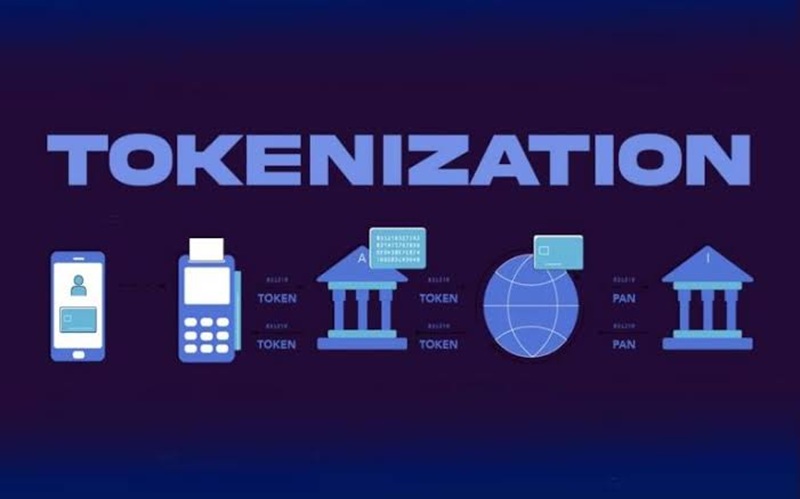
The promise of tokenization is compelling. Real estate, stocks, bonds, art, commodities, and even private credit can now be represented as digital tokens that move instantly across blockchains.

Advocates argue that tokenization will unlock liquidity, democratize investment access, and create a more efficient financial system. Yet beneath the excitement lies a difficult legal question: what exactly do token holders own when things go wrong?

The uncomfortable answer is that in many cases, they may own far less than they think.

A token on a blockchain is ultimately just a digital record. Its legal value depends entirely on the rights attached to it through contracts, regulations, and enforceable legal frameworks.

If these rights are poorly defined or absent, the token may merely represent a claim in theory rather than in law. Consider tokenized real estate. A platform may issue tokens representing fractional ownership of a property. Investors purchase these tokens believing they own a portion of the building.

If the property is actually held by a separate legal entity and the token merely references that entity, investors may not directly own the underlying asset at all. In a bankruptcy scenario, token holders could find themselves as unsecured creditors, standing in line behind banks, tax authorities, and other senior claimants.

The same issue applies to tokenized securities and private assets. The blockchain ledger may indicate ownership, but courts generally recognize legal ownership based on traditional documentation and jurisdictional laws.

If the legal agreements do not explicitly grant token holders enforceable rights, the blockchain record itself may carry little weight. This creates what many legal experts call the off-chain enforcement problem.

Blockchains are excellent at proving that a transaction occurred. They are far less effective at compelling real-world entities to honor those transactions. A smart contract cannot force a company to transfer property titles, release cash flows, or comply with investor claims if legal structures fail.

History provides several cautionary examples. During various crypto bankruptcies, users discovered that assets they believed belonged to them were legally treated as property of the platform.

Terms of service and corporate structures often determined outcomes more than blockchain records. The lesson was painful but clear: technological ownership and legal ownership are not always the same thing.

Jurisdiction adds another layer of complexity. A token issued in one country may represent an asset located in another and be traded by investors globally. If disputes arise, determining which legal system governs ownership can become extraordinarily complicated.

Courts may not recognize tokenized claims in the manner investors expect. This does not mean tokenization is fundamentally flawed. On the contrary, tokenized assets could become one of the largest financial innovations of the coming decade.

Major financial institutions are increasingly experimenting with tokenized bonds, money market funds, and real-world assets. These institutions are placing enormous emphasis on legal wrappers, custodial arrangements, and regulatory compliance precisely because they understand that code alone is insufficient.

For investors, the key question should never be simply, What does this token represent? The more important question is, What legal rights do I possess if the issuer fails? The answer may determine whether a tokenized asset is a revolutionary investment vehicle or merely a digital receipt with no enforceable claim.

As tokenization expands, legal infrastructure will likely become just as important as blockchain infrastructure. Without clear ownership rights, bankruptcy protections, and enforceable claims, many tokenized assets risk becoming sophisticated financial illusions.

Why Prediction Markets Could Become the Next Major Crypto Growth Sector

0

Crypto’s total market capitalization has now recorded its third consecutive quarterly decline, marking one of the longest periods of sustained weakness since the industry matured into a multi-trillion-dollar asset class.

The downturn reflects more than falling token prices; it signals a broader shift in investor behavior, capital allocation, and market priorities. While speculative enthusiasm has cooled across decentralized finance, gaming tokens, and many Layer-1 ecosystems, two sectors have managed to defy the trend: prediction markets and tokenized collectibles.

Their resilience is notable because they occupy opposite ends of the speculation spectrum. Prediction markets derive value from information, while tokenized collectibles thrive on entertainment and chance.

The broader crypto market has struggled under persistent macroeconomic uncertainty, tighter liquidity conditions, and declining retail participation. Venture funding has slowed, trading volumes remain below previous bull-market peaks, and many blockchain projects are finding it increasingly difficult to attract fresh users.

Investors who once chased every new token launch have become significantly more selective, favoring applications that demonstrate clear demand rather than relying solely on token incentives. Prediction markets have emerged as one of the few bright spots during this period.

These platforms allow participants to trade contracts tied to future events, ranging from elections and economic indicators to sports, technology launches, and cryptocurrency prices. Rather than speculating purely on asset appreciation, users are effectively pricing probabilities before outcomes become known.

The appeal of prediction markets lies in their ability to aggregate information. Every trade represents a participant’s assessment of future events, creating dynamic probabilities that often adjust faster than traditional forecasting methods.

As geopolitical uncertainty, regulatory developments, and economic volatility continue to dominate headlines, demand for accurate real-time forecasting has increased substantially. This informational edge has attracted both sophisticated traders and casual users seeking insights unavailable through conventional financial markets.

At the opposite end of the spectrum are tokenized collectibles, another sector posting surprising growth despite the broader market contraction. Unlike traditional NFT cycles that were driven primarily by digital art or profile-picture collections, today’s momentum is fueled by gamified mechanics, particularly gacha-style pack openings.

Borrowed from popular mobile gaming, these systems encourage users to purchase mystery packs containing digital assets with varying levels of rarity.

The excitement comes from uncertainty rather than guaranteed ownership of a specific collectible. Each pack represents a lottery-like experience where participants hope to uncover highly valuable or exceptionally rare items.

This model has proven remarkably effective at sustaining engagement. Instead of relying solely on secondary market speculation, platforms continuously generate activity through repeated pack purchases, limited-time releases, and rarity-driven incentives.

While critics argue that these mechanics resemble gambling, supporters contend they create an engaging digital collecting experience that blends gaming, ownership, and community participation. The success of these two sectors highlights an important evolution within crypto.

Capital is no longer flowing indiscriminately across every blockchain narrative. Instead, users are gravitating toward products that offer either tangible informational value or compelling entertainment.

Prediction markets monetize knowledge and forecasting accuracy, rewarding participants who possess superior information or analytical skills.

Tokenized collectibles monetize excitement, scarcity, and the psychology of chance. One is driven by rational expectations and probability, while the other thrives on emotional engagement and the thrill of uncertainty.

As the crypto industry navigates its prolonged market slowdown, these contrasting success stories illustrate where demand continues to exist. Investors may be retreating from speculative token ecosystems, but they have not abandoned digital assets altogether. Instead, they are concentrating their attention on experiences that deliver clear utility or immersive engagement.

Whether the next market cycle is led by information-driven financial products or gamified digital ownership remains uncertain. What is increasingly evident, however, is that crypto’s future will likely belong to platforms capable of capturing either humanity’s desire to predict the future—or its enduring fascination with taking a chance.