
DD
MM
YYYY

PAGES

DD
MM
YYYY

spot_img

PAGES

Home Blog Page 206

Nvidia CEO Jensen Huang Rules Out Blackwell Chip Sales to China as U.S.-China Tech Rift Deepens

0

Nvidia Chief Executive Jensen Huang has ruled out any immediate possibility of selling the company’s flagship Blackwell AI chips to China, saying there are “no active discussions” to ease U.S. export restrictions.

His remarks highlight how Washington’s tightening curbs on advanced chip sales have upended one of Nvidia’s most lucrative markets, deepening the fracture between the world’s two largest economies over control of artificial intelligence and semiconductor technology.

Speaking on Friday in Tainan, Taiwan, where he was attending chipmaking partner TSMC’s sports day, Huang said there was no change in Nvidia’s position despite speculation that a diplomatic breakthrough between President Donald Trump and President Xi Jinping could result in a limited deal allowing toned-down versions of the Blackwell chips to enter China.

“Currently, we are not planning to ship anything to China,” Huang said. “It’s up to China when they would like Nvidia products to go back to serve the Chinese market. I look forward to them changing their policy.”

The Blackwell series, Nvidia’s latest and most advanced line of AI chips, powers large-scale machine learning models and data centers that drive everything from generative AI to robotics and cloud computing. But the technology has been at the center of Washington’s campaign to curb China’s access to cutting-edge semiconductors that could be repurposed for military or surveillance use.

Under a string of export control measures first introduced in 2022 and expanded in 2023, the U.S. Commerce Department banned Nvidia and other chipmakers from selling their highest-end GPUs — including the A100, H100, and now Blackwell — to Chinese firms. The restrictions have forced Nvidia to develop lower-spec alternatives like the H20 chip, which comply with export limits but fall short of the performance Chinese companies seek for large-scale AI training.

Huang acknowledged the consequences of the faceoff, saying, “Our market share in China for advanced AI chips is zero.” He said the U.S. government’s limited exemptions have done little to change the reality on the ground, as Chinese firms are now pouring resources into domestic chip development to reduce dependence on American suppliers.

The policy shift has cost Nvidia billions in potential revenue. Before the export bans, China accounted for roughly one-fifth of Nvidia’s total sales, with its GPUs powering data centers for Chinese tech giants like Alibaba, Tencent, and Baidu. But those firms are now turning to local alternatives such as Huawei’s Ascend series, which Beijing has heavily subsidized as part of its broader “self-reliance” drive in semiconductor technology.

Analysts say the outcome reflects a broader tech and trade standoff between Beijing and Washington that has transformed from a tariff dispute into a race for technological dominance. While tariffs and supply chain realignments defined the early stages of the trade war, the current conflict centers on who controls the infrastructure of the AI age — chips, data, and algorithms.

The Trump administration has positioned chip export bans as a national security imperative, arguing that cutting off access to advanced semiconductors will slow China’s military modernization and surveillance capacity. In response, Beijing has retaliated by restricting exports of critical minerals like gallium and germanium, both essential for chipmaking, and by investing heavily in its domestic semiconductor ecosystem.

Huang, who has visited Taiwan several times this year, reaffirmed Nvidia’s commitment to its manufacturing partnerships despite these tensions.

“Business is very strong,” he said. “So I came back to encourage my TSMC friends.” Nvidia relies on TSMC to produce its most advanced chips, including the Blackwell architecture, using the foundry’s cutting-edge 4-nanometer process technology.

When asked about Tesla CEO Elon Musk’s recent plan to build a semiconductor fabrication plant to support AI growth, Huang noted the formidable barriers to entry.

“Building advanced semiconductor manufacturing capabilities like TSMC does is extremely hard,” he said. “But it’s a very important technology and the demand is extremely high.”

Huang also sought to clarify earlier remarks reported by the Financial Times suggesting he had said China would win the AI race.

“That’s not what I said,” he explained. “What I said was that China has very good AI technology. They have many AI researchers.”

He added that half of the world’s AI researchers are based in China and that some of the most popular open-source AI models originate there.

“They’re moving very, very fast,” he said. “The United States has to continue to move incredibly fast; otherwise, the world is very competitive, so we have to run fast.”
IBM Balances Automation-fueled Layoffs with AI-Focused Hiring Spree for Graduates

0

IBM is cutting thousands of jobs worldwide as part of its ongoing shift toward artificial intelligence and software-driven services, yet the tech giant pledges to ramp up recruitment of young graduates skilled in emerging technologies.

The dual strategy highlights a defining paradox of the AI era: while automation is displacing traditional roles, it is also creating demand for a new generation of workers fluent in machine learning, quantum computing, and data science.

The company confirmed Tuesday that it would lay off a “low single-digit percentage” of its global workforce—potentially affecting more than 2,500 employees—as it restructures to align with what CEO Arvind Krishna called the “AI-first” transformation of business operations. IBM, which employed about 270,000 people globally at the end of 2024, said the job cuts are necessary to free up resources for its fast-growing AI and cloud divisions.

“IBM’s workforce strategy is driven by having the right people with the right skills to do the work our clients need,” an IBM spokesperson told Fortune. “We routinely review our workforce through this lens and at times rebalance accordingly.”

The layoffs, part of a sweeping corporate trend toward automation and efficiency, come as companies across industries—from Amazon and Target to Accenture—reshape operations around artificial intelligence. What sets IBM apart, however, is its simultaneous pledge to hire aggressively among new graduates, particularly those with strong foundations in AI-related skills.

“People are talking about either layoffs or freezing hiring, but I actually want to say that we are the opposite,” Krishna told CNN last week, before confirming the latest cuts. “I expect we are probably going to hire more people out of college over the next 12 months than we have in the past few years.”

Krishna, who has positioned IBM as a frontrunner in generative AI and enterprise automation, said the company’s next phase of growth depends on talent that can build, deploy, and manage AI systems for clients worldwide.

“Skills of people are really important,” he emphasized. “We need skills in AI. We need skills in quantum. We need skills that our clients feel really good about technology being deployed in their environment.”

The company’s restructuring reflects a broader transformation in global employment patterns. Entry-level and mid-tier administrative roles—long seen as stepping stones for young professionals—are being automated at record speed. A Harvard University study found that firms adopting AI have sharply reduced junior hiring, with algorithmic systems now handling tasks such as data analysis, scheduling, and customer support that were once assigned to human staff.

According to the U.S. Federal Reserve, job postings have been declining since early 2022, making it harder for graduates to find entry-level work. Yet employers continue to seek candidates who can integrate AI tools into their workflows. A joint report by Microsoft and LinkedIn found that 71% of business leaders would rather hire a less experienced applicant who understands AI systems than a veteran who doesn’t.

Against this backdrop, it is believed that IBM’s approach—replacing redundant roles while hiring workers with advanced technical fluency—signals how companies plan to navigate the transition to automation.

Alyssa Cook, a senior managing consultant at Beacon Hill Staffing, told Fortune that firms “would rather hire a candidate who has hands-on experience with the specific tools they are implementing if they have the ability and interest to train up on other skills.”

Elon Musk, Satya Nadella, and Sundar Pichai have each echoed similar views in recent months, predicting that the next phase of workforce expansion will favor “AI natives”—workers who can build, train, or adapt models to improve business efficiency.

However, experts have cautioned that technical skills alone may not guarantee job security. “We’re not just looking for people who know the tools,” said Alejandro Castellano, CEO of automation firm Caddi. “We’re looking for those who are curious, adaptable, and thoughtful about how they use AI. That mindset makes the biggest difference.”

The dual strategy underscores IBM’s effort to balance efficiency with innovation—eliminating legacy roles that can be automated, while investing in the human capital that can steer its next phase of technological expansion.

Still, the reality for many workers is less optimistic. Thousands will lose their jobs in the months ahead, even as the company celebrates new AI-driven hires.

JP Morgan’s Latest Bitcoin Prediction: $170K in 6-12 Months

0
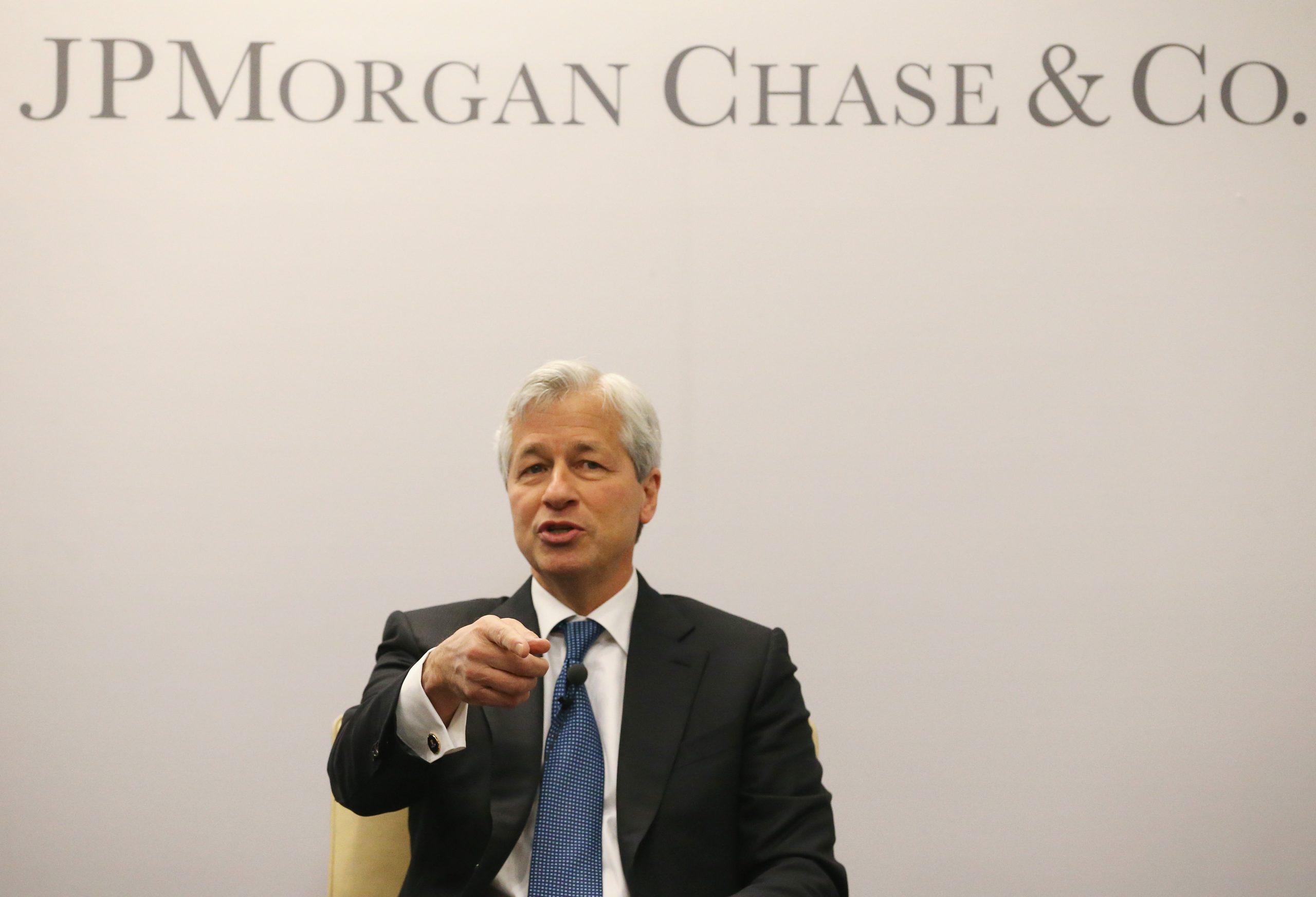
JP Morgan Chase puts contents through its CEO account, it goes viral. But the same content via JPMC account, no one cares (WSJ)

JPMorgan has forecasted that Bitcoin could reach around $170,000 in the next 6-12 months, based on a fresh analysis released on November 6, 2025.

This comes amid a recent pullback in BTC’s price below $100,000 it was trading around $103,000 as of early November 7, marking its first dip under that psychological level in four months. The prediction stands out as bullish, especially against a backdrop of broader market caution, including revised-down targets from firms like Galaxy Digital now at $120,000 for year-end 2025, down from $185,000.

Lead Analyst: Nikolaos Panigirtzoglou, Managing Director, argues Bitcoin is currently undervalued relative to gold when adjusted for volatility. Gold’s recent surge above $4,000/oz has increased its volatility, making BTC more appealing on a risk-adjusted basis.

The BTC-to-gold volatility ratio has fallen below 2.0, meaning Bitcoin now absorbs about 1.8 times more “risk capital” than gold. At BTC’s current market cap of ~$2.1 trillion, this implies a need for a ~67% increase to align with gold’s ~$6.2 trillion in private-sector investments via ETFs and physical holdings.

Price Math: A 67% cap rise from current levels points to ~$170,000 per BTC. JPMorgan notes BTC was ~$36,000 overvalued vs. gold at the end of 2024 but is now ~$68,000 undervalued.

The October 10 liquidation wave the largest ever for BTC perpetual futures has cleared excess leverage, with open interest ratios normalizing. This “deleveraging phase” is seen as complete, setting the stage for upside.

Timeline: “Significant upside” over the next 6-12 months, assuming stable conditions. This isn’t JPMorgan’s first BTC-gold comparison—earlier in October 2025, they eyed $165,000 by year-end—but the new report extends the horizon and refines the target.

While JPMorgan’s take is optimistic, sentiment is mixed: Bearish Signals: October was BTC’s worst month since 2018 (down 4-5%), driven by a $128 million DeFi hack, whale sell-offs ~400,000 BTC dumped, and macro headwinds like potential tariffs. Some analysts doubt a quick rebound to $125,000 by end-2025.

Voices like Mexican billionaire Ricardo Salinas Pliego predict BTC could hit $1 million “very shortly” to rival gold’s reserve status. ETF inflows remain positive overall, despite modest October redemptions.

On platforms like Reddit’s r/CryptoCurrency, responses range from excitement (“I want to believe”) to skepticism (“Kiss of death from JP Morgan”), with some joking about the bank’s track record.

Bitcoin’s year-to-date gains are still robust despite the dip, fueled by ETF demand and its “digital gold” narrative. JPMorgan’s CEO Jamie Dimon remains personally skeptical of crypto, but the firm’s research arm has grown more constructive.

A sustained move to $170 k would re-price the entire crypto capital stack, force central-bank policy responses, and cement BTC as a macro asset—but only if gold and leverage stay in JPMorgan’s forecasted range.

Macro shock – Fed QT + tariff war ? risk-off; BTC drops to $80 k. Regulatory clampdown – SEC reclassifies BTC ETFs as “security” ? forced redemptions. Gold catch-up – If gold volatility collapses, JPM model flips bearish.

Gold ETFs (GLD) see outflows; JPM’s own volatility-adjusted model implies gold needs to hit $4,800/oz to stay competitive ? unlikely in 12 mo. BTC seen as “digital gold 2.0”; reduces relative appeal of 10-yr T-bills.

Possible 25–50 bps upward pressure on yields if institutional rotation accelerates. ETH/BTC ratio likely stays <0.04 until BTC stabilizes; alts underperform until Q2 2026. Meme coins (DOGE, PEPE) still pump on retail hype.

If this prediction holds, it could signal a rebound from the post-peak correction BTC hit $126,000 ATH in October. Keep an eye on gold prices, futures leverage, and ETF flows for confirmation—volatility is BTC’s middle name.

72 Out of Top 100 Cryptocurrencies By Market Cap Are Trading 50% Below ATH

0

According to recent analysis from Galaxy Research, 72 of the top 100 cryptocurrencies by market capitalization are currently trading at least 50% below their all-time highs as of early November 2025.

This reflects ongoing market pressures, including the aftermath of the 2021 bull cycle hype, failed projects, and token dilution from unlocks. Large-cap standouts: A small group of leaders like Bitcoin (BTC), Ethereum (ETH), Binance Coin (BNB), and LEO Token are within 30% of their peaks, showing relative resilience.

Mid- and small-cap struggles: Assets such as Filecoin (FIL), The Graph (GRT), Tezos (XTZ), and Polkadot (DOT) remain 80–95% below ATHs, highlighting challenges in sectors like gaming, AI agents, and overvalued memecoins.

Of nearly 7 million tokens launched since 2021, about 3.7 million have failed, with 1.8 million collapsing in Q1 2025 alone—largely due to easy-launch platforms like pump.fun flooding the market with low-quality projects.

This distribution underscores why a full “altseason” rally has been elusive this cycle: too many tokens competing for attention and liquidity. Investors may want to focus on established names or those with strong fundamentals amid the volatility.

The cryptocurrency ecosystem has seen explosive growth, but it’s equally littered with failures. As of November 2025, out of nearly 7 million tokens launched since 2021, approximately 3.7 million (over 52%) have “died”—meaning they’ve ceased trading, been delisted, or become inactive due to low liquidity, scams, or abandonment.

This year alone has been brutal, with 1.8 million projects failing in the first quarter, the highest single-year rate on record. Platforms like pump.fun, which democratized token launches in 2024, fueled a meme coin frenzy but also amplified low-effort projects prone to collapse.

Failures aren’t new—over 14,000 “dead coins” have been tracked since 2014—but recent data shows a maturing market where survival rates are improving slightly (e.g., under 10% failure in 2023 vs. 70% in 2021).

Yet, in the last two months of mid-2025, 10.5% of active projects vanished due to shutdowns, rug pulls, and illiquidity. Pump.fun boom created 1M+ meme coins; most lacked utility.

Highest quarterly failures; market volatility post-inauguration. 99% of dead coins had low trading volume on pump.fun. Crypto projects flop for a mix of internal and external factors.

Lack of Utility or Real-World Adoption (42%): Many tokens launch with hype but no sustainable use case. Meme coins, for instance, rely on speculation and fade quickly—over 50% of 2024’s launches were memes that collapsed.

Scams and Rug Pulls (29%): Founders abandon projects after draining liquidity. In 2025, rug pulls accounted for a surge, with 92% of blockchain projects dying within a year due to bad actors.

Celebrity-endorsed coins (e.g., those tied to Trump family ventures) have been called out as 90%+ down, labeled scams. Bear markets expose weak fundamentals. Even VC-backed projects fail at 75% rates, often running out of cash or misreading demand.

Post-2025 inauguration volatility hit altcoins hard. Projects like Telegram’s TON halted due to SEC scrutiny. Inactive development (e.g., unupdated websites or socials) signals doom—99% of failures show this.

Oversaturation: With 37M+ unique tokens by September 2025 heading to 100M by year-end, competition is fierce. Only ~415 are listed on major exchanges like Binance.

Algorithmic stablecoin depegged in 2022 crash due to over-leverage; no real backing. $40B+ wiped out; largest single failure. Relic; new version (LUNA 2.0) trades at <1% of ATH, considered dead by most trackers.

Ponzi scheme promising 1% daily returns; collapsed amid fraud allegations. $3B+ investor losses; founders faced charges. Fully defunct; a cautionary tale for “guaranteed returns.”

Tied to collapsed exchange; liquidity crisis exposed mismanagement. $8B+ in user funds lost; Sam Bankman-Fried convicted. Token worthless; exchange bankruptcy ongoing. Scalability-focused but sank due to market indifference and poor adoption. Market cap <5% of peak; ongoing value erosion. Still trading but “failed” by performance metrics; down 95%+ from ATH.

Generic Pump.fun Memecoins (e.g., thousands unnamed). Low-effort launches; no utility beyond virality. 1.4M+ failures in 2024 alone. Bulk delisted; examples like “Peanut the Squirrel” up 4,800% then -57%.

Other mentions include QuadrigaCX exchange failure with $190M locked in cold wallet after CEO’s death and countless 2021 ICOs like BTCST. These failures highlight crypto’s “survival of the fittest” dynamic—good for weeding out junk but brutal for retail investors.

Elixir Sunsets deUSD After Fallout on Stream Finance

0

Elixir, a decentralized finance (DeFi) liquidity provider, announced it is sunsetting its synthetic stablecoin deUSD in response to severe fallout from Stream Finance’s $93 million loss.

Stream, a DeFi yield aggregator, halted withdrawals on November 4 after an external fund manager disclosed the massive shortfall, revealing $285 million in total debt across lenders—including $68 million owed to Elixir.

This exposure triggered a cascade: deUSD’s peg to the USD collapsed to as low as $0.015, wiping out nearly all its value. Elixir has emphasized that while the token is now worthless, it remains committed to redeeming holders 1:1 in USDC.

deUSD launches as a synthetic stablecoin challenging Ethena’s USDe, backed by over-collateralized loans across DeFi protocols. Community analysis reveals recursive minting loops between Stream’s xUSD and Elixir’s deUSD, inflating TVL through circular lending (e.g., Stream mints deUSD, uses it as collateral to borrow USDC, and loops back to mint more xUSD).

FUD builds as Stream fails to provide proof-of-reserves for xUSD; users urged to withdraw from related vaults. Stream halts withdrawals after $93M loss disclosure; its staked stablecoin xUSD depegs to $0.10 amid $285M debt revelation.

Stream holds 90% of deUSD supply ($75M), borrowed to back xUSD. Stream wallets dump deUSD on Curve pools, causing price to crash from $1 to $0.40, then $0.03. Elixir processes 80% of redemptions (excluding Stream), disables mint/redeem functions, takes a holder snapshot, and announces sunset. deUSD trades at $0.026.

Claims portal launches for remaining holders; Elixir coordinates with Euler, Morpho, and Compound to liquidate Stream positions and recover funds. Elixir lent ~65% of deUSD’s backing ($68M USDC) to Stream via Morpho markets for higher yields, taking xUSD as collateral.

When xUSD depegged 77% due to Stream’s loss, deUSD’s backing “vanished,” exposing systemic risks in synthetic stablecoins. Stream controls 99% of deUSD lending positions but declined to close or repay them, freezing liquidity. Elixir disabled withdrawals to prevent Stream from liquidating deUSD holdings prematurely.

Market Panic: Thin liquidity on DEXs like Curve amplified the dump—over $30M in deUSD was sold on-chain in hours, leading to the near-total depeg. This highlights vulnerabilities in recursive leverage loops, where protocols like Stream and Elixir mutually inflate TVL (e.g., $60M growth in weeks via circular minting), but a single failure unravels the system.

Elixir’s Response and User Impact Redemptions

80% of non-Stream holders already redeemed 1:1 in USDC. A snapshot secures the rest; a claims portal live as of November 7 allows remaining deUSD/sdeUSD holders to claim full value. Elixir states: “deUSD holds no value and the stablecoin has been sunset. Please do not buy or invest in deUSD.”

Elixir is withdrawing liquid assets and collaborating with Euler, Morpho, Compound, and vault curators to unwind Stream’s positions. It claims seniority on the $68M loan and expects full honoring of obligations.

Primarily deUSD holders now worthless on secondary markets and lenders to Stream via Morpho/Euler potential losses if recoveries fall short. No direct impact on USDC holders, but it erodes trust in synthetic stables.

Implications for DeFi

This event underscores the fragility of uncollateralized synthetics and leveraged lending: interlinked exposures can propagate failures rapidly, as seen in past cascades like the October 2025 liquidation wipeouts. While Elixir prioritizes user protection, the $93M Stream loss and $128M Balancer exploit recovery signals ongoing risks—analysts warn of eroding confidence in yield-chasing protocols.