DD
MM
YYYY

PAGES

DD
MM
YYYY

spot_img

PAGES

Home Blog Page 206

China’s Export Slumps, Highlights Fragile Trade Recovery Despite U.S. Truce

0

China’s exports declined in October for the first time in nearly two years, signaling renewed strain in global demand and marking a pause in the country’s fragile trade recovery, even after recent progress in easing tensions with the United States.

According to data released by China’s General Administration of Customs, outbound shipments fell 1.1% year-on-year in U.S. dollar terms, ending a seven-month streak of growth. The contraction, which caught economists by surprise, followed a strong 8.3% rise in September and was largely attributed to a high base from last year and the fading of front-loading by exporters ahead of the U.S.-China leaders’ meeting.

Economists surveyed by Reuters had expected exports to grow by 3%, underscoring the magnitude of the miss. Imports, meanwhile, rose just 1%, falling short of the 3.2% forecast, as weak consumer confidence, sluggish housing activity, and soft labor conditions continued to depress domestic demand.

Reuters quoted Zhiwei Zhang, president and chief economist at Pinpoint Asset Management, saying the slowdown was expected after months of accelerated shipments.

“It seems the frontloading finally faded in October,” he explained, adding that exports would likely normalize in the coming months as both Washington and Beijing suspended additional trade curbs for at least one year.

The cooling momentum came just days after U.S. President Donald Trump and Chinese President Xi Jinping met in South Korea, where both sides agreed to de-escalate trade tensions that had threatened to spiral into another full-blown tariff war. The agreement included the rollback of several punitive measures, such as export controls and tariffs on critical minerals and advanced technology, while Beijing committed to purchasing more U.S. agricultural products and strengthening efforts to stop fentanyl exports.

As part of the deal, the effective U.S. tariff rate on Chinese exports fell to 31%, according to estimates by Macquarie Group. Yet, the effects of earlier trade restrictions remain visible in the latest customs data. Exports to the U.S. plunged 25% in October from a year earlier, marking the seventh consecutive month of double-digit declines, while imports from the U.S. fell by nearly 23%.

Trade between the two largest economies has been shrinking steadily through 2025. In the first ten months of the year, Chinese shipments to the U.S. dropped 17.8%, while U.S. goods entering China declined 12.6%, narrowing the bilateral trade surplus by 20% to $233 billion.

Still, Beijing has managed to maintain overall export growth of 5.3% during the period, thanks to aggressive efforts by Chinese exporters to diversify into alternative markets. Shipments to the Association of Southeast Asian Nations rose 14.3%, to the European Union by 7.5%, and to Africa by 26.1%.

That diversification helped China’s total trade surplus swell to $964.8 billion in the first ten months of 2025 — 23% higher than the same period in 2024. The numbers highlight Beijing’s success in pivoting toward developing regions to offset its weakening trade with the U.S.

Oxford Economics expects this trend to persist, projecting Chinese exports to grow between 3.5% and 5% annually in real terms. The research firm also upgraded its outlook for China’s GDP growth to 4.5% in 2026 and 4.4% in 2027, supported by Beijing’s ongoing industrial expansion and the push to deepen manufacturing capabilities under the next five-year plan.

But analysts warn that exports alone cannot sustain growth for long. Now that export momentum weakens, China needs to rely more on domestic demand, Zhang said, suggesting that policymakers will likely unveil fresh fiscal stimulus in early 2026.

Larry Hu, chief China economist at Macquarie Group, agreed, saying Beijing would increasingly turn to local consumption to drive the economy.

He said at some point between 2026 and 2030, boosting domestic demand will become the central growth strategy.

Beijing is expected to retain its “around 5%” GDP growth target next year, using calibrated stimulus to balance recovery without triggering overheating. The government has also stepped up campaigns to address industrial overcapacity, a long-standing issue that has led to intense price competition and thinning profit margins across key sectors.

China’s National Bureau of Statistics reported that profits at major industrial firms rose 3.2% in the first nine months of the year, a modest gain that masks significant stress in manufacturing. Purchasing Managers’ Index data showed factory activity contracted for the seventh straight month in October, signaling that the global slowdown and renewed trade friction are still weighing heavily on China’s industrial base.

The latest figures suggest that while the trade truce with Washington offers some breathing space, China’s export engine remains vulnerable. With front-loading exhausted and global demand uneven, Beijing faces the challenge of engineering a more balanced recovery.
Elon Musk and the Looming Digital Geopolitics: When the Engine Needs Its Own Refinery

0

The universal truth, first posited by Pythagoras, is that the universe is numbers. The continuous human mandate, therefore, is the mastery of those numbers, a feat now entirely executed by computational engines of semiconductors. Before any technological giant, from Google to OpenAI, can achieve its next milestone, electrons must be fired across transistors, organized painstakingly on a silicon landscape.

Elon Musk’s consideration of building a massive, dedicated semiconductor fab is not merely a corporate contingency plan to solve a supply chain hiccup; it is a profound declaration of digital geopolitics. For a trillion-dollar compensation plan tethered to the delivery of Artificial Intelligence (AI) and Full Self-Driving (FSD), the foundation must be the indispensable substrate of computation, demanding total control.

Elon Musk says Tesla may have to build its own massive semiconductor fabrication plant to meet the company’s rising chip needs — a move that underscores both Tesla’s growing dependence on artificial intelligence and the immense challenge of meeting the lofty milestones tied to Musk’s $1 trillion compensation plan.

Speaking at Tesla’s annual shareholders meeting on Thursday, Musk said the company’s existing chip supply from Taiwan Semiconductor Manufacturing Company (TSMC) and Samsung Electronics would fall short of what’s needed to power Tesla’s expanding AI, robotics, and self-driving systems.

The strategic why behind this move is dictated by the insatiable appetite of deep-tech AI. Tesla’s future success relies on generating, processing, and acting upon data at an exponentially increasing scale. Dependency on external fabricators, however capable they may be (like TSMC), introduces critical vulnerabilities via bottlenecks, competing demands, and intellectual property risks. For a visionary player, this dependency is a terminal strategic flaw.

The only viable path forward is absolute vertical integration, where the core means of production are controlled in-house. In this calculus, the immense capital and engineering complexity of building a foundry are simply deemed a lower cost than the catastrophic business risk of not controlling the creation of the silicon upon which the entire ecosystem is built.

If Musk successfully executes this gambit, we will witness a tectonic shift in global economic and political balance. This move transcends standard business competition; it is the consolidation of power across the entire technological stack. Imagine the emergent entity: controlling the microprocessors, designing the AI software, launching the satellite network (Starlink), building the vehicles and robots of the future, and potentially even providing the electrical power to run them. This degree of self-sovereignty creates direct leverage and transforms dependency into an absolute competitive advantage. For established silicon empires, the challenge is no longer just about price or process node efficiency; it’s about existential relevance in a world rapidly integrating the source code of the physical world.

Good People, this will be the most dominant self-sovereignty in all absolute sense because Musk will integrate the source code of the physical world into his bank accounts

Musk Floats Plan for Tesla ‘Terra Fab’ as Chip Demand Threatens AI and $1tn Pay package Targets

0

Elon Musk says Tesla may have to build its own massive semiconductor fabrication plant to meet the company’s rising chip needs — a move that underscores both Tesla’s growing dependence on artificial intelligence and the immense challenge of meeting the lofty milestones tied to Musk’s $1 trillion compensation plan.

Speaking at Tesla’s annual shareholders meeting on Thursday, Musk said the company’s existing chip supply from Taiwan Semiconductor Manufacturing Company (TSMC) and Samsung Electronics would fall short of what’s needed to power Tesla’s expanding AI, robotics, and self-driving systems.

“One of the things I’m trying to figure out is — how do we make enough chips?” he told investors, adding that even with optimistic projections from suppliers, Tesla’s needs far exceed what’s available.

Musk said he’s also considering working with U.S.-based Intel, but added, “Even when we extrapolate the best-case scenario for chip production from our suppliers, it’s still not enough. Tesla would probably need to build a gigantic chip fab. I can’t see any other way to get to the volume of chips that we’re looking for.”

If built, the so-called “Tesla terra fab” would mark one of the most ambitious expansions in the company’s history. Musk estimated an initial production capacity of 100,000 wafer starts per month, scaling up to as many as 1 million — roughly two-thirds of Taiwan’s TSMC’s current monthly output. Semiconductor fabrication plants of that size typically cost tens of billions of dollars and take years to complete, highlighting how formidable the task would be for Tesla to vertically integrate into chip manufacturing.

The move comes as global demand for semiconductors continues to surge amid an AI boom that has left even major players like Nvidia and AMD scrambling to meet orders. Microchips are essential to everything from electric vehicles and robotics to data centers and AI models, and shortages have repeatedly hampered Tesla’s production lines in recent years.

Tesla currently designs its own AI chips for autonomous driving — including the latest “AI5” processor, which Musk said will be cheaper, more power-efficient, and optimized for Tesla’s AI systems — but relies on external foundries to manufacture them. A Tesla-built fab would give the company more control over production but would also represent an expensive and risky venture at a time when Tesla faces pressure to deliver on its long-promised breakthroughs in self-driving and robotics.

On Thursday, Musk reaffirmed Tesla’s plans to launch its fully autonomous Cybercab — an electric vehicle with no pedals or steering wheel — in April. The project is central to his vision of turning Tesla into a global leader in AI-driven mobility and automation, which he has claimed could one day increase the global economy “by a factor of 10, or maybe 100.”

But the scale of Musk’s ambitions, including the idea of a Tesla-run chip plant, also underscores how difficult it will be for the company to meet the targets tied to his massive $1 trillion compensation package. That plan, approved on Thursday, links Musk’s pay to a series of market capitalization and performance milestones that depend on sustained growth across Tesla’s core businesses — electric vehicles, robotics, and now, artificial intelligence.

While Tesla remains profitable and influential, its path to those goals has become increasingly complex. The company faces stiff competition from both automakers and AI hardware firms, global regulatory scrutiny over its self-driving software, and persistent supply chain risks. The idea of building a “terra fab” highlights just how vertically Tesla may need to integrate — and how steep the climb could be — to deliver the performance needed for Musk’s trillion-dollar compensation to materialize.

White House Blocks Nvidia’s AI Chip Sales to China Amid Bipartisan Pressure from Congress

0

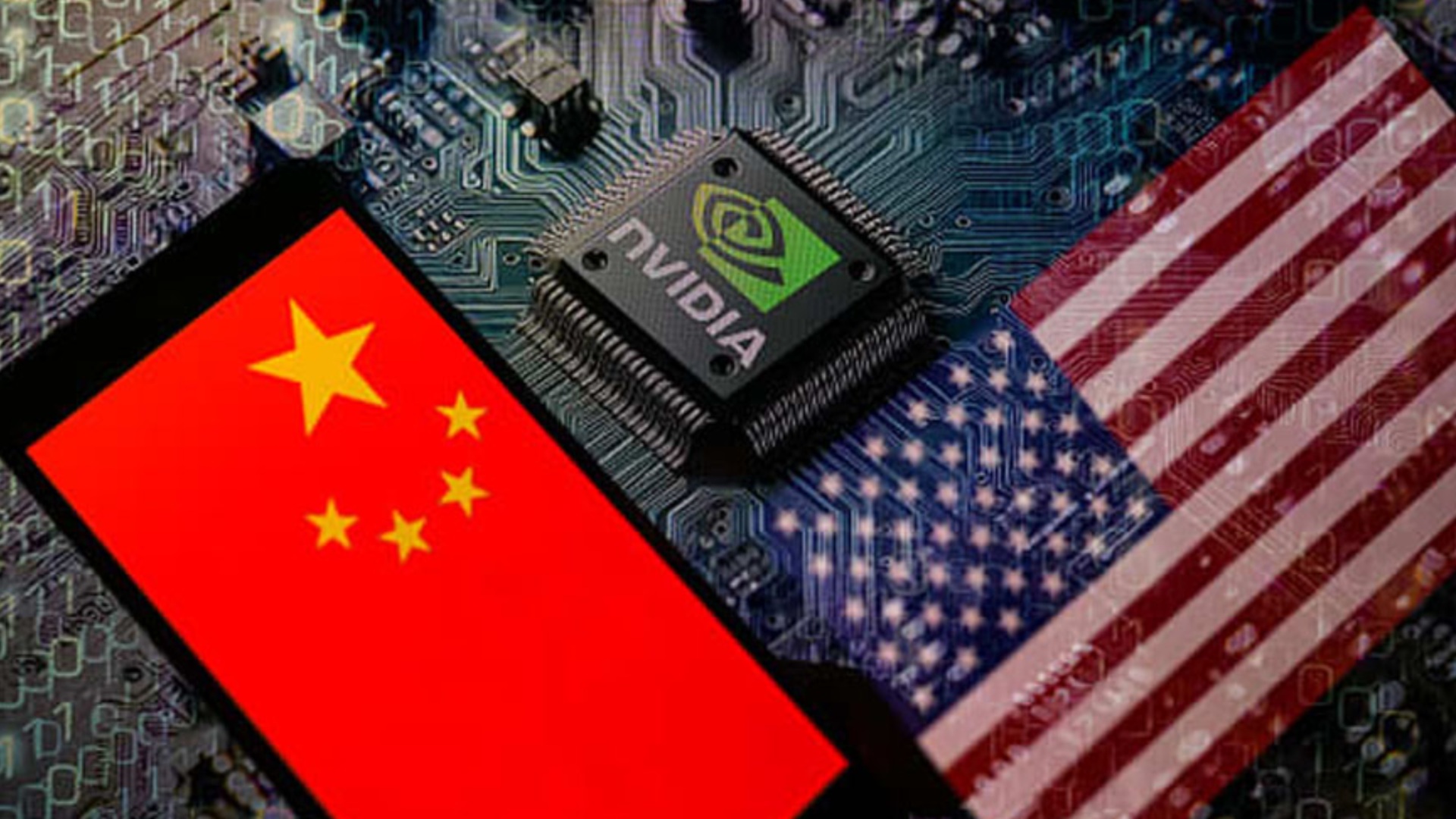
The White House has reportedly informed federal agencies that it will not permit Nvidia to sell its latest scaled-down AI chips to China, The Information reported on Thursday, citing three people familiar with the matter.

The decision adds new friction to the already tense technology standoff between Washington and Beijing, coming at a time when both sides are attempting to stabilize relations following a high-level meeting between U.S. President Donald Trump and Chinese President Xi Jinping in South Korea.

The chip at the center of the latest restriction, known as the B30A, was designed to comply with earlier U.S. export rules limiting the sale of advanced processors to China. Nvidia had reportedly provided samples of the chip to several Chinese companies before the White House intervened. The B30A can be used to train large language models when arranged in powerful data clusters—a capability that Chinese tech firms rely on to fuel the country’s fast-growing AI industry.

An Nvidia spokesperson told Reuters that the company currently has “zero share in China’s highly competitive market for datacenter compute, and do not include it in our guidance.” The White House has not yet issued a formal comment.

Behind the scenes, political pressure in Washington is mounting on President Trump to maintain a hard line against Beijing on semiconductor exports. Several lawmakers from both the Republican and Democratic parties are reportedly backing a bipartisan move in Congress to block the sale of sophisticated U.S. chips—including Nvidia’s most powerful AI processors, such as those based on the Blackwell architecture—to China. Lawmakers argue that such exports could undermine national security by helping China strengthen its AI capabilities for military and surveillance purposes.

However, Nvidia CEO Jensen Huang has said publicly that the company has no plans to export its high-end Blackwell chips to China, noting that the firm is fully complying with U.S. export regulations.

Still, many in Washington and the business community fear that this latest escalation could jeopardize delicate negotiations between Beijing and Washington. The talks, brokered during President Trump’s visit to South Korea, were aimed at reducing tensions over technology transfers, trade tariffs, and market access for both nations’ firms. Analysts say the timing of the U.S. export ban risks derailing progress made during the Trump-Xi discussions.

Meanwhile, Nvidia faces increasing challenges in China beyond U.S. policy. Beijing has recently issued guidance requiring all new data center projects that receive state funding to use only domestically developed chips. Projects less than 30% complete must remove any installed foreign processors or cancel plans to purchase them, while more advanced projects will undergo case-by-case reviews.

This policy effectively excludes Nvidia from a major segment of the Chinese market, compounding the impact of Washington’s restrictions. It also reinforces Beijing’s drive to accelerate self-sufficiency in chipmaking, with domestic firms like Huawei, Biren, and Cambricon stepping up as alternatives.

With bipartisan pressure mounting at home and nationalist policies rising abroad, Nvidia—America’s most valuable company—finds itself trapped between two economic powers whose rivalry over chips is fast becoming the defining factor of the tech industry.

Southeast Asia’s Largest Bank CEO Warns Investors To Brace For Turbulence In Global Markets

0

The chief executive of Southeast Asia’s largest bank, DBS, has warned investors to brace for turbulence in global markets, saying that valuations in U.S. equities—particularly among top artificial intelligence-driven stocks—have become dangerously stretched.

“We’ve seen a lot of volatility in the markets. It could be equities, it could be rates, it could be foreign exchange,” DBS CEO Tan Su Shan told CNBC in an interview. “And I think that volatility will continue.”

Tan, who took over from longtime DBS chief Piyush Gupta in March, said the global financial environment is now in a “fragile equilibrium,” where rising geopolitical tensions, shifting monetary policy expectations, and excessive investor optimism could easily disrupt stability.

She singled out the “Magnificent Seven”—Amazon, Alphabet, Meta, Apple, Microsoft, Nvidia, and Tesla—as examples of extreme concentration risk in the market, noting that their combined valuations have inflated to levels that could unsettle investors if any one of them falters.

“You’ve got trillions of dollars tied up in seven stocks,” Tan said. “So it’s inevitable, with that kind of concentration, that there will be a worry about, ‘You know, when will this bubble burst?’”

The Magnificent Seven, which have led Wall Street’s rally over the past two years, now make up roughly 30% of the S&P 500’s total market capitalization. Analysts have described their dominance as both a sign of technological leadership and a warning flag for potential market distortion, as smaller firms and sectors struggle to attract capital.

Tan’s remarks came days after several top financiers, including Morgan Stanley CEO Ted Pick, addressed similar concerns at the Global Financial Leaders’ Investment Summit in Hong Kong. At the event, industry leaders agreed that the rally in U.S. tech stocks had become “disconnected from fundamentals,” with some warning that a 10% to 20% correction could occur within the next 12 to 24 months.

Pick told the summit that investors should “welcome periodic pullbacks,” calling them “healthy developments rather than signs of crisis.” Tan echoed that sentiment, saying, “Frankly, a correction will be healthy. Markets can’t keep going up forever.”

The anxiety has already begun to surface in trading. Earlier this week, shares of Advanced Micro Devices (AMD) and Palantir Technologies both fell despite posting stronger-than-expected quarterly results, dragging the Nasdaq index lower. Analysts described the sell-off as a sign that investors may finally be reconsidering sky-high valuations, especially in sectors tied to artificial intelligence and cloud computing.

Her warning also aligns with recent alerts from the International Monetary Fund and central bankers like U.S. Federal Reserve Chair Jerome Powell and Bank of England Governor Andrew Bailey, who have each cautioned that markets are underpricing risks and overstating future earnings growth. The IMF, in its October financial stability report, noted that equity valuations in major economies have outpaced underlying profitability, calling the trend a potential precursor to disorderly repricing.

Beyond valuation risks, Tan highlighted the interplay between monetary policy and equity performance. The prolonged period of high interest rates in the U.S. and Europe has started to weigh on liquidity-sensitive assets, while uncertainty about when the Federal Reserve will begin rate cuts has injected further instability into global portfolios.

In her remarks, Tan emphasized the importance of diversification—not only across asset classes but also geographically. She also argued that Asia offers compelling opportunities for investors seeking a balance between growth potential and macroeconomic stability.

“Whether it’s in your portfolio, in your supply chain, or in your demand distribution, just diversify,” she advised.

Singapore, Tan noted, stands out as an increasingly attractive hub for global investors seeking diversification amid rising uncertainty in Western markets. She credited the city-state’s regulatory transparency, strong governance, and open financial system for boosting investor confidence.

“We’ve got rule of law. We’re a transparent, open financial system and stable politically,” Tan said. “We’re a good place to invest… So I don’t think we’re a bad place to think about diversifying your investments.”

Tan’s comments mirror a broader narrative emerging among Asian policymakers who believe the region can serve as a counterbalance to Western volatility. Singapore, in particular, has seen growing inflows of wealth management assets and family offices, driven by investors looking to hedge against market instability in the U.S. and Europe.

As investors weigh how long the current tech rally can last, Tan believes the global financial system is entering a period where resilience will depend less on chasing momentum and more on managing concentration risk. With geopolitical tensions, inflation pressures, and rate uncertainties still lingering, DBS’s new chief is urging investors to look beyond short-term optimism and position for the inevitable adjustment ahead.