DD
MM
YYYY

PAGES

DD
MM
YYYY

spot_img

PAGES

Home Blog Page 2060

Metaplanet Continues Bitcoin Shopping Spree With $13M Buy

0

Metaplanet, a Japanese publicly traded company listed on the Tokyo Stock Exchange, recently expanded its Bitcoin holdings by purchasing approximately $13 million worth of Bitcoin. This acquisition is part of the company’s ongoing strategy to build a significant Bitcoin treasury, a move that has drawn comparisons to MicroStrategy’s Bitcoin accumulation model. The purchase involved 135 Bitcoin, acquired at an average price of around $96,185 per Bitcoin, bringing Metaplanet’s total holdings to 2,235 Bitcoin, valued at approximately $196 million at the time of the purchase.

This acquisition occurred just before a notable market downturn, with Bitcoin’s price dropping to a three-month low of $87,115 shortly after. Metaplanet’s strategy is part of its broader “21 Million Plan,” which aims to accumulate 10,000 Bitcoin by the end of 2025 and ultimately 21,000 Bitcoin by the end of 2026. To fund these purchases, the company has employed a combination of equity and debt financing, including issuing zero-coupon bonds and stock acquisition rights.

For instance, it recently raised $47 million through such financial maneuvers, with plans to continue this approach to fuel further Bitcoin acquisitions. The company’s Bitcoin strategy has been profitable, with a reported Bitcoin yield of 23.2% for the year, indicating growth in the ratio of Bitcoin holdings to shares.
Critically, while Metaplanet’s aggressive Bitcoin accumulation has boosted its stock price significantly—surging over 3,000% since it began buying Bitcoin in April 2024—it also exposes the company to considerable risk.

The timing of this particular purchase, just before a market dip, highlights the volatility inherent in such a strategy, as the value of its Bitcoin holdings can fluctuate dramatically. Moreover, the company’s reliance on debt financing to fund these purchases raises questions about sustainability, especially in a bearish market where Bitcoin’s price could decline further, potentially straining its ability to service debt.

Additionally, Metaplanet’s focus on Bitcoin as a core business strategy, while abandoning traditional performance benchmarks, may alienate investors who prefer more diversified or stable investment profiles, particularly given its history as a struggling hotel developer before pivoting to Bitcoin. From a broader perspective, Metaplanet’s actions reflect a growing trend among corporations to adopt Bitcoin as a treasury asset, potentially signaling confidence in its long-term value.

However, this trend is not without controversy, as it challenges traditional financial strategies and raises questions about the role of speculative assets in corporate balance sheets. The narrative pushed by companies like Metaplanet—that Bitcoin is a hedge against fiat currency volatility, particularly the yen, and a superior store of value—should be scrutinized. While Bitcoin’s scarcity and decentralized nature are often touted, its extreme price volatility and lack of intrinsic cash flow generation make it a risky bet compared to traditional treasury assets like bonds or gold.

Furthermore, the comparison to Strategy may oversimplify the risks, as Metaplanet operates in a different economic and regulatory environment, with Japan’s unique financial landscape potentially influencing the outcomes of this strategy differently than in the U.S. Metaplanet’s $13 million Bitcoin purchase is a significant step in its ambitious plan to become a major corporate Bitcoin holder, but it comes with substantial risks that warrant careful consideration. The company’s success will depend on Bitcoin’s long-term price trajectory, its ability to manage debt, and broader market and regulatory developments, all of which remain uncertain.


Ripple Secured Regulatory Approval from DFSA in United Arab Emirates

0

Ripple, a leading blockchain payment provider, secured full regulatory approval from the Dubai Financial Services Authority (DFSA) to offer cryptocurrency payment services in the United Arab Emirates (UAE). This approval marks a significant milestone for Ripple, as it becomes the first blockchain-enabled payments provider licensed to operate within the Dubai International Financial Centre (DIFC), a free economic zone in the UAE with its own regulatory and tax framework.

The DFSA approval enables Ripple to provide its global blockchain-based payment solutions, including cross-border payment services, to businesses across the UAE. This development aligns with Ripple’s mission to deliver faster, more cost-effective, and transparent payment solutions, particularly for financial institutions seeking to integrate digital assets into real-world applications.

The United Arab Emirates (UAE) has emerged as a global leader in cryptocurrency and blockchain regulation, adopting a progressive and comprehensive framework to foster innovation while ensuring investor protection, financial stability, and compliance with international standards. The UAE’s approach is characterized by a combination of federal-level oversight and jurisdiction-specific regulations, particularly in its free economic zones like the Dubai International Financial Centre (DIFC) and the Abu Dhabi Global Market (ADGM).

The approval follows an in-principal authorization granted by the DFSA in October 2024, highlighting Ripple’s ongoing efforts to expand its presence in the Middle East, where it established its regional headquarters in Dubai in 2020. Ripple’s CEO, Brad Garlinghouse, emphasized the UAE’s progressive regulatory environment, noting that the country’s clear framework and early adoption of fintech innovations position it as a global leader in the crypto industry. The UAE’s strategic location as a trade and financial hub, coupled with its substantial cross-border payments market—estimated at $40 billion—makes it an attractive region for Ripple’s expansion.

Approximately 20% of Ripple’s global customer base is already located in the Middle East, reflecting the region’s readiness to adopt blockchain technology. This regulatory milestone adds to Ripple’s growing list of over 60 global licenses, including approvals from jurisdictions such as Singapore, New York, and Ireland. The DFSA license not only strengthens Ripple’s foothold in the Middle East and North Africa (MENA) region but also underscores its commitment to regulatory compliance, a critical factor in navigating the complex global crypto landscape.

Additionally, Ripple has engaged in partnerships to foster blockchain innovation in the UAE, including collaborations with the DIFC Innovation Hub and NYU Abu Dhabi, further solidifying its regional presence. The approval is part of a broader trend of increasing institutional adoption of cryptocurrencies, driven by regulatory clarity in progressive markets like the UAE. However, while this development enhances Ripple’s market position, it is worth noting that the company has faced regulatory challenges elsewhere, such as its ongoing legal battle with the U.S. Securities and Exchange Commission (SEC) over the classification of its XRP token.

The UAE’s crypto regulatory framework is designed to balance innovation with risk management, positioning the country as a hub for blockchain technology and digital finance. Promoting the adoption of cryptocurrencies and blockchain for financial services, payments, and trade. Protecting investors and consumers from fraud, money laundering, and other financial crimes. Ensuring compliance with global anti-money laundering (AML) and counter-terrorism financing (CFT) standards. Attracting global crypto businesses by offering regulatory clarity and a business-friendly environment.

$2.2 Billion Stolen From Crypto Platforms in 2024 as Pig Butchering Grows Nearly 40% With AI Sophistication

0

Cryptocurrency crimes have been a growing concern in recent years, and 2024 appears to have continued this trend based on available data and ongoing developments.

A report from blockchain analytics firm, Chainalysis revealed that last year, cryptocurrency scams amassed at least $9.9 billion in on-chain transactions, a figure expected to grow as more fraudulent addresses are identified. In 2024, funds stolen increased by approximately 21.07% year-over-year (YoY) to $2.2 billion, and the number of individual hacking incidents increased from 282 in 2023 to 303 in 2024.

Crypto fraud has become increasingly sophisticated, with scammers leveraging Al and professionalized fraud networks to exploit victims at an unprecedented scale. The fraud ecosystem has expanded significantly, with operations like Huione Guarantee providing illicit services that fuel scams. These services include technological infrastructure for initiating fraud, money laundering solutions, and cash-out mechanisms for criminals. Among all scam types, high-yield investment scams (HYIS) and pig butchering scams generated the highest crypto revenues in 2024, accounting for 50.2% and 33.2% of total fraud-related inflows, respectively. While HYIS inflows declined by 36.6% year-over-year (YoY), pig butchering fraud surged nearly 40%. YoY, signaling a shift in scam tactics.

Pig Butchering Scams Expands Globally

Traditionally concentrated in Southeast Asia, pig butchering scams-also known as investment or romance scams-have expanded globally. These scams involve fraudsters building relationships with victims over time to convince them to invest in fake opportunities.

Recent international crackdowns have exposed the global reach of these operations:

  • December 2024: Nigerian authorities arrested 88 foreign nationals running an investment scam targeting victims in Europe and the Americas.
  • June 2024: Interpol disrupted an international scam network that forced 88 youths in Namibia to conduct fraud schemes.
  • October 2023: Malaysian authorities revealed that Peruvian police rescued 43 Malaysians trafficked into a scam operation in Peru.

Fraudsters have also diversified their approach, shifting from long-term cons to quicker scams, such as fake work-from-home job offers that trick victims into depositing funds. Alongside pig butchering, crypto drainers and address poisoning scams have escalated. Crypto drainers grew by 170% YoY, with scammers tricking users into connecting wallets to fraudulent platforms. Address poisoning attacks surged over 15,000%, with scammers mimicking legitimate addresses to deceive victims into sending funds.

Al Fuels the Next Generation of Crypto Fraud

Generative Al has revolutionized fraud tactics, enabling scammers to create synthetic identities, bypass verification controls, and generate realistic fake websites. According to Alterya, 85% of crypto scams now involve fully verified accounts, making fraud prevention increasingly difficult. As scams become more sophisticated, financial institutions and regulators must rapidly adapt to combat the rising threat of Al-powered financial fraud.

Crypto hacking remains a persistent threat, with four years in the past decade individually seeing more than a billion dollars’ worth of crypto stolen (2018, 2021, 2022. and 2023). 2024 marks the fifth year to reach this troubling milestone, highlighting how, as crypto adoption and prices rise, so too does the amount that can be stolen.

Interestingly, the intensity of crypto hacking shifted about halfway through the year. Chainalysis noted that the cumulative value stolen between January 2024 and July 2024 had already reached $1.58 billion, approximately 84.4% higher than the value stolen over the same period in 2023. The ecosystem was easily on track for a year that could rival the $3 billion+ years of 2021 and 2022. However, 2024’s upward trend slowed considerably after July, after which it remained relatively steady.

In terms of the amount stolen by victim platform types, 2024 also saw interesting patterns. In most quarters between 2021 and 2023, decentralized finance (DeFi) platforms were the primary targets of crypto hacks. DeFi platforms were more vulnerable because their developers tend to prioritize rapid growth and bringing their products to market over implementing security measures, making them prime targets for hackers.

Although DeFi still accounted for the largest share of stolen assets in the first quarter of 2024, centralized services were the most targeted in Q2 and Q3. Some of the most notable centralized service hacks include DMM Bitcoin (May 2024; $305 million) and WazirX (July 2024: $234.9 million).

This shift in focus from DeFi to centralized services highlights the increasing importance of securing mechanisms commonly exploited in hacks, such as private keys. Private key compromises accounted for the largest share of stolen crypto in 2024, at 43.8%. After compromising private keys, malicious actors often launder stolen funds by funneling them through decentralized exchanges (DEXs), mining services, or mixing services to obfuscate the transaction trail and complicate tracing.

The need for stronger crypto security

The rise in stolen crypto in 2024 underscores the need for the industry to address an increasingly complex and evolving threat landscape. While the scale of crypto theft has not yet returned to the levels of 2021 and 2022, the resurgence described above highlights gaps in existing security measures and the importance of adapting to new exploit methods. To combat these challenges effectively, a collaborative approach between the public and private sectors is essential.

Data-sharing initiatives, real-time security solutions, advanced tracing tools, and targeted training can empower stakeholders to quickly identify and neutralize malicious actors while building the resilience needed to safeguard crypto assets. Additionally, as crypto regulatory frameworks continue to develop, the scrutiny of platform security and customer asset protection will likely intensify. Industry best practices must keep pace with these changes, ensuring both prevention and accountability.

Nigeria Public Sector Workers – Thank You for Serving

0
If you work in the public service at local government, state, and federal levels in Nigeria, this is just to appreciate all of you. I mean, I want to thank you for serving because without people like you the Nigeria we hope for may not readily come. I read how a government trained 32 young people on core needed capabilities, but within six months, all of them LEFT the public sector. With that revelation, I have nothing but respect for those still serving.
 
Good People, join me to appreciate those still working for the government. They take enormous sacrifices despite whatever we may think or feel. And I also use this opportunity to ask governments at all levels to find ways to improve working conditions for these citizens. They need to be supported and encouraged because no good policy could be executed without the PEOPLE component and the public sector workers are the front liners in the playbook.
 
Nigeria worked for me – big time. It gave me options in all ways and forms. I truly appreciate it and use this moment to THANK all the public sector workers, from drivers to DGs. I am very confident that with improved working conditions, all of you would do better and my voice today is to push for that change. Thank You for serving the public.

What Are the Best Modern Day Reproduction Samurai Blades?

0

Samurai swords hold a timeless allure. They combine history, art, and raw functionality. However, possessing a genuine katana is a luxury beyond reach because of its cost and rarity.

Luckily, modern day reproduction samurai blades are made with a focus on precision and historical accuracy.

Whether you’re a collector or reenactor looking to add authenticity to your performance, there’s a perfect reproduction sword. This guide examines the best modern-day samurai blades, helping you discover a masterpiece that combines safety, purpose, and quality.

What Are Reproduction Samurai Blades? 

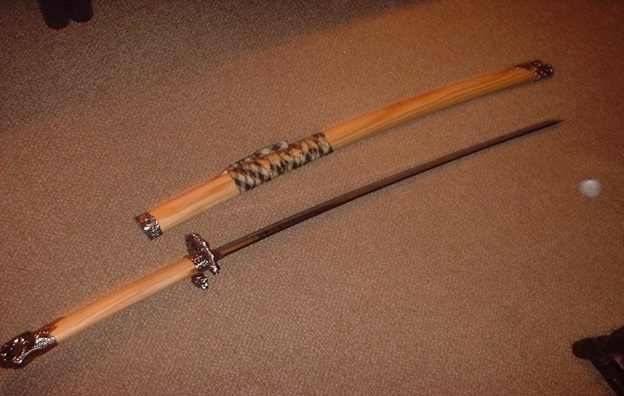
Reproduction samurai blades are modern recreations of traditional Japanese swords. They are crafted to mimic the appearance and construction of historical katanas. These pieces are made with materials that resemble those used in authentic swords. They range from purely decorative pieces to high-quality hand-forged swords.

Why People Choose Reproduction Samurai Blades

Owning an authentic samurai sword can be prohibitively expensive and often requires strict legal restrictions. Reproduction blades offer a practical alternative, allowing enthusiasts to enjoy the beauty and history of these iconic weapons without the limitations of owning a historical artifact. They are ideal for collectors seeking aesthetic appeal, martial artists needing reliable practice tools, or anyone drawn to the cultural significance of samurai craftsmanship.

Key Factors to Consider When Choosing a Reproduction Samurai Blade

Various factors must be considered when selecting a reproduction blade to find an authentic piece.

Purpose

The first factor to consider is the sword’s purpose. Decorative swords are ideal for display and are less durable than functional weapons. Functional swords, often used in martial arts or cutting practice, are crafted with robust real-use materials. Choose a blade that aligns with your needs, whether aesthetic appeal or practical performance.

Material and Construction

Blade material significantly impacts quality and usability. High-carbon steel is the standard for functional swords due to its strength and sharpness. Stainless steel, while less durable, is standard for decorative swords because it resists rust. Damascus steel offers a striking pattern and premium feel but is more expensive. Decorative sword handles and fittings should be durable and secure to enhance functionality and authenticity, mainly when used frequently.

Authenticity and Craftsmanship 

Reproduction swords vary widely in their attention to detail. High-quality replicas aim to replicate traditional designs, including the guard, ornamental grip, and scabbard. Authentic craftsmanship enhances the sword’s value and historical accuracy. Look for artisans or brands known for meticulous detail and quality control.

Price Range 

Budget plays a crucial role in finding the right reproduction blade. The prices of decorative swords vary depending on several factors. Swords crafted from high-quality materials will be more costly, fetching $200 upwards. Mid-range swords often balance affordability and quality,  making them suitable for most enthusiasts. Be cautious of overly cheap options, which may sacrifice safety and durability.

These factors can help you find a weapon that suits your budget, needs, and expectations.

Top Recommendations for Modern Reproduction Samurai Blades

Modern reproduction blades can be classified depending on their quality and intended use. Here’s a breakdown of top replica samurai blades.

Best Decorative Reproduction Samurai Blades

Decorative samurai blades prioritize aesthetics. This feature makes them perfect for collectors and displays. These swords often have fine engravings, polished finishes, and guards. Brands like Musashi and Shinwa offer high-quality and affordable pieces. Although these blades aren’t functional, their attention to detail and quality add a touch of elegance to any collection.

Best Functional Reproduction Samurai Blades for Martial Arts 

Functional samurai blades, like those used in martial arts training, are made for rigorous use. Swords designed from high-carbon steel have ideal sharpness and durability. Reputable brands like Hanwei and Cold Steel create swords with excellent cutting power and balance. These blades are ready for battle and are built to withstand repeated use while maintaining safety and authenticity.

Best High-End, Authentic-Looking Reproduction Samurai Blades 

High-end reproduction blades blend art and function for collectors seeking authenticity. These swords feature premium materials like Damascus steel. Companies like Dragon King and Citadel specialize in producing limited but unique pieces, replicating historical designs meticulously. Their swords are prized for their attention to detail and cultural accuracy, making them perfect for serious collectors.

Affordable Options for Beginners or Collectors on a Budget 

For those starting their collection or working within a budget, affordable reproduction swords offer decent quality at accessible prices. Brands like RYUJIN and Masahiro provide entry-level options made from 1045 carbon steel. These swords balance cost and functionality, offering beginner-friendly models that don’t compromise on basic craftsmanship.

By selecting a sword from these recommendations, enthusiasts can find a reproduction samurai blade that fits their purpose, style, and budget.

How to Care for Your Reproduction Samurai Blade  

Maintaining the functionality and beauty of a replica samurai blade is essential. Here are some tips:

Cleaning and Maintenance 

Regular cleaning is necessary to prevent rust and preserve a sword’s condition. After handling it, clean the sword with a soft cloth to clear any dust or fingerprints. Use a slightly damper cloth to clean stubborn dirt and dry it immediately. For steel blades, apply a light coating of mineral oil to prevent corrosion.  For thorough cleaning, consult a specialist familiar with cleaning and maintaining swords. Always handle the blade respectively to minimize accidental damage.

Storage and Display Tips 

Correct storage ensures your sword remains in pristine condition. Store the sword in a cool, dry environment. Keep the sword away from humidity because any fluctuations in temperature can corrode the weapon. Storing the blade in its scabbard (saya) helps to keep it safe and protect it from physical harm and dust. Keeping it in the saya also helps to maintain its sharpness and alignment. Use a sturdy stand that holds the blade horizontally and is stable for display.

Conclusion 

Samurai sword’s elegance and history continue to impress people worldwide. While authentic swords are precious, modern reproductions offer an affordable way to experience the art and beauty of these iconic weapons. These replicas connect to a rich and fascinating history, whether for collection, display, or martial arts practice. By understanding these blades’ construction, material type, and care requirements, enthusiasts can find a piece that suits their needs and budget.