DD
MM
YYYY

PAGES

DD
MM
YYYY

spot_img

PAGES

Home Blog Page 208

US Job Cuts Surge 175% in October 2025, Reaching Highest October Levels Since 2003

0

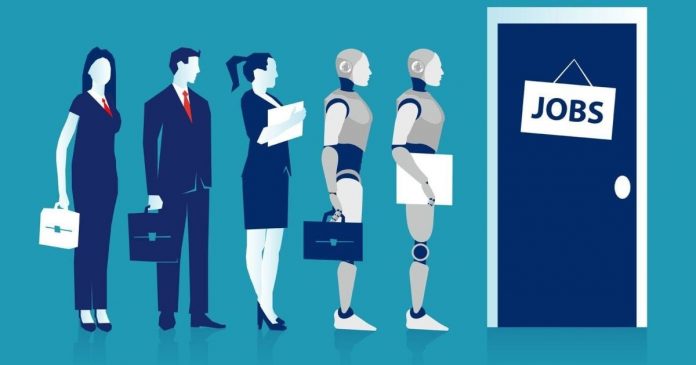
Recent data from Challenger, Gray & Christmas, a leading outplacement firm, reveals a sharp escalation in US layoffs, signaling potential strain in the labor market. In October 2025, US employers announced 153,074 job cuts—a 175% increase from the 55,597 cuts in October 2024 and a 183% jump from September 2025’s 54,064 cuts.

This marks the highest total for any October since 2003, when 171,874 layoffs were recorded, and represents the worst single-month figure in the fourth quarter since the 2008 financial crisis.

Through October, announced cuts reached 1,099,500, up 65% from the first 10 months of 2024. This already exceeds full-year 2024 totals (761,358) by 44% and is the highest since the COVID-19 peak in 2020, when over 2 million cuts occurred through October.

Warehousing led with 47,878 cuts, driven by overcapacity and post-pandemic adjustments. Technology followed with 33,281 cuts, heavily influenced by AI adoption. Other notable sectors included retail and finance, with plant/store closures contributing significantly.

Over 50,000 cuts, the top driver amid rising expenses and slowing consumer spending. A growing factor, with experts drawing parallels to disruptive tech shifts in 2003.

Broader uncertainty, including tariffs, immigration policy changes, and federal workforce reductions, exacerbated the surge. This surge contrasts with the historically low-firing job market of recent years, where fourth-quarter monthly averages hovered around 42,927 cuts from 2013–2023 down from 74,733 in 2003–2013.

Hiring intentions have also plummeted to 2011 levels, per Challenger’s data, raising concerns about a softening economy. Federal Reserve officials, who have cut rates twice since September 2025 with another expected in December, cite these trends as evidence of cooling labor demand.

Analysts attribute the spike to a mix of factors: lingering pandemic-era overexpansion, AI-driven restructuring freeing up resources for tech integration, and macroeconomic headwinds like inflation and policy shifts under the Trump administration.

While not yet at recessionary depths, the pace suggests companies are proactively trimming to build resilience—though it could prolong job searches in a competitive market.

The Impact of AI on Tech Jobs

As of November 2025, artificial intelligence (AI) is profoundly reshaping the tech sector, accelerating a shift from routine coding and support roles to higher-level strategic and AI-integrated positions.

While AI has driven over 77,000 tech layoffs in the first half of the year alone—often tied to automation of repetitive tasks—it’s also fueling demand for specialized skills like machine learning engineering and AI ethics.

A polarized job market: entry-level and mid-tier roles face contraction, but overall tech employment is projected to grow modestly through 2033, per the U.S. Bureau of Labor Statistics (BLS), as AI augments productivity rather than fully replacing humans in complex engineering tasks.

This transformation echoes historical tech shifts (e.g., the rise of cloud computing), but AI’s speed—fueled by tools like ChatGPT and generative models—has amplified concerns. A Stanford study highlights a 13% employment drop for early-career (22-25) workers in AI-exposed tech occupations since 2022, concentrated in automatable roles like basic software testing.

Meanwhile, experienced professionals in the same fields saw 6-9% growth, underscoring a “barbell” effect: juniors squeezed, seniors thriving. AI excels at standardizable, data-heavy tasks, hitting entry- and mid-level tech roles hardest.

From an analysis of 180 million U.S. job listings, creative execution and ops roles declined 20-33% year-over-year, while strategic AI roles surged. At Risk (Declines of 20%+ in 2025): Software Developers/Engineers (Entry-Level): Routine coding automated by tools like GitHub Copilot; 90% of basic tasks could be AI-handled soon.

In Demand (Growth of 15%+):AI/ML Engineers & Prompt Engineers: Explosive need for building and fine-tuning models; Python, SQL, and AWS top skills lists. Shortages persist; AI creates more data to analyze.

AI Ethicists & Integration Specialists: Roles bridging tech and human oversight; projected to add 11 million jobs globally by 2027 (WEF). AI threats demand human-AI hybrid defenses.

Industries like finance and consulting (adjacent to tech) face similar white-collar squeezes, with 40% of employers planning workforce reductions via AI. However, BLS case studies on electrical and aerospace engineering show resilience, with 6-8% growth despite productivity gains from generative AI

PwC’s 2025 AI Jobs Barometer, analyzing 1 billion ads, finds AI-exposed sectors including tech see 25% faster wage growth but higher volatility. Goldman Sachs estimates 6-7% U.S. workforce displacement overall, but “frictional unemployment” fades within 2 years as new roles emerge—echoing the internet boom

Yet, entry barriers are rising: Indeed reports fewer junior hires, with AI handling “no-brainer” tasks. Critics like Anthropic’s Dario Amodei warn of 10-20% unemployment spikes if unchecked, concentrating wealth in AI firms

Positively, AI could add $13 trillion to global GDP by 2030, creating unforeseen jobs like AI trainers—much like “app developer” post-iPhone. PwC notes AI boosts value in augmentable jobs by 14%.

Target Hybrids: Seek roles in AI deployment, not pure coding; demand for cloud-AI integration is up 30%. Advocate for retraining (e.g., U.S. apprenticeships aiming for 1M slots) and regulations on AI transparency

AI isn’t “coming for” all tech jobs—it’s redefining them. While 2025 marks a painful transition, historical precedents suggest net gains if workers and policymakers pivot fast.


Google Integrates Prediction Market Data from Kalshi and Polymarket into Finance and Search

0

Google announced a major update to its Google Finance platform, incorporating real-time prediction market data from two leading platforms: Kalshi and Polymarket.

This integration allows users to access crowd-sourced probabilities on future events—like elections, economic indicators, sports outcomes, and regulatory decisions—directly alongside traditional financial data such as stocks, commodities, and currencies.

The feature is part of a broader AI-powered overhaul aimed at enhancing research tools and providing more interactive, forward-looking insights. Users can query natural language questions (e.g., “Will the U.S. enter a recession in 2025?” or “Who will win the Super Bowl?”) in Google Search or Google Finance, and the platform will display live odds and probability trends from Kalshi and Polymarket.

This includes historical changes in market sentiment over time, leveraging the “wisdom of the crowds” for sharper forecasts. The data will begin appearing in the coming weeks, starting with Google Labs users before wider availability.

Platforms Involved: Kalshi: A U.S.-regulated exchange under the Commodity Futures Trading Commission (CFTC), focusing on event contracts for topics like inflation, policy, and sports. It recently raised $300 million at a $5 billion valuation.

Polymarket: A decentralized, blockchain-based platform on Polygon, known for high-volume trading on politics, culture, and tech events. It operates outside the U.S. but hit record volumes in October 2025 and raised funds valuing it at $9 billion.

Polymarket confirmed the partnership via an X post, highlighting its role in bringing on-chain transparency to Google’s ecosystem. Financial terms of the deals were not disclosed, but this marks one of the first mainstream integrations of prediction markets into a tech giant’s consumer tools.

Prediction markets have exploded in popularity, with weekly volumes surpassing $2 billion in late October 2025, driven by events like U.S. elections and sports betting expansions. Google’s move signals growing legitimacy for these platforms as sentiment indicators, potentially rivaling traditional economic models.

Analysts note that prediction odds often react faster to news than stocks or bonds, offering traders an edge in hedging risks.This isn’t isolated—other players are jumping in:Robinhood partnered with Kalshi in August 2025 for sports contract trading, calling the space “on fire.”

The NHL became the first major league to integrate with Kalshi and Polymarket. MetaMask plans Polymarket integration, and exchanges like CME are developing similar products. However, regulatory hurdles remain: Polymarket faced past CFTC scrutiny for U.S. operations, while Kalshi’s licensed model provides a compliant contrast.

As adoption grows, this could push for clearer policies on event contracts. The news sparked buzz on X (formerly Twitter), with users hailing it as validation for prediction markets: Polymarket’s announcement post garnered over 7,000 likes, emphasizing “Polymarket x Google” integration.

Traders like @cryptovcdegen called it a “first foray into event-based financial tracking,” stressing its use for elections and crypto regs. @ThuanGlobal noted the shift from “online betting tools” to “market sentiment indicators.”

Overall, this positions prediction markets as a core part of modern finance, blending AI, blockchain, and crowd intelligence for more predictive tools. If you’re trading or analyzing events, keep an eye on Google Finance for these updates—they could become your new go-to for spotting alpha.

Vast Data Signs $1.17bn Deal With CoreWeave as AI Infrastructure Race Intensifies

0

AI infrastructure firm Vast Data has struck a $1.17 billion commercial agreement with CoreWeave, expanding their existing partnership to meet surging demand for computing power that fuels artificial intelligence systems.

The deal, which Vast confirmed to Reuters, marks one of the largest software and data infrastructure contracts in the fast-growing AI cloud sector.

Under the new agreement, CoreWeave, a cloud provider backed by Nvidia, will adopt Vast as its primary data platform for managing and scaling its cloud infrastructure. CoreWeave’s cloud platform is designed to provide customers access to graphics processing units (GPUs), the hardware backbone for training and running large AI models.

Vast said contracts of this kind typically span three to five years, though the company declined to reveal specific revenue milestones or payment structures tied to the deal.

Founded in 2016, Vast Data specializes in building data management and storage software that enables companies to efficiently handle the massive datasets required to train and operate AI models. Its technology is designed to streamline how data is stored, accessed, and processed — an increasingly critical factor for firms competing in the AI arms race. The company charges clients based on capacity and the range of features used.

As part of the new partnership, Vast and CoreWeave plan to align their product development roadmaps to optimize data storage and retrieval for AI workloads. The collaboration aims to increase efficiency and performance across CoreWeave’s expanding GPU cloud ecosystem, which supports customers in AI, visual effects, and computational research.

The deepened alliance will allow Vast to work more closely with CoreWeave while maintaining relationships with other top-tier clients. Vast’s customer base includes major cloud providers such as Amazon Web Services, AI startups like Elon Musk’s xAI, and other “neocloud” firms such as Nebius, according to Vast co-founder Jeff Denworth, who confirmed the details in an interview with Reuters.

The deal also highlights the accelerating investments in AI infrastructure, where companies like Nvidia, CoreWeave, and software firms such as Vast are emerging as the backbone of the generative AI economy. Vast’s platform helps power AI clusters that require enormous bandwidth and storage performance to handle the trillions of parameters used in modern neural networks.

For Vast, the CoreWeave contract represents a major commercial milestone and a validation of its position in the market. The New York-based company said it has been free cash flow positive and reached $200 million in annual recurring revenue (ARR) by January 2025 — a rare achievement among AI infrastructure startups.

The company’s strong financial footing could accelerate its fundraising plans. In August, Reuters reported that Vast was in talks to raise several billion dollars in new funding at a potential valuation of up to $30 billion, with possible investors including Alphabet’s CapitalG and Nvidia.

Vast was last valued at $9.1 billion following a 2023 funding round and is increasingly viewed by analysts as a likely IPO candidate. That speculation gained traction after the company hired Amy Shapero, former Chief Financial Officer of Shopify, in 2024 — a move widely interpreted as preparation for a potential public listing.

The new deal underscores the growing symbiosis between hardware providers like Nvidia, cloud firms such as CoreWeave, and data management platforms like Vast, which together form the unseen architecture behind today’s AI revolution.

With the AI market projected to exceed $1 trillion in annual revenue by 2030, infrastructure partnerships like this are expected to multiply. The expanded CoreWeave deal cements Vast’s status as one of the most strategically positioned startups in the AI supply chain — bridging the gap between compute power and data intelligence.

Samsung’s 512GB P9 microSD Express Card Offers Early Boost for Nintendo Switch 2 Gamers

0

The Nintendo Switch 2 has officially arrived, with one of its most welcome upgrades being backward compatibility with most original Switch titles — a move that ensures early adopters can dive right into their existing digital libraries without waiting for a flood of new exclusives.

The console ships with 256GB of internal storage, which may be sufficient for casual players, but falls short for those with larger game collections or who prefer downloading their titles rather than relying on cartridges.

To address that, expandable storage options are already in high demand, and Samsung’s new 512GB P9 microSD Express card has emerged as one of the top-performing and most affordable choices. Currently available on Amazon for $94.99 — $5 off when buyers clip the on-page coupon — the P9 is roughly $20 cheaper than most competing 512GB microSD Express cards on the market. The smaller 256GB version sells for $54.99.

Although the discount may seem modest, the P9 stands out for its performance and compatibility. It supports sequential read speeds of up to 800MB/s, meaning it can load large games faster and handle high-resolution assets with ease. However, only devices with a microSD Express slot, such as the new Switch 2, can utilize its maximum speed potential. For older gadgets or cameras that use microSD UHS-I slots, the P9 will still function, but at reduced speeds.

The card also has wider utility beyond gaming. Certain high-end cameras, drones, and tablets that support microSD Express can benefit from its read and write performance, especially when recording or transferring 4K and 8K video footage.

As for storage needs, how far 512GB will go depends heavily on the size of each game. Major titles such as Hyrule Warriors: Age of Imprisonment require up to 43.4GB, while smaller indie releases like Silksong take up just 4.1GB. Combined with the Switch 2’s internal storage, gamers could have around 768GB in total, though even that can be quickly consumed by today’s large file sizes. For instance, the Switch 2 version of Final Fantasy VII Remake Intergrade demands a massive 93GB installation.

Even collectors who prefer physical copies may find themselves needing more storage space. An increasing number of publishers are releasing “game-key cards,” which authenticate physical ownership but still require the full digital download onto the system’s internal or expanded storage. Some physical editions are also released months after their digital counterparts, making downloads the only immediate option.

The growing size of modern games — paired with more demanding graphics, higher-quality audio, and frequent updates — has made expandable storage almost essential for serious players. With microSD Express technology now entering the mainstream, the P9’s price-to-performance ratio makes it an attractive option not just for Switch 2 owners, but for anyone who values fast, reliable storage across multiple devices.

Ultimately, while it’s tempting to rely on internal storage, investing in a high-speed microSD Express card like Samsung’s P9 ensures smoother performance, faster load times, and plenty of breathing room as game libraries grow. For gamers on the move, it’s one less thing to worry about — and one more reason the Switch 2 feels ready for the next generation of portable gaming.

Metropolis Raises $1.6bn at $5bn Valuation to Expand Its AI-Driven “Recognition Economy” Beyond Parking

0

Metropolis Technologies, a U.S.-based operator of smart parking systems that leverages artificial intelligence and computer vision to recognize vehicles and automate payments, has raised $1.6 billion in fresh capital to accelerate its expansion beyond parking into retail, restaurants, hotels, and gas stations.

The new funding includes a $500 million Series D equity round led by investment advisory firm LionTree, valuing Metropolis at $5 billion. Other major backers include Eldridge Industries, Vista Equity Partners, BDT & MSD Partners, and the SoftBank Vision Fund. Alongside the equity financing, Metropolis secured a $1.1 billion syndicated term loan led by J.P. Morgan, collateralized by cash flows from its profitable parking operations.

The Los Angeles-based company, founded in 2017, has grown from an AI startup to one of the largest operators of parking infrastructure in the United States. Its technology uses advanced cameras, sensors, and license plate recognition to enable drivers who have opted into its network to enter, park, and exit without stopping to pay. The system automatically charges users through a linked account, removing the need for tickets, kiosks, or human attendants.

Chief Executive Alex Israel said the new funding will help Metropolis build the next phase of what he calls the “Recognition Economy” — a seamless digital payments environment where identity replaces manual transactions. This comes under the company’s vision to create a world where a customer’s presence — not their wallet or phone — completes the transaction.

Expansion Beyond Parking

Metropolis plans to channel the fresh capital toward hiring more technical talent, advancing its AI and vision software, and integrating its payment automation technology into other sectors. Israel said the company is already developing systems for drive-through restaurants, fueling stations, and hotels, where vehicles or customers could be recognized instantly upon arrival and charged automatically for services.

The company also aims to monetize its software through enterprise partnerships, offering subscription-based access to its recognition and payment systems for businesses.

Metropolis has struck partnerships with major real estate operators and retail brands to embed its “intelligent infrastructure layer” into their facilities. This layer uses data analytics and AI models to streamline customer flow, predict occupancy, and enhance payment efficiency — effectively turning physical locations into smart, automated environments.

Strategic Growth Through Acquisitions

Metropolis has scaled rapidly by acquiring established players in parking and vision analytics. Its 2024 acquisition of SP+ Corporation, one of North America’s largest parking management companies, was valued at $1.5 billion and gave Metropolis access to more than 4,200 parking locations across 40 countries. The company now processes roughly $5 billion in annual transaction volume from 50 million customers.

Earlier in 2025, Metropolis expanded its AI capabilities by acquiring Oosto, a SoftBank-backed biometrics and vision analytics firm, for about $125 million. The acquisition has allowed Metropolis to deepen its use of facial and behavioral recognition tools, enhancing security and automation accuracy.

According to financial filings and investor statements, Metropolis has achieved profitability, a milestone that sets it apart from many high-growth AI startups still burning cash. The company’s recurring revenues from parking and payment subscriptions have provided a solid foundation for its broader ambitions.

However, Metropolis’ push into retail and hospitality comes at a time when automation and frictionless payment technologies are drawing mixed results across industries. Amazon, which pioneered the “Just Walk Out” checkout-free shopping concept, recently scaled back the feature in its Fresh grocery stores, citing high operational costs and complex maintenance requirements. However, Amazon continues to license the technology to third-party retailers.

Israel believes Metropolis’ model differs in its focus on infrastructure rather than retail ownership.

It is believed that the company’s strategy of combining physical infrastructure ownership with software-as-a-service (SaaS) revenue could prove lucrative.

Building the “Recognition Economy”

Metropolis’ broader ambition is to create what it calls a “Recognition Economy,” where transactions across daily life — from parking to fueling to shopping — occur automatically based on verified identity and consent. The company envisions its system as a backbone for a future in which every vehicle or individual can move through the world with seamless, secure payment interactions powered by AI.

As part of this mission, Metropolis has been investing in data privacy and security features to ensure transparency in how biometric and visual data are used. Company officials say all recognition systems operate on an opt-in basis, with strict compliance to U.S. and international data protection standards.

With $1.6 billion in new funding and momentum across its core markets, Metropolis is positioning itself not just as a parking operator but as a foundational layer of smart urban infrastructure. The company’s blend of AI, automation, and real-world assets has drawn comparisons to how Tesla integrated energy and mobility — but in Metropolis’ case, the focus is on the physical world of payments and access.