DD
MM
YYYY

PAGES

DD
MM
YYYY

spot_img

PAGES

Home Blog Page 208

Musk Floats Plan for Tesla ‘Terra Fab’ as Chip Demand Threatens AI and $1tn Pay package Targets

0

Elon Musk says Tesla may have to build its own massive semiconductor fabrication plant to meet the company’s rising chip needs — a move that underscores both Tesla’s growing dependence on artificial intelligence and the immense challenge of meeting the lofty milestones tied to Musk’s $1 trillion compensation plan.

Speaking at Tesla’s annual shareholders meeting on Thursday, Musk said the company’s existing chip supply from Taiwan Semiconductor Manufacturing Company (TSMC) and Samsung Electronics would fall short of what’s needed to power Tesla’s expanding AI, robotics, and self-driving systems.

“One of the things I’m trying to figure out is — how do we make enough chips?” he told investors, adding that even with optimistic projections from suppliers, Tesla’s needs far exceed what’s available.

Musk said he’s also considering working with U.S.-based Intel, but added, “Even when we extrapolate the best-case scenario for chip production from our suppliers, it’s still not enough. Tesla would probably need to build a gigantic chip fab. I can’t see any other way to get to the volume of chips that we’re looking for.”

If built, the so-called “Tesla terra fab” would mark one of the most ambitious expansions in the company’s history. Musk estimated an initial production capacity of 100,000 wafer starts per month, scaling up to as many as 1 million — roughly two-thirds of Taiwan’s TSMC’s current monthly output. Semiconductor fabrication plants of that size typically cost tens of billions of dollars and take years to complete, highlighting how formidable the task would be for Tesla to vertically integrate into chip manufacturing.

The move comes as global demand for semiconductors continues to surge amid an AI boom that has left even major players like Nvidia and AMD scrambling to meet orders. Microchips are essential to everything from electric vehicles and robotics to data centers and AI models, and shortages have repeatedly hampered Tesla’s production lines in recent years.

Tesla currently designs its own AI chips for autonomous driving — including the latest “AI5” processor, which Musk said will be cheaper, more power-efficient, and optimized for Tesla’s AI systems — but relies on external foundries to manufacture them. A Tesla-built fab would give the company more control over production but would also represent an expensive and risky venture at a time when Tesla faces pressure to deliver on its long-promised breakthroughs in self-driving and robotics.

On Thursday, Musk reaffirmed Tesla’s plans to launch its fully autonomous Cybercab — an electric vehicle with no pedals or steering wheel — in April. The project is central to his vision of turning Tesla into a global leader in AI-driven mobility and automation, which he has claimed could one day increase the global economy “by a factor of 10, or maybe 100.”

But the scale of Musk’s ambitions, including the idea of a Tesla-run chip plant, also underscores how difficult it will be for the company to meet the targets tied to his massive $1 trillion compensation package. That plan, approved on Thursday, links Musk’s pay to a series of market capitalization and performance milestones that depend on sustained growth across Tesla’s core businesses — electric vehicles, robotics, and now, artificial intelligence.

While Tesla remains profitable and influential, its path to those goals has become increasingly complex. The company faces stiff competition from both automakers and AI hardware firms, global regulatory scrutiny over its self-driving software, and persistent supply chain risks. The idea of building a “terra fab” highlights just how vertically Tesla may need to integrate — and how steep the climb could be — to deliver the performance needed for Musk’s trillion-dollar compensation to materialize.

White House Blocks Nvidia’s AI Chip Sales to China Amid Bipartisan Pressure from Congress

0

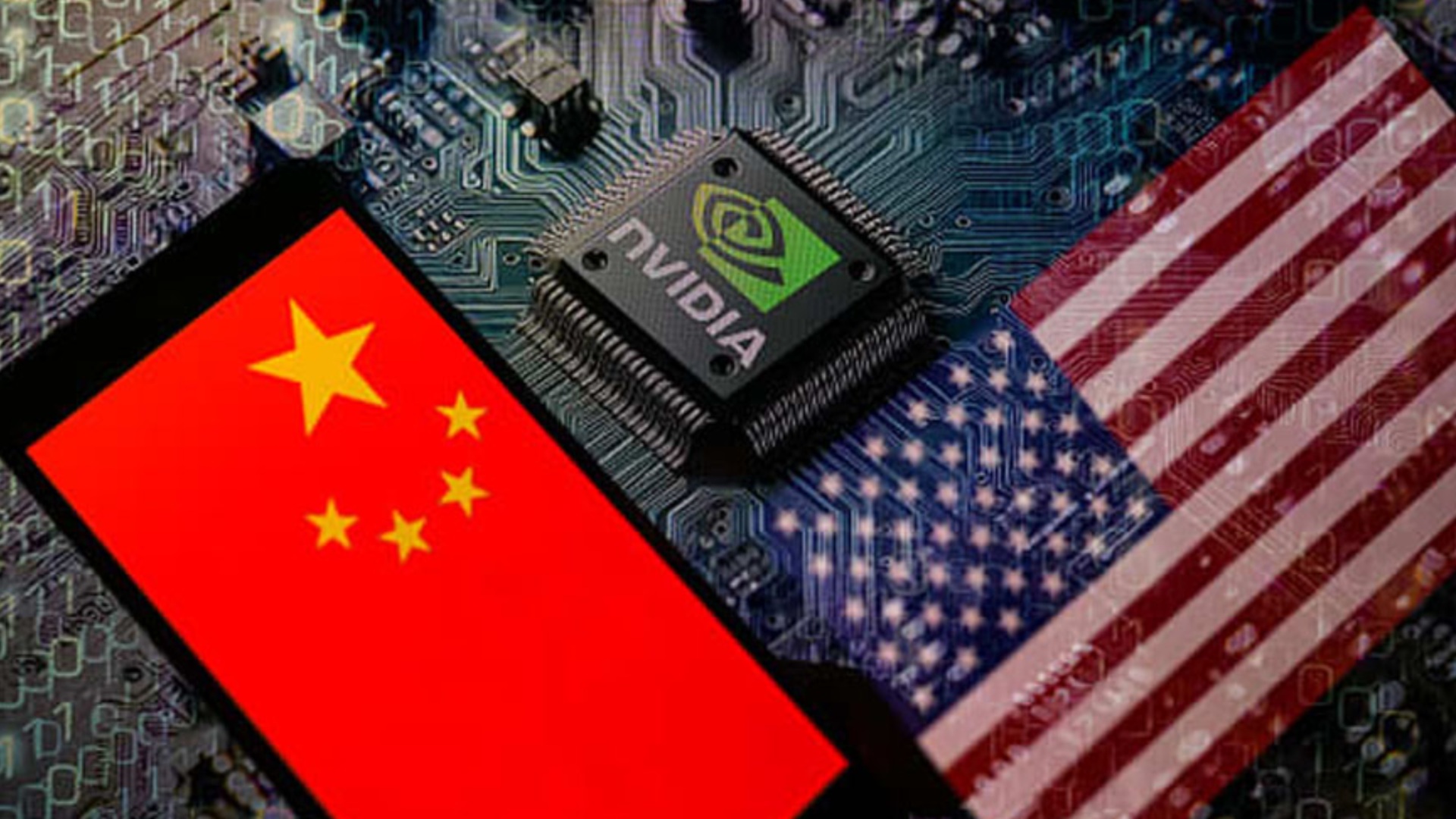
The White House has reportedly informed federal agencies that it will not permit Nvidia to sell its latest scaled-down AI chips to China, The Information reported on Thursday, citing three people familiar with the matter.

The decision adds new friction to the already tense technology standoff between Washington and Beijing, coming at a time when both sides are attempting to stabilize relations following a high-level meeting between U.S. President Donald Trump and Chinese President Xi Jinping in South Korea.

The chip at the center of the latest restriction, known as the B30A, was designed to comply with earlier U.S. export rules limiting the sale of advanced processors to China. Nvidia had reportedly provided samples of the chip to several Chinese companies before the White House intervened. The B30A can be used to train large language models when arranged in powerful data clusters—a capability that Chinese tech firms rely on to fuel the country’s fast-growing AI industry.

An Nvidia spokesperson told Reuters that the company currently has “zero share in China’s highly competitive market for datacenter compute, and do not include it in our guidance.” The White House has not yet issued a formal comment.

Behind the scenes, political pressure in Washington is mounting on President Trump to maintain a hard line against Beijing on semiconductor exports. Several lawmakers from both the Republican and Democratic parties are reportedly backing a bipartisan move in Congress to block the sale of sophisticated U.S. chips—including Nvidia’s most powerful AI processors, such as those based on the Blackwell architecture—to China. Lawmakers argue that such exports could undermine national security by helping China strengthen its AI capabilities for military and surveillance purposes.

However, Nvidia CEO Jensen Huang has said publicly that the company has no plans to export its high-end Blackwell chips to China, noting that the firm is fully complying with U.S. export regulations.

Still, many in Washington and the business community fear that this latest escalation could jeopardize delicate negotiations between Beijing and Washington. The talks, brokered during President Trump’s visit to South Korea, were aimed at reducing tensions over technology transfers, trade tariffs, and market access for both nations’ firms. Analysts say the timing of the U.S. export ban risks derailing progress made during the Trump-Xi discussions.

Meanwhile, Nvidia faces increasing challenges in China beyond U.S. policy. Beijing has recently issued guidance requiring all new data center projects that receive state funding to use only domestically developed chips. Projects less than 30% complete must remove any installed foreign processors or cancel plans to purchase them, while more advanced projects will undergo case-by-case reviews.

This policy effectively excludes Nvidia from a major segment of the Chinese market, compounding the impact of Washington’s restrictions. It also reinforces Beijing’s drive to accelerate self-sufficiency in chipmaking, with domestic firms like Huawei, Biren, and Cambricon stepping up as alternatives.

With bipartisan pressure mounting at home and nationalist policies rising abroad, Nvidia—America’s most valuable company—finds itself trapped between two economic powers whose rivalry over chips is fast becoming the defining factor of the tech industry.

Southeast Asia’s Largest Bank CEO Warns Investors To Brace For Turbulence In Global Markets

0

The chief executive of Southeast Asia’s largest bank, DBS, has warned investors to brace for turbulence in global markets, saying that valuations in U.S. equities—particularly among top artificial intelligence-driven stocks—have become dangerously stretched.

“We’ve seen a lot of volatility in the markets. It could be equities, it could be rates, it could be foreign exchange,” DBS CEO Tan Su Shan told CNBC in an interview. “And I think that volatility will continue.”

Tan, who took over from longtime DBS chief Piyush Gupta in March, said the global financial environment is now in a “fragile equilibrium,” where rising geopolitical tensions, shifting monetary policy expectations, and excessive investor optimism could easily disrupt stability.

She singled out the “Magnificent Seven”—Amazon, Alphabet, Meta, Apple, Microsoft, Nvidia, and Tesla—as examples of extreme concentration risk in the market, noting that their combined valuations have inflated to levels that could unsettle investors if any one of them falters.

“You’ve got trillions of dollars tied up in seven stocks,” Tan said. “So it’s inevitable, with that kind of concentration, that there will be a worry about, ‘You know, when will this bubble burst?’”

The Magnificent Seven, which have led Wall Street’s rally over the past two years, now make up roughly 30% of the S&P 500’s total market capitalization. Analysts have described their dominance as both a sign of technological leadership and a warning flag for potential market distortion, as smaller firms and sectors struggle to attract capital.

Tan’s remarks came days after several top financiers, including Morgan Stanley CEO Ted Pick, addressed similar concerns at the Global Financial Leaders’ Investment Summit in Hong Kong. At the event, industry leaders agreed that the rally in U.S. tech stocks had become “disconnected from fundamentals,” with some warning that a 10% to 20% correction could occur within the next 12 to 24 months.

Pick told the summit that investors should “welcome periodic pullbacks,” calling them “healthy developments rather than signs of crisis.” Tan echoed that sentiment, saying, “Frankly, a correction will be healthy. Markets can’t keep going up forever.”

The anxiety has already begun to surface in trading. Earlier this week, shares of Advanced Micro Devices (AMD) and Palantir Technologies both fell despite posting stronger-than-expected quarterly results, dragging the Nasdaq index lower. Analysts described the sell-off as a sign that investors may finally be reconsidering sky-high valuations, especially in sectors tied to artificial intelligence and cloud computing.

Her warning also aligns with recent alerts from the International Monetary Fund and central bankers like U.S. Federal Reserve Chair Jerome Powell and Bank of England Governor Andrew Bailey, who have each cautioned that markets are underpricing risks and overstating future earnings growth. The IMF, in its October financial stability report, noted that equity valuations in major economies have outpaced underlying profitability, calling the trend a potential precursor to disorderly repricing.

Beyond valuation risks, Tan highlighted the interplay between monetary policy and equity performance. The prolonged period of high interest rates in the U.S. and Europe has started to weigh on liquidity-sensitive assets, while uncertainty about when the Federal Reserve will begin rate cuts has injected further instability into global portfolios.

In her remarks, Tan emphasized the importance of diversification—not only across asset classes but also geographically. She also argued that Asia offers compelling opportunities for investors seeking a balance between growth potential and macroeconomic stability.

“Whether it’s in your portfolio, in your supply chain, or in your demand distribution, just diversify,” she advised.

Singapore, Tan noted, stands out as an increasingly attractive hub for global investors seeking diversification amid rising uncertainty in Western markets. She credited the city-state’s regulatory transparency, strong governance, and open financial system for boosting investor confidence.

“We’ve got rule of law. We’re a transparent, open financial system and stable politically,” Tan said. “We’re a good place to invest… So I don’t think we’re a bad place to think about diversifying your investments.”

Tan’s comments mirror a broader narrative emerging among Asian policymakers who believe the region can serve as a counterbalance to Western volatility. Singapore, in particular, has seen growing inflows of wealth management assets and family offices, driven by investors looking to hedge against market instability in the U.S. and Europe.

As investors weigh how long the current tech rally can last, Tan believes the global financial system is entering a period where resilience will depend less on chasing momentum and more on managing concentration risk. With geopolitical tensions, inflation pressures, and rate uncertainties still lingering, DBS’s new chief is urging investors to look beyond short-term optimism and position for the inevitable adjustment ahead.

A Look At Tokenworks’ First ERC-1155 Strategy: $NAKASTRY

0

Tokenworks is  launching their inaugural ERC-1155-based strategy today, November 7, 2025, in collaboration with Emblem Vault. The strategy is ticker $NAKASTR, centered on the iconic “Nakamoto Card” from the Rare Pepe collection—a cultural cornerstone in crypto history with only 300 total supply and 88 currently vaulted on Ethereum.

What is $NAKASTR?

It’s a tokenized strategy that provides exposure to the Nakamoto Card NFTs via ERC-1155 tokens. This allows for fractional ownership, trading, and gamification of these high-value assets (current floor ~35 ETH or $115K per card).

As an ERC-1155 strategy, it supports multi-token functionality, enabling efficient handling of both fungible and non-fungible elements in a single contract—ideal for illiquid, low-supply collections like this one.

Why ERC-1155?

This standard introduced in 2018 is gas-efficient for batch transactions and multi-asset management, outperforming ERC-20 or ERC-721 for complex NFT strategies. Tokenworks highlighted that future platform updates will support deploying strategies for ERC-721, ERC-1155, and even ERC-20 tokens, potentially reviving “dead bags” in memecoins and NFTs.

Cross-Chain Innovation: This is also the first cross-chain strategy from Tokenworks, bridging assets from Bitcoin Rare Pepes originated on Counterparty to Ethereum. It paves the way for strategies involving Ordinals, Solana, Base, and more—unifying liquidity across ecosystems without fragmentation.

With low liquidity only 88 vaulted cards, $NAKASTR could act as a “standing high bid,” lifting the floor price by buying at premiums (e.g., 20% above listings). Early buzz suggests it might durably boost Rare Pepe values, especially for reluctant sellers.

This launch builds on Tokenworks’ prior success with $PNKSTR and signals a broader push into “onchain financialized ideas.” The full platform rollout in the coming days could flood the market with custom strategies—watch for volatility in low-supply NFTs like Rare Pepes.

The Rare Pepe story begins with Pepe the Frog, a laid-back anthropomorphic frog created by artist Matt Furie in 2005. Pepe first appeared in Furie’s self-published comic series Boy’s Club, where he famously uttered the line “Feels good man” while urinating with his pants down—a moment that would later become a cornerstone of meme culture.

Furie intended Pepe as a symbol of simple, ironic humor, but the character’s minimalist expressiveness capable of conveying sadness, smugness, joy, or irony quickly resonated online. By 2008, Pepe had migrated to platforms like MySpace and 4chan, evolving into a standalone meme.

On 4chan’s /r9k/ board, users began creating variations—photoshops, drawings, and edits—that captured raw emotions under phrases like “Feels Bad Man” or “Feels Good Man.”

Celebrities like Katy Perry and Nicki Minaj amplified its reach in 2014, but this mainstreaming sparked backlash from 4chan purists, who started watermarking “rare” variants with “DO NOT SAVE” to preserve scarcity.

By late 2014, these were traded like digital baseball cards in an ironic “meme economy,” with users even attempting to “flood the market” by dumping collections on Imgur in April 2015.

Blockchain Meets Meme Culture (2016): The pivotal shift came in 2016, when Rare Pepes transitioned from ephemeral forum posts to blockchain-secured assets. Built on Counterparty, a Bitcoin layer-2 protocol launched in 2014, the project tokenized Pepe variants as non-fungible collectibles—predating Ethereum’s CryptoPunks by months and the NFT boom by years.

Counterparty used “burned” BTC (permanently removed from circulation) to mint assets, enabling a peer-to-peer marketplace without centralized control.September 9, 2016: The Genesis Mint. Community member “Mike” uploaded the first card, RAREPEPE (aka the “Nakamoto Card”), in Bitcoin block 428919.

With a supply of just 300, it honors Bitcoin’s pseudonymous creator, Satoshi Nakamoto, and kicked off the Rare Pepe Directory—a submission-based platform where “Meme Scientists” (judges) curated designs.

A Telegram group formed soon after to discuss these “on-chain collectible assets.” Over 2016–2018, the project released 1,774 unique cards across 36 series, each with varying rarity (e.g., 1-of-1s to editions of millions).

Artists worldwide contributed, blending humor, pop culture, and crypto lore—e.g., HOMERPEPE (Homer Simpson fused with Pepe) or KEISERPEPE (featuring Bitcoin advocate Max Keiser). The directory stopped accepting new cards in 2018 due to high Bitcoin fees, but the ecosystem persisted.

This democratized crypto art: No technical barriers meant hundreds of creators onboarded, minting “dank” (high-quality) Pepes that documented blockchain personalities and meme evolution. Early tools like KEKDAQ (a Counterparty NFT marketplace) emerged, foreshadowing platforms like OpenSea.

Pepe’s versatility made him a double-edged sword. In 2015–2016, amid Donald Trump’s campaign, alt-right groups on 4chan and 8chan co-opted Pepe for white nationalist memes (e.g., Pepe in Nazi attire), leading the Anti-Defamation League to label him a hate symbol in 2016.

Furie publicly disavowed this in a 2017 Time op-ed, “killing” Pepe in a comic to reclaim him—only for the character to “resurrect” via fan support.The Rare Pepe community, including the Rare Pepe Foundation, distanced itself, emphasizing apolitical, artistic roots.

Furie’s 2015 #SavePepe campaign with the ADL succeeded in broadening Pepe’s image globally (e.g., as “sad frog” in Hong Kong protests). The 2020 documentary Feels Good Man chronicles this turbulent arc, highlighting Pepe’s resilience as a “totem of the people.”

Today, with floors from $0.11 common editions to six figures for grails like the Nakamoto Card ~$157K recent sale, Rare Pepes symbolize irreverent innovation. Communities like pepe.wtf track sales, while projects like Tokenworks’ $NAKASTR tokenize them for fractional access.


Robinhood Considers a Bitcoin Treasury Strategy, as Kazakhstan Plans $1B National Crypto Reserve Fund

0

Robinhood Markets (NASDAQ: HOOD), the popular commission-free trading platform, is actively evaluating the addition of Bitcoin (BTC) to its corporate treasury as of its Q3 2025 earnings call on November 5, 2025.

This comes amid a massive surge in the company’s crypto-related revenues, highlighting its deepening ties to digital assets. While no final decision has been made, executives emphasized a balanced debate on the pros via alignment with the crypto community and cons like capital allocation and volatility risks.

CEO Vlad Tenev stated the company is “still thinking about it,” noting that holding BTC could align Robinhood with its user base but raises questions about whether it’s the “best use of our capital.”

Incoming CFO Shiv Verma SVP of Finance and Strategy described ongoing internal discussions: “We spend a lot of time thinking about this and have this debate constantly… We like being aligned with the community… but shareholders can already buy BTC on Robinhood. Should we make that decision for them?”

The firm is “keeping it on the table” but prioritizing EPS growth and long-term shareholder value over immediate adoption. Robinhood’s crypto segment is booming, fueled by broader market enthusiasm and platform expansions.

Crypto transaction revenues jumped 339% year-over-year to $268 million in Q3 2025, contributing to total revenues of $1.27 billion up significantly from prior quarters. The company reported strong growth in prediction markets ($100 million in Q3) and international expansion (e.g., UK and EU markets).

HOOD shares fell nearly 11% on November 6, 2025, despite year-to-date gains of over 240%, possibly reflecting broader market volatility rather than the treasury news. This mirrors a 2025 wave of “digital asset treasuries” (DATs), with public companies holding 1.05 million BTC collectively.

Examples include MicroStrategy (641,205 BTC) and Metaplanet (31,000 BTC). However, experts warn of risks like unrealized losses during downturns (e.g., October 2025’s market dip). Beyond treasuries, the company is advancing tokenized stocks, secondary trading on Bitstamp, and DeFi integrations.

CEO Tenev aims for over 50% of revenues from non-U.S. sources in the next decade, positioning Robinhood as a “global financial ecosystem.” Firms like Bernstein forecast a 12% stock rise to ~$160 from $142, citing confidence in Robinhood’s crypto pivot.

On X, the news sparked quick reactions, blending optimism with skepticism: Posts highlighted Verma’s cautious tone, with users debating BTC’s role as a “mainstream treasury choice.” Crypto news aggregators like CryptoDiffer included it in daily roundups alongside events like Google’s Polymarket integration.

Broader sentiment ties it to endorsements from figures like Scottie Pippen, underscoring BTC’s shift from speculation to reserve asset. If Robinhood proceeds, it could normalize corporate BTC holdings further and boost indirect exposure for shareholders via HOOD stock.

Adopting BTC could leverage Robinhood’s crypto momentum, enhancing its tokenized stock program, Bitstamp secondary trading, and DeFi integrations. CEO Vlad Tenev envisions >50% of revenues from non-U.S. sources in a decade, with crypto as a core pillar—potentially accelerating EPS growth.

BTC holdings introduce unrealized losses during downturns, as seen in October 2025’s market dip. Firms like Metaplanet (31,000 BTC) and Trump Media faced sharp asset value drops, tying up capital and conflicting with priorities like prediction markets ($100M in Q3).

Executives question if BTC is the “best use of capital” versus reinvesting in user growth or international expansion. A clear disclosure framework could mitigate governance risks but might divert funds from stable assets.

Kazakhstan Announces Plans for $1 Billion National Crypto Reserve Fund

Kazakhstan is gearing up to establish a national cryptocurrency reserve fund valued between $500 million and $1 billion, with a launch targeted for early 2026. This initiative, first teased by officials in mid-2024, represents a major step in integrating digital assets into the country’s sovereign wealth strategy, aiming to diversify beyond its traditional reliance on oil exports.

The reserve will be seeded primarily with seized or repatriated cryptocurrency assets from recent crackdowns on money laundering schemes, which netted $16.7 million in crypto from 130 platforms, proceeds from state-backed mining operations, and potentially portions of the National Fund’s assets, gold, and foreign exchange reserves.

To mitigate risks like volatility and custody issues, the fund will avoid direct holdings of cryptocurrencies. Instead, it will allocate capital to crypto-related ETFs and shares in digital asset companies, providing indirect exposure to the sector’s growth.

Officials, including National Bank Deputy Chairman Berik Sholpankulov, expect the fund to be operational by year-end 2025 or January 2026. Sholpankulov stated during a parliamentary session: “I think by year end, January next year, we will have it up and running.”

President Kassym-Jomart Tokayev has championed this as part of building a “full-fledged ecosystem of digital assets.” It aligns with broader reforms to position Kazakhstan as a Central Asian fintech hub, leveraging its existing crypto mining infrastructure and recent launches like the Alem Crypto Fund which made its first investment in Binance Coin.

Kazakhstan has been a crypto-friendly jurisdiction since 2022, attracting miners with cheap energy and clear regulations after the 2021 China ban. This reserve fund builds on that momentum, following similar sovereign experiments elsewhere (e.g., U.S. and European use of seized assets for regulated investments).

On X (formerly Twitter), the news has sparked buzz, with users highlighting its potential to boost institutional Bitcoin flows and signal global confidence in crypto as a reserve asset.

This development could accelerate Kazakhstan’s pivot to tech-driven growth, though central bank Governor Timur Suleimenov has cautioned about crypto’s high volatility, emphasizing careful allocation. As of November 7, 2025, the plan remains in discussion but is advancing rapidly.

The Alem Crypto Fund is Kazakhstan’s pioneering state-backed investment vehicle dedicated to long-term holdings in digital assets. Launched in late September 2025, it serves as a strategic reserve to diversify the nation’s financial portfolio beyond traditional commodities like oil and gold, while fostering blockchain innovation.

The fund operates within a regulated framework, emphasizing transparency, security, and compliance to position Kazakhstan as a Central Asian hub for crypto finance. Unlike direct crypto purchases for speculation, Alem focuses on building stable, utility-driven reserves to support economic growth and institutional adoption.

Overseen by Qazaqstan Venture Group and registered under the Astana International Financial Centre (AIFC), with regulatory supervision from the Astana Financial Services Authority (AFSA).

While exact initial capital isn’t publicly disclosed, it’s designed for long-term accumulation, potentially drawing from state revenues, including crypto mining profits and seized assets. Some reports speculate a target size up to $500 million, aligning with broader national reserve plans.

Governance: Operates as a sovereign wealth-style fund, with allocations guided by risk management principles similar to global peers (e.g., Norway’s oil fund or U.S. strategic reserves). Deputy Prime Minister Zhaslan Madiyev described it as “a reliable instrument for major investors,” highlighting its role in advancing digital finance.

Alem Crypto Fund prioritizes diversified, low-volatility exposure to digital assets, avoiding direct holdings of highly speculative tokens. Instead, it targets assets with proven utility, such as those enabling transactions, staking, and ecosystem governance.

The strategy mirrors institutional approaches, using regulated partnerships for custody and execution to mitigate risks like market swings and hacks. Long-term reserves in utility tokens, blockchain infrastructure, and potentially crypto ETFs or equities.

Custody via licensed partners; emphasis on compliant, insured storage (e.g., multisig wallets, cold storage). Balance between major cryptos (e.g., BTC, ETH), stablecoins, and altcoins with real-world applications; future rotations based on performance and regulations.

High-growth potential balanced against volatility; Central Bank Governor Timur Suleimenov noted “no need to rush” due to crypto’s risks. The fund’s first acquisition was BNB, the native token of the BNB Chain, valued for its role in transaction fees, staking rewards, and network governance on Binance’s ecosystem.

The exact amount wasn’t disclosed, but it signals confidence in scalable, utility-focused blockchains over pure store-of-value assets like Bitcoin. Binance Kazakhstan, a licensed AIFC entity, handles custody and execution. This builds on a 2022 memorandum signed by former Binance CEO Changpeng Zhao (CZ) with Kazakhstan’s Ministry of Digital Development.

Binance Kazakhstan GM Nurkhat Kushimov called it “a new chapter for institutional recognition of cryptocurrencies in Kazakhstan.” Kazakhstan’s crypto journey accelerated post-2021 China mining ban, making it a global hashrate leader (second in Bitcoin mining by 2021).

President Kassym-Jomart Tokayev’s push for a “full-fledged ecosystem of digital assets” ties Alem to larger reforms, including a proposed $1B national crypto reserve by early 2026 funded partly by seized assets. This fund isn’t a central bank reserve but a precursor, echoing global trends like El Salvador’s Bitcoin adoption or UAE’s virtual asset frameworks.