DD
MM
YYYY

PAGES

DD
MM
YYYY

spot_img

PAGES

Home Blog Page 2095

The Shift Toward Onchain Exchanges

0

Onchain Crypto Exchanges refer to decentralized platforms that execute trades directly on a blockchain, leveraging smart contracts rather than centralized order books or custodians. This contrasts with traditional centralized exchanges (CEXs) like Coinbase or Binance, which handle transactions offchain and custody user funds.

The panel likely explored how DeFi is evolving to bring exchange functionality onchain, driven by Layer 2 Scaling solutions like Arbitrum, Optimism, and rollups (e.g., zkSync) reduce transaction costs and latency, making onchain trading viable. Coinbase’s Base, a Layer 2 built on Optimism’s OP Stack, exemplifies this shift, and Phil Girard, a Coinbase director, probably highlighted its role.

Interoperability: Protocols like LayerZero, led by Bryan Pellegrino, enable seamless cross-chain communication, allowing assets and data to move between blockchains without intermediaries. This is key for onchain exchanges to aggregate liquidity across ecosystems.

User Experience (UX): Projects like Backpack Exchange (Armani Ferrante’s venture) and Morpho (represented by 0xloth) focus on simplifying DeFi interactions, abstracting away blockchain complexity to rival CEXs in usability.

Pellegrino’s Quote and Abstraction

Bryan Pellegrino, CEO of LayerZero Labs, is a vocal advocate for abstraction in blockchain UX. His statement, “Users shouldn’t have to worry about chains or gas—what they need is abstraction,” reflects LayerZero’s mission and the industry’s direction. Users currently juggle multiple blockchains (Ethereum, BNB Chain, Solana, etc.), each with distinct wallets, tokens, and fees.

LayerZero’s omnichain protocol uses Ultra Light Nodes (ULNs) to verify cross-chain messages onchain, enabling applications to operate across ecosystems without users manually bridging assets. For exchanges, this means unified liquidity pools—trade ETH on Ethereum for SOL on Solana without leaving the platform.

Gas: Transaction fees (gas) deter mainstream adoption, especially on Ethereum’s Layer 1, where costs can spike during congestion. Abstraction here involves gasless transactions—either via meta-transactions (third-party fee sponsorship, as in EIP-7702) or Layer 2s, where fees drop to cents. Pellegrino likely tied this to LayerZero’s support for gas abstraction, letting apps handle fees behind the scenes.

Abstraction: This buzzword means hiding blockchain complexity from users. For onchain exchanges, it’s about delivering a CEX-like experience—fast trades, no seed phrases, no chain selection—while retaining DeFi’s trustlessness. LayerZero’s generic messaging (beyond asset transfers) supports this by enabling dApps to sync state and logic across chains, creating a seamless frontend.

Pellegrino’s view aligns with LayerZero’s tech: a messaging layer that abstracts chain-specific details, letting developers build exchanges where users just click “trade” without wrestling with RPCs or gas limits. At ETHDenver, he might’ve contrasted this with clunky bridges (e.g., Wormhole’s past exploits) or CEX vulnerabilities (FTX’s 2022 collapse), emphasizing trustless abstraction as the future.

Phil Girard (Coinbase): Discussed Base’s role in onboarding users to onchain trading, leveraging Coinbase’s infrastructure. Base’s low fees (sub-1-cent transactions) and OP Stack integration could’ve been pitched as a scalable foundation for exchanges.

Armani Ferrante (Backpack Exchange): Backpack, a Solana-based exchange, emphasizes speed and UX. Ferrante might’ve argued for high-throughput chains as the backbone for onchain trading, with abstraction layered on via wallets or APIs.

0xloth (Morpho): Morpho, a lending protocol transitioning to a full DeFi stack, could’ve tied exchange shifts to liquidity optimization. Abstraction here might mean integrating trading with lending/borrowing seamlessly onchain.

Margaux Nijkerk (CoinDesk): As a seasoned crypto journalist, Nijkerk likely pressed on challenges—centralization risks in abstracted systems, regulatory hurdles, or scaling pains—grounding the discussion in real-world stakes.

As of March 2, 2025, DeFi’s total value locked hovers around $100 billion (per recent trends), with onchain exchanges like Uniswap and Curve growing but still dwarfed by CEX volumes. The6 panel likely positioned abstraction as the tipping point—making DeFi as intuitive as Coinbase while keeping self-custody. Pellegrino’s LayerZero, with its $3 billion valuation (2023) and cross-chain dominance, is central to this vision.

Smart Mining is the most trusted and US-regulated node cloud mining platform, which can earn $6686 a day

0

Smart Cloud Mining Innovatively launches ETH dual-node mining pool, with computing power 1.5 times that of traditional mining

In the turbulent cryptocurrency market, AI cloud mining has gradually become an emerging choice for investors. Compared with traditional mining, cloud mining is favored for its simple operation and considerable returns.

Advantages of cloud mining

Smart Mining was established in 2020 and has attracted 10 million users worldwide, supporting the mining of Bitcoin and multiple cryptocurrencies. Its AI management system optimizes the status of the mining pool in real time, ensures 100% operation rate, and helps users achieve passive income. Users only need to deposit more than $10 in their trust wallet to start making profits.

Easy participation

Joining Smart Cloud Mining only takes a few steps:

  1. Open the ETH authorized cooperation trust wallet (recommended) and visit the mining pool website (3dmining.cc) through the Dapp browser.
  1. Go to the official website of Smart Mining, select ETH chain mining, and prepare 0.000133ETH as the startup fee.
  2. The minimum withdrawal is 1USDT, 0 pledge, 0 risk, no handling fees and management fees. Customer service is available 24/7.

Flexible mining experience

Smart mining uses advanced node mining technology. Users only need to connect their wallet to the system to generate their own computing power. Unlike the high hardware investment and difficult technical operations required for traditional mining, smart cloud mining eliminates the restrictions on pledge fees, allowing users to choose to mine or exit at any time. This flexibility greatly reduces investment risks and enhances user experience.

Security and compliance

The platform does not collect personal information, and all operations are based on smart contracts and blockchain technology to ensure fund security and user privacy. At the same time, it follows compliance requirements such as anti-money laundering (AML) and know your customer (KYC) to provide investors with a transparent and secure experience.

Summary

Smart mining’s node cloud mining provides investors with a stable and secure wealth appreciation channel through a decentralized structure, compliant management, and simple operation. In a market environment with frequent fluctuations, smart cloud mining has become an important choice for many investors to open the door to wealth.


For more information and details,

Welcome to visit the official website: https://3dmining.cc

Telegram channel: https://t.me/smartmining6

With smart cloud mining, you can seize new opportunities for cryptocurrency investment in 2025.

Company name: SMART MINING SERVICES LTD

Official email: SmartMining@3dmining.org

XRP’s Biggest Rival On Track To Secure Huge CEX Listings As It Raises More Than $13.3 Million In Just 10 Weeks!

0

A recent outage in the Xaman Wallet (formerly XUMM) has put a spotlight on the challenges of depending on single wallet services for XRP transactions. Users found themselves unable to move XRP, currently priced around $2.27, highlighting how reliant the network is on external infrastructures.

Meanwhile, an emerging project called Remittix (RTX) is drawing comparisons to a “rival” of XRP, thanks to its cross-border payment model and rapid fundraising success. Below, we explore both the Xaman Wallet incident and how RTX—having already raised over $13.3 million—might overshadow some of XRP’s market share.

The Xaman Wallet Outage and XRP’s Vulnerabilities

XRP at $2.27 as Xaman Wallet goes offline

Xaman Wallet going offline underscores the delicate nature of crypto access points. Many XRP holders rely on third-party platforms to manage assets, and when these services falter, user funds become effectively frozen until the service is restored.

Observers recommend hardware or paper wallets as fallback options, both of which reduce reliance on a single online system. Although the  Xaman outage was brief, it highlighted recurring trust and dependability challenges in the XRP ecosystem.

Ripple’s XRP has seen its ups and downs, including legal battles and huge network expansions. . But as these events unfold, many investors realize that a single wallet outage can undercut the currency’s day-to-day usability, especially if no convenient alternative is on hand.

Remittix (RTX): The New Challenger

While XRP grapples with wallet infrastructure hiccups, Remittix (RTX)—priced around $0.0694 and having sold more than 512 million tokens—has raised over $13.3 million in just 10 weeks. Its PayFi protocol aims to streamline cross-border transactions by seamlessly converting crypto into local fiat, typically within 24 hours.

This direct approach resonates with families sending remittances, freelancers billing international clients, and businesses navigating import/export logistics. Critics often label Remittix as an “XRP 2.0,” believing it refines the cross-border dream that first propelled Ripple into the spotlight.

Locked liquidity and an audited contract strengthen RTX’s position as a secure investment, especially for those weary of new tokens or projects that vanish quickly. Early supporters point to massive potential if Remittix secures partnerships with top-tier exchanges or e-commerce portals, allowing the token to serve an even broader user base.

Observers also note that RTX might soon land major centralized exchange listings—an event historically linked with considerable price boosts, especially if the token’s day-to-day use case is easily understood.

Why RTX Could Dethrone XRP

While XRP has built a strong reputation and network effect, Remittix (RTX) is catching up fast by addressing a fundamental pain point: the complexity and cost of cross-border transfers. By requiring minimal blockchain know-how from end users, Remittix might on-board a more casual or business-focused audience—beyond the realm of hardcore crypto enthusiasts.

This stands in sharp contrast to XRP’s partial reliance on specialized partners and wallet services like Xaman, which can be single points of failure if they encounter downtime.

Moreover, as the recent wallet outage shows, even well-established tokens aren’t immune to infrastructure snags. Meanwhile, Remittix touts an approach that circumvents heavy dependencies—recipients simply see typical bank deposits, while crypto usage happens behind the scenes.

Conclusion: Racing Toward Global Adoption

The Xaman Wallet incident serves as a reminder that established tokens like XRP can suffer setbacks when the surrounding ecosystem stumbles. In contrast, Remittix (RTX)—with over $13.3 million raised, more than 512 million tokens sold, and a price near $0.0694—continues to gain momentum by focusing on the needs of everyday users.

If upcoming major CEX listings proceed as rumored, RTX may solidify its reputation as the leading cross-border token, potentially edging out XRP among newcomers and mainstream investors searching for a simpler, more reliable option.

Ready to Check Out Remittix?
Website: https://remittix.io/
Socials: https://linktr.ee/remittix

SpacePay Presale Races Ahead: The Next 100X Crypto Opportunity?

0

Cryptocurrencies have challenged the idea of how we see investments and money.

However, the industry still faces roadblocks, especially when it comes to demonstrating its relevance in everyday purchases.

SpacePay ($SPY) changes this. With its MVP ready and close to $1 million raised in the ongoing presale, the new crypto payment solution demands attention.

Before we dive deep into the project, let’s find out the key challenges that stand in the way of crypto adoption in mainstream retail.

Why Crypto Payments Haven’t Gone Mainstream

Crypto payments have yet to gain widespread adoption. The reasons are clear.

First, crypto prices can fluctuate wildly in minutes. Merchants are hesitant to access Bitcoin as a payment, as there is always the risk of seeing its value drop before cashing out. That’s not a profitable way to run a business.

Now, let’s say the business decides to accept only stable coins. There are still challenges. For example, most crypto payment solutions require businesses to install new hardware or undergo complicated integration processes.

While large brands like Tesla and Gucci can afford to experiment with crypto payments and the growing new demographic of crypto users, the case is different for small and medium-sized businesses (SMBs). They can’t afford the hassle.

Businesses are also concerned that traditional blockchain transactions can take longer than credit card payments. Crypto payment processors charge hefty fees during active markets, which can significantly eat into business profits.

For crypto to be used as easily as cash or cards, these concerns should be efficiently addressed. SpacePay does just that. The London-based fintech startup is designed to make crypto payments effortless for both businesses and consumers.

How SpacePay Solves These Problems

A prominent feature of SpacePay is real-time fiat conversion. Here, customers can pay in crypto by scanning a QR code. Merchants instantly receive the exact amount in their local currency.

Instant conversion and payment settlement eliminate the risk of volatility. As a result, businesses don’t have to worry about market fluctuations affecting their earnings.

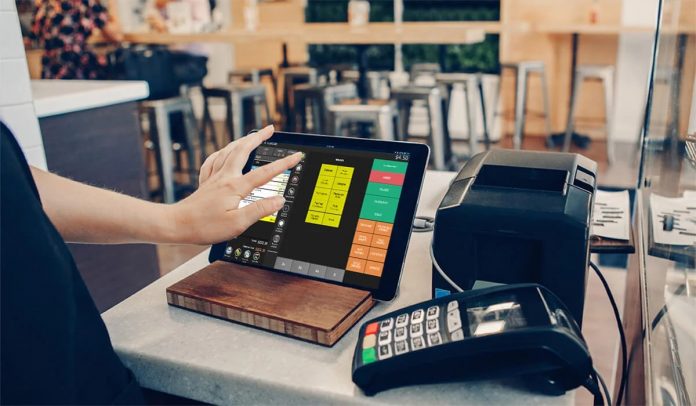
Unlike other payment solutions that require costly hardware, SpacePay is an affordable solution. It is compatible with existing Android-based POS (Point of Sale) systems.

Businesses can start accepting crypto without investing in new technology, making adoption seamless and cost-effective.

While traditional credit card transactions charge merchants anywhere between 1.5% and 3.5% per sale, SpacePay charges a flat 0.5% transaction fee.

Payment providers enjoy zero integration costs.

Crypto payments can be risky, with fraud and hacks being common concerns. SpacePay secures its ecosystem with fast, irreversible transactions with strict protocols. It provides peace of mind to both businesses and users.

A Community-Driven Ecosystem with $SPY

At the heart of SpacePay’s payment network is the $SPY token.

It plays a crucial role in the ecosystem beyond just transactions.

$SPY holders have voting rights, which allows them to influence platform upgrades and decisions. The decentralized governance ensures that the community has a say in SpacePay’s future direction. Few traditional financial platforms can claim this feature.

$SPY holders can also earn loyalty rewards and unlock exclusive platform features, making it more than just a speculative asset.

$SPY Presale Nears $1 Million – What’s Next?

The SpacePay presale is moving fast.

The project is closing in on its first major milestone–$1 million raised.

Currently, $SPY is selling for $0.003126. The price is set to increase at every stage. Investors looking to enter early have limited time before the token lists on major exchanges.

The SpacePay tokenomics is structured for sustainable growth, with 18% allocated to marketing and 10% reserved for development. They fund ongoing upgrades and ecosystem expansion.

As a project that tackles the very issues that have prevented crypto payments from going mainstream, SpacePay is a top altcoin to watch now.

Once the $SPY token hits exchanges, the price is expected to surge exponentially. Now is the chance to get in at a discounted rate before the wider market catches on the trend.

The presale supports purchases using cryptocurrencies like ETH, USDC, USDT, and fiat cards.

To learn more about SpacePay and the ongoing presale, visit the official website. Follow the community on Twitter and Telegram for the latest presale and project updates.

Even ETF Approval Cannot Help Cardano in 2025: Investor Interest Shifts to Rival Altcoin

0

The cryptocurrency market is experiencing contrasting movements as Cardano ETF discussions fail to reverse ADA price’s 37% monthly decline, even with network upgrades like its new XRP bridge. During this stagnation, DTX Exchange emerged as a standout presale opportunity, having raised $15.3 million from 720,000+ investors at its current $0.18 token price.

Market analysts project that DTX could debut at $0.36 when listing, representing a 2x increase from its presale valuation, as traders seek alternatives to underperforming major cryptocurrencies like ADA. This split shows that investors are now picking new projects with clear plans over older cryptocurrencies that keep struggling.

DTX Exchange Reaches $0.18 in Presale – Is It the Next Big Altcoin?

The cryptocurrency market shows contrasting trends as Cardano ETF rumors fail to stop the ADA price slide (down 37% monthly) while the newcomer DTX Exchange gains momentum. The hybrid trading platform’s presale just entered its bonus stage at $0.18 per token, with predictions of a double listing price to reach $0.36.

With more than 720,000 unique wallets participating in the presale, the platform has already raised an impressive $15.3 million before its official launch. Using the promo code “LIST2X”, investors can double their token wallets, positioning themselves for potential 2X returns when trading goes live.

Market analysts point to several factors making DTX Exchange appear as one of the best new cryptos to invest in during the current market cycle. The platform’s Layer-1 blockchain infrastructure provides transparency and security while enabling high-performance execution of up to 200,000 transactions per second.

Cardano ETF Fails to Boost ADA Price, Down 37% in 30 Days

Cardano ETF speculations have failed to generate positive momentum for ADA price, which currently sits at $0.6, representing a steep 37% decline over the past 30 days.

Despite Charles Hoskinson’s recent assertions about potential Cardano ETF developments, ADA’s market capitalization has shrunk to $21 billion, raising questions about investor confidence in the project’s short-term prospects.

Source: ADA Price, Weekly Chart, CoinMarketCap

The layer-1 blockchain continues to expand its technological capabilities through systematic upgrades and partnerships, yet the ADA price remains suppressed. This disconnect between fundamental developments and market performance indicates a potential shift in investor sentiment toward projects with more immediate utility and revenue-generating mechanisms.

Cardano supporters who operated the network for long periods are now redistributing their holdings into the newer platform DTX Exchange because it offers tangible use cases in the current market conditions, while the ongoing anticipation of a Cardano ETF has not yet translated into tangible gains for ADA price.

The hybrid trading platform DTX Exchange enables investors to access traditional markets while trading cryptocurrencies for exposure outside basic crypto-related assets. Digital asset traders view the multi-characteristic approach of the platform as better than Cardano’s state because it has attracted investment away from what some consider the top crypto buy option today.

XRP Down 10% Even After Cardano Bridge Launch

XRP has failed to maintain its upward momentum despite the recent launch of a bridge with Cardano, with its price currently at $2, reflecting a 9% decrease in the past 24 hours. The cross-chain development, which theoretically expands utility for both ecosystems, has been overshadowed by broader market trends affecting the $116.4 billion market cap token.

Technical analysts point to critical support levels that XRP must hold to prevent further declines, as the token has already lost 25% of its value over the last week and 35% in the past month. The Cardano-XRP bridge launch was designed to enable smooth asset transfers between both blockchains, potentially creating new use cases and liquidity options.

Source: ADA Price, Weekly Chart, CoinMarketCap

The implementation of cross-chain interoperability through an Integrated Chain has not led to increased prices for either token as markets experienced a downward pullback. Institutional investors appear to be reassessing their allocation strategies, with some moving toward more diversified platforms that offer exposure to multiple asset classes.

Popular crypto analyst CryptoWhale tweeted: “The XRP-Cardano bridge is technically impressive but hasn’t impacted prices positively. Watch for projects with actual revenue models like DTX Exchange to outperform in 2025 as investors prioritize utility over speculation.” Upcoming trading solutions that connect multiple markets are positioned as the top crypto to invest in.

Conclusion

While Cardano ETF’s hopes and cross-chain innovations fail to boost XRP and ADA prices, investor capital continues flowing toward platforms with an immediate utility like DTX Exchange. The presale’s progression to $0.18 reflects growing confidence in hybrid trading solutions that bridge traditional and crypto markets. If you’re interested in learning more about DTX Exchange, check out the links below.


DTX Website

Buy Presale

Telegram Community