DD
MM
YYYY

PAGES

DD
MM
YYYY

spot_img

PAGES

Home Blog Page 21

Key Implications of Iranian President Pezeshkian’s “Total War” Remarks

0

Iranian President Masoud Pezeshkian made highly escalatory remarks in a lengthy interview published on December 27-28, 2025, on the official website of Supreme Leader Ayatollah Ali Khamenei.

He described Iran as being in a “full-scale war”, “total war”, or “full-fledged war” with the United States, Israel, and Europe. Key quotes from the interview, as reported consistently across multiple outlets:” In my opinion, we are at total war with the United States, Israel and Europe. They want to bring our country to its knees.”

He compared it unfavorably to the 1980-1988 Iran-Iraq War: “This war is worse than the war with Iraq… it is far more complex and difficult,” referring to multifaceted pressures including economic sanctions, cultural influences, political isolation, security threats, and prior military strikes.

Pezeshkian claimed Iran is “besieged from every aspect” and warned that any future attacks would meet a “more decisive response,” asserting Iran’s military is now stronger. These statements come amid heightened regional tensions in late 2025.

A direct 12-day air war between Israel and Iran with U.S. involvement in June 2025, triggered by Israeli strikes on Iranian nuclear and military sites, resulting in ~1,100 Iranian deaths including commanders and scientists and Iranian retaliatory missiles killing 28 in Israel.

Renewed UN sanctions on Iran’s nuclear program reimposed by France, Germany, and the UK in September 2025. Concerns over Iran rebuilding nuclear facilities and ballistic missiles.

The remarks were timed just before Israeli Prime Minister Benjamin Netanyahu’s meeting with U.S. President Donald Trump at Mar-a-Lago on December 29, 2025, where Iran was a key topic; Trump warned against Iran rebuilding its nuclear program.

This is rhetorical escalation, framing ongoing hybrid confrontations (sanctions, proxy conflicts, cyberattacks, and past strikes) as a comprehensive “war.” It is not a formal declaration of conventional war or an announcement of immediate military mobilization against the U.S., Israel, or Europe.

Iran has long used such language to rally domestic support amid economic woes like rial at record lows, protests in Tehran and external pressures. The statement has been widely covered by reputable sources including AP News, with no indications it is fabricated or a hoax.

Regional risks remain high, with potential for miscalculation, but as of December 30, 2025, no new direct hostilities have erupted from this rhetoric. President Masoud Pezeshkian’s declaration frames ongoing hybrid pressures as a comprehensive “total war” worse than the 1980-1988 Iran-Iraq War.

This is rhetorical escalation, not a formal war declaration or mobilization for direct conflict. No new hostilities have erupted immediately, but the statement carries significant short- and long-term risks. Pezeshkian calls for internal cohesion amid economic crisis, inflation >53%, rial at record lows, reduced oil revenue.

It deflects blame for hardships onto external enemies, justifying sacrifices and suppressing dissent. Published on Supreme Leader Khamenei’s site, it aligns the reformist-leaning president with the regime’s core narrative, potentially strengthening IRGC positions while Pezeshkian navigates parliamentary and economic challenges.

If economic woes worsen without relief, rhetoric could fuel protests rather than unity. Warning of a “more decisive response” to future attacks signals stronger retaliation, raising chances of spiral in proxy conflicts like Houthis in Red Sea, Hezbollah in Lebanon, militias in Iraq/Syria.

Iran’s Rebuilding Efforts

Tehran views survival of June 2025 strikes as victory, potentially emboldening missile and nuclear reconstitution. Israel monitors this closely; renewed strikes could trigger broader war.

Bolsters ties with Hamas/Houthis/Hezbollah, complicating Gaza ceasefire (Phase 2 stalled over disarmament) and Lebanon stability. Released just before Netanyahu-Trump Mar-a-Lago meeting, it aims to preempt tougher stances. Trump warned Iran against rebuilding nuclear/missile programs, threatening strikes and supporting potential Israeli action.

Its reinforces Trump’s “maximum pressure” revival; complicates any nuclear diplomacy, talks stalled since June strikes. Trump indicated openness to deals but prioritized Israeli concerns. White House/Israeli Embassy declined comment initially; focus remains on deterrence rather than direct engagement.

Its justifies Iran’s defiance against reimposed UN/E3 sanctions. Risks further isolation if enrichment resumes. Escalation could disrupt oil routes like the Strait of Hormuz, spike prices, or draw in Gulf states. Analysts warn of multi-front crisis in 2026 if diplomacy fails.

Primarily propaganda to consolidate power and signal resilience; unlikely to trigger immediate war. Increases volatility—Tehran’s “survivalist” mindset may encourage riskier behavior, while US-Israel alignment signals readiness for preemptive action.

De-escalation hinges on backchannel talks or economic relief, but prospects dim amid mutual distrust. Regional tensions remain elevated but contained as of December 30, with no reports of new strikes or mobilizations.

Alleged Drone Attack on Putin’s Valdai Residence Might Derail Ongoing Peace Negotiations with Ukraine

0

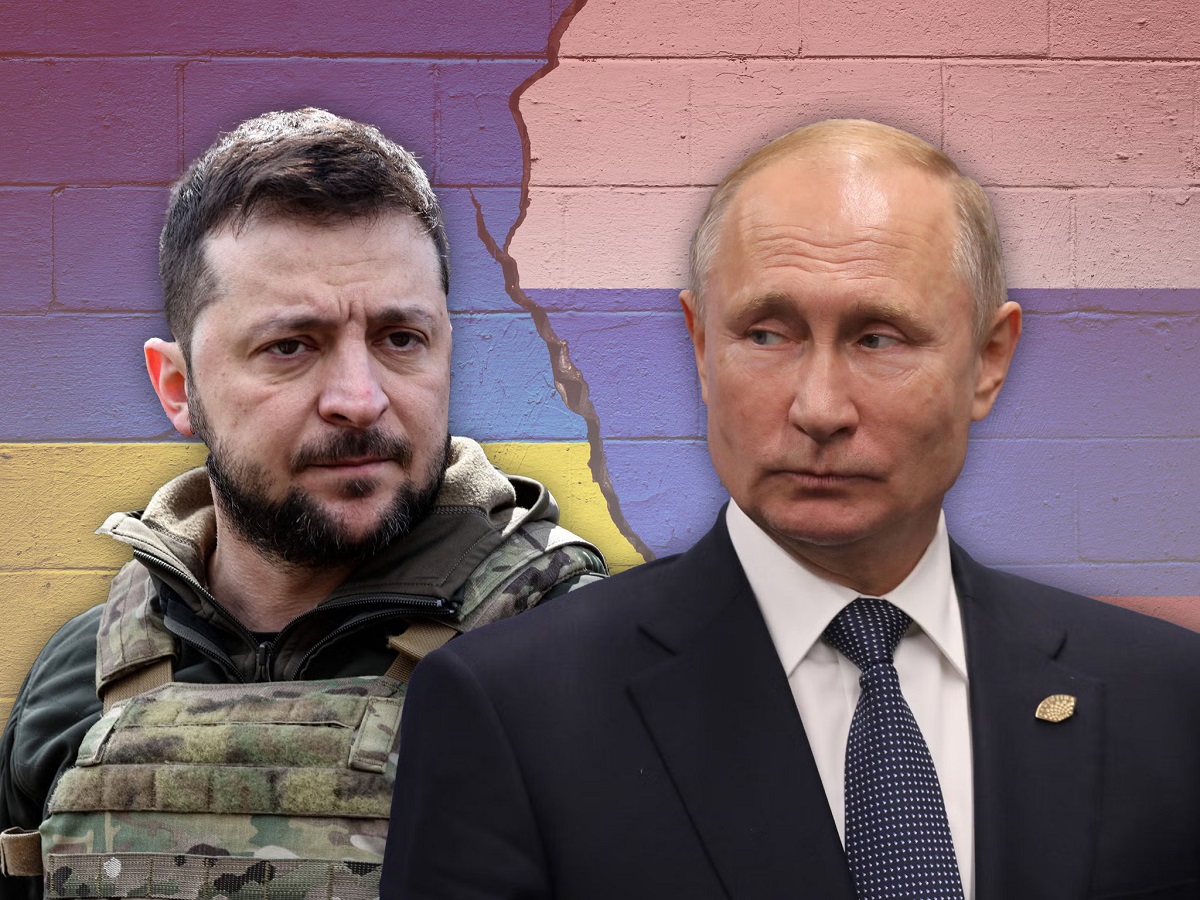
Russian Foreign Minister Sergei Lavrov accused Ukraine of launching a large-scale drone attack involving 91 long-range drones targeting President Vladimir Putin’s state residence in the Novgorod region known as Valdai or Dolgiye Borody.

Russian officials stated that air defenses intercepted and destroyed all drones, with no damage or injuries reported. Lavrov described the alleged incident as “state terrorism” and warned that “such reckless actions will not go unanswered”, indicating Russia would review its position in ongoing peace negotiations and prepare retaliatory strikes.

Kremlin aide Yuri Ushakov reported that Putin personally informed U.S. President Donald Trump of the alleged attack during a phone call, prompting Trump to express anger, calling it “not good” and distinguishing it from general offensives as an attack on Putin’s “house.”

Trump noted he was “very angry” about it but has not independently verified the claim. Ukrainian President Volodymyr Zelenskyy swiftly rejected the accusation as a “complete fabrication” and “typical Russian lies,” aimed at justifying further Russian attacks on Ukrainian cities including potential strikes on Kyiv government buildings and derailing U.S.-brokered peace talks.

Ukraine’s foreign ministry emphasized that no evidence has been provided by Russia, and independent verification is lacking. The claim emerged shortly after Zelenskyy’s meeting with Trump in Florida, where progress toward a peace deal was discussed, though key issues like territory remain unresolved.

Russia has used the allegation to signal a tougher stance in negotiations, while Ukraine and some Western observers view it as a pretext to escalate or stall diplomacy. No photos, videos, or third-party confirmation of the attack have surfaced, and Russia has declined to provide evidence, attributing details to military sources.

This echoes a similar unverified Russian claim of a Ukrainian drone strike on the Kremlin in May 2023, also denied by Kyiv. Tensions remain high amid ongoing peace efforts.

Diplomatic Implications

The unverified Russian claim of a Ukrainian drone attack on Putin’s Valdai residence in Novgorod Oblast has significantly strained ongoing U.S.-brokered peace negotiations.

Just one day after optimistic talks between U.S. President Donald Trump and Ukrainian President Volodymyr Zelenskyy in Florida—where both sides described a draft peace deal as 90-95% complete—Russia announced it would revise and toughen its negotiating position.

Russian Foreign Minister Sergei Lavrov explicitly linked the alleged attack to this shift, stating that “such reckless actions will not go unanswered” and that retaliatory targets had already been selected. This timing suggests the claim serves as a pretext for Russia to: Stall or derail diplomacy, especially on contentious issues like territorial control and security guarantees.

Demand further concessions from Ukraine, reinforcing Russia’s battlefield initiative. Zelenskyy countered by calling it a “complete fabrication” designed to justify escalated strikes on Ukrainian cities and government buildings, potentially including Kyiv.

Independent analyses, from ISW and opposition Russian media note the lack of evidence undermines Russia’s credibility, echoing the disputed 2023 Kremlin drone incident.

Trump, who spoke with Putin twice in two days before and after meeting Zelenskyy, expressed anger, saying the alleged attack was “not good” and distinguishing it from general warfare: “It’s one thing to be offensive… It’s another thing to attack his house.”

He noted it occurred during a “delicate period” but deferred on evidence, saying “we’ll find out” while accepting Putin’s account. This response risks tilting U.S. mediation toward Russia, potentially pressuring Ukraine to make unilateral concessions.

However, Trump maintained optimism about peace, describing talks as productive and aiming for resolution on “thorny issues.” Russia has vowed retaliation, raising fears of intensified strikes on Ukrainian infrastructure or leadership targets.

Lavrov labeled it “state terrorism,” a rhetoric often preceding major operations. Ukraine denies involvement, and no third-party verification exists—local accounts in Valdai report no signs of air defense activity despite claims of 91 drones intercepted.

If fabricated, this could embolden Russian advances while portraying Ukraine as obstructing peace. Conversely, if real unlikely per experts due to heavy defenses around Valdai, it would mark a bold Ukrainian escalation targeting Putin personally.

Dents momentum from Trump-Zelenskyy meeting; Russia rejects proposed ceasefires as prolonging the war. Its omplicates Western support for Ukraine, as Trump emphasizes quick deals potentially at Kyiv’s expense. It highlights Russia’s pattern of using unproven claims to justify aggression, eroding trust in negotiations.

As of now, no retaliation reported, but tensions are elevated amid winter energy attacks on Ukraine. The incident—real or invented—benefits Russia by shifting blame for stalled talks onto Ukraine, while highlighting the fragility of Trump-era diplomacy. Progress remains possible but now faces greater hurdles.

Tokenized Stocks Hit ATH of $1.2B as Race for Fractional Ownership Deepens

0

The total market capitalization of tokenized stocks— on-chain representations of public equities like Tesla, Apple, Amazon, etc has hit a record all-time high of $1.2 billion, driven by strong growth in September and December.

This milestone comes from surges in institutional adoption, new product launches like Backed Finance’s xStocks on Ethereum, and improved liquidity across chains like Ethereum, Solana, and others. The comparison to stablecoins in 2020 is a common one in the industry right now.

At the start of 2020, the total stablecoin market cap was around $5 billion mostly niche tools for crypto traders. By the end of 2020 and into the 2021 bull run, it exploded, peaking above $180 billion at one point before stabilizing.

Today (2025), stablecoins sit at roughly $300–310 billion, forming the backbone of crypto liquidity and DeFi. Tokenized stocks are seen as being in a similar “early infancy” phase: small but rapidly scaling, with benefits like 24/7 trading, fractional ownership, and seamless bridging of traditional finance (TradFi) to blockchain.

Analysts and platforms like Token Terminal explicitly draw this parallel, noting that tokenized equities could follow a similar trajectory to become core infrastructure for global markets—especially with big players like Nasdaq, Ondo Finance, and others pushing for more on-chain equities in 2026.

It’s an exciting development in the broader Real World Assets (RWA) space, where tokenized stocks have outperformed other categories which is up ~2,695% YTD in some metrics. If the stablecoin analogy holds, this $1.2B could be just the beginning.

Tokenized Real Estate Trends

Tokenized real estate—representing fractional ownership of physical properties like residential, commercial, or developments via blockchain tokens—continues to grow steadily within the broader Real World Assets (RWA) category.

While not exploding as rapidly as tokenized stocks which hit a record $1.2 billion market cap this month, it’s establishing itself as a key pillar for institutional and retail investors seeking yield-bearing, tangible assets.

The on-chain tokenized real estate segment is estimated at $10–20 billion in 2025, part of the overall public blockchain RWA market ~$18–34 billion total RWAs, depending on trackers like RWA.xyz and industry reports.

This represents significant growth from ~$3–4 billion in prior years, driven by fractional ownership models and DeFi integrations. Conservative estimates peg the dedicated tokenized real estate market at $3–10 billion today, with aggressive forecasts eyeing $4 trillion by 2035 through institutional adoption.

Year-over-year, RWAs including real estate have surged ~300–400%, with real estate benefiting from automated rental yields and secondary market liquidity. Compared to tokenized stocks’ recent ATH, real estate tokenization is more mature in yield generation but lags in pure speculative volume.

Fractional Ownership Democratization

Investors can buy into properties starting at $50–1,000, earning proportional rental income in stablecoins. This has attracted global retail participation, especially in U.S. residential/multifamily units. Major players like BlackRock, Kin Capital, and platforms in the UAE/Dubai are scaling commercial tokenizations.

EU’s MiCA treats many as utility tokens; U.S. executive actions open alternatives to broader investors; emerging markets signal mainstream integration. Emerging markets are leading tangible asset tokenization for liquidity in illiquid economies.

Platforms now enable 24/7 trading, AMMs, and DeFi composability using tokens as collateral. This addresses past criticisms of low liquidity. Tokenized real estate emphasizes stable rental yields often 8–15% APY vs. volatile price appreciation, making it a “stablecoin-like” haven in RWAs.

Analysts from Bitfinex, and Deloitte predict acceleration, especially in emerging markets and ESG-linked properties. With RWAs tripling in 2025, tokenized real estate could capture more institutional flows as liquidity matures—potentially mirroring stablecoins’ path but with real yield.

It’s still early <<1% of global ~$400T real estate tokenized, but 2025 marked the shift from pilots to scalable, compliant ecosystems. Exciting for diversified, income-focused portfolios.

U.S. Treasury Yields Hold Steady Ahead of Fed Minutes as Investors Seek Clarity on 2026 Rate Path

0

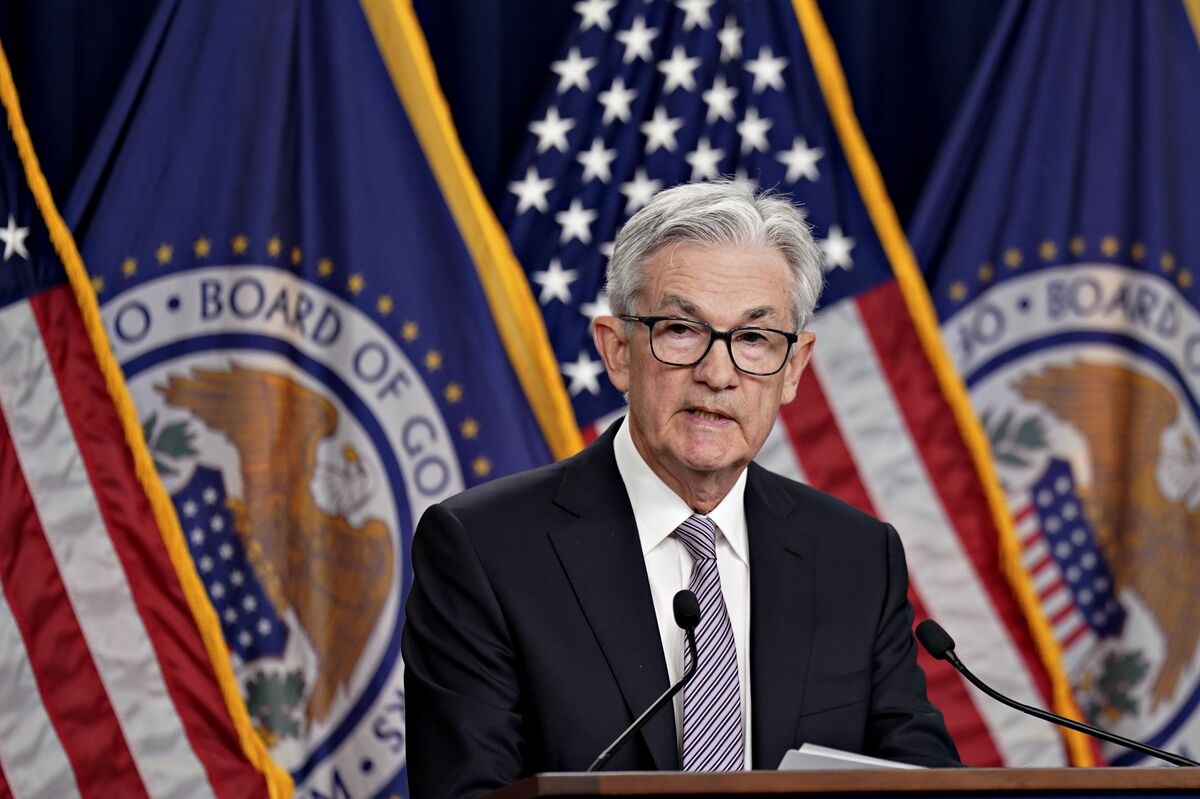
U.S. Treasury yields were largely unchanged on Tuesday as investors adopted a cautious stance ahead of the release of minutes from the Federal Reserve’s December policy meeting, one of the final major macro events before markets close out the year.

The benchmark 10-year Treasury yield was flat at around 4.12% in early trading, while the 2-year yield, which is more sensitive to expectations around monetary policy, edged down by less than one basis point to 3.459%. With many global markets operating with reduced staff and lower volumes during the year-end period, price movements remained muted, reflecting limited conviction ahead of the Fed release.

Markets are focused on the minutes from the Federal Open Market Committee’s Dec. 9–10 meeting, scheduled for publication at 2 p.m. ET. At that meeting, policymakers approved a 25-basis-point interest rate cut, bringing the federal funds target range to 3.50%–3.75% and marking the third rate reduction of the year. The decision signaled a further shift away from the aggressive tightening cycle that defined much of the Fed’s response to post-pandemic inflation.

Still, the cut was far from unanimous, and the minutes are expected to shed light on the depth of divisions within the committee. Some policymakers pushed for additional easing, citing concerns that restrictive policy could lead to further softening in the labor market. Others argued that financial conditions were already accommodative enough and warned that cutting too quickly could undermine progress on inflation, which, while easing, has yet to return decisively to the Fed’s 2% target.

Investors will be parsing the minutes for any indication of how policymakers are weighing those risks heading into 2026. Of particular interest will be language around inflation persistence, wage growth, and the resilience of consumer demand, as well as how confident officials are that inflation expectations remain anchored.

“Our baseline assumption is that the Committee will remain incentivized to retain as much flexibility as possible into the January 29 FOMC decision – a stance that has been consistent throughout 2025 and we expect will be rolled into the new year,” Ian Lyngen, head of U.S. rates strategy at BMO Capital Markets, said.

That emphasis on flexibility has become a defining feature of the Fed’s recent communication. Rather than committing to a preset path of cuts, officials have repeatedly stressed data dependence, a message that has kept short-term yields elevated relative to longer-dated bonds and contributed to a flatter yield curve.

Beyond the Fed minutes, broader macro conditions continue to shape Treasury market dynamics. Recent data have shown inflation cooling from earlier highs but remaining uneven across sectors, while the labor market has slowed without showing signs of abrupt deterioration. This combination has reinforced expectations that the central bank will move cautiously, balancing the need to support growth against the risk of rekindling price pressures.

Currently, the lack of movement in yields reflects both the thin liquidity typical of the final days of the year and the market’s reluctance to take strong positions ahead of clearer guidance from policymakers. Once full trading resumes in early January, the tone of the December minutes is likely to play a key role in shaping expectations for the Fed’s next steps and setting the direction for Treasury yields at the start of 2026.

Femi Otedola Exits Geregu Power in $750 Million Deal, Narrowing Focus to Banking Empire

0

Billionaire investor Femi Otedola has divested his controlling stake in Geregu Power Plc, Nigeria’s leading independent power producer, in a landmark transaction valued at approximately $750 million.

The deal, executed through the sale of his 95% interest in Amperion Power Distribution Company Limited—Geregu’s majority shareholder—to MA’AM Energy Ltd, an Abuja-based integrated energy firm, marks one of the largest private power sector divestments in Nigerian history. According to a regulatory filing on the Nigerian Exchange website dated December 29, 2025, MA’AM Energy acquired the 95% equity in Amperion, effectively transferring indirect control of Geregu’s 77% stake from Otedola’s Calvados Global Services Limited to the new entity.

Geregu clarified that the transaction “does not involve the direct sale or transfer of shares of Geregu Power Plc,” preserving the company’s public shareholding structure on the Nigerian Exchange unchanged. However, ultimate beneficial ownership of the controlling block has shifted. Sources familiar with the matter confirmed the deal closed on December 29, financed by a consortium of Nigerian banks led by Zenith Bank, with Blackbirch Capital serving as financial adviser.

MA’AM Energy, engaged in electricity generation, supply, trading, and marketing, gains operational control of Geregu, positioning it to expand within Nigeria’s evolving power market. One source linked MA’AM Energy to Senator Abdulaziz Yari, a former Zamfara governor, though this has not been officially confirmed. Geregu Power, currently valued at N2.85 trillion and trading at N1,140 per share, remains one of the Nigerian Exchange’s most capitalized and profitable firms, contributing roughly 10% of the national grid supply with a nameplate capacity of 435 MW.

Under Otedola’s stewardship since the 2013 privatization, the plant expanded from 40 MW, achieved consistent profitability, and delivered average annual dividends of N20 billion. The company, listed on the Nigerian Exchange in October 2022, has been a cornerstone of Nigeria’s power sector, generating over N50 billion in revenue in 2024 and maintaining strong margins amid chronic electricity shortages. Otedola’s energy journey spans over two decades: founding Zenon Petroleum and Gas in 1999, acquiring and rebranding African Petroleum as Forte Oil, and carving out Geregu post-2019 exit from downstream oil.

The divestment unlocks substantial liquidity, signaling a strategic pivot toward financial services where Otedola chairs First HoldCo, parent of First Bank of Nigeria, holding a 17.1% stake—the largest individual shareholding. Otedola regained his position as First Bank’s majority shareholder earlier this year through strategic acquisitions, further consolidating his influence. Since entering First Bank in 2022, Otedola has driven aggressive reforms: recapitalization (raising over N300 billion), restructuring non-performing loans, and debt recovery initiatives amid Nigeria’s banking consolidation wave.

The $750 million proceeds position him to deepen influence in a sector bracing for higher capital requirements under CBN guidelines, potentially fueling further acquisitions or expansions in First HoldCo’s portfolio. The transaction arrives amid pivotal developments in Nigeria’s electricity market. The Federal Government recently launched a N4 trillion power-sector liquidity fund, with an initial N590 billion disbursement to settle legacy debts owed to generation companies, including Geregu. This intervention aims to stabilize cash flows and encourage private investment in a sector plagued by liquidity gaps, with debts to GenCos exceeding N1.5 trillion as of mid-2025.

Otedola’s exit reflects a maturing investment cycle for early post-privatization players, with rising valuations and improving liquidity prompting capital recycling. Similar transactions are underway: the sale of Eko Electricity Distribution Company to North South Power is nearing completion, with approximately N150 billion already received. Industry observers see increased investor activity, with legacy operators seeking fresh capital for a more market-driven environment featuring limited government support and tariff reforms under the Multi-Year Tariff Order framework.

However, Industry stakeholders have mixed views. While some praise the deal for injecting fresh capital into power generation, others question MA’AM Energy’s experience in managing large-scale assets, given its focus on smaller-scale energy trading. The acquisition could accelerate Geregu’s expansion, including potential upgrades to its gas-fired plant or diversification into renewables, aligning with Nigeria’s energy transition goals.

Market reaction was muted in thin holiday trading, with Geregu shares unchanged at N1,140. Analysts view the deal positively for sector maturation, though questions linger on MA’AM’s execution capabilities in a capital-intensive industry plagued by gas supply constraints, transmission bottlenecks, and regulatory uncertainties. Geregu’s strong fundamentals—consistent output of 300-400 MW and EBITDA margins above 50%—position it well under new ownership.

With Nigeria’s power demand projected to double by 2030, such transitions could catalyze investment, but energy experts believe success hinges on addressing systemic issues like the N2 trillion sector debt and 60% energy poverty rate.