DD
MM
YYYY

PAGES

DD
MM
YYYY

spot_img

PAGES

Home Blog Page 210

Tech Leaders Warn of Growing AI Bubble as Valuations Stretch Beyond Fundamentals

0

Concerns about a swelling bubble in the artificial intelligence sector are intensifying among top technology executives, deepening anxiety within an industry whose valuations have surged at a pace many experts now say is unsustainable.

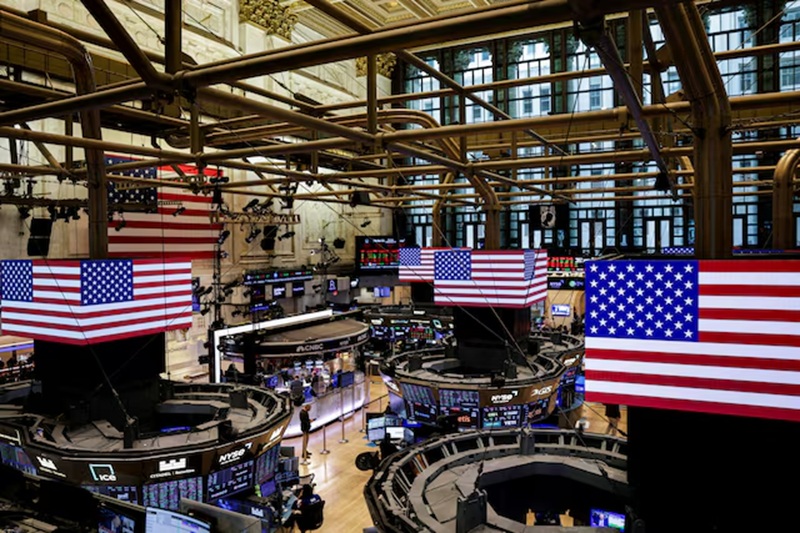
The warnings didn’t come from the usual corners of Wall Street this time. They came from the stage lights and crowded walkways of Lisbon’s Web Summit, where some of the most visible builders of artificial intelligence quietly admitted what many in the industry whisper behind closed doors. According to a CNBC report, they all agreed that something in this booming sector feels overheated.

Their warnings come as markets begin to confront the scale of capital pouring into the AI boom. Cash is chasing everything from semiconductor giants to small experimental startups, muddying the outlook for long-term revenue and raising serious questions about the reliability of current valuations.

Until recently, most alarms were being sounded in financial circles. Goldman Sachs’ David Solomon and Morgan Stanley’s Ted Pick have both flagged the possibility of a market correction as valuations across major tech firms touched historic highs.

The sharpest intervention came from Michael Burry, the famed “Big Short” investor, who accused major AI infrastructure and cloud operators—often called hyperscalers—of understating chip depreciation costs. He argued that profits at large players such as Oracle and Meta may be significantly overstated. Burry disclosed put options against Nvidia and Palantir, signaling his position that these companies are vulnerable if current assumptions collapse.

Admitting the concerns, this week, top executives who build and deploy AI, during conversations with CNBC at the Web Summit technology conference in Lisbon, acknowledged that the apprehension is no longer confined to Wall Street.

Jarek Kutylowski, chief executive of German AI firm DeepL, said valuations are running ahead of reality.

“I think the evaluations are pretty exaggerated here and there, and I think there is signs of a bubble on the horizon,” he told CNBC on Tuesday.

Picsart CEO Hovhannes Avoyan agreed. He said many young AI companies are being funded at extraordinary levels even though they have no meaningful revenue. Some are being valued on what he described as “noise and vibe revenue,” a phrase derived from “vibe coding,” which refers to using AI to create software without deep technical expertise.

The tension between optimism and caution runs straight through the industry. Executives acknowledge that AI demand is rising, and they remain confident that the technology will shape the future of work and economic productivity. But they also say current pricing carries substantial risk.

Lyft CEO David Risher put it bluntly. “Let’s be clear, we are absolutely in a financial bubble. There is no question, right? Because this is incredible, transformational technology. No one wants to be left behind.”

Risher said the transformative nature of the technology creates a gulf between long-term industrial value and the short-term financial enthusiasm that is driving valuations upward.

“The data centers and all the model creation, all of that is going to have a long, long life,” he said, arguing that real-world utility is not in doubt. “On the other hand, you know, the financial side, it’s a little risky right now.”

Kutylowski said demand for AI inside companies remains strong, with businesses increasingly aware of how automation can improve efficiency. He said companies understand AI can “do magical things,” but full adoption still lags the hype. Many firms, he noted, are “struggling in adopting” the technology. His view is that AI integration will advance, although the pace will not match some of the more exuberant predictions about 2026. DeepL’s main business is an AI translation tool, though it has now developed a broader “agent” to perform tasks for employees.

Cohere’s chief financial officer, Francois Chadwick, also said demand is real and rising, particularly in the enterprise sector, where companies are racing to understand how to incorporate AI into daily operations. His comments align with the sense that underlying interest remains robust even as valuations stretch.

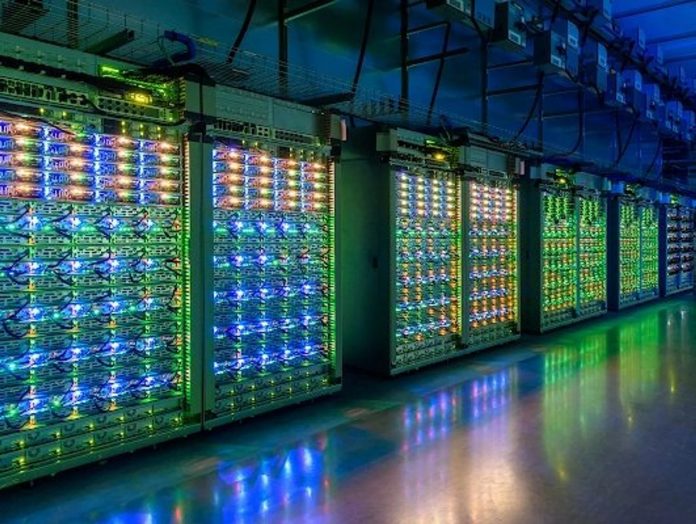
Underpinning the debate is the scale of investment. A report published this week by venture capital firm Accel projected that new AI data center capacity could reach 117 gigawatts by 2030. The report estimated that this buildout could require about four trillion dollars in capital spending over the next five years. Accel calculated that about three point one trillion dollars in revenue will be needed to cover that capital outlay.

Even now, capital commitments remain aggressive. Companies such as Nvidia and OpenAI have announced billion-dollar infrastructure deals worldwide as they seek enough data center space to keep their models updated and commercially viable.

Accel partner Philippe Botteri said future revenue will be powered by three forces: larger and more powerful AI models that require substantial training capacity, the use of new AI services, and what he called the “agentic revolution in the enterprise,” a term often used to describe AI systems capable of carrying out tasks automatically.

The enormous spending has also produced a countercurrent of skepticism. Novo Capital managing partner Ben Harburg said the headline investment figures shouted by large tech companies may be inflated. He said there is growing awareness that expectations around energy use, chips, and data center needs may have been overstated.

“We hear these crazy headline numbers about how much energy is going to be needed, how many chips are going to be needed,” he told CNBC on Tuesday. He warned that enthusiasm around infrastructure is itself becoming a bubble.

Harburg said even Sam Altman “would privately admit” that the industry needs fewer chips, less capital, and less energy than earlier projections suggested.

The tension between excitement and caution is now embedded in the sector. On one side is the conviction that AI will reshape entire industries. On the other hand, there is the mounting concern that financial expectations have sprinted ahead of what the technology can achieve in the near term.

The sector’s leaders, who are often the ones urging acceleration, are now among the voices urging restraint.

Apple Hit With $634m Verdict in Long-Running Patent Battle With Masimo

0

Apple has been ordered to pay $634 million to Masimo after a federal jury in California found that the Apple Watch’s blood-oxygen-related features infringed one of Masimo’s patents, marking the most significant victory yet for the medical-technology company in its sprawling legal war with the iPhone maker.

The jury concluded on Friday that Apple violated Masimo’s patent rights through the Apple Watch’s workout mode and heart-rate notification features. Masimo confirmed the verdict in a statement, calling the decision “a significant win in our ongoing efforts to protect our innovations and intellectual property.”

Apple said it disagrees with the jury’s findings and will appeal. “Over the past six years (Masimo has) sued Apple in multiple courts and asserted over 25 patents, the majority of which have been found to be invalid,” an Apple spokesperson said. “The single patent in this case expired in 2022, and is specific to historic patient monitoring technology from decades ago.”

The ruling caps a major chapter in a contentious, years-long legal feud between the two California-based companies, one that has stretched across federal courts, the U.S. International Trade Commission (ITC), and now U.S. Customs and Border Protection.

A Multi-Front Fight Over Pulse-Oximetry Technology

Masimo, headquartered in Irvine, has accused Apple of hiring away its employees and using its proprietary pulse-oximetry technology—traditionally used in medical devices—for the Apple Watch. That claim has spawned multiple lawsuits and regulatory battles since 2018, turning the conflict into one of Apple’s most persistent patent fights.

The most dramatic escalation came in 2023 when the ITC blocked imports of Apple’s Series 9 and Ultra 2 watches after determining that Apple’s blood-oxygen technology infringed Masimo’s patents. Apple responded by stripping the blood-oxygen feature from certain watches in the U.S. market to avoid running afoul of the ban. The company later reintroduced an updated oxygen-sensing technology in August after receiving approval from U.S. Customs and Border Protection.

Even with the workaround, the regulatory tug-of-war remains in motion. The ITC said on Friday that it will hold a new proceeding to determine whether Apple’s updated watch models should still fall under the import ban. That decision could again disrupt Apple’s sales depending on the outcome.

Masimo has an ongoing lawsuit against Customs over the agency’s clearance of Apple’s revised watches. Apple, meanwhile, is challenging the original ITC import ban in the federal appeals court.

A Dispute With No Clean Ending in Sight

Friday’s $634 million verdict represents one of the largest single judgments Apple has faced in a patent case in recent years, though the company is already signaling a lengthy appeal process. Because the patent in question expired in 2022, the dispute centers on earlier Apple Watch models and historic technology, not the company’s newest devices.

The two sides have split earlier rounds of litigation. A California judge declared a mistrial in 2023 in Masimo’s trade-secret case against Apple after jurors could not reach a unanimous verdict. Apple scored a symbolic win in Delaware last year when a jury ordered Masimo to pay just $250 over allegations that Masimo’s smartwatches infringed two Apple design patents.

Still, the broader battle over pulse-oximetry technology remains unsettled. The stakes go beyond the two companies, because the Apple Watch is one of the world’s most widely used health-monitoring devices. Any ruling that affects its features or availability tends to ripple across the wearables industry, health-tech suppliers, and regulators.

Friday’s verdict adds to that uncertainty. Masimo, emboldened by its win, is continuing to pursue claims across multiple venues. Apple is preparing for another round at the appeals court. And the ITC could once again determine whether Apple’s flagship watches stay on U.S. shelves.

For now, the only clarity is that the fight is far from over.

How Hodlers Are Destroying Bitcoin, Making It What It Was Not Invented for

0

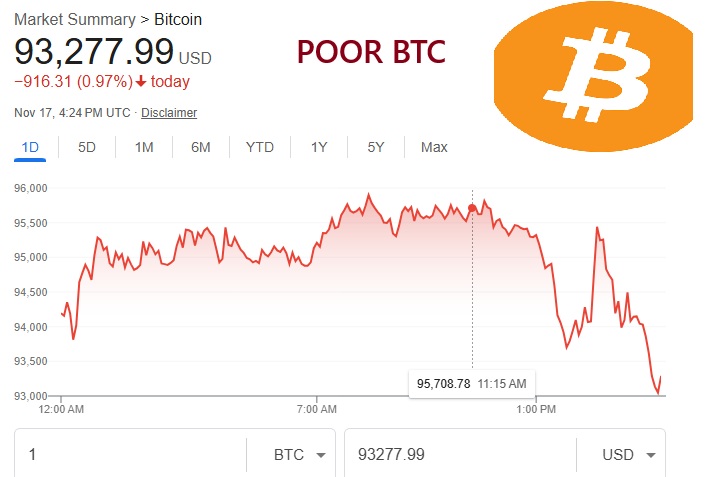
Who will rescue Bitcoin as it continues its gravitational drift toward the bears of the market? This is one of those moments when you wish Bitcoin had a date on the calendar to present revenue, profits, margins, an earnings call to defend its value. But since Bitcoin cannot show a balance sheet or an income statement, the only lifeline is hope: hope that new faithfuls will buy, creating another inflection point.

Good People, the invention of money transformed humanity. The history is rich, from barter to cowries, from precious metals to minted coins. Across kingdoms and civilizations, humans have always sought efficient ways to exchange value. Then came a breakthrough in 7th-century China when the Tang dynasty invented paper money. The Song dynasty popularized it in the 11th century, and the Mongol Empire and Yuan dynasty scaled it across territories. The pursuit of frictionless exchange has been a timeless human project. Hello, electronic fund transfer of the internet era!

But Bitcoin introduces a paradox. For hodlers, it is not money, it is an asset class. Yet it is spoken of as a currency. And because it behaves more like an asset than a medium of exchange, it suffers: it must appreciate simply because people believe it should appreciate.

Imagine if Bitcoin had an earnings call tomorrow, standing before the market to defend its valuation. That would change the game. As money, used to buy, exchange, transfer value, Bitcoin is a remarkable innovation. As an asset class expected to produce returns without a business engine behind it, the logic becomes fragile.

Use Bitcoin as money and it delivers. Ask it to behave like a company, and it collapses under expectations it was never designed to meet. I like stablecoins because they strip away the hodling spirit, removing the speculative pressure and leaving a powerful utility: the ability to cut transaction costs dramatically. That is transformative.

Let us scale that utility across Africa. Let us move away from the mindset of buying coins simply because we expect them to rise. Instead, let us deploy digital tools to improve operations, eliminate cross-border frictions, and unlock abundance across our economies.

Czech National Bank Purchases of First Digital Assets

0

The Czech National Bank (CNB)—the central bank of the Czech Republic—announced its first-ever purchase of digital assets, totaling approximately $1 million. This marks a historic step as the first central bank to publicly disclose acquiring Bitcoin (BTC).

The Czech National Bank’s (CNB) $1 million acquisition of Bitcoin and other digital assets is framed as a limited experimental pilot rather than a strategic investment. However, its significance extends far beyond the modest sum, representing a cautious yet pivotal entry by a Western central bank into blockchain-based assets.

The acquisition was approved by the CNB’s Bank Board on October 30, 2025, and executed through a regulated platform outside the bank’s international reserves. The purchase is not aimed at financial returns but to test operational processes for blockchain-based assets, including: Purchasing and custody.

Anti-money laundering (AML) compliance. Crisis response and tokenization workflows. The portfolio will be evaluated over 2–3 years, with the CNB planning to share insights publicly. It represents just 0.0006% of the CNB’s total assets, underscoring its limited, exploratory nature.

Governor Aleš Michl proposed the idea in January 2025 to prepare for a future where digital assets integrate with traditional finance, such as enabling seamless purchases of tokenized Czech bonds alongside everyday transactions.

The CNB noted that while it could invest in Bitcoin via exchange-traded funds (ETFs) under current laws, it opted for direct acquisition to gain hands-on experience. No immediate plans exist to add Bitcoin to official reserves due to its perceived immaturity.

This move positions the CNB as a pioneer among European central banks, leveraging the Czech Republic’s non-adoption of the euro for greater regulatory flexibility within the EU. It aligns with growing institutional interest in crypto, though the CNB emphasized compliance with Czech and EU regulations.

The announcement has sparked discussions on central bank digital asset adoption, with some viewing it as a signal for tokenized securities in public finance. As the first central bank to publicly disclose a direct Bitcoin purchase outside of seized assets or indirect ETFs, the CNB’s move normalizes crypto for sovereign institutions.

This could accelerate adoption, with analysts predicting it as a “turning point” for global Bitcoin integration into national strategies. Bitcoin’s price, already hovering above $100,000, saw a modest uptick post-announcement, reflecting heightened investor confidence in institutional inflows.

Governor Aleš Michl’s earlier proposal for up to 5% of reserves ~$7.3 billion in Bitcoin highlights potential for larger allocations. If the pilot succeeds, it could inspire similar tests elsewhere, echoing El Salvador’s full adoption but in a more measured EU context.

The portfolio—comprising Bitcoin for volatility/decentralization, a USD-pegged stablecoin and a tokenized deposit—focuses on practical workflows like custody, key management, AML compliance, and crisis simulations. Over 2–3 years, the CNB plans to share findings publicly, potentially establishing best practices for tokenizing assets like Czech bonds.

This could streamline future integrations, such as seamless koruna-based purchases of tokenized securities alongside everyday payments. By exploring blockchain’s role in payments, the CNB is preparing for a tokenized economy. Michl envisions “one-tap” transactions for everything from coffee to bonds, reducing barriers for retail investors and enhancing efficiency in a post-euro Czech system.

The Czech Republic’s non-euro status grants regulatory flexibility, allowing this pilot despite ECB President Christine Lagarde’s dismissal of Bitcoin as having “zero” value and warnings against reserve inclusion. Reactions on X describe it as “heroic,” potentially pressuring the ECB to revisit crypto policies and fostering debate on EU-wide standards.

Google Unveils $40bn Texas Data-Center Push as AI Infrastructure Race Heats Up

0

Alphabet’s Google on Friday announced a sweeping $40 billion investment to build three new data centers in Texas through 2027, marking one of the company’s largest-ever infrastructure commitments and intensifying the high-stakes battle among U.S. technology giants to secure the computing power needed for advanced artificial intelligence.

The investment underscores how fiercely competitive the AI arms race has become. Companies including OpenAI, Microsoft, Meta Platforms, and Amazon are pouring billions into AI-focused data centers across the country, driven by unprecedented demand for training and deploying frontier AI models.

Google’s latest move places Texas at the heart of this new infrastructure surge. According to the company, one of the new facilities will be located in Armstrong County in the Texas Panhandle, while the other two will rise in Haskell County, a stretch of West Texas near Abilene. The tech company will also pump fresh capital into its existing Midlothian campus and the Dallas cloud region, both of which anchor its global network of 42 cloud regions.

“This investment will create thousands of jobs, provide skills training to college students and electrical apprentices, and accelerate energy affordability initiatives throughout Texas,” Alphabet CEO Sundar Pichai said in a statement.

Texas Governor Greg Abbott welcomed the announcement, saying, “Google’s $40 billion investment makes Texas Google’s largest investment in any state in the country and supports energy efficiency and workforce development in our state.”

The company’s Texas plan lands during a period of rapid industrial expansion across the cloud and AI sectors. Big tech firms have announced massive new spending in 2024 and 2025, particularly within the U.S., as President Donald Trump pushes for major domestic investment to maintain the country’s advantage in the global AI contest. Google’s move aligns closely with that policy direction.

Earlier this month, Anthropic announced its own $50 billion plan to build data centers across the United States—including in Texas and New York—highlighting how capital expenditure is accelerating beyond long-established giants and into the broader AI startup ecosystem.

Google’s investment in Texas also complements its growing commitments in Europe. Just days earlier, the company said it would invest €5.5 billion ($6.41 billion) in Germany over the coming years, dedicated to expanding infrastructure and data-center capacity in Europe’s largest economy.

The latest Texas investment follows Google’s recent upgrade of its AI capabilities and expansion of cloud services, both of which depend heavily on computing infrastructure. As more enterprises migrate toward AI-driven processes—and as model sizes balloon—hyperscale data centers have become essential to meeting demand.

Still, analysts are warning that the current AI spending boom bears echoes of past tech cycles where capital outpaced returns. Some investors have cautioned that valuations and expenditure growth may prove difficult to sustain if AI adoption does not rise at the same explosive pace as infrastructure deployment.

Even so, with rivals racing to secure land, power, and long-term access to advanced chips, Google’s Texas expansion signals that the company is unwilling to lose ground in one of the most consequential technology competitions in modern history. The data centers—spanning workforce development, energy infrastructure, and regional economic gains—are both a strategic and symbolic marker of where the AI race is headed next.

Google says the investment will expand its cloud footprint, add significant capacity for AI workloads, and prepare the company for the next phase of rapid model development and deployment. The project is set to roll out through 2027.