DD
MM
YYYY

PAGES

DD
MM
YYYY

spot_img

PAGES

Home Blog Page 2131

Perform Coin and Bitcoin Mining: JA Mining Helps You Earn $48,000 Fast with Efficient Profits.

0

In 2025, JAMining has set a new benchmark in the cloud mining industry with its innovative AI mining technology and environmentally friendly and efficient computing architecture. With globally deployed data centers and intelligent resource optimization systems, JAMining has not only greatly improved mining efficiency, but also provided users with higher income. Regardless of whether you are a local veteran or not, we provide guarantees and financial grade security protection. Whether you are a miner or a beginner in the crypto field, JAMining’s one-stop cloud Mining solutions can meet your needs, allowing you to easily obtain popular cryptocurrencies such as BTC and DOGE without investing in expensive equipment or complex technical work, and enjoy a convenient yet professional mining experience.

How to Start Cloud Mining for Free with JA Mining

Earn Profits with JA Mining Cloud Mining

1: Sign up and get a $100 bonus ($1 for every day you check in).

2: Choose a Contract: After successfully registering, the next step is to choose a mining contract that suits your goals and budget. JAMining offers a variety of contracts to meet different needs, whether you are a beginner or an experienced miner.

Choose a contract that fits your investment strategy:

Contract amount day profit earnings Principal + Total Return
$100


1 1% $1 $100+$1
$200


2 3.5% $7 $200+$7
$500


3 1.8% $9 $500+$27
$1000


5 1.9% $19 $1000+$95
$2600


10 1.95% $50.70 $2600+$507
$10000 20 2.1% $210 $10000+$4200


3: Start making a profit: After selecting and activating a mining contract, you can sit back and let the system do the work for you. JAMining’s advanced technology ensures that your mining operations run efficiently, thereby maximizing your potential earnings.

JA Mining is regulated by the FCA to protect the rights of investors.

JAMining is a company focused on financial technology, and its business encompasses digital asset management and blockchain technology applications. It is worth noting that JAMining is regulated by the UK Financial Conduct Authority (FCA), providing strong compliance protection for its operations.


Company: JA mining

Company website: https://jamining.com/

Company email: info@JA mining.com

Crypto Won the US 2024 Elections

0

The cryptocurrency industry’s significant influence on the 2024 U.S. elections marked a pivotal moment in American politics, reflecting its growing financial clout and strategic mobilization. Here’s how crypto “won” the 2024 elections, based on its unprecedented investment, targeted political strategies, and the resulting outcomes.

The crypto industry emerged as a financial juggernaut in the 2024 election cycle, pouring substantial sums into political campaigns. Crypto-backed super PACs, notably Fairshake and its affiliates, spent over $130 million supporting pro-crypto candidates across congressional races. This figure represented nearly half of all corporate contributions to the election, making crypto one of the largest corporate donors, rivaled only by traditional heavyweights like the fossil fuel industry.

Major players such as Coinbase and Ripple, facing regulatory scrutiny themselves, contributed tens of millions—Coinbase alone donated $50 million to Fairshake—while individual billionaires like Marc Andreessen and Ben Horowitz added millions more to pro-Trump super PACs. This financial firepower dwarfed previous election cycles and underscored the industry’s determination to shape policy in its favor.

Strategically, the crypto industry targeted key races to maximize its influence. In Ohio, Fairshake invested $40 million in ads supporting Republican Bernie Moreno, defeating incumbent Senator Sherrod Brown, a vocal crypto critic and chair of the Senate Banking Committee. This victory signaled to lawmakers that the industry could end political careers.

Across the country, crypto PACs backed 48 candidates, reportedly achieving a perfect success rate with all winning their races. Stand With Crypto reported that 274 pro-crypto candidates secured House seats and 20 won Senate seats, creating what industry leaders called the “most crypto-friendly Congress” ever.

The industry also capitalized on Donald Trump’s presidential campaign, which embraced crypto with promises to make the U.S. the “crypto capital of the planet,” fire SEC Chair Gary Gensler (a regulatory nemesis), and establish a national Bitcoin stockpile. Trump’s shift from calling Bitcoin a “scam” in 2021 to accepting crypto donations and launching his own platform, World Liberty Financial, resonated with the industry’s goals.

Crypto’s influence extended beyond money to voter mobilization and narrative control. Polling from Paradigm and Stand With Crypto suggested a “crypto voter” demographic—often young, tech-savvy, and distrustful of institutions—played a role, with half reportedly leaning Republican and contributing to Trump’s narrow popular vote win (76.8 million votes, under 50%). While only about 7% of Americans held crypto in 2023 per a Federal Reserve survey, the industry amplified its presence through ad campaigns that avoided overt crypto mentions but targeted candidates’ broader appeal, ensuring wider voter reach.

Blockchain-based prediction markets like Polymarket, which saw 80% of its volume tied to election wagers, further shaped public sentiment, gaining mainstream media traction. The outcome was a political landscape primed for crypto-friendly policies. Trump’s victory, coupled with a potential Republican Congress, promised an administration sympathetic to the industry’s calls for regulatory clarity and reduced SEC oversight.

The House had already passed the FIT21 bill in May 2024 with bipartisan support, shifting some regulatory power to the Commodity Futures Trading Commission—a framework the industry favored. Post-election, crypto leaders like Digital Chamber’s Cody Carbone hailed it as “massive,” anticipating reforms aligning with their “wish list,” such as limiting SEC authority and legitimizing digital assets in the financial system.

However, the win wasn’t absolute. Critics, including consumer advocates and figures like ex-SEC official John Reed Stark, warned of risks to consumers from a deregulated crypto space prone to fraud and illicit activity. Some industry insiders cautioned that expectations of immediate, sweeping change might overestimate political realities, given ongoing SEC lawsuits and potential Senate resistance. Still, the 2024 elections demonstrated crypto’s ability to flex financial muscle, sway key races, and align itself with a winning presidential candidate, cementing its status as a formidable political force.

Trump Pressures Apple to Abandon DEI Despite The Company’s Overwhelming Shareholder Support

0

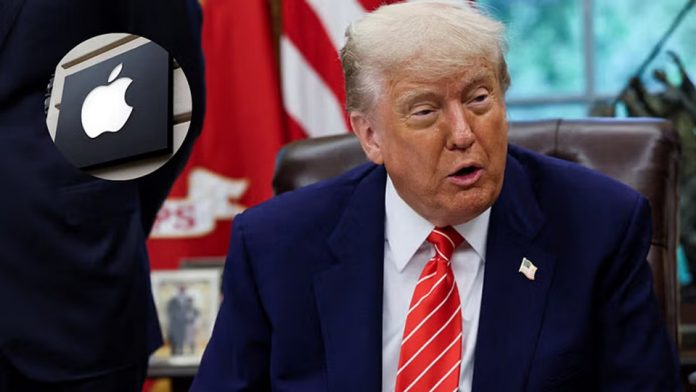
President Donald Trump has escalated his campaign against corporate diversity initiatives, calling on Apple to comply with his executive order to dismantle Diversity, Equity, and Inclusion (DEI) programs.

The president’s demand comes despite Apple’s shareholders voting overwhelmingly to keep these initiatives in place, raising questions about whether the tech giant will stand firm or eventually yield under government pressure.

Trump, who has already influenced several major corporations to roll back their DEI commitments, took direct aim at Apple in a post on Truth Social.

“APPLE SHOULD GET RID OF DEI RULES, NOT JUST MAKE ADJUSTMENTS TO THEM. DEI WAS A HOAX THAT HAS BEEN VERY BAD FOR OUR COUNTRY. DEI IS GONE!!!” he said.

The administration has framed these programs as discriminatory, arguing they disadvantage individuals who do not belong to historically marginalized groups. The White House has also signaled that companies failing to comply could face legal action, with Trump suggesting that the Department of Justice (DoJ) could investigate whether such initiatives violate federal anti-discrimination laws.

Apple’s Shareholders Reject Push to End DEI

Apple has long championed diversity initiatives, and this week, its shareholders reaffirmed their support for DEI efforts. At the company’s annual meeting, a proposal titled “Request to Cease DEI Efforts” was overwhelmingly rejected, with 8.84 billion votes against and just 210.45 million in favor.

The proposal, submitted by the conservative think tank National Center for Public Policy Research, was part of a broader effort to pressure corporations into eliminating DEI programs in response to Trump’s policy stance.

Apple is not the only company facing such pressure. A similar shareholder proposal at Costco’s recent annual meeting was also rejected. However, many major firms, including Google and Meta, have already begun scaling back or eliminating their DEI hiring targets to align with the administration’s directives.

Will Apple Hold Its Ground? 

While Apple has resisted so far, there are growing concerns that the company may eventually cave. CEO Tim Cook has not issued a direct rebuttal to Trump’s demand but told shareholders that “We will continue to create a culture of belonging.” However, Cook also acknowledged that the company may have to make changes to its DEI programs as the legal and political landscape shifts.

Apple’s defiance comes at a delicate time for its relationship with the Trump administration. The company has several high-stakes issues to negotiate with the president, including:

  • Tariffs on China: Trump has repeatedly threatened to increase tariffs on Chinese imports, a move that could significantly impact Apple’s supply chain. With many iPhones and other Apple products still manufactured in China, higher tariffs would drive up costs, making Apple particularly vulnerable to policy shifts.
  • Encryption Battle: Apple has long resisted government efforts to weaken encryption on its devices, arguing that backdoor access for law enforcement would compromise user privacy. Trump has previously pushed for such access and could use regulatory pressure to force Apple’s hand.

Many analysts believe these issues could give Trump leverage over Apple, forcing the company to choose between protecting its DEI programs or securing more favorable trade and regulatory conditions.

Apple is making a $500 billion investment in US manufacturing over the next four years, which includes building a new factory in Houston and hiring over 20,000 people in the US. This move, announced after Cook’s meeting with Trump, was expected to soften the ground for the company.

A Test Case for Corporate Resistance

While Apple remains defiant for now, its decision is being closely watched as a potential turning point in corporate resistance to government pressure on DEI. Many companies have already scaled back their programs, fearing political backlash or legal consequences. Others, like Target, are now facing lawsuits over the alleged financial risks posed by DEI initiatives.

Florida Attorney General James Uthmeier filed a federal lawsuit against Target, accusing the retailer of misleading investors about the financial risks of its DEI and Pride Month campaigns. The lawsuit claims that Target’s stock declined due to consumer backlash and that shareholders were not properly informed of these risks—an argument that could set a precedent for similar cases against other companies.

If Apple ultimately surrenders to Trump’s demands, it could trigger a wider retreat from DEI across the corporate world. However, if the company holds firm, it may embolden others to resist as well.

Software Development Isn’t a Crime in Retrospect to Ongoing Litigations with DOJ on Tornado Cash

0

Coin Center, a prominent nonprofit advocating for cryptocurrency policy, has developed a multifaceted legal strategy to counter what it perceives as overreach by U.S. government agencies, including the Department of Justice (DOJ), Treasury Department, and IRS. These strategies focus on defending the rights of software developers and users of open blockchain networks, emphasizing constitutional protections like free speech and privacy. Below is an overview of Coin Center’s legal approaches as of February 28, 2025, based on their public actions and priorities.

Section 6050I Lawsuit (Treasury/IRS): In June 2022, Coin Center filed a lawsuit against the U.S. Treasury Department challenging the amendment to Section 6050I of the Tax Code, part of the 2021 Infrastructure Investment and Jobs Act. This amendment mandates that individuals receiving over $10,000 in cryptocurrency report intrusive personal details (e.g., sender’s name, Social Security number) to the government.

Coin Center argues this constitutes “unconstitutional financial surveillance,” violating the Fourth Amendment (protection against unreasonable searches) and First Amendment (freedom of association and speech). Although a district court dismissed the case as “unripe” in 2023, a 2024 Sixth Circuit ruling partially reversed this, allowing Coin Center to proceed on its enumerated-powers claim—asserting Congress exceeded its authority. This demonstrates their strategy of pushing constitutional limits through federal courts, potentially aiming for Supreme Court review.

Tornado Cash Sanctions (Treasury/OFAC): Coin Center has challenged the Treasury’s Office of Foreign Assets Control (OFAC) sanctions on Tornado Cash, a privacy-focused Ethereum mixer. In 2022, they sued Treasury, arguing that sanctioning open-source software (not a person or entity) exceeds OFAC’s authority and infringes on developers’ free speech rights. This case ties into broader efforts to protect code as constitutionally protected expression.

Non-Custodial Developer Protections: Coin Center has prioritized preventing “unjust prosecutions” of non-custodial software developers—those who don’t control user funds—targeted by the DOJ for unlicensed money transmission. Notable cases include the 2024 indictments of Tornado Cash developers (e.g., Roman Storm) and Samourai Wallet developers.

Coin Center contends that DOJ’s interpretation—that merely writing code facilitating transactions equates to money transmission—contradicts long-standing Financial Crimes Enforcement Network (FinCEN) guidance (2013 and 2019), which exempts non-custodial actors. Their strategy includes supporting affected developers, like Michael Lewellen’s lawsuit against DOJ, and advocating for legislative codification of FinCEN’s guidance via the Blockchain Regulatory Certainty Act.

Amicus Briefs and Support: Coin Center files amicus curiae briefs to influence court rulings, as seen in their backing of Tornado Cash-related cases, arguing that publishing code is protected speech under the First Amendment. This legal support aims to set precedents shielding developers from criminal liability for others’ use of their software.

While primarily litigation-focused, Coin Center complements its courtroom efforts with legislative proposals. Their 2025 policy priorities include pushing Congress to repeal or amend unconstitutional provisions (e.g., Section 6050I) and clarify developer liability. They’ve worked with lawmakers to introduce bills countering Treasury and DOJ actions, ensuring that if courts don’t fully resolve issues, statutory protections can safeguard their constituents. This dual-track approach—litigation and legislation—maximizes their impact.

Coin Center selects cases with potential to challenge foundational regulatory frameworks. For instance, their Section 6050I lawsuit could, if successful, undermine decades-old anti-money laundering laws beyond crypto, as noted by observers like The Verge in 2022. Similarly, their Tornado Cash litigation questions the scope of sanctions law, potentially affecting how software is regulated across industries. This strategy leverages crypto-specific disputes to address wider civil liberties concerns, appealing to allies like the Cato Institute and Fight for the Future.

Beyond direct legal action, Coin Center educates policymakers and the public to bolster their cases’ legitimacy. Their detailed reports (e.g., “Principles for Crypto Legislation,” January 2025) and events like the 2025 Annual Dinner frame their legal arguments in accessible terms, rallying support from the crypto community and civil rights advocates. This soft power amplifies their courtroom efforts by shaping judicial and legislative perceptions.

Tornado Cash litigation continues to test sanctions law, with Coin Center supporting parallel developer defenses. Their backing of Michael Lewellen’s suit against DOJ (highlighted in a January 2025 X post by Peter Van Valkenburgh) signals ongoing resistance to prosecutorial overreach. Coin Center’s strategies hinge on framing software development as a protected right, using constitutional arguments to curb agency actions, and pursuing systemic change through precedent or law.

Success could redefine tech regulation, but setbacks—like the initial 6050I dismissal—show the uphill battle against entrenched government power. Their persistence suggests a long-term commitment, potentially escalating to higher courts if lower rulings falter. What specific aspect of their strategy interests you most?

German Merz meets Macron in Paris to Dialogue on Critical Issues Bordering on NATO

0

Friedrich Merz, the leader of Germany’s Christian Democratic Union (CDU) and the likely next German Chancellor following his party’s strong performance in the snap election on February 23, met with French President Emmanuel Macron in Paris. This meeting, held just three days after the election, took place at the Elysée Palace and was described as a “working dinner” aimed at exploring agreements and strengthening Franco-German relations. The discussions occurred against the backdrop of a shifting global landscape, particularly with concerns over U.S. policy under President Donald Trump and its implications for European security and transatlantic relations.

The talks reportedly focused on several key areas, including the enhancement of German French cooperation, European defense, and responses to international challenges such as the war in Ukraine and shifting U.S. foreign policy. Both leaders expressed a shared intent to open a “new chapter” in bilateral relations, with sources close to Merz noting a “great deal of agreement” and “numerous starting points for joint initiatives.” The atmosphere was described as friendly and constructive, lasting approximately three hours.

Merz, who speaks French and has a personal affinity for France, emphasized the potential for the two nations to “achieve great things for Europe together,” a sentiment he echoed in a bilingual post on X following the meeting. This rapid engagement signals a mutual urgency to revitalize the Franco-German axis, especially after a period of strained relations between Macron and outgoing German Chancellor Olaf Scholz.

The meeting also reflects broader European concerns, including the need for a unified stance amid uncertainties surrounding Trump’s approach to NATO, Ukraine, and trade policies like the Mercosur agreement. While specific agreements were not publicly detailed, the encounter laid the groundwork for future collaboration, with Merz and Macron aligning on the importance of European unity and strategic autonomy. Merz’s trip to Paris marks his first international visit post-election, underscoring France’s priority in his prospective chancellorship.

Donald Trump’s return to the U.S. presidency has raised concerns in Europe about America’s commitment to NATO, given his past criticisms of the alliance and calls for European nations to increase defense spending. This uncertainty was a likely backdrop to the Merz-Macron talks. Merz and Macron may push for NATO policies that bolster European contributions to the alliance, reducing reliance on U.S. leadership.

This could mean advocating for higher defense budgets among European NATO members (Germany, in particular, has faced pressure to meet the 2% GDP target consistently) and strengthening NATO’s European pillar. Their emphasis on “strategic autonomy” hints at a vision where Europe takes greater responsibility for its defense, potentially reshaping NATO’s operational balance.

The Merz-Macron dialogue reflects a shared recognition that NATO’s effectiveness may hinge on Europe stepping up, particularly if Trump pressures allies to “pay their share” or reduces U.S. troop presence. Their push for unity could stabilize NATO amid uncertainty, but it also risks friction with members like the UK or Poland, who prioritize a U.S.-centric alliance.

The Merz-Macron meeting signals a proactive Franco-German effort to shape Europe’s security architecture ahead of potential U.S. policy shifts.
Impact: If successful, their collaboration could lead NATO toward a more multipolar structure, where European nations collectively wield greater influence. This might involve revisiting NATO’s Strategic Concept to reflect a stronger European voice, especially on issues like hybrid threats, energy security, and relations with China—areas where Franco-German alignment could set the tone.