DD
MM
YYYY

PAGES

DD
MM
YYYY

spot_img

PAGES

Home Blog Page 2140

Beyond Meme Coins: Harry Hippo’s Serious Take on Gaming Helps To Raise Close To $1.5 million in Viral Crypto Presale

0

The meme coin space sees something new in Harry Hippo – where playful community spirit meets serious gaming technology. While most meme projects focus solely on trading hype, Harry Hippo adds artificial intelligence that creates skill-based matches and real earning potential. With tokens priced at $0.00555 and presale approaching $1.5 million, this new approach gains market trust.

The platform keeps the fun energy that makes meme coins exciting while adding substance through AI gaming. Over 250 million tokens now sit in staking – showing how the community believes in this long-term vision. This combination of meme appeal and technical innovation creates something unique in the crypto gaming world.

Let’s understand how Harry Hippo rises above typical meme coin limitations to build lasting value through AI-powered gaming.

More Than a Meme: The Harry Hippo Difference

Unlike traditional meme coins that rely on social hype, Harry Hippo brings serious technology to the playful world of crypto gaming. The AI system studies player actions during matches, much like how a chess computer learns from grandmaster games. This creates an environment where your gaming skills matter more than meme-driven market swings.

The platform takes what works best from meme coins – community excitement and accessible entry points – then adds layers of real utility. When you play matches, the AI watches how you handle resources, time your moves, and adapt to challenges. These insights help create fair games where strategy leads to success.

The staking program shows this blend of meme coin accessibility and serious gaming potential. Holders earn steady rewards while supporting a growing gaming ecosystem. As the platform moves toward its Q1 2025 launch, this foundation helps turn meme coin energy into lasting gaming value.

Building a Lasting Meme Economy

The economy in Harry Hippo starts with careful token planning. Like traditional meme coins, it keeps entry accessible for new users. But unlike typical meme projects, the 3 billion total tokens serve specific purposes in the gaming world. Marketing spreads awareness, liquidity keeps trading smooth, and development funds power AI features.

The staking program adds depth beyond basic meme coin trading. Think of it like a savings account that rewards long-term holders with 100% APY while funding the gaming platform’s growth. These staked tokens create stability, helping the project avoid the sharp swings common in meme markets.

By linking tokens to gaming skill, Harry Hippo gives holders more than just meme-based value. When matches begin in Q1 2025, your tokens work as both gaming assets and earning tools. The AI system ensures these earnings come from real gameplay ability, not just market momentum.

Where Memes Meet Gaming Innovation

Harry Hippo brings gaming power to the meme coin world through its AI system. While meme projects often focus on social buzz, this platform uses artificial intelligence to study gameplay and reward skill. The AI watches matches like a chess master studying moves, learning what makes gameplay truly excellent.

The gaming system balances meme-style fun with competitive depth. New players find matches that teach core skills while staying entertaining. As they improve, the AI creates tougher challenges with bigger rewards. This progression keeps the excitement of meme communities while adding real gaming achievement.

When matches begin in Q1 2025, players see how this blend works in practice. The AI creates fair games where strategy beats luck, turning meme coin energy into skilled gameplay. By Q3, NFTs and advanced features add new ways for skilled players to earn, showing how meme appeal can support serious gaming goals.

Community-Driven Future

The road to 2025 builds on the best parts of meme coin culture – active communities and shared goals. Q1 starts with basic matches where players test the AI system, bringing the fun of meme projects to skilled gaming. Your moves matter, your strategy counts, and the community grows through shared gaming experiences.

Q2 adds features that let the community shape gameplay. Built-in staking options mean players manage their earnings right in the game. The AI learns from how top players compete, using these insights to create better matches for everyone. This keeps the social spirit of meme coins while adding competitive depth.

Q3 brings NFTs and advanced AI that make each player’s journey unique. Early supporters who joined during presale find their faith in the project rewarded with both gaming skills and token value. The community that started with meme coin energy now enjoys a full gaming world where both fun and skill lead to success.

The presale is moving close to almost $1.5 million raised with HIPO priced at $0.00555. Users can connect any of the supported wallets and buy the meme coin with ETH, USDT, USDC or even bank card.


                                   Check out the Harry Hippo social media channels

                                            Harry Hippo PresaleTwitter | Telegram


Bybit Covers $1.46bn Hack Loss with Loans, Whale Deposits, and Ethereum Purchases

0

In an extraordinary move to recover from one of the largest cryptocurrency heists in history, Bybit has successfully covered its $1.46 billion loss through a mix of loans, large investor deposits, and aggressive Ethereum (ETH) purchases.

In an X post on Monday, blockchain analytics firm Lookonchain revealed that Bybit secured a total of 446,870 ETH—valued at approximately $1.23 billion—from multiple sources, including large over-the-counter (OTC) purchases and institutional support.

The crypto exchange, which suffered the devastating hack earlier this month, has reassured users that it is now financially stable, but the incident has reignited concerns over the security of centralized platforms in the digital asset space.

The Hack That Shook the Crypto World

The attack on Bybit was executed with precision, leaving the exchange scrambling to secure its reserves. On February 10, 2025, the hackers successfully infiltrated Bybit’s multisignature cold storage system, which was meant to provide an additional layer of security by requiring multiple approvals for transactions. Despite these safeguards, the attackers managed to breach the system, transferring nearly $1.4 billion in assets to wallets linked to known cybercriminal networks.

Within hours of the breach, blockchain analysts identified patterns that mirrored previous attacks attributed to the Lazarus Group, a North Korea-backed hacking syndicate responsible for billions of dollars in stolen cryptocurrency. The stolen funds were quickly funneled through various mixing services and decentralized exchanges, making it nearly impossible to recover them.

Analysts also noted striking similarities between the Bybit hack and another attack that had targeted Phemex, another cryptocurrency exchange, just days earlier. Investigators found that the funds from both breaches had been merged and transferred using the same theft addresses, a tactic previously seen in state-sponsored cyber warfare operations.

Following the breach, Bybit immediately launched an internal investigation with the help of blockchain forensics firms and cybersecurity experts. The exchange also worked closely with law enforcement agencies and other crypto platforms in an attempt to track the stolen funds.

However, with most of the assets already laundered or converted into privacy-focused cryptocurrencies, the likelihood of recovery appeared slim.

Bybit’s Multi-Billion-Dollar Rescue Operation

With an enormous financial gap to fill, Bybit made the unprecedented decision to purchase over $742 million worth of Ethereum on the open market. The exchange also secured additional funds through a combination of loans, direct purchases, and deposits from high-net-worth investors and institutions.

A significant portion of Bybit’s ETH acquisition came from an over-the-counter (OTC) deal that brought in 157,660 ETH, valued at approximately $437.8 million, from a single address. Another 109,033 ETH, worth $304.1 million, was traced back to an entity that had acquired the assets from both centralized and decentralized exchanges. Institutional players stepped in as well, with whale investors and crypto firms contributing over $127 million in ETH-based loans.

Crypto exchange Bitget played a major role in Bybit’s recovery effort, lending the exchange 40,000 ETH, valued at around $106 million. Another industry player, MEXC, provided 12,653 stETH, worth approximately $33.9 million. Additionally, a separate unidentified entity was found to have transferred 22,609 ETH, valued at $61.9 million, while another transfer of 20,000 ETH, worth $53.7 million, came from an unknown source. Investment firms also participated, with Mirana Ventures and a possible Fenbushi Capital-linked entity each contributing 10,000 ETH, valued at $28 million.

Bybit’s 266,694 ETH purchase, worth approximately $742 million, was another critical component of its financial stabilization plan. This large-scale buying activity had a noticeable impact on the broader cryptocurrency market, contributing to a 6% recovery in ETH prices after the asset had experienced a sharp decline following the hack.

In response to growing concerns among users, Bybit CEO Ben Zhou took to X to assure customers that the exchange had fully replenished its reserves. He confirmed that Bybit had successfully closed the ETH gap and that all user funds were once again backed at a 1:1 ratio.

Zhou also announced that a new proof-of-reserves (PoR) report would be released in the coming days, leveraging Merkle tree verification technology to allow users to independently verify that their assets were fully accounted for. The move is part of a broader push for transparency in the crypto industry, especially following the collapse of FTX in 2022, which exposed how centralized exchanges could mismanage user funds.

However, the hack has raised deeper concerns about the security vulnerabilities of even the most well-established cryptocurrency platforms. Industry experts have pointed out that multisignature cold wallets, once considered among the safest storage methods for crypto assets, are increasingly being targeted by sophisticated attackers. The growing frequency of high-profile exchange hacks has renewed calls for stricter cybersecurity measures, regulatory oversight, and decentralized alternatives to centralized exchanges.

A Warning Sign for the Crypto Industry

The Bybit hack serves as yet another reminder that no exchange, regardless of size, is immune to cyber threats. While the company’s ability to recover from a $1.46 billion loss in a matter of days demonstrates the financial strength of major crypto firms, it also highlights the risks that users face when entrusting their assets to centralized platforms.

Regulators have already signaled an interest in tightening oversight of cryptocurrency exchanges, with many noting that existing security measures are insufficient to protect users from large-scale cyberattacks. For the industry, the real challenge will be restoring investor confidence and ensuring that future breaches do not lead to devastating financial losses.

Dangote Says Refinery Has 500m Liters, Enough Petrol for Nigeria Amidst Ongoing Imports By NNPCL, Marketers

0

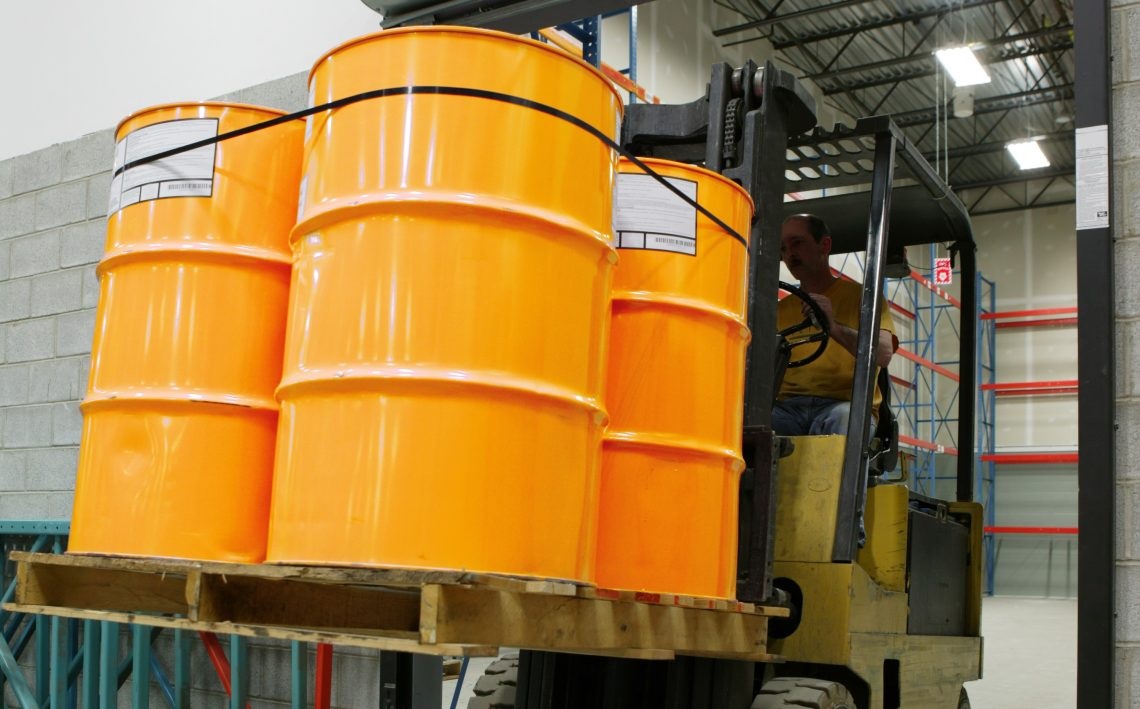
The President of Dangote Industries Limited has disclosed that the state-of-the-art refinery, with a capacity of 650,000 barrels per day (bpd), has stocked more than half a billion liters of petroleum and over N600 billion worth of refined products in its storage tanks.

Speaking over the weekend, Dangote reiterated that the refinery is fully capable of supplying Nigeria’s entire petrol demand without the need for imports.

“…As we speak right now, we have more than half a billion liters. The refinery is producing enough refined products, like gasoline, diesel, and kerosene, to meet 100 percent of Nigeria’s requirements,” he said.

His comments came during a visit by a Zambian government delegation led by Energy Minister Makozo Chikote, who expressed admiration for the refinery’s scale and capabilities. The refinery, which has a processing capacity of 650,000 barrels per day, is the largest single-train refinery in the world, designed to refine Nigerian crude and supply both domestic and regional markets.

Dangote emphasized that beyond Nigeria, the facility is a strategic asset for Africa’s energy security and trade, in line with the African Continental Free Trade Area (AfCFTA).

“This refinery is not only for Nigeria; it is for Africa. We must sustain the African Continental Free Trade Area (AfCFTA) deal. We are trying to see how we trade with other African countries,” he said.

The Vice President of Dangote Industries Limited, Edwin Devakumar stated that the Refinery produces the best quality products as its core business strategy, and the capacity to other African countries and the Middle East.

“The project concept was to process the crude from Nigeria and add value. But we also wanted to provide some flexibility to process most of the African crudes and some of the Middle Eastern crudes,” Edwin said.

He added “In another concept, what we did was maximum value extraction. That is a process where every barrel of crude which goes in, the value addition should be the best.”

Edwin added: “The Refinery can meet all our requirements. 44 percent can meet the entire requirements of Nigeria, and 56 percent of the production would be exported. Every day, we produce lighter products of 104 million liters; 57 million liters of petrol every day; 20 million liters of jet fuel; and 27 million liters of diesel production.

“The local consumption is just around 46 million liters, and the remaining 58 million liters will be exported daily.”

However, despite these assurances, the NNPCL and independent marketers have continued to import petrol into the country, raising questions about why Nigeria is still spending scarce FX on imported fuel when a major refinery is now operational. According to the motor tanker vessel report for January 2025, a total of 212,870,340 liters of Premium Motor Spirit (PMS) was imported into Nigeria in January 2025, with the shipments arriving at Calabar and Lagos ports via motor tanker vessels.

Dangote’s Legal Battle Against Fuel Importation

Frustrated by the continued importation of petrol, Dangote has taken legal action against the NNPCL and other fuel importers. He had argued that imported petrol is not only more expensive but also adulterated, which poses a significant risk to vehicle engines and national fuel quality standards.

Dangote’s lawsuit seeks to block the importation of petrol into Nigeria, as he believes his refinery should be the primary source of refined fuel for the domestic market. However, the case is complicated by the Petroleum Industry Act (PIA), which deregulated the downstream sector and allows marketers to source petroleum products from anywhere in the world. The PIA, which was designed to encourage competition, technically empowers importers to bring in fuel if they find cheaper or more suitable options.

The Free Market Debate

Dangote insists that continuing to import fuel while a massive refinery sits underutilized is economically counterproductive. One of the key arguments for the Dangote Refinery was that it would help reduce Nigeria’s dependence on fuel imports, thereby easing pressure on the naira and saving the country billions of dollars in FX expenditures.

One of the most critical aspects of this ongoing issue is its impact on Nigeria’s currency and foreign exchange reserves. Fuel importation has been a major drain on Nigeria’s FX for years, contributing significantly to the country’s dollar scarcity. The rationale for supporting local refining was that it would eliminate the need for excessive fuel imports and ease the pressure on the naira, which has suffered severe depreciation over the past year.

If Dangote’s refinery were to fully take over Nigeria’s petrol supply, it could potentially save billions of dollars annually in import costs. However, with NNPCL and other marketers still bringing in foreign fuel, the anticipated FX relief has not yet been realized. This has led to growing concerns that Nigeria’s downstream petroleum sector is not operating in a manner that aligns with the country’s broader economic interests.

Furthermore, questions remain about the Port Harcourt Refinery, which the NNPCL claims has resumed operations. Energy experts have noted that if the refinery is truly operational, it should have added local supply to the market, drastically minimizing fuel imports. This has fueled speculation about whether the refinery is producing at commercial levels or merely undergoing test runs.

At the heart of this controversy is the balance between local refining and market competition. While the government initially pushed for self-sufficiency in refining, the PIA has opened the sector to free-market dynamics, allowing marketers to choose their suppliers. This has led to a standoff between Dangote’s push for a monopoly over Nigeria’s petrol supply and the marketers’ right to source fuel from alternative providers.

Bybit Hack shows Crypto Firms’ Solidarity for Unity of Purpose

0

On February 21, Bybit—one of the world’s top crypto exchanges by volume—got hit with a massive security breach. Hackers snagged around 401,000 ETH from an Ethereum cold wallet, valued at roughly $1.4 billion to $1.5 billion depending on market swings. Analysts are calling it the biggest single crypto heist ever, eclipsing past exploits like Ronin Network’s $600 million loss in 2022. The breach came during a routine transfer to a warm wallet, with attackers—possibly North Korea’s Lazarus Group, per blockchain sleuth ZachXBT—exploiting multisig vulnerabilities via phishing and social engineering.

What’s striking isn’t just the scale, but the aftermath. Bybit’s CEO Ben Zhou jumped on it fast—within 30 minutes, he was live on X, calming over 200,000 viewers, promising solvency, and ensuring withdrawals stayed open. The exchange saw a bank-run-level surge—580,000 withdrawal requests—but held firm, backed by $20 billion in assets and bridge loans covering 80% of the loss. Hacken, their auditor, confirmed reserves still exceed liabilities despite $5.3 billion yanked out post-hack.

Crypto firms didn’t just watch—they acted. Bitget loaned Bybit ETH within 24 hours, with CEO Gracy Chen saying they’d expect the same in return. Crypto.com’s Kris Marszalek had his cybersecurity team reach out to assist. Heavyweights like Antalpha, MEXC, Galaxy Digital, Lido Finance, Solana, Arkham Intelligence and Ton Foundations, Tether, Binance, and more rallied—some blacklisting hacker wallets (e.g., Orbiter, deBridge), others like Chainalysis tracing funds. Zhou called it “overwhelming support” on February 22, thanking the industry for setting aside competition to face a shared threat.

This unity’s not just feel-good optics. It’s practical. The hack exposed a recurring weak spot—multisig cold storage isn’t the fortress it’s billed as (Phemex and WazirX saw similar hits). Firms are now pooling resources to track the $1.4 billion (already moving through DEXs and privacy protocols) and tighten security. Bybit’s offering a 10% recovery bounty—up to $140 million—drawing in ethical hackers and analysts like ZachXBT, who tied it to Lazarus patterns. It’s a collective push to protect users and the industry’s rep, especially as crypto’s legit use cases grow faster than illicit ones, per Chainalysis.

This isn’t about one exchange—it’s a stress test for Web3’s resilience. Zhou framed it as a “dark moment” turned proof of purpose: building a decentralized future that can take a punch. Firms uniting here signals they’re not just rivals; they’re in a shared fight against malicious actors and systemic risks. Posts on X echo this—users note Bybit’s crisis handling as a blueprint, with industry players showing a “we’re stronger together” ethic.

The $2.3 billion lost to hacks in 2024 says vulnerabilities linger, and recovery’s dicey—only 20% of Ronin’s haul came back. But this response hints at a maturing space, where solidarity might just forge tougher defenses. What do you think—genuine turning point or temporary truce?

Companies like Chainalysis and Elliptic use blockchain analytics to trace funds live—Bybit tapped them fast, with ZachXBT linking the haul to North Korea’s Lazarus Group. AI’s stepping up too: Cyvers rolled out off-chain transaction validation in 2024, simulating moves to catch bad code before it hits the chain. It’s not universal yet, but post-Bybit, expect adoption to spike—could’ve cut that $1.4 billion loss if deployed earlier. Exchanges are also beefing up internal alerts—think anomaly detection for weird withdrawal spikes (Bybit saw 580,000 requests post-hack).

Is “External Revenue Service” Replacing Internal Revenue Service in US?

0

US President Donald Trump’s tariff pitch, as Lutnick framed it, involves replacing the IRS (Internal Revenue Service) with an “External Revenue Service” that leans on tariffs—think 10% across-the-board, 60% on China, or even 25% on Canada and Mexico—to fund the government. The ideas to raise $700 billion annually, ax income taxes, and shift the burden to foreign entities. So, what’s the impact look like?

Revenue Feasibility: The IRS collected $823 billion from individual income taxes in 2024, per Treasury data, and total federal revenue was around $4.9 trillion. Tariffs brought in $80 billion—peanuts by comparison. Scaling that to $700 billion means tariffs would need to jump nearly ninefold. The Tax Foundation estimates a 10% universal tariff could pull $2 trillion over a decade ($200 billion yearly), or $3.3 trillion at 20% ($330 billion yearly), before economic blowback.

A 60% China tariff plus 10% elsewhere might hit $400 billion annually, per some models, but even that’s half of income tax revenue. Historical tariffs topped out at 19.8% of imports in the 1930s, funding a government spending just 2% of GDP—today it’s 22.7%. The math’s tight; $700 billion’s optimistic without massive rate hikes or trade volume holding steady, which it won’t.

Economic Effects: Tariffs are taxes on imports, so prices rise—simple as that. The 2018-2019 Trump tariffs on steel, aluminum, and Chinese goods added $80 billion in costs, mostly passed to U.S. consumers and firms, per the U.S. International Trade Commission. A 2024 Peterson Institute brief pegs a 10%-60% tariff combo at $200 billion yearly but warns of GDP shrinkage from retaliation and efficiency losses. Their high-end scenario (50% universal) could hit $780 billion—close to Lutnick’s number—but slashes GDP by 1.3% long-term, kills 142,000 jobs, and spikes inflation.

The Tax Policy Center says a 20%-60% plan cuts household income by $3,000 on average in 2025, hitting the bottom 80% hardest (up to 9% income loss) while the top 1% gains 12%. Retaliation’s a killer—Canada and Mexico, supplying 70% of U.S. oil imports, could tank Midwest gas prices by 50 cents a gallon if they slap back.

Consumer Impact: Take cars—Mexico’s auto parts feed U.S. plants. A 25% tariff could add $2,700 to a $45,000 vehicle, per Jefferies. Avocados? 90% from Mexico; guac’s pricier. China’s $450 billion in imports—electronics, toys—face a 10% hike, so your next phone or kid’s gift costs more. NPR’s analysis says Trump’s latest tariffs could mean $800-$1,100 extra per household in 2025. Inflation’s already stubborn; this could nudge it from 2.5% to 3.5%, per S&P Global, especially if trade wars escalate.

Trade and Jobs: Tariffs aim to boost U.S. production, but evidence is mixed. The 2023 ITC report says 2018 tariffs cut Chinese imports and nudged domestic steel output up, with “minor” price hikes. But broader studies—like Tax Foundation’s—show net job losses from higher costs and export hits. A 25% Canada-Mexico tariff could gut $680 billion in U.S. exports, per Brookings, disrupting supply chains (50% of North American trade). Globally, countries like Germany or India might snag market share if U.S.-China trade shrinks, per the OEC Tariff Simulator.

Feasibility Caveats: Lutnick’s $700 billion assumes foreign entities eat the cost, but econ 101 says importers—and thus U.S. buyers—pay most. Compliance is another snag; smuggling and evasion rise with rates (15% noncompliance is standard). And scrapping the IRS? That’s a 90,000-person machine—Congress would need to rewrite the tax code, facing a divided House and filibuster-happy Senate. Pre-1913 tariffs worked for a tiny government; today’s $6 trillion budget laughs at that.

Bottom Line: Tariffs could raise serious cash—maybe $300-$500 billion yearly with aggressive rates—but replacing income tax fully is a stretch without cratering trade or spiking deficits. You’d see higher prices (cars, food, tech), some job shifts (gains in protected sectors, losses elsewhere), and a GDP dip (0.5-1.4%, per The Budget Lab). Inflation ticks up, the dollar might flex short-term, and global trade takes a hit—China, Canada, Mexico feel it most. Lutnick’s vision sounds slick, but the numbers and fallout say it’s more disruption than deliverance.