DD
MM
YYYY

PAGES

DD
MM
YYYY

spot_img

PAGES

Home Blog Page 2151

Bybit Recovers $1.46B Hack Loss Through Loans, Whale Deposits And Ethereum Purchases

1

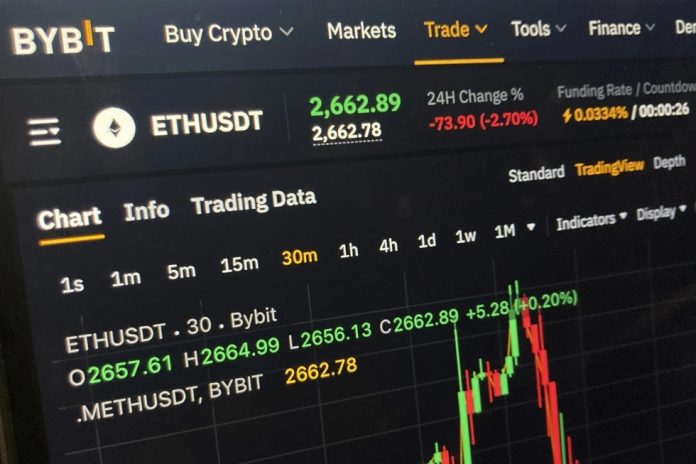
Bybit, a major cryptocurrency exchange, has reportedly recovered its $1.46 billion loss from a recent hack, through a combination of loans, whale deposits, and Ethereum (ETH) purchases, according to Lookonchain data.

This is coming after the company launched a recovery bounty program with rewards of up to 10% of stolen funds. Bybit called on the brightest minds in cybersecurity and crypto analytics to join the global hunt for the perpetrators of crypto’s largest heist in history. With a reward of 10% of the amount recovered, the contributors stand to share a bounty of potentially up to 140 million USD in value in the scenario of a full recovery.

The CEO revealed that since the hack, the exchange experienced the greatest number of withdraws that it has ever seen. He disclosed that they had a total number of more than 350k withdrawal requests, and so far, around 2100 withdrawal requests left to be processed. Overall 99. 994% of withdrawals were disclosed to have been completed.

Moving forward, on February 24, Lookonchain reported that Bybit received a substantial. 157,660 ETH (approximately $437.8 million) from a single address, likely through over-the-counter (OTC) transactions. Additionally, another 109,033 ETH ($304.1 million) came from an entity that purchased ETH from both centralized and decentralized exchanges.

Whales and institutions provided over $127 million in ETH as loans, with:

  • Bitget contributing 40,000 ETH ($106 million)
  • MEXC sending 12,653 stETH ($33.9 million)

Further contributions included:

  • 22,609 ETH ($61.9 million) from an OTC buyer.
  • 20,000 ETH ($53.7 million) from an unknown entity.
  • 10,000 ETH ($28 million) each from Mirana Ventures and a possible Fenbushi Capital-linked address.
  • Smaller amounts from users linked to “@yuchao” (2,499 ETH) and DWF Labs (2,200 ETH).

Acknowledging the support received towards the recovery of the hacked funds, Bybit wrote,

“Within 24 hours of the event, we were overwhelmed with support from some of the best people and organizations in the industry, and we do not take it for granted. We have shared a dark moment in crypto history, and we’ve proven we are better than the malicious actors. We want to officially reward our community who lent us their expertise, experience, and support through the Recovery Bounty Program, and our efforts to make this difficult lesson a valuable one do not stop here. Bybit is determined to rise above the setback and fundamentally transform our security infrastructure, improve liquidity, and be a steadfast partner to our friends in the crypto community”.

On Monday 24, 2025, Bybit CEO Ben Zhou announced on X that Bybit has already fully closed the ETH gap, noting that a new audited POR report will be published very soon to show that the crypto exchange is again Back to 100% 1:1 on client assets through Merkle tree.

Possible Links to Phemex Hack and Lazarus Group

Blockchain investigator ZachXBT identified on-chain connections between the Bybit hack and the recent Phemex breach. The attackers merged stolen funds from both incidents using the same addresses, a strategy previously employed by North Korea-backed Lazarus Group in multiple hacks.

On the other hand, some reports have suggested that the perpetrators could be North Korean state hackers, the Lazarus Group, who have been blamed for previous large-scale heists, including the $615m theft from the blockchain project Ronin Group in 2022.

Bybit took a decisive step by reportedly purchasing $742 million worth of ETH to restore its referes making it one of the largest post-hack recoveries in crypto history. This move has had a significant impact on Ethereum’s market price, contributing to a 6% recovery from the previous week’s decline.

Notably, the rapid response by Bybit has been praised as a strong example of crisis management, though some analysts note that relying on loans means the exchange still has debts to settle, raising questions about long-term financial health.
Germany’s Friedrich Merz Wins

0

Update: Friedrich Merz has won.

Friedrich Merz, leader of the center-right Christian Democratic Union (CDU), emerged as the frontrunner, with his party securing the largest share of votes—around 28.5% to 29% according to early projections. This result positions Merz as the likely next chancellor of Germany, marking a return to power for the conservatives after years of a center-left coalition under Olaf Scholz.

The far-right Alternative für Deutschland (AfD) also made significant gains, coming in second with approximately 20% of the vote, nearly doubling its share from the 2021 election. This is the strongest performance for a far-right party in Germany since World War II, reflecting growing support, particularly among younger voters and in eastern regions. Meanwhile, Scholz’s Social Democrats (SPD) suffered a historic defeat, dropping to third place with about 16% to 16.5%, their worst postwar result.

This shift doesn’t mean Germany is suddenly a far-right country—Merz’s CDU is a mainstream conservative party, and he’s ruled out any coalition with the AfD, sticking to a long-standing “firewall” against far-right collaboration. But the AfD’s surge signals discontent with issues like immigration and the economy, which Merz has promised to tackle with tougher policies and a revitalized European leadership role. Coalition talks will be key, likely involving the SPD or Greens, though no single party has a majority, and negotiations could take weeks or months.

Contrast this with France, where Marine Le Pen’s National Rally (RN) has been a far-right juggernaut, scoring 41.46% in the 2022 presidential race and leading polls into 2025. Unlike Germany’s CDU-AfD divide, RN blends nationalism with a softened image, shedding overt racism for broader appeal. Immigration and identity dominate here too, but France’s political volatility—Macron’s centrists faltering, a left coalition blocking RN in parliament—means the far-right’s mainstreaming is more advanced, though still short of governing power.

Italy’s Giorgia Meloni offers a different flavor. Since 2022, her Brothers of Italy (rooted in neo-fascist history) has led a right-wing government, winning over 28% in the 2024 European elections. Meloni’s success lies in balancing hardline migration policies with NATO loyalty and EU pragmatism, unlike Germany’s AfD or France’s RN, which remain Euroskeptic. Her coalition with center-right forces shows how Italy’s right has normalized, governing without the “cordon sanitaire” still holding in Germany.

In Austria, the Freedom Party (FPÖ) took 29% in September 2024’s election, the strongest far-right result since WWII. Like AfD, it’s anti-immigrant and Euroskeptic, but coalition talks collapsed, leaving it sidelined for now. This mirrors Germany’s firewall but contrasts with Italy’s integration of the right into power. Austria’s trend hinges on nationalism and rural discontent, with less of the economic focus Merz emphasizes.

Sweden and Finland show the Nordic twist. Sweden’s Sweden Democrats, now the second-largest party, back a center-right government from outside, doubling youth support since 2018. Finland’s Finns Party joined a right-wing coalition in 2023. Both push anti-immigration agendas, but their influence is diluted by coalition dynamics, unlike Italy’s direct rule or France’s opposition strength. They’re less radical than AfD or RN, focusing on pragmatic governance over ideological purity.

Hungary’s Viktor Orbán stands apart. Fidesz, in power since 2010, has turned increasingly illiberal, dismantling checks and balances while railing against EU “overreach” and immigration. Unlike Merz’s pro-EU stance or Meloni’s strategic cooperation, Orbán’s right-wing model is a blueprint for authoritarian nationalism, aligning more with Poland’s Law and Justice (PiS) pre-2023 than Germany’s current trajectory.

What ties these trends together? Immigration is the heartbeat—AfD’s “remigration,” RN’s border obsession, Meloni’s sea patrols, all echo voter anxiety over cultural change. Economic woes—stagnation in Germany, cost-of-living crises elsewhere—fuel the fire. Youth support is surging too, from AfD’s eastern strongholds to Sweden’s Gen Z shift, bucking the old progressive stereotype. Yet, differences matter: Germany and Austria cling to excluding the far-right, France and Italy embrace or normalize it, and Hungary goes full autocrat.

So, Germany’s shift isn’t unique but fits a mosaic. Merz’s win is milder than Meloni’s or Le Pen’s ambitions, restrained by Germany’s historical caution. The AfD’s rise, though, signals potential for sharper turns if that firewall cracks—like it has elsewhere. What do you think—will Germany stay the exception, or follow Italy’s path?

Ripple Labs and XRP

0

Recently, the Ripple price surged to an all-time high (ATH) of $3.39 per coin, sparking debates among investors. Some argue that the price has risen sufficiently above its long-term resistance, signaling that it might be a good time to buy in. Others believe waiting for a price dip to more favorable levels could yield better returns. However, the central question remains: is XRP worth buying at all, regardless of its past and current price trends? To answer this, we need to understand what XRP truly represents and its role in the broader financial ecosystem.

XRP is the native coin of the XRP Ledger (XRPL), a decentralized and open-source blockchain network launched in 2012 by Ripple Labs. The primary purpose of XRP is to facilitate cross-border payments, offering a faster and more cost-effective alternative to traditional financial systems. When transferring money between currencies that are not directly traded against each other, the process typically involves converting the first currency into USD and then converting the USD into the second currency. In these situations, XRP serves as a bridge currency, reducing both transaction time and costs.

One of XRP’s key features is its speed and affordability. As of February 2025, the average transaction fee on the XRP Ledger is less than a cent, typically ranging from 0.0025 to 0.0035 XRP per transaction. Transactions are completed in under four seconds, starkly contrasting to the several business days required for traditional wire transfers. This efficiency has made XRP particularly useful in underbanked regions, where it provides greater access to financial services and opportunities for individuals with limited banking options.

The XRPL operates on a unique consensus mechanism, the Unique Node List (UNL), managed by trusted validators selected by the XRP community. Each transaction is validated by at least 80% of node operators, ensuring a high level of security and reliability within the network. This decentralized approach contrasts with traditional financial systems, which are often criticized for their centralization and slow transaction speeds.

XRP vs. Traditional Payment Systems 

When it comes to competing with traditional payment networks, XRP faces stiff competition from industry giants like VISA and Mastercard.

VISA is the undisputed leader, capable of processing up to 24,000 transactions per second (TPS) under optimal conditions. Mastercard, while considerably smaller, still handles up to 5,000 TPS.

In comparison, the XRP Ledger can process around 1,500 TPS, a relatively modest number considering the total volume of global payment transactions. This difference in processing power raises questions about XRP’s potential as a global payment solution.

XRP as an Investment Asset 

From an investment perspective, XRP presents a unique set of challenges. Its total supply is capped at 100 billion coins, with nearly half of this amount held in escrow by Ripple Labs. While the remaining XRP is available for free circulation, the significant concentration of coins in escrow raises concerns about potential price manipulation and the overall centralization of the asset. Despite XRP’s relatively high correlation of 0.8 with Bitcoin and 0.6 with Ether, it still operates in a highly volatile and speculative market.

XRP’s previous ATH was $3.30 in January 2018, and it took seven years for the price to surpass this peak by just nine cents. This slow rate of appreciation, combined with the continuous release of approximately one billion XRP coins into circulation each month, raises concerns about the asset’s inflation. While Ripple Labs’ regular coin releases are intended to counter inflation, they also create ongoing selling pressure, potentially suppressing any significant long-term price increases.

Despite these challenges, Ripple Labs is a well-established company with growth potential. However, XRP should not be viewed as a traditional wealth-preserving asset, particularly when compared to more established financial instruments or even other cryptocurrencies that offer greater decentralization.

Disclaimer: Cryptocurrencies are one of the riskiest investment assets. Always consult with your financial advisor before making any investment decisions.

Innovative online casino solutions from online casino provider Kiron

0

The content of casino games provider Kiron is not just taken out of the rankings. Comparing the brand’s products with competitors is largely pointless. The provider has moved far ahead of its rivals.

The largest package of offers on the market

Over the years of presence in the industry, the developer has not removed a single product. Therefore, today the provider simply has no alternatives. Clients of the online casino https://freshbetcasino.com/ will meet thousands of events for every day of the week and will be able to explore dozens of disciplines.

Comfortable gaming in the browser

You don’t have to download the gambling club app from best paying slot games UK to enjoy virtual sports betting. HTML5 technology allows you to follow the matches through your mobile browser without straining your phone’s battery and RAM.

Demo account

Gamblers who play Kiron casino games will be able to practice without restrictions. Unlike the same live casinos where you can only become a casual guest, products from Kiron offer the opportunity to start opening betas with a virtual deposit.

Emphasis on running and racing

Betting on dog racing and horse racing through the best slot apps uk is quite exciting. On top of that, you can also watch motorsport battles. On the plus side, the races only last a few minutes, so you don’t have to wait long for the results to be announced and the payout to be calculated.

Television broadcasting

If you want, you can watch the fictional competition on TV. The operator Kiron actively uses the satellite TV resource through the best paying slot sites uk. However, it is now possible to connect to such a broadcast from the site of any online casino.

Today, the casino software manufacturer Kiron also promotes the developments of other studios. The aggregator platform includes content from more than 100 developers. This opens for potential partners more than 100,000 gambling games.

Thinkific Pricing Plans: Which Plan Offers the Best Value?

0

Selecting an online course platform can feel overwhelming when factoring in cost. Every platform comes with its own set of features, and determining which one gives you the most bang for your buck takes careful consideration. Thinkific, a favored option for teachers and business owners, offers a range of plans tailored to suit requirements. This piece will delve into these pricing packages, showcasing their advantages and drawbacks. 

Exploring the Free Package

Thinkifics Free Plan is a superb starting place for beginners in their journey of creation without any initial expenses! With this option at your fingertips, you can share one course effortlessly. It comes with features like quizzes and interactive lessons that give you a glimpse into the platform’s capabilities. While the free plan gives you a foundation to get started with your courses online, it does come with limitations. For instance, it doesn’t offer access to advanced features such as certificates and integrations that could be essential for creators wanting to broaden their course offerings. Thinkific pricing depends on the plan you have chosen plan, and each one offers various features.

The Fundamental Elements of the Strategy

If you’re looking for options to explore further, the Basic Plan is a step up to consider. You’ll get two accounts for managing sites and working with your team. Moreover, you can offer courses and enrollments for scalability. The Basic Plan also lets you integrate emails and use custom domains, creating a learning environment. However, some users may feel limited by the absence of marketing tools and membership features. 

Delving Into the Pro Plan

The Pro Plan is designed for course creators who want features and functionality to be used effectively for their content creation needs, one of which is having five site admin accounts that can help manage larger teams efficiently. Special features, like memberships and bundles, can maximize revenue opportunities as priority support to address any problems promptly. Remember, the Pro Plan comes with a cost, making it less suitable for those working with budgets. 

Optimizing Benefits With the Top Tier Package

The Prime Package is tailored for operations and comes with a range of features to benefit users. It includes 15 admin accounts for each site to facilitate effective collaboration among larger teams. There are also integrations and labeling options to help businesses maintain a consistent brand image. Moreover, the inclusion of Thinkifics Brillium integration enhances the evaluation process for students. However, the higher price tag of the Premier Plan may only be worthwhile for those with a number of courses on offer. 

Additional Points to Keep In Mind

Thinkific offers pricing options tailored to requirements; it’s important to consider the extra features to gauge the worth accurately. However, Thinkific’s strong customer service can greatly improve user satisfaction levels. Engaging with Thinkific’s community and training materials opens doors for continuous learning experiences beyond just the basics. It’s also wise to factor in any additional charges from external tools, like transaction fees or costs, as they could affect your total expenses. 

Comparative Examination

Comparing the plans offered by Thinkific involves considering the advantages and the costs involved. The Free Plan may suit those looking to explore without committing much. On the other hand, the Basic Plan provides a combination of features at a fair cost, making it attractive to creators who are just starting out. The Pro Plan caters to educators aiming to reach an audience and increase their earnings with its advanced features. Lastly, the Premier Plan is designed for companies with extensive requirements and budgets. 

Selecting the Appropriate Plan 

Choosing the plan depends on your goals and resources. Keep this in mind when opting for a Free or Basic Plan for beginners or a pro or Premier Plan for experienced educators. According to your needs and future growth prospects, you should make sure that the chosen plan can accommodate your long-term goals and scalability plans for future endeavors. 

Final Thoughts

Thinkific offers a range of pricing options to cater to the requirements of educators creating courses on the platform. Each plan has advantages, from the Free Plan, suitable for beginners, to the encompassing Premier Plan, designed for those running large-scale operations. Course creators must carefully consider the features and restrictions of these plans to determine which one best aligns with their needs. By evaluating their goals and needs thoroughly, educators can make a choice that enhances their chances of success on Thinkific.