DD
MM
YYYY

PAGES

DD
MM
YYYY

spot_img

PAGES

Home Blog Page 2151

Dangote Refinery Slashes Petrol Price Again to N825/Liter, Importers Lament Market Disruption

0

The Dangote Petroleum Refinery has once again reduced the ex-depot price of petrol by N65 per liter, bringing it down from N890 to N825, effective February 27, 2025.

While Nigerians have welcomed the move as a relief from high fuel costs, petroleum product importers have raised concerns that Dangote’s repeated price cuts are making importation unprofitable, effectively pushing them out of the market.

This marks the second price reduction of petrol in February 2025, following a previous N60 decrease earlier in the month. It also follows a similar move in December 2024, when Dangote slashed petrol prices by N70.50 during the yuletide season, cutting the cost from N970 to N899.50 per liter.

The refinery stated that this latest reduction was designed to provide relief to Nigerians ahead of the Ramadan season, while also aligning with President Bola Ahmed Tinubu’s economic recovery policy by easing the financial burden on citizens.

With this latest price adjustment, buyers in Lagos can purchase petrol at MRS outlets for N860 per liter, while prices vary across other regions.

  • South-West: N870 per liter
  • North: N880 per liter
  • South-South & South-East: N890 per liter

Meanwhile, in AP (Ardova Petroleum) and Heyden stations, prices are slightly higher:

  • Lagos: N865 per liter
  • South-West: N875 per liter
  • North: N885 per liter
  • South-South & South-East: N895 per liter

Dangote Using Price Reduction to Undercut Fuel Importers

This latest price adjustment is widely seen as an indication that Dangote is leveraging price reduction as a strategic tool to dominate the Nigerian fuel market.

The billionaire businessman is currently locked in a legal battle with the Nigerian National Petroleum Company (NNPC) and petroleum marketers, challenging their continued importation of fuel despite his refinery having 500 million liters of petrol in stock, which he said is enough to meet Nigeria’s demand.

However, even before the court delivers its ruling, Dangote appears to be using aggressive pricing to achieve his objective—making fuel importation unprofitable and forcing marketers to abandon imports in favor of buying locally.

An industry insider noted that Dangote’s consistent price slashes are forcing fuel importers to sell at a loss or exit the market entirely.

“Some of us who have imported PMS are feeling the heat of Dangote’s decision to slash prices. Though it is a good thing to reduce petrol prices, it is taking a toll on our business. That’s the simple truth,” a dealer who spoke anonymously, lamented in a chat with The PUNCH.

Another retailer explained that importation is becoming less attractive, as Dangote’s continuous price reductions are discouraging fuel imports altogether.

“Dangote understands the competition in the business, and this latest reduction will further discourage fuel imports. There will be losses, as we may have to drop our prices too. At the end of the day, some of us will source our products locally. I will just advise Dangote to create a level playing field for all,” the retailer stated.

Importers in Crisis as Landing Costs Soar Above Dangote’s Prices

Petrol importers’ plights are compounded by landing cost of petrol products. The cost reached N927 per liter last week—significantly higher than Dangote’s new ex-depot price of N825 per liter.

This means that importers are selling at a loss, as they cannot afford to compete with Dangote’s lower prices. Some have already begun reconsidering their role in the market, as importing fuel at a higher cost while competing with a local refinery selling at cheaper rates is financially unsustainable.

Confirming these concerns, the National Publicity Secretary of the Independent Petroleum Marketers Association of Nigeria (IPMAN), Chinedu Ukadike, told The Punch that Dangote’s pricing strategy is threatening fuel importers.

“Dangote may ‘kill’ fuel importers by this continued lowering of prices. All those importers who have challenged Dangote that they wanted to import cheaper fuel—as they’re just nearing the seashore—Dangote will reduce the price, and they will run into trouble,” Ukadike remarked.

He explained that Dangote is taking full advantage of Nigeria’s deregulated market, making it difficult for independent fuel importers to remain competitive.

Cheaper Fuel for Nigerians With Risk of a Monopoly

While consumers celebrate the price reductions, analysts warn that Dangote’s pricing strategy could eventually eliminate competition, leading to a long-term monopoly in the sector.

Industry experts have also noted that if importers are completely squeezed out of the market, Dangote will have total control over fuel pricing in Nigeria. This could potentially drive prices up in the future once competition is eliminated.

Bank of America is Primed to Facilitating Crypto Transactions Hinges on Regulatory Clarity

0

Bank of America’s CEO, Brian Moynihan, He’s saying they’re primed to roll out a USD-pegged stablecoin the moment U.S. lawmakers give it the green light. The idea’s been buzzing around since he dropped it at the Economic Club of Washington, D.C.—basically, if the regulatory stars align, they’re jumping in. Moynihan framed it as a no-brainer evolution, calling it “fully dollar-backed” and “no different than a bank account,” which hints at how they’d pitch it: a digital dollar with the bank’s seal of trust.

This ties into the broader stablecoin chatter heating up under the Trump administration’s crypto-friendly vibe. Lawmakers are apparently eyeing the first 100 days to push through some kind of legislation—maybe something like the Clarity for Payment Stablecoins Act or the Lummis-Gillibrand bill. The stablecoin market’s already massive, sitting at $231 billion, with Tether (USDT) and USDC dominating. Bank of America stepping in could shake that up, bringing a traditional finance heavyweight into the ring.

What’s wild is the shift—banks like BofA used to sideline crypto, but now they’re circling it like sharks. If they pull this off, it could mean faster payments or cheaper cross-border transfers for consumers, all wrapped in that big-bank security blanket. Still, Moynihan’s cagey on the “how”—no word yet on blockchain choice or exact use cases. Guess they’re waiting to see what Congress cooks up. What do you think—game-changer or just another corporate toe-dip into crypto?

Stablecoin regulation is a messy puzzle lawmakers are still piecing together—especially in the U.S.—because these digital assets straddle a line between crypto wildness and traditional finance. A stablecoin, like the USD-pegged one Bank of America’s eyeing, is a cryptocurrency designed to hold a steady value, usually tied 1:1 to something like the dollar. The catch? Keeping that peg solid—and ensuring it’s not a house of cards—means rules, and that’s where the regulatory headache kicks in.

Right now, stablecoins like Tether (USDT) and USDC operate in a gray zone. They’re issued by private companies (Tether Limited, Circle), not banks, and they promise each token’s backed by real assets—cash, bonds, whatever—in reserve. But there’s no uniform law forcing them to prove it consistently. The U.S. has a patchwork approach: the SEC might call some stablecoins securities if they’re investment-y enough, the CFTC could claim them as commodities, and Treasury frets about money laundering or systemic risks if they get too big. Remember 2022’s TerraUSD collapse? A $40 billion implosion that spooked everyone into realizing an unbacked stablecoin can tank fast.

For Bank of America, regulation’s the green light they’re waiting for. A USD-pegged stablecoin from them would likely mean FDIC-style oversight, full dollar reserves, and tight anti-money-laundering checks—think less “crypto cowboy” and more “digital checking account.” The upside? Trust and scale. The downside? Smaller players might get squeezed out if rules favor big banks.

Globally, it’s a mixed bag. The EU’s got MiCA (Markets in Crypto-Assets), rolling out now, which demands reserve proof and caps unhosted wallets. China? Forget it—crypto’s banned, stable or not. The U.S. is still playing catch-up, balancing innovation with not letting a Tether-sized time bomb blow up. What’s your angle on this—worried about overreach or just want the chaos tamed?

Nvidia Posts Record-Breaking Quarter, Confirms Recovery from DeepSeek-Fueled Market Panic

0

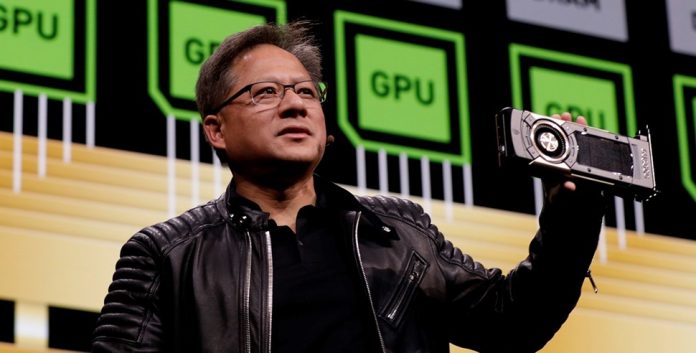
Tech giant Nvidia has once again delivered a record-breaking quarter, posting $39.3 billion in revenue, a 12% increase from the previous quarter and an astonishing 78% jump year-over-year.

This figure surpassed Wall Street’s projected $38.3 billion, reinforcing the company’s dominance in the booming AI and data center markets.

The company’s full-year revenue hit $130.5 billion, up 114% from the previous fiscal year, demonstrating unwavering demand for AI chips despite temporary setbacks, including one of the worst stock slumps in history due to fears of emerging competition from China’s DeepSeek AI.

With Nvidia forecasting next-quarter revenue to reach $43 billion, slightly above analyst expectations, it is now clear that the market panic triggered by DeepSeek’s entry into the AI race has subsided.

DeepSeek’s Shockwave and the Impact on Tech Stocks

The DeepSeek frenzy erupted in early 2025 when the Chinese AI startup DeepSeek AI announced that its new AI model could compete with models from top U.S. firms like OpenAI and Google DeepMind at a fraction of the cost. Investors reacted swiftly, fearing that China’s AI industry was closing the gap with American leaders, potentially threatening Nvidia’s stranglehold on the AI chip market.

The panic reached its peak when Nvidia’s stock lost nearly $600 billion in market capitalization in a single day, marking the largest single-day loss for any U.S. company in history. Tech stocks across the board tumbled, as Nvidia’s decline sent ripples through the AI sector, affecting chipmakers like AMD and Broadcom, as well as AI-heavy companies such as Meta, Alphabet, and Microsoft, all of which rely on Nvidia’s cutting-edge GPUs for AI training.

The mass selloff was fueled by speculation that DeepSeek’s breakthrough could drastically reduce demand for Nvidia’s expensive AI chips, especially in China, one of Nvidia’s largest markets. With U.S. export controls already restricting Nvidia’s high-end chips to China, many feared that DeepSeek’s AI models could lessen reliance on Nvidia’s technology, triggering a long-term decline in its dominance.

DeepSeek’s Disruption Was Short-Lived

While DeepSeek’s emergence sent ripples through the industry, Nvidia has since recovered, as Big Tech continues to aggressively invest in AI computing power. The AI chip race has intensified rather than slowed down, and Nvidia remains the primary supplier of high-performance GPUs.

In fact, China’s demand for Nvidia’s chips has surged, particularly for the H20 GPUs, which were designed to comply with U.S. export controls. Industry sources suggest that Chinese firms are stockpiling Nvidia chips, likely anticipating potential new U.S. restrictions from Donald Trump’s administration.

Additionally, the DeepSeek panic failed to dent Big Tech’s spending spree on AI infrastructure. Companies like Meta, Amazon, Google, and Microsoft have committed to spending as much as $320 billion on AI-related infrastructure, ensuring that demand for Nvidia’s chips remains sky-high.

Nvidia’s Data Center Boom

Nvidia’s data center division, which accounts for the majority of its revenue, delivered $35.6 billion in sales, up 93% year-over-year. This figure crushed analyst expectations of $34.2 billion, proving that Nvidia continues to dominate the AI chip industry despite mounting competition and geopolitical tensions.

The AI boom is showing no signs of slowing down, with companies racing to secure Nvidia’s cutting-edge hardware to train and deploy generative AI models. The insatiable demand for computing power has allowed Nvidia to sustain record-breaking revenue growth, even as margins continue to face short-term pressures.

However, one of the few weak spots in Nvidia’s earnings report was gross margins, which fell for the second consecutive quarter, coming in at 73.5%. CFO Colette Kress attributed this temporary margin compression to the rollout of Nvidia’s next-generation Blackwell architecture, which is expected to drive even greater AI performance in the coming quarters.

Despite the margin decline, Nvidia has assured investors that it remains highly profitable and that gross margins should stabilize once Blackwell enters full-scale production. Nvidia’s stock has surged 171% in 2025, accounting for more than 20% of the S&P 500’s overall gains this year.

Generative AIs will Redesign the Edtech Market Globally

0

Truly unfortunate for this: “Edukoya, the Nigerian edtech startup that once held the promise of revolutionizing online learning in Africa, has officially shut down, marking a significant blow to the country’s digital education sector. The closure comes just four years after the startup secured $3.5 million in pre-seed funding—Africa’s largest at the time.”

Like Chegg and others, free ChatGPT, Gemini and other genAIs are making things difficult for edtech companies. Yes, if students can get ChatGPT to solve the equations, and learn, why would they subscribe to your platform?

According to recent reports, Chegg lost approximately 21% of its user base, representing a decline of around 3.6 million subscribers year-over-year, primarily attributed to competition from AI-powered search results like Google’s AI Overviews. 

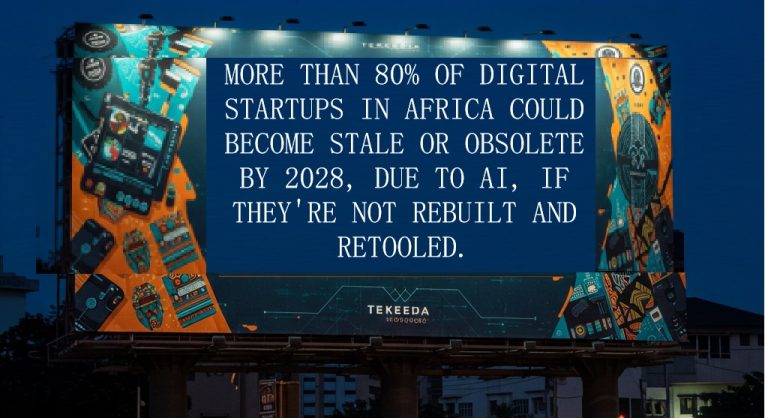
Remember my note: by 2028, a huge number of Africa’s digital startups will become stale or obsolete if they do not evolve. Many edtech companies are collapsing around the world because what used to be a premium product is now commoditized by chatbots and AI systems.

The Risk for African Startups in AI Era

Four Years After Raising $3.5m, Nigerian Edtech Startup Edukoya Shuts Down, Cites Market Challenges

Nigeria’s Oil Refining Sector Posts First Growth in Five Years, Driven by Dangote Refinery Expansion

0

Nigeria’s oil refining sector recorded its first quarterly growth in five years in the fourth quarter of 2024, marking a crucial turnaround in a historically underperforming industry.

The latest Gross Domestic Product (GDP) report from the National Bureau of Statistics (NBS) revealed that the refining sector grew by 9.59% in Q4 2024, ending a prolonged period of contraction that had persisted since 2018.

An analysis by Nairametrics Research shows that the last time the oil refining sector posted positive growth was in Q4 2018 when it expanded by 33.6%. However, the sector has since suffered a continuous decline due to aging infrastructure, inadequate refining capacity, and heavy dependence on imported petroleum products.

The recovery in 2024 underpins a major shift, largely driven by the operational launch of the 650,000-barrel-per-day Dangote Refinery.

However, the nominal value of the refining sector was recorded at N20.5 billion in 2024, slightly lower than the N22.8 billion recorded in 2023. This suggests that while real output has improved, the monetary value of refining activities still trails pre-2018 levels, emphasizing the fragility of the recovery.

Dangote Refinery’s Expansion Fuels Growth in the Refining Sector

The primary catalyst behind the resurgence of Nigeria’s refining sector is the Dangote Refinery, which began operations in mid-2024. The refinery, recognized as the world’s largest single-train refinery, has significantly altered Nigeria’s refining landscape by producing and supplying refined petroleum products both domestically and internationally.

Dangote Refinery has been actively expanding its reach into international markets, exporting refined products to countries that previously relied on fuel imports from Europe and Asia. The refinery’s entry into these markets has positioned Nigeria as a key player in the global refining business, while also reducing the country’s dependence on imported fuel.

Domestically, Dangote has been aggressively pushing to win over Nigerian fuel marketers and consumers who have long relied on fuel imports. The refinery has strategically reduced its supply prices, making locally refined petroleum products more attractive than imported alternatives. This competitive pricing strategy is aimed at capturing a larger share of the domestic market, ensuring that more fuel is sourced from within Nigeria rather than being shipped in from abroad.

The ability of the Dangote Refinery to sustain this growth trajectory is expected to play a vital role in ensuring continued expansion in Nigeria’s refining sector. If the refinery maintains its competitive pricing and continues to expand its export footprint, the refining sector is likely to experience further gains in 2025 and beyond.

The Growth Could Have Been Bigger if State-Owned Refineries Were Functional

While the growth recorded in Q4 2024 is a welcome development, industry experts believe the expansion could have been much larger if Nigeria’s state-owned refineries, managed by the Nigerian National Petroleum Company Limited (NNPCL), were fully operational.

For years, Nigeria’s three major state-owned refineries—located in Port Harcourt, Warri, and Kaduna—have remained largely inactive, operating at near-zero capacity despite multiple rehabilitation efforts. If these refineries were functioning at even partial capacity, Nigeria’s domestic refining output would have been significantly higher, further reducing fuel importation and strengthening the local refining sector.

The failure of the NNPC to revive these refineries has left Dangote Refinery as the sole major player in Nigeria’s refining sector. While Dangote’s operations are helping to stabilize supply, the absence of additional refining capacity from state-owned facilities means that the Nigerian refining sector is seemingly monopolistic.

Impact on Nigeria’s Trade Balance and Foreign Exchange Stability

The resumption of domestic refining activities has had a positive impact on Nigeria’s trade balance. Previously, the country spent billions of dollars annually on fuel imports, which placed immense pressure on foreign exchange reserves and contributed to naira depreciation. With Dangote Refinery ramping up production, Nigeria’s fuel import bill has started to decline, reducing the demand for foreign exchange and easing pressure on the naira.

However, the full benefits of local refining are yet to be fully realized. The naira remains weak, and fuel importation has not been completely phased out.

Overall Oil Sector Growth and Government Reforms

Beyond the refining sector, the broader oil industry experienced sustained growth throughout 2024, posting an annual GDP expansion of 5.54%. This represents a significant rebound from the 2.22% contraction recorded in 2023. On a quarterly basis, the oil sector maintained positive growth across all four quarters, although growth in Q4 2024 slowed to 1.48%, a sharp drop from the 12.11% recorded in Q4 2023. The slowdown was primarily due to base effects, as the high growth in 2023 set a tough benchmark for year-on-year comparison.

Several factors contributed to the overall recovery in Nigeria’s oil sector. Higher international crude oil prices provided a strong revenue boost for Nigeria’s oil earnings, while crude oil output increased from an average of 1.44 million barrels per day (mbpd) in 2023 to 1.5 mbpd in 2024.

The administration of President Bola Tinubu also implemented key policy reforms aimed at revitalizing the sector. These included fiscal incentives for deepwater and midstream gas projects, streamlining contracting processes to reduce approval timelines from 36 months to six months, and adjusting local content requirements to encourage foreign investment without driving up project costs.

Enhanced security measures in oil-producing regions also helped reduce crude oil theft, ensuring that more output reached the market and boosting investor confidence in the sector.

Challenges Ahead

Despite the positive momentum in Nigeria’s refining and oil sector, several challenges remain. Regulatory uncertainty continues to be a concern for investors, as shifting government policies and unclear regulations create an unpredictable business environment. Infrastructure deficits persist, particularly in transportation and storage facilities for refined products. Security risks, including pipeline vandalism and militant activities in the Niger Delta, remain a major threat to steady production and investment in the industry.

Against this backdrop, global oil and gas investors have funneled an estimated $80 billion into energy projects elsewhere, largely bypassing Nigeria over the past decade, according to Olu Verheijen, Special Adviser to President Bola Tinubu on Energy.

To reverse this trend, she said Tinubu issued three landmark directives in February 2024—Directives 40, 41, and 42—designed to remove investment bottlenecks and enhance Nigeria’s competitiveness in the global energy market.