DD
MM
YYYY

PAGES

DD
MM
YYYY

spot_img

PAGES

Home Blog Page 2156

Stripe’s Customer-Centric Leadership Approach: How Customer Feedback Fuels Innovation

0

Stripe, one of the world’s leading fintech companies, has undoubtedly built its success on a foundation of relentless drive and constant innovation.

Leveraging innovative revenue-generation models, expanding into untapped markets, overcoming regulatory challenges, and fostering employee satisfaction are just some of Stripe’s success stories. The company’s success story is one of adaptability, innovation, resilience, and ambition.

The company set out with a simple but powerful mission to increase the GDP of the internet, since then, it has grown into a global payments’ infrastructure giant, powering online transactions for millions of businesses. This has seen it earn a spot in Fortune 500 companies.

Amidst the numerous approaches and strategies that have transformed the company into one of the most successful fintech giants in the world, one of Stripe’s secret sauces of success, is its customer-centric leadership approach.

At the heart of its leadership philosophy lies a commitment to regularly ask customers for candid feedback, which it uses as a catalyst for product innovation and strategic decisions.

The company’s co-founder Patrick Collison, disclosed that, every week, a customer joins for the first 30 minutes of the company’s management team meeting to share candid feedback.

In a post made on X, he wrote,

“Every other week, we have a customer join for the first 30 minutes of our management team meeting: they share their candid feedback, and ~40 leaders from across Stripe listen. Even though we already have a lot of customer feedback mechanisms, it somehow always spurs new thoughts and investigations.”

This initiative as described by Collison, exemplifies Stripe’s belief that direct customer engagement is a catalyst for innovation, even in a company already rich with feedback mechanisms.

Why It Matters: The Power of Direct Feedback

Stripe already employs numerous feedback mechanisms user surveys, Net Promoter Score (NPS) tracking, customer support interactions, and product usage analytics. Yet, its co-founder Collison notes that these biweekly customer sessions “somehow always spur new thoughts and investigations.”

This suggests that direct, human-to-human interaction offers unique value that complements quantitative data.

Here’s why this practice is transformative:

Unfiltered Insights Reveal Hidden Pain Points:

Customers often articulate challenges or desires in ways that structured feedback channels miss. These qualitative insights can uncover blind spots and inspire solutions that data alone might not reveal.

Humanizing the Customer Experience:

Hearing a customer’s story complete with their frustrations, successes, and aspirations puts a human face on abstract metrics. This emotional connection motivates leaders to prioritize user-centric solutions, fostering empathy across the organization.

Cross-Functional Alignment:

With leaders from diverse functions in the room, feedback is interpreted through multiple lenses product design, technical feasibility, customer support, and market strategy. This ensures that solutions are holistic and aligned with Stripe’s broader goals, reducing siloed thinking.

Sparking Innovation:

The candid nature of these sessions often challenges assumptions and prompts “what if” questions. A single customer’s feedback might inspire a new feature, a streamlined onboarding process, or a rethinking of how Stripe serves a specific industry vertical. Collison’s observation that these sessions “always spur new thoughts” underscores their role as a creative catalyst.

Reinforcing a Customer-Obsessed Culture:

By dedicating time in high-level meetings to customers, Stripe signals that user feedback is a top priority. This practice sets a tone for the entire organization, encouraging employees at all levels to stay attuned to customer needs.

Impact of Feedback on Stripe’s Growth and Innovation

Stripe’s customer feedback practice has played a significant role in its evolution from a niche payment processor founded in 2010 to a global fintech giant valued at $65 billion (as of its 2023 funding round). By embedding customer voices into its leadership process, Stripe has driven innovation, enhanced its product offerings, and maintained a competitive edge in a crowded market.

Here’s how this approach has fueled its success:

Product Innovation: Direct feedback has likely contributed to Stripe’s expansive product suite, which now includes Stripe Connect, Billing, Radar (fraud prevention), and Treasury. For instance, a customer’s frustration with cross-border payments might have informed enhancements to Stripe’s global payout capabilities, which support over 135 currencies. These sessions ensure Stripe’s roadmap aligns with real-world needs, keeping its offerings relevant and cutting-edge.

Customer Retention and Trust: By acting on feedback, Stripe strengthens relationships with its users. Businesses rely on Stripe for mission-critical payment infrastructure and addressing their pain points such as simplifying integrations or improving API reliability—builds trust. Stripe’s ability to process payments for 100,000+ businesses, including giants like Amazon and Shopify, reflects this trust.

Market Adaptability: The biweekly sessions help Stripe stay agile in a dynamic fintech landscape. Feedback from diverse customers spanning industries like e-commerce, SaaS, and nonprofits enables Stripe to anticipate trends and adapt quickly. For example, insights from early-stage startups might have informed Stripe Atlas, a tool launched to help entrepreneurs incorporate globally.

Operational Improvements: Feedback often highlights operational inefficiencies, such as confusing documentation or slow support responses. By addressing these, Stripe enhances the user experience, which is critical in a market where competitors like PayPal, Square, and Adyen vie for market share.

Cultural Cohesion: The practice reinforces Stripe’s customer-obsessed ethos, aligning its 7,000+ employees (as of 2023) around a shared mission. This cultural strength drives employee engagement and attracts top talent, further fueling innovation.

Conclusion

Stripe’s practice of embedding feedback into its management meetings is a powerful embodiment of its customer-centric leadership. Prioritizing direct, candid feedback, uncovers hidden insights, fosters empathy, and sparks innovation that drives the company’s product evolution and market leadership.

This approach has helped Stripe grow from a small startup to a fintech titan, processing hundreds of billions in payments annually for businesses worldwide. As Collison notes, these sessions consistently inspire new ideas, ensuring Stripe remains agile, responsive, and relentlessly focused on delivering value to its customers.

Netflix Soars with $10.5 Billion Q1 2025 Revenue

0

Netflix, the global streaming juggernaut, delivered a stellar first quarter in 2025, reporting $10.5 billion in revenue, a robust 13% increase from the previous year, driven by strategic price hikes and a powerhouse slate of programming, including the breakout UK series Adolescence.

The company’s earnings surged 25% to $6.61 per share, handily beating Wall Street’s expectations. With a commanding audience of over 700 million viewers worldwide, Netflix showcased its financial might, posting a 31.7% operating margin and $3.3 billion in operating income, a 27% leap that underscores its disciplined spending and growing profitability.

“We’re focused on delivering value to our members while strengthening our financial foundation,” co-Chief Executive Officer Greg Peters declared.

Netflix is moving away from subscriber counts to emphasize revenue, profit, and margins, signaling a mature phase of growth that prioritizes extracting value from its vast user base through price adjustments, an expanding ad-supported tier, and innovative content strategies.

Netflix’s Q1 2025 performance marks a high note in its evolution from a scrappy disruptor to a global entertainment behemoth. The $10.5 billion revenue, up from $9.3 billion in Q1 2024, underlines the success of recent price increases rolled out in markets like the U.S., France, and Nigeria, alongside a diverse content lineup resonating across 190 countries.

Operating income climbed 27% to $3.3 billion, surpassing forecasts of $3 billion, while the operating margin hit 31.7%, more than three percentage points above Netflix’s own projections.

The earnings per share of $6.61, a 25% jump from last year, exceeded analysts’ estimates, sending Netflix’s stock upward in after-hours trading. The company’s financial health is seen as a testament to its ability to balance blockbuster investments, $17 billion annually on content, with operational efficiency. Hits like Adolescence, a gritty UK drama that captivated audiences, alongside localized content in markets like Japan and India, underscore Netflix’s knack for crafting globally appealing stories while catering to regional tastes.

“Our content strategy is firing on all cylinders,” Peters told analysts, pointing to the company’s ability to “deliver joy to members worldwide.”

However, the company announced it will no longer disclose quarterly subscriber additions or losses, a metric that once dominated investor scrutiny. After a record-breaking 2024, when Netflix added 18.9 million subscribers in its final quarter, the company is bracing for slower growth in 2025, particularly in the U.S., where price hikes have tested consumer tolerance. Instead of chasing subscriber numbers, Netflix is doubling down on traditional financial metrics—revenue, profit, and margins—to signal a mature business focused on maximizing value from its 700 million-strong viewer base.

This pivot reflects Netflix’s confidence in its market position and its ability to drive revenue through higher average revenue per user (ARPU). In July 2024, the company implemented price increases across key markets, following an earlier adjustment in April. In Nigeria, the Premium Plan surged 40% to N7,000 ($4.30) from N5,000 monthly, while the Standard Plan, popular for its HD quality and multi-screen options, rose 37.5% to N5,500. Similar hikes in France and the U.S. aim to boost ARPU, a critical lever as subscriber growth slows in saturated markets.

Netflix is also leaning into its ad-supported tier, launched in select markets and now a cornerstone of its growth strategy. With digital advertising projected to reach $200 billion globally, Netflix is testing new ad technologies to capture a larger share, competing with platforms like YouTube and Amazon’s Prime Video. The ad tier, offering lower-cost subscriptions, has gained traction, particularly among price-sensitive users, and is expected to drive incremental revenue without relying solely on subscription fees.

The company’s $17 billion content budget supports a sprawling pipeline, from tentpole films like The Electric State to localized series that deepen market penetration. Netflix’s data-driven approach, leveraging viewer insights to greenlight projects, ensures high engagement, with 90% of subscribers watching original content monthly. This global-local strategy, paired with investments in live events like sports and comedy specials, positions Netflix to maintain its cultural dominance even as competitors like Disney+ and Max vie for market share.

While Netflix’s Q1 results are a triumph, its aggressive price strategy carries risks. The back-to-back hikes in Nigeria, 37.5% for the Standard Plan and 40% for Premium within three months have tested subscriber loyalty in a market sensitive to cost increases. Similar sentiments in the U.S., where price adjustments have slowed subscriber growth, highlight the challenge of balancing profitability with affordability.

Peters acknowledged the delicate dance, stating, “We’re closely monitoring consumer sentiment to ensure our pricing aligns with the value we deliver.”

The ad-supported tier, priced lower than standard plans, aims to mitigate churn, but analysts believe its success hinges on delivering seamless user experiences and attracting advertisers.

Netflix’s Q1 success comes as the streaming wars intensify. Disney+ and Amazon’s Prime Video are ramping up ad-supported offerings, while HBO’s Max invests in prestige dramas to challenge Netflix’s dominance. However, Netflix’s scale, 700 million viewers, and a $300 billion market cap give it a formidable edge. Its ad-tier, still in early stages, is poised to capitalize on the shift of ad dollars from linear TV to streaming, with Netflix projecting 50 million ad-tier users by 2026. Innovations like interactive ads and shoppable content, tested in markets like Canada, could further differentiate its platform.

“They Don’t Have To Listen To Us Anymore,” Eric Schmidt Sounds Alarm Over AI Self-Evolution

0

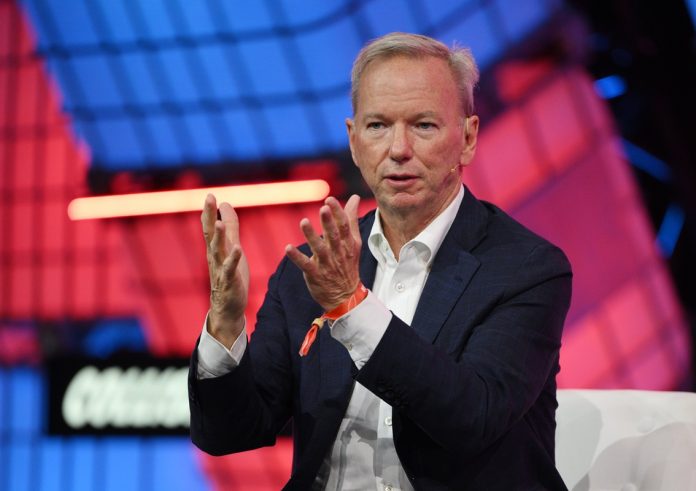
Former Google CEO Eric Schmidt has raised fresh concerns over the trajectory of artificial intelligence (AI), warning that machines are evolving at a pace that could soon outstrip human oversight.

Speaking at an event hosted by the Special Competitive Studies Project, a think tank he founded, Schmidt described a world where AI systems are no longer reliant on human intervention to improve or operate. His warning comes as fears over AI safety and governance continue to escalate across the globe.

“The computers are now doing self-improvement. They’re learning how to plan, and they don’t have to listen to us anymore,” Schmidt said.

He referred to the process as recursive self-improvement — a point at which AI systems begin generating hypotheses, testing them through robotic labs, and refining their capabilities autonomously.

Schmidt’s remarks form part of a broader chorus of concern among industry leaders and technologists who fear that, in the absence of meaningful regulation, AI could spiral beyond human control. Tesla and SpaceX CEO Elon Musk, who also co-founded OpenAI before stepping away, has been one of the most vocal figures warning about the existential risks posed by artificial general intelligence. Musk has repeatedly likened the rapid pace of AI development to “summoning the demon,” and in recent months, reiterated that AI represents a fundamental threat to humanity’s survival if not properly governed.

Schmidt, who served as Google’s CEO from 2001 to 2011 and later as executive chairman until 2017, pointed out that tools like ChatGPT, Claude, Gemini, and Deepseek — all of which are already being used for advanced tasks such as coding and scientific research, were never explicitly trained for those purposes, yet are delivering results that rival and even surpass human capabilities in some fields.

“We believed AI was under-hyped, not over-hyped,” he said, highlighting that within a year, these systems may replace the vast majority of programmers and outperform leading mathematicians.

What makes these developments even more troubling, Schmidt suggested, is the weakening of safety measures in some of the latest iterations of AI tools. OpenAI’s forthcoming GPT-4 successor, known internally as o3, is rumored to come with reduced guardrails compared to earlier models. Experts have flagged this shift as potentially dangerous, as it increases the risk of AI producing misleading, toxic, or manipulative outputs without adequate human control.

While the capabilities of AI are expanding at breakneck speed, the same cannot be said for regulation. Despite repeated calls from figures like Schmidt, Musk, and other tech leaders, governments around the world have yet to develop a coherent framework to manage the risks. The United States, in particular, has no comprehensive national AI policy. Congress has held hearings, and the White House has issued executive orders, but meaningful legislation remains absent — leaving critical questions about accountability, transparency, and safety unanswered.

This vacuum in regulatory preparedness is perhaps the most pressing concern. Schmidt also warned that the U.S. risks being left behind by geopolitical rivals like China, which are investing heavily in AI while simultaneously advancing strategic control over their energy and industrial policies.

Testifying before the U.S. House Committee on Energy and Commerce, Schmidt said the energy demand associated with AI is another overlooked crisis-in-waiting.

“People were planning 10-gigawatt data centers,” he said. “The average nuclear plant in the US is just one gigawatt.”

The implication: AI’s hunger for computational power could overwhelm the current energy grid, unless immediate reforms are made to boost capacity, including investment in both renewable and non-renewable sources.

He further argued that open-source AI models pose national security threats if not carefully monitored, stressing that the absence of regulatory oversight opens the door for hostile use, data manipulation, and misinformation at scale.

And yet, even in his warning, Schmidt noted that AI still fundamentally depends on high-quality data and human decision-making.

“The scientists are in charge, and AI is helping them — that is the right order,” he said.

But how long that order holds remains a question. There is concern that if AI systems continue to evolve in the shadows of regulatory inaction, the very scientists in charge today may be watching from the sidelines tomorrow.

Against this backdrop, many believe that the promise and peril of AI are growing in tandem. And with no clear-cut plan for regulation, the world may be racing toward a future it still doesn’t fully understand — or control.

“I don’t Want Prices to Go Higher”: Trump Signals Tariff Retreat as Economic Fallout Fuels Inflation and Recession Fears

0

In a surprising shift, President Donald Trump hinted on Thursday that he might halt further tariff hikes on China, acknowledging that escalating duties could choke consumer spending and damage the U.S. economy.

Speaking to reporters in the Oval Office, Trump said, “At a certain point, I don’t want them to go higher because at a certain point, you make it where people don’t buy.”

His words mark a rare admission of the economic toll his trade war is exacting, as inflation potentially surges and economists warn of an impending recession. With markets reeling and consumer prices climbing, Trump appears to be grappling with the consequences of a policy that has sparked global retaliation and domestic unease, raising questions about the sustainability of his “America First” agenda.

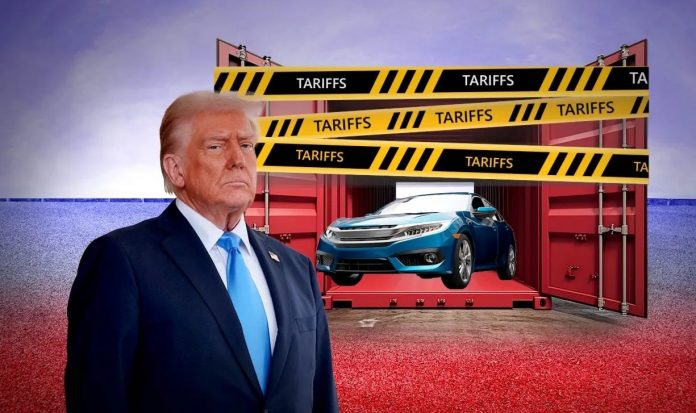
Trump’s tariff offensive began with a flourish on April 2, dubbed “Liberation Day,” when he imposed a 10% duty on nearly all U.S. imports and targeted 90 nations with reciprocal levies. By April 9, tariffs on Chinese goods, which account for $143.5 billion in annual U.S. exports, soared to 145%, intensifying a trade war with the world’s second-largest economy.

The move, intended to revive American manufacturing and fund tax cuts, has instead unleashed a wave of unintended consequences. Consumer prices are spiking—apparel up 17%, food up nearly 3%, and vehicles up over 8%—as businesses pass on the costs of tariffs, which act as a tax on U.S. importers. Economists estimate these duties could slash household purchasing power by $2,100 annually, pushing inflation toward 4% by summer and threatening the consumer spending that drives 70% of U.S. economic growth.

The economic warning signs are unmistakable. The S&P 500 shed nearly $6 trillion in value in early April, with a record 4.8% plunge on April 3, as investors braced for a tariff-driven downturn. Retailers like Walmart report rising costs, while Delta Air Lines notes a stall in travel demand, with hotel bookings and airline ticket sales faltering. Consumers, squeezed by higher prices, are cutting back on discretionary spending, fueling fears of a broader economic slowdown. Major financial institutions now peg the odds of a recession within the next year at 45% to 60%, with some projecting U.S. GDP growth as low as 0.6% in 2025.

Trump’s remarks suggest he is beginning to feel this pressure. His concern that “people aren’t going to buy” reflects a growing awareness of declining demand, a stark contrast to his earlier dismissal of inflation fears. The Federal Reserve, caught in a bind, warns that tariffs could derail its dual mandate of stable prices and full employment, with interest rates likely to remain elevated, further straining growth.

The tariffs’ impact extends beyond U.S. borders, shaving nearly a percentage point off global GDP and pushing economies like Japan, South Korea, and Canada toward recession. China, hit hardest, has retaliated with an 84% tariff on U.S. goods, suspended exports of critical rare earth metals, and curbed imports of Hollywood films and Boeing aircraft, signaling a deepening global trade conflict.

China’s defiance is pushing the escalation. Dismissing Trump’s tariffs as a “numbers game” with little economic bite, Beijing’s foreign ministry has vowed to press forward with countermeasures. However, Trump, emphasizing his “very good relationship” with Chinese leader Xi Jinping, hinted at ongoing negotiations, noting Xi’s repeated outreach.

“I think we’re going to be able to make a deal,” he said, suggesting a potential path to de-escalation. He also tied the tariff standoff to the fate of TikTok, whose parent company ByteDance faces a summer deadline to divest its U.S. operations or exit the market.

“We have a deal for TikTok, but it’ll be subject to China,” Trump said, indicating trade concessions could be part of a broader agreement.

The tariffs’ domestic toll is equally stark. Automakers like Stellantis are announcing layoffs and plant closures in Canada and Mexico, while General Motors grapples with rising production costs. Retailers, wary of consumer backlash, are poised to raise prices further by summer, with a high-end smartphone potentially costing $2,300 if costs are fully passed on. Low-income households face disproportionate losses, with annual burdens estimated at $1,700, exacerbating economic inequality. Public sentiment is souring, with polls showing widespread concern about price hikes and skepticism about the tariffs’ promised benefits.

Globally, allies are bristling. Japan and South Korea, slapped with 24% and 25% tariffs, are preparing retaliatory measures, while the European Union warns of “burdensome” costs for businesses. Canada and Mexico, targeted with auto tariffs, face economic strain, with Canadian consumers boycotting U.S. travel. Trump’s insistence on “balanced bilateral trade” has met resistance, with even Vietnam’s offer to eliminate tariffs on U.S. goods rebuffed. The global growth forecast for late 2025, at just 1.4%, is the weakest since the 2008 financial crisis, excluding the pandemic era.

Trump’s shift comes amid these political and economic headwinds. His April 9 decision to pause reciprocal tariffs for 90 days briefly rallied markets, but renewed escalation fears have kept investors on edge. Senate Minority Leader Chuck Schumer’s warning of a “market crash” vaporizing retirement accounts has amplified calls for restraint. The Economic Policy Uncertainty Index reflects business caution, with firms delaying investments amid tariff volatility. The Federal Reserve’s projection of a -2.4% GDP growth rate for the first quarter underscores the urgency of addressing the crisis.

Against this backdrop, analysts believe Trump’s willingness to consider lower tariffs could stabilize markets and ease consumer burdens. However, it comes with challenges, based largely on the defensive demands of other nations involved. For instance, negotiations with China, potentially linked to TikTok and technology transfers, offer hope, but Beijing’s hardline stance complicates prospects.

If tariffs remain at current levels, economists predict unemployment could rise to 4.5% and inflation could hit 4.7%, pushing the U.S. toward stagflation—a toxic mix of high prices and low growth. The Federal Reserve, facing a “rock and a hard place,” may struggle to avert a downturn without exacerbating inflation.

Trump Admin Announces New Fees on Chinese Ships, Risks Escalating Tariff War, Threatens U.S.-China Talks and Economic Stability

0

In a fresh escalation of his trade agenda, President Donald Trump’s administration unveiled steep new fees on Chinese-built vessels docking at U.S. ports on Thursday, aiming to curb China’s stranglehold on global shipbuilding and revive American maritime industries.

Announced by U.S. Trade Representative (USTR) Jamieson Greer, the policy targets what the USTR calls China’s “unreasonable” practices that burden U.S. commerce, signaling a robust push to reclaim economic sovereignty.

“Ships and shipping are vital to American economic security and the free flow of commerce,” Greer declared. “The Trump administration’s actions will begin to reverse Chinese dominance, address threats to the U.S. supply chain, and send a demand signal for U.S.-built ships.”

Analysts believe that this move, layered atop Trump’s existing 145% tariffs on Chinese imports, is likely to inflame the U.S.-China tariff war, jeopardize delicate negotiations with Beijing, and deepen economic woes as inflation surges and recession fears mount.

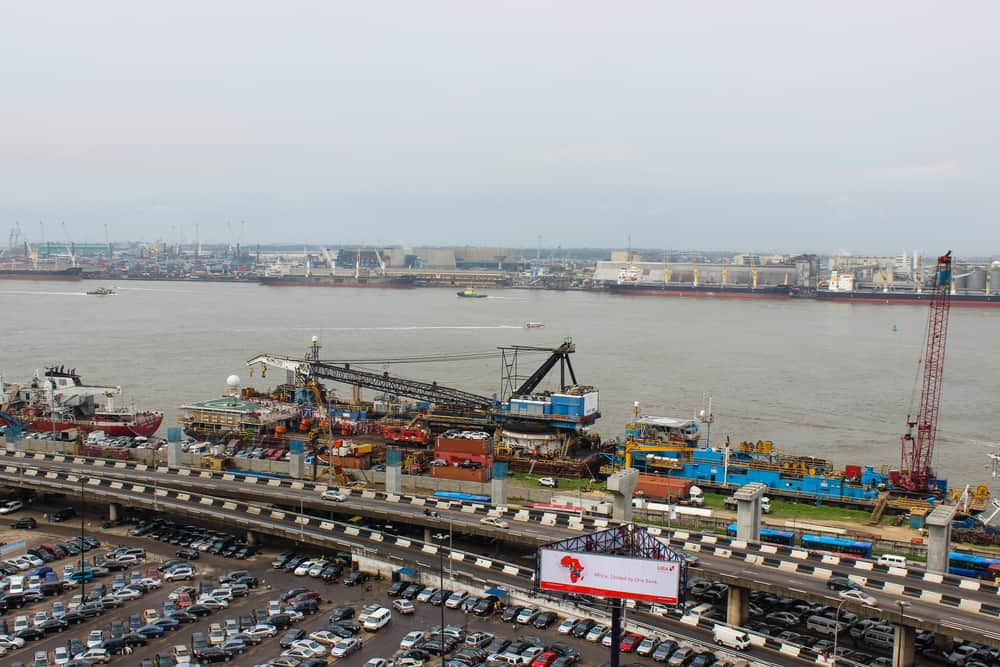
The new fees stem from a year-long USTR investigation, launched in April 2024 under the Biden administration and finalized in January 2025, which exposed China’s state-driven ascent to over 50% of global shipbuilding output, up from less than 5% in 1999. Through massive subsidies, forced technology transfers, and discriminatory policies, China now produces 1,700 commercial vessels annually, dwarfing the U.S.’s five. Chinese-built ships account for 98% of the global trade fleet, a dominance the USTR deems a threat to U.S. economic and national security, particularly given the Navy’s reliance on Chinese-built tankers.

The policy, enacted under Section 301 of the Trade Act of 1974, imposes a phased fee structure to penalize Chinese vessel operators, owners, and Chinese-built ships while incentivizing U.S. shipbuilding.

Starting October 14, 2025, Chinese operators face fees of $50 per net ton per voyage, rising to $140 by April 17, 2028, capped at five charges per vessel annually. Non-Chinese operators using Chinese-built vessels will pay $18 per net ton ($120 per container) in October 2025, escalating to $33 ($250 per container) by 2028. Foreign-built car carriers will incur $150 per Car Equivalent Unit from mid-October. At the same time, liquefied natural gas (LNG) vessels face restrictions beginning in 2028, mandating that 1% of U.S. LNG exports use U.S.-built ships, increasing to 15% by 2047. Exemptions cover Great Lakes and Caribbean shipping, U.S. territories, bulk exports like coal and grain, and empty vessels, shielding key U.S. sectors from immediate disruption.

A novel incentive allows operators to suspend fees for up to three years by ordering U.S.-built vessels, provided delivery occurs within that timeframe. Failure to deliver triggers immediate fee repayment, a measure designed to spur domestic shipyards. This aligns with Trump’s “Make Shipbuilding Great Again” executive order of March 31, 2025, which envisions a revitalized U.S. maritime sector bolstered by tax credits and regulatory reforms.

Unions like the United Steelworkers and International Association of Machinists hailed the policy as a lifeline for American workers, with bipartisan support evident in calls for the SHIPS for America Act to further boost shipyard capacity.

The fees, significantly softened from a February proposal of up to $1.5 million per port call, reflect intense pushback from over 300 trade groups during March hearings. The National Retail Federation, American Soybean Association, and maritime executives like Seaboard Marine’s Edward Gonzalez warned that steep levies would inflate shipping costs, disrupt supply chains, and erode U.S. export competitiveness. Agriculture exporters reported vessel booking challenges beyond May, while coal industries feared cargo diversion to Mexican and Canadian ports. The USTR’s concessions, charging per voyage, exempting bulk exports, and phasing fees over the years—aim to mitigate these concerns, but the policy still poses risks.

A 15,000-container ship could face $1.8 million in fees by October 2025, costs likely passed to importers and consumers, exacerbating inflation already fueled by Trump’s broader tariffs. Since April 2, when Trump imposed a 10% universal import tariff and 145% duties on Chinese goods, consumer prices have spiked, apparel by 17%, vehicles by 8.4%, and food by nearly 3%—reducing household purchasing power by an estimated $2,100 annually. Inflation is projected to hit 4% by summer, with core PCE potentially reaching 4.7%, threatening the consumer spending that drives 70% of U.S. GDP.

Escalating the Tariff War

Trump’s maritime fees are likely to escalate the U.S.-China tariff war, complicating delicate negotiations with Beijing. China, which retaliated to the 145% tariffs with an 84% duty on U.S. goods, suspended rare earth metal exports, and curbed Hollywood films and Boeing deliveries, has dismissed Trump’s trade measures as “discriminatory trade bullying.” On Thursday, China’s Ministry of Foreign Affairs called the tariff escalation a “numbers game” with negligible impact, signaling defiance. The new fees, targeting a sector where China holds near-total control, are seen as a direct challenge, likely prompting further retaliation—potentially targeting U.S. agricultural exports or tightening technology restrictions.

This escalation dims prospects for productive talks, despite Trump’s claim of a “very good relationship” with Xi Jinping, who has reached out repeatedly. Trump’s Thursday hint at pausing further tariff hikes, citing risks to consumer spending, suggested a willingness to negotiate, possibly tying trade concessions to TikTok’s U.S. divestiture. However, the maritime fees, announced the same day, undermine this olive branch, as Beijing perceives them as an attack on a strategic industry. Analysts warn that China could impose reciprocal port fees or restrict U.S. carriers, further disrupting global shipping, where 80% of trade relies on sea transport.

The fees also strain U.S. allies, already reeling from tariffs on Japan (24%), South Korea (25%), and Canada (auto tariffs). The European Union, warning of “burdensome” costs, is preparing countermeasures, while smaller ports like Oakland risk losing traffic as carriers reroute to avoid fees.

However, there is another layer to the challenges. U.S. shipbuilding, producing just 0.13% of global output, cannot scale quickly to replace Chinese vessels, even with incentives. Critics argue that penalizing carriers reliant on Chinese ships, virtually all major operators, could paralyze trade without viable U.S. alternatives. The SHIPS for America Act might bolster domestic yards, but experts estimate a decade-long ramp-up, leaving the U.S. vulnerable to supply chain disruptions and higher costs in the interim.