DD
MM
YYYY

PAGES

DD
MM
YYYY

spot_img

PAGES

Home Blog Page 216

Judge Upholds $243m Verdict Against Tesla in Landmark Autopilot Fatality Case

0

A federal judge has upheld a $243 million jury verdict against Tesla over a fatal 2019 Autopilot crash, sustaining the first federal jury award tied to a deadly accident involving the driver-assistance system.


A federal judge has rejected Tesla’s attempt to overturn a $243 million jury verdict arising from a 2019 crash involving an Autopilot-equipped Model S that killed a 22-year-old woman and severely injured her boyfriend.

In a decision made public Friday, U.S. District Judge Beth Bloom in Miami said the evidence at trial “more than supports” the August 2025 verdict and that Tesla presented no new arguments that would justify setting it aside. The ruling leaves intact what is widely regarded as the first federal jury verdict concerning a fatal crash involving Tesla’s Autopilot system.

Tesla is expected to appeal.

The case stems from a crash on April 25, 2019, in Key Largo, Florida. George McGee was driving his 2019 Model S at about 62 mph (100 kph) when he bent down to retrieve his dropped cellphone. The vehicle traveled through an intersection and struck an SUV parked on the shoulder. Naibel Benavides Leon and Dillon Angulo were standing beside the SUV at the time. Benavides was killed; Angulo suffered severe injuries.

McGee reached a prior settlement with the plaintiffs and was not part of the verdict against Tesla.

Jurors found Tesla 33% responsible for the crash. They awarded $19.5 million in compensatory damages to Benavides’ estate and $23.1 million to Angulo. The jury also imposed $200 million in punitive damages, to be divided between them, bringing the total judgment to $243 million.

The allocation of fault reflects the jury’s conclusion that driver negligence and product-related factors both played roles in the crash.

In seeking to overturn the verdict, Tesla argued that McGee alone was responsible for the collision and that the Model S was not defective. The company said the verdict “defied common sense” and argued that automakers “do not insure the world against harms caused by reckless drivers.”

Tesla also challenged the punitive damages award, asserting that it did not exhibit “reckless disregard for human life,” the threshold required under Florida law.

Judge Bloom rejected those arguments, writing that the trial record supported the jury’s conclusions and that Tesla had not identified grounds to disturb the findings. By upholding both compensatory and punitive damages, the ruling reinforces the jury’s determination that the case met the legal standard for punitive liability.

Adam Boumel, a lawyer representing Benavides’ estate and Angulo, welcomed the decision.

“From day one, Tesla has refused to accept responsibility,” Boumel said in an email. “Autopilot was defective, and Tesla put it on American roads before it was ready and before it was safe.”

The verdict is a milestone in litigation involving advanced driver-assistance systems. While Tesla has faced numerous lawsuits over crashes involving Autopilot and its Full Self-Driving software, many were dismissed, settled, or resolved before reaching a jury. This case is the first in federal court in which jurors imposed substantial liability for a fatal Autopilot-related crash.

The decision could influence how future juries assess responsibility in cases involving partially automated systems. Autopilot is designed as a driver-assistance feature, requiring drivers to remain attentive and ready to intervene. Tesla has consistently maintained that drivers are responsible for maintaining control of their vehicles at all times.

The plaintiffs, however, argued that the system was defective and that Tesla’s design and deployment decisions contributed to the crash. The jury’s finding that Tesla bore 33% of the responsibility indicates that it accepted at least part of that argument.

The punitive damages component is particularly significant. Such awards are intended not only to compensate victims but also to punish conduct deemed especially egregious and to deter similar behavior. Under Florida law, punitive damages require proof of intentional misconduct or gross negligence. By allowing the award to stand, the court signaled that the jury had sufficient evidence to meet that standard.

Implications for Tesla’s Autonomy Strategy

Elon Musk, Tesla’s chief executive and the world’s richest person, has long positioned the company as a leader in autonomous driving technology for private vehicles and robotaxis. Tesla continues to promote advancements in its driver-assistance systems as a central pillar of its future growth strategy.

The upheld verdict comes as the broader automotive industry races to deploy increasingly sophisticated automation features, while regulators and courts grapple with how to assign responsibility when human drivers and software share control.

Tesla’s expected appeal will likely focus on legal standards for product defect, causation, and punitive damages. Appellate review could address whether the evidence was sufficient to support findings of defect and reckless disregard, as well as whether the size of the punitive award complies with constitutional limits.

U.S. Growth Slows Sharply in Q4 as Shutdown Hits Demand, Inflation Stays Stubbornly High

0

The fourth-quarter slowdown exposes how vulnerable late-cycle U.S. growth has become to fiscal disruptions, even as inflation’s persistence limits the Federal Reserve’s room to respond.


The U.S. economy decelerated more than expected in the fourth quarter of 2025, as a record-length federal government shutdown disrupted public spending, weighed on consumer and export activity, and exposed underlying fragilities in late-cycle growth.

At the same time, inflation remained well above the Federal Reserve’s 2% target, underscoring the policy tension facing central bankers entering 2026.

According to the U.S. Department of Commerce, gross domestic product rose at an annualized 1.4% pace in the final quarter of the year, sharply below the 2.5% Dow Jones estimate and down from 4.4% growth in the third quarter. For all of 2025, the economy expanded 2.2%, compared with 2.8% in 2024.

Shutdown’s Direct and Indirect Costs

The Commerce Department estimated that the government shutdown, which ran from Oct. 1 to Nov. 12, shaved roughly one percentage point from fourth-quarter GDP, though it noted the precise effect “cannot be quantified.” Federal spending and investment dropped 16.6%, dragging overall government outlays down 5.1% for the quarter. State and local spending rose 2.4%, but not enough to offset the federal contraction.

The mechanical impact of lost government activity is only part of the story. Shutdowns also disrupt contractor payments, delay procurement cycles, dampen consumer sentiment among furloughed workers, and inject uncertainty into financial markets. These second-round effects often linger beyond the official end date.

President Donald Trump preemptively attributed the slowdown to the shutdown, writing on Truth Social that it cost “at least two points in GDP” and calling for lower interest rates. His comments again targeted Jerome Powell, chair of the Federal Reserve, whom he has repeatedly criticized over monetary policy.

Consumer and Trade Cooling

Personal consumption expenditures — the engine of U.S. growth — increased 2.4% in the quarter, down from 3.5% in the third quarter. The deceleration suggests that households began to moderate spending amid elevated borrowing costs and persistent price pressures.

Exports fell 0.9% after a 9.6% surge in Q3, reflecting softer global demand and normalization after earlier front-loading of shipments. Net trade, therefore, shifted from a strong contributor to a modest drag.

The inventory component was not highlighted as a major factor, suggesting that businesses are not aggressively rebuilding stockpiles. That indicates cautious corporate behavior rather than exuberant expansion.

Inflation Remains Broad-Based

While growth slowed, inflation data showed little sign of retreat.

The core personal consumption expenditures (PCE) price index — the Fed’s preferred inflation gauge — rose 3% year over year in December, up from November and still well above the central bank’s 2% objective. Headline PCE increased 2.9%. On a monthly basis, both core and headline measures rose 0.4%, exceeding expectations.

Crucially, price pressures were broad-based: goods rose 0.4% and services 0.3%. That distribution suggests inflation is not confined to a narrow category such as energy or tariff-sensitive imports, but remains embedded across sectors.

For policymakers, that breadth complicates the disinflation narrative. Services inflation, often tied to wages and domestic demand, tends to be more persistent. If service costs remain firm, the path back to 2% could be prolonged.

Underlying Demand Still Holding

Despite the weak headline GDP figure, underlying private-sector demand showed resilience. Final sales to private domestic purchasers — a measure that excludes volatile trade and government components — increased 2.4%. Though slightly below the prior quarter’s pace, it signals that household and business demand did not collapse.

Gross private domestic investment rose 3.8% after being flat in Q3, indicating that corporate capital expenditure remains intact. That strength may reflect continued spending on automation, digital infrastructure, and artificial intelligence technologies, areas that have supported productivity gains.

Heather Long of Navy Federal Credit Union described the shutdown’s impact as harmful but characterized the broader economy as resilient, citing solid consumption and AI-driven momentum.

Monetary Policy Crosscurrents

The Fed cut its benchmark interest rate by 75 basis points in late 2025 but has since shifted to a more cautious stance. Officials are navigating a narrowing corridor: growth is slowing, yet inflation remains elevated.

If the fourth-quarter weakness proves transitory and growth rebounds as federal operations normalize, the Fed may maintain a holding pattern. However, should consumption weaken further while inflation remains stuck near 3%, policymakers could confront a stagflation-lite environment — cooling output alongside sticky prices.

Financial markets will scrutinize labor data and early 2026 spending trends for confirmation of either scenario.

Fiscal Fragility and Political Risk

The episode underscores how political disruptions can reverberate through a $31.5 trillion economy. Even in an expansion supported by private demand, a federal shutdown can quickly dent output.

Repeated shutdown threats also risk eroding business confidence and raising risk premiums in financial markets. Investors price not only economic fundamentals but also governance stability. Persistent fiscal brinkmanship could introduce structural drag beyond any single quarter’s arithmetic subtraction.

2026 Outlook: Rebound Likely, But Not Guaranteed

Economists widely anticipate a bounce-back in early 2026 as deferred federal spending resumes and pent-up activity flows back into the system. The question is magnitude. A technical rebound could lift first-quarter growth, but underlying trends will depend on consumer resilience, labor market stability, and inflation dynamics.

If inflation eases gradually and investment momentum continues, growth could stabilize near its long-run potential rate. If inflation proves entrenched and rate cuts remain constrained, momentum may fade more meaningfully.

Upshot Launching as high-stakes prediction card platform, amid Moonbirds Blind Box Card Solling for $3150

0

Upshot is the world’s first high-stakes prediction card platform, reimagining prediction markets as a collectible trading card game. Users open mystery packs to reveal digital prediction cards tied to real-world events like culture, internet trends, tech outcomes.

Each card includes a prediction, resolution date, and potential cash prize—if the prediction resolves correctly in your favor, you redeem real rewards. The platform gamifies predictions: collect, trade, and flip cards while earning XP and positioning for rewards.

It’s built on Base (Coinbase’s Layer 2), blending elements of Polymarket-style markets with TCG (trading card game) mechanics like Pokémon or Magic, but focused on high-stakes, accessible speculation for everyday users. Open Beta is live now. You can sign up via email or X, claim daily free cards/gifts, buy packs, reveal predictions, and start stacking XP.

Earlier phases included Closed Alpha (testing with USDT placeholder payouts, not real cash). Mainnet launch (full real-cash prizes, likely more features) is imminent—references point to February 26, 2026 as a key date for mainnet rollout, enabling true cash redemptions.

The team won a spot in Base Batches 002 (announced around late 2025), highlighting their momentum. It’s gaining buzz in crypto/Web3 communities for making prediction markets fun and approachable, with partnerships, airdrop potential via activity and XP, and community events.

Upshot represents a fascinating evolution in the prediction markets space by blending high-stakes forecasting with the addictive mechanics of trading card games like Pokémon or sports cards.

As of now it’s in Open Beta on Base with payouts still in USDT during this testing phase, and the full mainnet launch (real cash redemptions) appears targeted for late February 2026—potentially around February 26–28 based on community references and contest timelines.

Traditional platforms like Polymarket or Kalshi often feel intimidating—geared toward sharp traders, requiring deep liquidity understanding, and focused on binary yes/no bets. Upshot flips this by making predictions fun, social, and collectible: Mystery packs + reveal mechanics lower the entry barrier ? casual users not just degens can participate without analyzing order books.

Nostalgic TCG vibes + daily free claims/XP farming encourage habit-forming engagement. This could massively expand the audience for prediction markets, turning “betting on reality” into mainstream entertainment akin to fantasy sports or loot boxes.


Prediction markets evolve from niche crypto tool ? broader cultural phenomenon, potentially accelerating overall sector volume already exploding to billions weekly across the industry. Upshot sits at the intersection of: Prediction markets (truth-seeking via incentives). Collectibles/NFTs (ownable cards with rarity/prizes). Social gaming (leaderboards, contests like “Pick 5”, trading/flipping).

By rewarding conviction, strategy, and community creation (user-generated predictions), it creates a reputation layer—your stack of resolved cards could signal forecasting skill, potentially becoming portable identity or social proof in Web3.

This model could inspire a wave of “prediction play” products on chains like Base, blending DeFi utility with viral gaming loops. Early XP farming + potential airdrops tied to activity position it as another Base-native farm opportunity. Winning Base Batches 002 + $50k grant signals strong ecosystem backing ? more visibility, integrations, and liquidity.

User co-creation tools let anyone mint cultural moments as cards ? turns hype/influence into tradable assets e.g., viral memes, tech launches, pop culture events. Onchain cards open doors for secondary markets, lending against prize potential, or even using resolved outcomes as oracles/signals elsewhere.

Upshot could capture mindshare in the growing “everything is predictable” trend, especially as sports/entertainment verticals dominate volume. Prediction markets face patchwork oversight. High-stakes cash prizes could attract gambling classifications—Upshot’s “cards with prizes” mechanic might blur lines further.

Low-liquidity or niche predictions risk insider edges or wash trading. Broader industry concerns could spill over. Like loot boxes or NFTs, addiction/gambling risks exist; alpha USDT payouts are placeholders—real cash mainnet introduces volatility and loss potential.

Success depends on hitting viral escape velocity before mainnet; if cards feel too gimmicky or resolutions disputed, trust erodes quickly. Prediction markets are maturing into a legitimate “truth machine” and hedging layer. Upshot’s approach makes this accessible and emotionally engaging—owning a card that “wins” feels like collecting a trophy from history.

If it scales, it could normalize probabilistic thinking in everyday culture. Upshot isn’t just another prediction app—it’s pioneering Prediction Play as a new category. Early entry positions users for XP/airdrops and rewards before mainnet cash flows kick in.

If it catches fire, it could redefine how normies engage with uncertainty in crypto and beyond. For a sense of the cards’ aesthetic and pack-ripping excitement: These showcase example Predictor Cards and pack reveals shared in recent community posts—nostalgic yet futuristic vibes.

If you’re into prediction markets, collectibles, or onchain gaming, this feels like a fresh category mashup. Head to the site to claim free cards and get in early before mainnet drops.

Moonbirds Blind Box Card Sold for $3150 As Punch Surpassed $30M Marketcap

The Moonbirds NFT project known for its “birb” bird-themed owls recently announced a notable sale: a birb blind box card sold for $3,150. This ties into their “birb. in control” blind box collection, which includes physical figures (12 common + 2 secret rare) plus a randomized collectible card with a QR code for redemptions.

The project has been pushing these physical collectibles, with shipping and redemptions handled via platforms like Collector Crypt. Moonbirds posted about the sale with the caption “The world will birb,” signaling hype around their ecosystem.

On the memecoin side, $PUNCH (a Solana-based meme coin) has exploded recently, crossing well over $30M market cap briefly topping $30M+ in recent hours, with reports of $31M+ and surges pushing it higher.

It’s tied to viral buzz around “Punch,” an adorable baby macaque monkey rescued from illegal trafficking (the story went mega-viral online, even drawing attention from figures like Justin Sun, who donated to the cause).

The token launched recently on Solana, rocketed ~80,000% overall since inception, with massive weekly/daily gains like 22,000%+ in a week, 200-260% in single days at peaks. Current stats hover around $30M–$32M market cap, with wild volatility—it’s one of the top gainers/trending assets on platforms like CoinGecko, but as with most memecoins, it’s high-risk.

The birb blind box card sale for $3,150 on the Moonbirds side and $PUNCH memecoin surging past $35M market cap (recently hitting around $30-33M+ with volatility) represent two distinct but parallel hype cycles in crypto right now—NFT/physical collectibles revival and Solana memecoin frenzy.

This sale, highlights renewed momentum in their ecosystem: Signals strong secondary market demand for their physical blind box items; launched in 2025 with 68,000+ sold, including trading cards + QR codes for redemptions like tiered Soulbound Tokens/SBTs.

High resale values like this validate the physical-digital hybrid play and could drive more scans/redemptions for $BIRB token rewards. Boosts sentiment around $BIRB (Moonbirds’ Solana-based token, launched via TGE in Jan 2026 with Nesting 2.0 mechanics).

NFT holders earn tokens over 24 months for nesting—monthly claims started Feb 2026. A flashy sale like this reinforces “birb” narrative, potentially supporting $BIRB price stability or upside amid recent listings and ecosystem growth.

Moonbirds (once a blue-chip floor leader) is pushing IP into trading cards, games, and physicals. This could attract collectors back, increasing floor prices or volume for Moonbirds/Mythics/Oddities NFTs, though the project has faced volatility post-launch.

It’s niche hype—more community signaling than a massive pump trigger. But it ties into Moonbirds’ long-term alignment. Positive for Moonbirds ecosystem loyalty and $BIRB holders, but more incremental than explosive.

PUNCH (Solana-based, inspired by viral baby macaque “Punch” rescued from trafficking—clinging to a plush toy for comfort) has gone parabolic: The monkey’s story exploded online; zoo updates, donations like Justin Sun’s $100K pledge, IKEA plush gifts, turning wholesome into memecoin gold.

Gains of 80,000%+ since launch, 22,000%+ weekly at peaks, and daily surges show pure narrative-driven momentum—organic spread via normies, TikTok, news outlets. Early holders turned tiny buys like $794 ? $300K+ profits into generational stories.

Holder count doubled quickly (nearing 20K+), volume spikes, and it’s trending as a top gainer. Could push toward $50M+ if momentum holds, echoing past Solana memes like $WIF. High concentration (top holders/whales control chunks, some linked wallets flagged for sells/manipulation concerns), rug-pull warnings from analysts, and classic memecoin patterns.

It’s high-risk—could fade fast if narrative cools or insiders exit. Reinforces Solana as the memecoin casino hub like pump.fun launches, fast pumps. Sparks “next big cute animal” plays, but also highlights manipulation/red flags in the space.

Huge short-term upside for degens riding the wave, but classic pump-and-dump territory—wholesome origin doesn’t guarantee longevity. Both events capture February 2026 crypto vibes: nostalgia/revival in NFTs (Moonbirds birb energy) + raw, emotional memecoin chaos ($PUNCH monkey love).

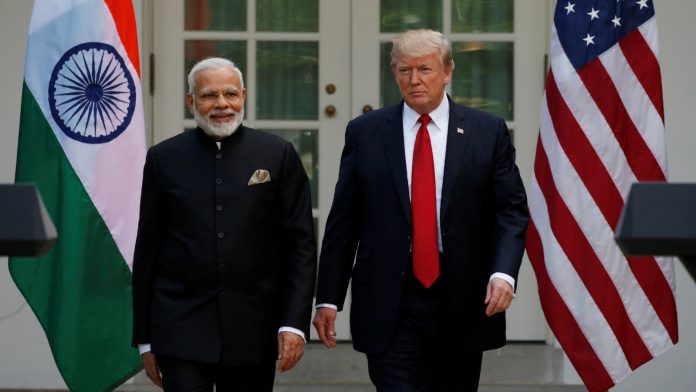
U.S.–India Interim Trade Deal Cuts Tariffs to 18%, with Venezuelan Oil Sales as Part of Broader Trade and Sanctions Realignment

0

The interim pact not only lowers tariffs but links trade access to energy realignment, binding U.S.–India commerce to Washington’s broader strategy of squeezing Russia’s oil revenues.


The United States and India are moving toward formal implementation of an interim trade agreement that reduces U.S. tariffs on Indian goods to 18% and removes a 25% punitive levy previously imposed in response to India’s purchases of Russian oil.

The arrangement, expected to take effect in April pending formal notification from Washington, represents a recalibration of trade tensions while embedding energy geopolitics directly into bilateral commerce.

President Donald Trump confirmed the tariff reduction earlier this month, stating that India had agreed to end its purchases of Russian oil and expand energy imports from the United States. He also indicated that India could buy crude from Venezuela as part of its diversification strategy.

India’s Commerce and Industry Minister Piyush Goyal said Friday that the U.S. is likely to issue a formal notification this month reducing its tariff on Indian goods to 18%, with the interim arrangement becoming effective in April. He added that a final trade agreement would be signed “sooner than later,” describing the remaining issues as limited to “a few tweaking points.” Trump has been invited to India by Prime Minister Narendra Modi in connection with that broader pact.

The interim deal reverses a period of escalating tariff friction. U.S. duties on Indian exports had climbed sharply under the administration’s broader trade agenda, at times incorporating punitive measures tied to energy policy. The 25% levy was directly linked to Washington’s position that purchases of Russian crude helped fund Moscow’s invasion of Ukraine.

Following Russia’s 2022 invasion, the United States and its allies imposed sanctions on Russia’s energy sector. India subsequently became the largest buyer of Russian seaborne crude, purchasing barrels at steep discounts. The shift frustrated Western governments, which argued that discounted sales were sustaining Russian state revenues.

Under the new framework, India has committed to diversifying its oil imports. U.S. officials have stated that the objective extends beyond India alone. “The United States doesn’t want anyone buying Russian oil,” a U.S. envoy said, describing India’s diversification as part of a broader energy realignment.

Energy Diplomacy and Venezuela’s Role

In parallel with the trade talks, Washington has explored facilitating Venezuelan crude exports to India as a substitute for Russian supplies. The U.S. granted licenses to trading houses Vitol and Trafigura to market and sell Venezuelan oil after the capture of Venezuelan President Nicolas Maduro and the negotiation of a supply arrangement with interim president Delcy Rodriguez.

This maneuver reflects a layered geopolitical calculus. By encouraging India to source crude from the United States and Venezuela, Washington aims to blunt Russia’s energy income while stabilizing supply for one of the world’s fastest-growing major economies. For India, diversification reduces exposure to secondary sanctions risk while preserving access to competitively priced barrels.

Energy trade thus becomes an enforcement mechanism embedded within tariff policy. The interim agreement links market access in goods to compliance with broader strategic objectives — a structural shift in how economic and security policy are intertwined.

Economic Implications for India

An 18% tariff level remains above traditional most-favored-nation rates but marks a significant reduction from prior punitive levels. For Indian exporters in sectors such as pharmaceuticals, textiles, engineering goods, auto components, and specialty chemicals, the clarity of a defined tariff band provides planning certainty after months of volatility.

The United States is India’s largest export market. Lower duties are expected to improve price competitiveness and support order flows, particularly for labor-intensive goods sensitive to marginal cost changes. Indian firms that had absorbed part of the tariff burden may regain margins, while U.S. importers could see moderated landed costs.

However, replacing discounted Russian crude with U.S. or Venezuelan oil could raise India’s average import bill depending on price spreads. Russian barrels had traded at deep discounts following sanctions. A narrower differential may compress refining margins or feed into domestic fuel pricing.

India’s policymakers are therefore balancing trade access gains against potential energy cost adjustments.

Implications for the United States

For Washington, the agreement serves multiple objectives. It lowers tariff friction with a major strategic partner while reinforcing pressure on Moscow’s energy revenues. It also underscores the administration’s approach of deploying tariffs as leverage to shape allied behavior.

Reduced tariffs on Indian goods could modestly ease input costs for U.S. manufacturers and retailers. Because tariffs are paid by U.S. importers at the border, a cut from higher punitive levels to 18% may mitigate inflationary pressures in certain categories, particularly consumer goods.

At the same time, the rollback trims potential tariff revenue compared to prior rates. The administration has repeatedly emphasized tariffs as a revenue source, but the interim deal signals flexibility when strategic priorities dictate.

However, officials on both sides describe the interim deal as a bridge to a broader bilateral trade agreement. Such a pact could address market access in agriculture, digital trade rules, services, intellectual property protections, and supply chain cooperation.

India has historically been cautious in full free-trade negotiations, prioritizing protection for agriculture and sensitive industries. The United States has sought deeper market opening and regulatory alignment. The reference to “tweaking points” suggests that politically sensitive sectors remain under discussion.

If finalized, a comprehensive agreement would formalize a deeper economic integration between two of the world’s largest democracies. It would also embed trade flows within a strategic framework shaped by energy security, supply chain diversification, and geopolitical alignment.

While Pi Network and ETH Prices Rise, BlockDAG’s Final Early Access Window Opens Ahead of its March 4 Launch

0

Traders are shifting their eyes across the charts to find the next big opportunity. Ethereum’s price swings are currently fueling a major debate over the latest Ethereum price prediction models. Meanwhile, the Pi Network price is quietly moving forward, showing a steady growth pattern as the project gets closer to its first anniversary. In the middle of this market activity, BlockDAG (BDAG) is rewriting the rules for new project launches. Its mainnet is already live, airdrops are being claimed by users, and March 4 will mark the first day of global trading in the USA and Europe.

Analysts are already looking closely at how people are using the network and how well it performs to guess how far the momentum of BDAG could go. With early activity creating a lot of curiosity and exchanges getting ready for more people to join, some are asking if this is the next crypto to explode, while Ethereum and Pi continue their own steady paths.

Ethereum Price Prediction Focuses on $2,000 to $2,110 Range

Ethereum stays at the center of the world for decentralized finance, digital art, and smart contracts. Recent Ethereum price prediction analysis is looking at technical levels between the $2,000 and $2,110 range, where it is facing some resistance while large holders continue to collect more coins. Information from the blockchain shows that major owners are growing their positions, while certain gaps in the futures market near the $2,100 level are seen as reasons for potential price swings.

Experts mention that a steady move above this resistance could change how people feel about the coin in the short term, while failing to stay above the $1,900 support might lead to a price drop. Since moving to its new system for securing the network, Ethereum has cut its energy use by a lot, though fees can still go up when many people are using it at once. Current Ethereum price prediction charts suggest the price will stay in a narrow range for now, with its next move depending on money flows and general market conditions.

Pi Network Price Faces a Short-Term Technical Barrier

Pi Network is being watched closely as traders look at its current technical state. Recent data shows the Pi network price moving between $0.17 and $0.19, showing small moves rather than very fast changes. Blockchain records show that several million PI tokens were moved in a single day, which points to normal wallet use and people moving their positions.

Market participants are watching the 50-day moving average as an important guide for the price. Staying above that level could help the price slowly test the $0.20 area, while the main support on the bottom appears to be near $0.15. The mobile mining setup and the focus on the community continue to define the network, with the amount of available coins and exchange access being the main factors for keeping the price steady.

BlockDAG: Last Chance for Early Entry with 400x Potential

The countdown has truly started. BlockDAG is still available for $0.000125, but this price lasts only until March 4 when global trading starts in the USA and Europe. After that time, the special early entry price will go away and be replaced by regular market prices, and the chance to join before the general public gains access will be gone for good. Right now, the coins have a potential for 400x growth upon listing, which is a rare level of opportunity for a major launch.

The network is now fully active, with the mainnet running, the Token Generation Event finished, and airdrops being sent out, all before the exchanges open. People who join early are at a special point where readiness and limited supply meet, meaning that timing is the main factor for a market advantage.

On the first day, centralized exchanges will start trading, which will be followed by a wider global release and decentralized exchange entry. Every step changes how supply and demand work, slowly making the coins less scarce while making the project more visible to the world.

Experts watching how people use the system and how the technology performs call BDAG a next crypto to explode situation. Once we reach March 4, the $0.000125 price point will be a thing of the past. The timer is not just for show; it is real. Early entry, working systems, and a set trading date all join together to make a window that will shut forever, giving a rare chance for those who get in place before the start.

Final Summary

Ethereum still plays a big role in market plans, as the latest Ethereum price prediction helps people make choices, while the Pi Network price stays on a path of steady growth as more people use it. Many other coins are staying in a small price range, giving results that are easy to guess but limited. BlockDAG, however, is moving into its most important stage. Its mainnet is active, airdrops are happening, and global trading starts on March 4.

Getting in early at $0.000125 gives a 400x potential at listing, while the ability to grow, the ready network, and the planned release create a rare mix of speed and chance. These points make BDAG the next crypto to explode, placing it as a top pick for those searching for real opportunities in today’s market.


Private Sale: https://purchase.blockdag.network

Website: https://blockdag.network

Telegram: https://t.me/blockDAGnetworkOfficial

Discord: https://discord.gg/Q7BxghMVyu