DD
MM
YYYY

PAGES

DD
MM
YYYY

spot_img

PAGES

Home Blog Page 216

Google Plans Deeper Personalization for Search, Eyes Gmail and Drive Integration for AI Mode

0

Google is intensifying efforts to make Search more personal than ever, with plans to introduce an “AI Mode” capable of drawing insights from users’ Gmail, Drive, and other Google apps.

The feature, now under development, is seen as part of the company’s broader push to redefine how people interact with Search—potentially transforming the internet’s information flow and disrupting traditional web traffic patterns.

In a recent podcast with Silicon Valley Girl, Google’s Robby Stein confirmed that the company is “exploring ways” to integrate AI Mode across its ecosystem.

“We announced at I/O an opportunity for users in the future to be able to opt into an experience with enhanced personalization,” Stein said. “We want people to be able to help Google and help the services know more about you so that it can be more helpful.”

The upcoming AI Mode would be capable of pulling real-time data from Gmail, Calendar, Maps, and Drive to deliver uniquely customized results. It could summarize flight bookings from Gmail, generate schedules automatically, or pull travel recommendations based on saved itineraries and map searches—all without users having to navigate multiple pages or apps.

This direction builds on Google’s ongoing rollout of its AI Overview, a generative feature that places AI-written summaries directly at the top of search results. The feature, powered by the company’s Gemini model, aims to provide direct answers rather than simply linking to external websites.

However, this shift has already begun to affect online publishers and media outlets that rely heavily on Google traffic. Multiple analytics firms have reported significant declines in referral visits since AI Overviews began appearing in search results earlier this year. Because users can now get summarized answers immediately on Google’s results page, they are less likely to click through to original sources—a trend that some publishers warn could threaten the economics of online journalism.

In September, Penske Media Corporation (PMC), owner of titles including Rolling Stone, Billboard, Variety, Hollywood Reporter, Deadline, Vibe, and Artforum, filed a lawsuit accusing the tech giant of illegally repurposing news content to generate AI summaries that undercut publishers’ business models.

But Google has pushed back, insisting that its AI tools aren’t killing publisher traffic, even as its own product strategy and external data suggest otherwise. In a blog, Google’s Head of Search, Liz Reid, disputed claims that the company’s AI-driven features are siphoning off clicks. Reid wrote that total organic click volume from Google Search to websites has remained “relatively stable” year-over-year, and even claimed that the “average click quality” — measured by whether users linger on a page — has “slightly increased.”

“User trends are shifting traffic to different sites,” Reid noted, adding that “people are increasingly seeking out and clicking on sites with forums, videos, podcasts, and posts where they can hear authentic voices and first-hand perspectives.”

Stein, however, framed the upcoming personalization as a user-centric innovation, saying that the experience will remain optional.

“We did launch recently some steps in this direction. So in Labs now, you can opt into a new experiment for personalizing shopping and local recommendations for restaurants,” he explained.

It is not yet clear whether Google will train its AI models directly on users’ personal data, but the company insists the experience will be opt-in and privacy-controlled. Still, the growing integration of AI into Search—combined with access to personal information—marks a fundamental shift in how Google positions itself: no longer just an index of the web, but an intelligent assistant capable of predicting needs and producing original answers.

It is believed that as AI Overviews evolve and personalization deepens, Google’s Search could move further away from the traditional web model that sustains much of the internet’s publishing economy. While the company argues that AI-enhanced Search will improve user satisfaction, the looming question remains whether the convenience of personalization will come at the expense of the open web.


Didn’t buy BTC at $1000? Satoshi-Era Bitcoin Investor Says This Crypto Could Offer Similar 10,000% Upside

0

If one missed out on purchasing Bitcoin at around $1,000, the prospect of replicating that kind of explosive return may now be slipping into the realm of myth. Yet, a fascinating narrative has emerged: a so-called “Satoshi-era” Bitcoin holder has resurfaced after more than a decade of dormancy, while concurrently, Little Pepe (LILPEPE), a new crypto offering, is capturing investor interest with talk of potential returns reminiscent of the early Bitcoin days.

The Bull Case for “Second Wave” Crypto Upside

To recreate the kind of 10,000% gains that Bitcoin once delivered demands finding assets with two things: extremely low entry valuations and credible scenarios for major adoption or ecosystem growth. While many altcoins have attempted this, few present both factors in combination. Enter Little Pepe: a meme-token with ambitions. Currently in its presale stage (Stage 13) at approximately $0.0022 per token, the project has already raised over $27 million and sold more than 16.5 billion tokens.

While many memecoins rely purely on hype, LILPEPE claims to bring utility: the architecture of a layer-2 network, zero transaction taxes, staking, and decentralized governance.  From a bullish perspective, the case is this: entering early in a project before the listing, when valuations are deeply discounted, still leaves the possibility of high multiples. If the token lists and scales into a recognizable ecosystem, the upside may not simply be tenfold; some models in the media suggest upside of thousands of percent.

Why Little Pepe (LILPEPE) Resembles the Early Bitcoin Opportunity

At the time when Bitcoin was worth $1,000 (or even less), it had few believers, little infrastructure, and massive risk, but also little price. That asymmetry is what delivered the massive gains. Today’s landscape is more mature, regulatory risk is higher, and competition is fierce, but extremely low-cap, high-ambition tokens still retain significant upside if they manage to break out.

LILPEPE’s current pricing, combined with its stated roadmap and presale success, gives it some of that “early-entry” characteristic. Its narrative is anchored in the idea that meme-coins aren’t just social hype; they can be infrastructure platforms. The combination of a very modest price and stated utility creates the possibility of outsized returns, if things indeed go right.

The Risks That Come With the Reward

Bullish language must be tempered by reality. The crypto universe is littered with projects that failed to deliver. Early access and low prices alone don’t guarantee a 10,000% gain. Utility claims must convert into adoption, listings must follow, tokenomics must resist dilution, and broader market conditions must support growth. For LILPEPE, while the presale figures look strong, the token has not yet achieved a major exchange listing or broad usage. A project may promise a layer-2 chain and staking, but execution is key. Market sentiment can shift, regulatory oversight can sour, and hype can fade.

The Bottom Line

To the investor, who now regrets not having invested in Bitcoin at $1,000, the ride has not ended, but it has evolved. The pathway to similar returns is now narrower, riskier, and the need for great timing and discipline is greater than ever. A project like Little Pepe offers a glimpse of what might be possible: extremely low entry cost, early traction, and a narrative beyond meme hype. If it lists on the top exchange, gains adoption, and carries community momentum, the upside from $0.0022 could be massive. Still, the fundamentals remain: one must believe in the project’s vision, accept the very real risk of total failure, and understand that such bets are speculative. The era of “you could buy Bitcoin for $1” is not repeatable in the same way. Nevertheless, the possibility of locating a project that has 100x, 1000x, or higher upside is available to those who are willing to purchase Little Pepe now. Simply put, the feeling of regret over not acquiring Bitcoin at $1,000 can be justified, yet the next wave of payoffs will not be quite as catchy, but rather selective in new projects. LILPEPE can be one of such high-payoff competitors.

For more information about Little Pepe (LILPEPE) visit the links below:

Website: https://littlepepe.com

Whitepaper: https://littlepepe.com/whitepaper.pdf

Telegram: https://t.me/littlepepetoken

Twitter/X: https://x.com/littlepepetoken

$777k Giveaway: https://littlepepe.com/777k-giveaway/

Join the New Wave: XRP Army, Unlock Daily Wealth with Oak Mining

0

The crypto landscape is transforming at lightning speed, and so are the strategies for building wealth. For the XRP Army, holding through bull and bear markets is a testament to conviction—but true financial power comes from putting your assets to work. Oak Mining introduces a new paradigm: turning your static XRP holdings into a dynamic income engine, generating steady passive returns day by day. This isn’t just another trading tactic—it’s a smarter, more sustainable path to growing your wealth.

Beyond Price Speculation: The Cloud Mining Advantage

While the world watches price charts, a quiet revolution is underway. Savvy investors are turning to cloud mining to build wealth independent of market volatility. Oak Mining provides direct access to this opportunity, eliminating the barriers that once kept everyday users out.

  • No Technical Headaches: Forget about hardware, electricity costs, or complex setups. We handle the infrastructure.
  • Built-In Stability: Your earnings are calculated daily, providing a predictable income stream that isn’t solely reliant on price appreciation.
  • Effortless Efficiency: Start earning from day one with a user-friendly platform that requires no prior experience.

Why Oak Mining is the Trusted Choice for the XRP Community

We’ve built our platform to meet the standards that discerning crypto holders demand: transparency, reliability, and security.

  • Instant $18 Welcome Bonus: Kickstart your mining journey immediately after registration.
  • Daily Payouts: Watch your earnings grow and withdraw them daily to your wallet. No delays, no excuses.
  • Zero Hidden Fees: What you see is what you earn. We operate with complete transparency.
  • Diversified Mining Portfolio: Mine a suite of major cryptocurrencies including XRP, BTC, ETH, SOL, DOGE, USDC, USDT, LTC, and BCH.
  • Lucrative Referral Program: Share the opportunity and earn rewards of up to $19,999.
  • Fortified Security: Protected by industry-leading cybersecurity solutions from McAfee® and Cloudflare®.
  • Guaranteed Uptime & 24/7 Support: Our platform is always on, and our team is always here to help.

Your Journey to Daily Earnings in Two Simple Steps

Step 1: Sign Up & Claim Your Bonus
Register with your email in under a minute. Your $18 welcome bonus is instantly credited, which you can use to activate a mining contract that immediately starts generating a daily return.

Step 2: Select Your Contract & Start Earning
Choose a mining plan that aligns with your goals, with clear tiers starting at $100. Your mining operation begins the next day, generating steady returns. Withdraw your profits directly or reinvest them to compound your wealth exponentially.

(For full details on contract durations and exact ROI, visit the Oak Mining official website.)

The Strategic Shift: Why Yield Generation is the Future

Market analysts at firms like CoinMetrics and Messari consistently report a maturation in investor behavior. The focus is shifting from short-term speculation to long-term, yield-generating strategies. Platforms like Oak Mining are at the forefront of this shift, offering a sustainable model for wealth creation in the digital age.

As one industry report notes, “Crypto natives, including the dedicated XRP Army, are increasingly allocating portions of their portfolio to passive income solutions. This isn’t a trend; it’s the maturation of a new asset class.”

Conclusion: Elevate Your Role in the Crypto Economy

The era of the passive holder is giving way to the age of the active earner. For the XRP Army, this means leveraging your holdings to build a resilient financial future. With Oak Mining, you’re not just waiting for the next price surge—you’re generating your own.

It’s time to join the new wave and unlock the full, income-producing potential of your crypto assets.

Ready to Transform Your XRP into a Daily Income Stream?

Official Website: https://www.OakMining.com

Contact Us: info@oakmining.com

Berkshire Hathaway Posts Robust Profit Surge as Cash Pile Hits Record $381.6bn

0

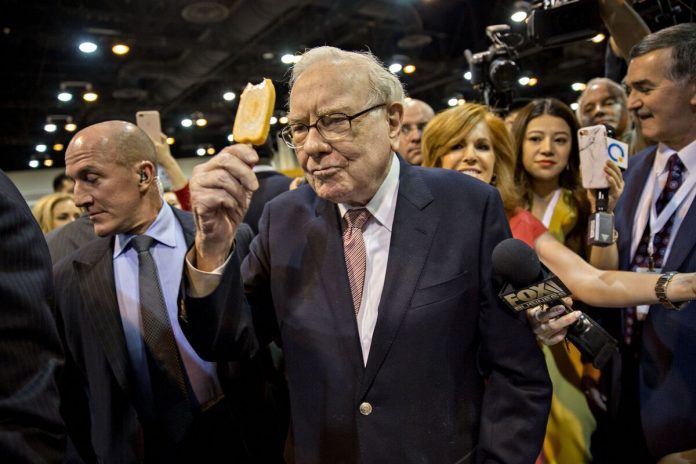
Warren Buffett’s Berkshire Hathaway has reported a strong rebound in third-quarter earnings, powered by a resurgence in its insurance operations and disciplined capital management that lifted its cash holdings to an unprecedented level.

The company’s results mark both its financial strength and Buffett’s trademark conservatism, even as markets await a leadership transition that will mark the end of an era for the 95-year-old investor.

The conglomerate’s operating profit — a key measure that excludes investment gains and losses — climbed 34% year over year to $13.49 billion. The growth was largely driven by a surge in insurance underwriting income, which rose more than 200% to $2.37 billion. Stronger performance in its GEICO unit, coupled with higher premium pricing and improved catastrophe management, helped reverse previous underwriting losses. The results, according to some analysts, highlight Berkshire’s ability to capitalize on rising insurance demand in a volatile global market.

Buffett’s decision to keep Berkshire’s cash stockpile untouched drew particular attention. Despite the firm’s share price decline earlier this year, Berkshire did not execute any buybacks during the first nine months of 2025. The restraint is consistent with Buffett’s view that buybacks should only occur when shares trade below intrinsic value — a threshold he clearly does not believe has been met. The absence of repurchases pushed Berkshire’s cash reserves to a record $381.6 billion, surpassing the previous high of $347.7 billion reached in the first quarter.

The company also disclosed that it was a net seller of equities during the quarter, unloading shares for a taxable gain of $10.4 billion. Buffett has often cautioned against chasing overpriced stocks and has been content to hold cash until what he calls “fat pitch” opportunities emerge.

There aren’t many things that look cheap to us right now, Buffett remarked earlier this year, reflecting his cautious stance amid a soaring stock market.

Berkshire’s shares have gained about 5% in 2025, trailing the S&P 500’s 16.3% rise — a gap analysts attribute partly to investor unease over Buffett’s impending retirement. The legendary investor announced in May that he will step down as chief executive at the end of the year after six decades at the helm. Greg Abel, Berkshire’s vice chairman overseeing non-insurance operations, will take over as CEO and begin penning shareholder letters from 2026. Buffett will remain chairman of the board, ensuring a measure of continuity in the conglomerate’s famously decentralized management structure.

Following the succession announcement, Berkshire’s shares fell by double digits from their all-time highs, pointing to what many call the erosion of the “Buffett premium” — the extra valuation investors assign to the company because of Buffett’s unparalleled reputation for capital allocation and long-term discipline. Still, analysts say the company’s fundamentals remain strong, with operating subsidiaries like BNSF Railway, Berkshire Hathaway Energy, and Precision Castparts delivering consistent earnings.

The quarter also saw Berkshire make its largest acquisition since 2022 — a $9.7 billion all-cash purchase of Occidental Petroleum’s petrochemical arm, OxyChem. The deal expands Berkshire’s footprint in industrial and energy assets, complementing its long-standing investment in Occidental’s equity and its broader exposure to the oil and gas sector. It comes on the heels of Berkshire’s $11.6 billion purchase of Alleghany Insurance three years ago.

Including investment gains from its massive stock portfolio — which features holdings in Apple, Coca-Cola, American Express, and Chevron — Berkshire’s overall earnings rose 17% year-on-year to $30.8 billion. The company’s Apple stake, worth more than $150 billion, remains its largest single holding, although Buffett recently trimmed the position slightly to manage tax liabilities.

Analysts believe Berkshire’s mounting cash reserves could soon position it as a stabilizing force if equity valuations correct. Buffett is essentially sitting on a war chest the size of a small nation’s GDP. If valuations come down, Berkshire will be in the strongest position globally to act.

Nvidia’s Jensen Huang Expresses Hope for Blackwell Chip Sales in China, But Admits It’s Up to Trump

0

Nvidia CEO Jensen Huang said on Friday he remained hopeful that the company’s Blackwell AI chips could eventually be sold in China, but emphasized that the decision ultimately rests with U.S. President Donald Trump.

Speaking in Seoul, South Korea, during his first official visit to the country in more than ten years, Huang made the remarks a day after Trump and Chinese President Xi Jinping held bilateral talks there — a meeting closely watched for its implications on trade and technology cooperation.

“I’m always hopeful that both governments will arrive at a conclusion someday where Nvidia’s technology could be exported to China,” Huang said. “We’re always hoping to return to China, and I think that Nvidia in China is very good. It’s in the best interest of the United States. It’s in the best interest of China.”

Following the talks, Trump told reporters aboard Air Force One that semiconductors had been discussed and that China would be “talking to Nvidia and others about taking chips,” but clarified that “we’re not talking about the Blackwell.”

The Blackwell chip is Nvidia’s most powerful AI processor yet — and the centerpiece of its latest generation of hardware used in training advanced AI systems. Its export to China has been blocked under U.S. restrictions on high-performance semiconductor sales, part of Washington’s broader strategy to prevent Beijing from gaining access to technologies that could enhance its military or surveillance capabilities.

The U.S.-China standoff over advanced chip technology has become a defining element of global AI competition. Washington’s export controls, first tightened in 2022 and later expanded, prohibit the sale of Nvidia’s most capable AI chips, including the A100, H100, and now the Blackwell, to China.

Huang has spent months urging U.S. policymakers to reconsider those limits, arguing that Chinese AI’s reliance on American-designed hardware ultimately benefits the United States.

He has previously said Chinese AI’s dependence on U.S. hardware is good for America, suggesting that restricting access could backfire by accelerating China’s push toward semiconductor self-sufficiency.

According to sources cited by Reuters, Nvidia has been developing a special variant of its Blackwell chip tailored for China — a model that would fall below the U.S. performance threshold for export bans but still outperform the company’s H20 chip, the most advanced model currently cleared for sale in the Chinese market.

However, the Chinese government has reportedly cooled toward Nvidia, discouraging local firms from purchasing the H20 as part of efforts to strengthen domestic alternatives. Instead, Beijing has been encouraging investment in Huawei Technologies Co., which has aggressively moved to expand its own chip production capacity.

A Shrinking Chinese Market

Huang admitted that Nvidia’s ambitions for a foothold in China have diminished significantly.

“We had been hoping for a non-zero market share in China, but we’re now expecting zero,” he told reporters.

Although the U.S. has expressed national security concerns that Nvidia’s chips could be diverted for military use, Huang dismissed the notion that export controls would meaningfully limit China’s technological capabilities. China’s own domestically produced AI chips are already good enough for their military applications, he said.

He further cautioned against underestimating Huawei’s competitive strength, calling it one of the most capable technology companies in the world.

“It is deeply uninformed to think that Huawei can’t build systems,” Huang said. “It is foolish to underestimate the might of China and the incredible competitive spirit of Huawei. This is a company with extraordinary technology.”

A Complex Balancing Act

Nvidia, now the world’s most valuable semiconductor maker with a market capitalization surpassing $5 trillion, relies heavily on global demand for its AI processors but faces increasing political headwinds as Washington and Beijing vie for dominance in advanced computing.

During his trip to Seoul, Huang said he was delighted with the success of the Trump-Xi meeting, though he was unaware of the specific topics discussed.

“I have every confidence that the two presidents had a very good conversation,” he said. “It doesn’t have to involve anything that I do.”

While Nvidia’s presence in China has been sharply curtailed by U.S. policy, Huang’s remarks suggest that the company remains optimistic about a possible reopening of the Chinese market — a move that could reshape the global AI supply chain if permitted by the Trump administration.

For now, Nvidia’s growth continues to be driven by soaring demand in the U.S., Europe, and South Korea, where it is expanding partnerships with Samsung Electronics, Hyundai Motor Group, and other technology firms investing heavily in AI infrastructure.

However, Nvidia’s future in China remains one of the most consequential questions in the evolving U.S.-China technology rivalry — one that hinges on whether Washington sees strategic advantage in allowing its most advanced chips to flow once again into the world’s second-largest economy.