DD
MM
YYYY

PAGES

DD
MM
YYYY

spot_img

PAGES

Home Blog Page 2176

The Irony on Coinbase Market Cap

0

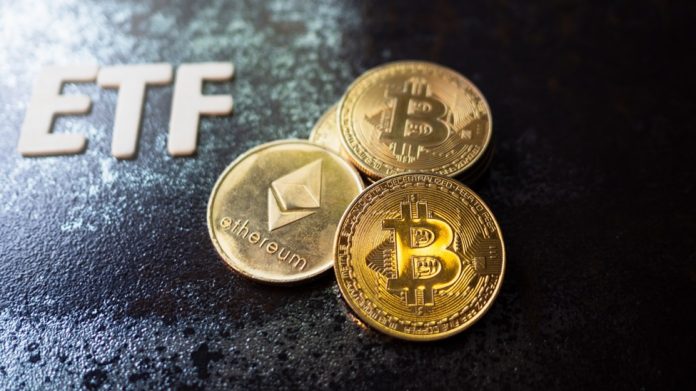
Before the Bitcoin ETF universe was normalized by the United States Securities & Exchange Commission (SEC), there were fringe players which were leaders, and which were also asking for the government to clearly regulate them. The thesis was self-evident: if they were doing well before full regulation, post regulation, the skies of opportunities would open up for them.

But you know what? Immediately the SEC approved and clarified things, the big players came in, and now, the world of Bitcoin ETF is now in the hands of Blackrock and big cousins. Those small players have seen significant outflows of funds from their ecosystems as the world of money congregates to the usual stable states.

Warren Buffett cannot understand Nigeria to invest therein, making someone with $10 million to have a great chance. But if Nigeria is fully normalized, he will come with $billions and many opportunities will fade away from those small investors. Say it in another way: you cannot wait for a perfect condition because in business, it is all an illusion. As factors shift, re-alignments take shape.

Remember Coinbase. I wrote that under Trump when all the rules are largely  made free, its default status as the most trusted exchange in the US will begin to see competitive challenges. Why? Before Trump, many were afraid to do certain things in the crypto domain. But now, it is a wild race and exchanges, etc are coming up, and suddenly Coinbase has lost 13% of its market value since Trump 2.0 inauguration.

Lesson: There is no moment in business that can convey an absolute asymmetric positioning without also making you lose a competitive edge in one way. And that means we must take actions instead of waiting for a perfect ecosystem to emerge.

President Donald Trump has repeatedly pledged to end what he describes as Joe Biden’s “war on cryptocurrency” if elected, a stance he emphasized during his 2024 presidential campaign and has continued to highlight following his victory. These narrative frames Biden’s administration as hostile to the crypto industry, citing aggressive regulatory actions, while positioning Trump as a pro-crypto advocate aiming to foster innovation and make the United States a global leader in digital assets.

Comment on Feed

Comment 1Nice expose but with respect to Coinbase, what you shared is half truth. Coinbase marketcap is down because Bitcoin price is down. Even $MSTR Microstrategy has lost 16% of its marketcap within the last one month. You will see a reversal when Bitcoin price starts going up.

My Response: It is social science, not natural science, no nothing is absolute. You made my point despite saying half-truth.  If you look at the big picture, why is Bitcoin down? And the fact that Bitcoin is down is part of my thesis as many think it will fly through the roof because of the no-regulation era. I am saying nothing like. Why? Before Trump, people were afraid to create memecoins. But when Trump and his wife began the show, people are now flooding everywhere with coins, and that is now a competition for BTC, etc. With $TRUMP, someone would have bought $BTC but with coins everywhere, there are more options.

President Trump to End Biden’s War’s on Crypto Innovations’

President Trump to End Biden’s War’s on Crypto Innovations’

0

President Donald Trump has repeatedly pledged to end what he describes as Joe Biden’s “war on cryptocurrency” if elected, a stance he emphasized during his 2024 presidential campaign and has continued to highlight following his victory. These narrative frames Biden’s administration as hostile to the crypto industry, citing aggressive regulatory actions, while positioning Trump as a pro-crypto advocate aiming to foster innovation and make the United States a global leader in digital assets.

Under Joe Biden, the cryptocurrency industry faced significant regulatory scrutiny, which Trump and crypto advocates have labeled a “war.” Key actions include: The Securities and Exchange Commission (SEC), led by Chair Gary Gensler, pursued over 100 enforcement actions against crypto firms, including major exchanges like Coinbase and Binance, alleging violations of securities laws. Gensler’s skepticism—evidenced by his remarks calling crypto a field where leading figures end up “in jail or awaiting extradition”—set a tone of strict oversight aimed at curbing fraud and protecting consumers.

Operation Choke Point 2.0: Industry leaders coined this term to describe perceived efforts by Biden-era bank regulators to discourage financial institutions from servicing crypto businesses, echoing a prior Obama-era initiative targeting risky sectors. This led to banking challenges for exchanges like Binance.US, culminating in its 2023 suspension of USD services.

Proposed Taxes and Rules: Biden’s administration pushed for measures like a 30% tax on crypto mining energy use to address environmental concerns and IRS rules treating wallet developers as brokers, moves seen by critics as stifling innovation. These policies, intended to mitigate risks like money laundering and financial instability, were interpreted by the crypto community as an existential threat, driving Trump’s rhetoric of a “slow and painful death” for the industry under Biden.

Trump’s stance marks a dramatic shift from his earlier skepticism—dismissing Bitcoin in 2019 as “not money” and “based on thin air”—to a full embrace by 2024. During his campaign, he made bold promises:
Ending the “War”: Trump vowed to halt Biden’s regulatory crackdown, declaring, “I will end Joe Biden’s war on crypto,” in speeches like his June 2024 address in West Palm Beach, Florida, and posts on Truth Social. He positioned this as a contrast to Biden’s policies, which he claimed favored adversaries like China.

U.S. Crypto Leadership: He pledged to ensure “the future of crypto and Bitcoin will be made in America,” including plans for a national digital asset stockpile using seized cryptocurrencies, a concept he floated to prevent government sell-offs that depress prices. Trump promised to fire Gensler (though the president lacks direct authority to do so) and rescind restrictive SEC guidance like SAB 121, which complicates banks holding crypto. Post-election, he signed an executive order on January 23, 2025, creating a crypto advisory council to draft new regulations and explore the stockpile idea.

Industry Support: His campaign accepted crypto donations, and he courted industry leaders, raising significant funds—nearly half of 2024’s corporate donations came from crypto sources, per some estimates.

Since winning the presidency on November 5, 2024, Trump has moved swiftly. His January 2025 executive order signals intent to overhaul U.S. crypto policy, cheered by industry figures like Anchorage Digital’s Nathan McCauley as a “sea change.” Appointments like Paul Atkins—a crypto-friendly former SEC commissioner—as SEC chair further underscore this shift, contrasting with Gensler’s tenure. Bitcoin’s surge past $100,000 in December 2024 reflects market optimism tied to these developments.

Trump’s narrative taps into a growing political divide. Biden’s allies defend their approach as balancing innovation with consumer protection, while Trump frames it as stifling American competitiveness. Critics argue his deregulation could invite fraud—recalling FTX’s 2022 collapse—yet supporters see it as a chance to reclaim U.S. dominance in a trillion-dollar industry. Whether Trump fully delivers remains uncertain; executive orders can signal intent, but lasting change often requires Congressional action, and his first term showed mixed crypto engagement.

In short, Trump’s pledge to end Biden’s “war on crypto” is both a critique of past regulation and a promise of a crypto-friendly future, already influencing markets and policy as of February 21, 2025. Whether it’s sustainable or merely campaign hype will hinge on execution. What do you think—will this shift hold, or is it just political theater?

“Not Going To Be Immune”: Walmart Warns of Potential Price Hikes as Trump’s Tariffs Loom

0

Retail Giant Braces for Impact as New Trade Duties Threaten Supply Chains

Walmart has issued a stark warning that its business could be significantly affected by new tariffs that former President Donald Trump is seeking to impose, particularly if duties targeting Canada and Mexico—two of America’s largest trading partners—are implemented.

The warning came after the retail giant released its quarterly earnings report, which showed slowing profit growth. The announcement rattled investors, leading to a 6% drop in Walmart’s stock price during a broader market decline.

In an interview with CNBC, Walmart’s Chief Financial Officer John David Rainey acknowledged that while the company sources two-thirds of its products from the U.S., it is “not going to be completely immune” from trade duties and their inflationary effects.

“We’ve lived in a tariff environment for the last seven or eight years, and we’ll do what we know how to do,” Rainey said. “We’ll work with suppliers. We’ll lean into our private brand. We’ll shift supply where necessary to try to take advantage of lower costs that we can then pass on to consumers.”

However, he admitted that Walmart could not fully shield consumers from price hikes, emphasizing that tariffs typically lead to higher costs across the supply chain.

“There will likely be cases where prices for consumers will increase as a result of tariffs,” Rainey added, noting that such policies are “inflationary” for shoppers.

Trump’s Tariffs Could Reshape U.S. Trade and Retail Costs

Trump has proposed an expansive list of tariffs, which, if fully implemented, could significantly disrupt global supply chains and raise costs for U.S. businesses and consumers. These proposed tariffs include:

  • A 10% across-the-board tariff on all imported goods
  • Higher duties on steel, aluminum, automobiles, drugs, semiconductors, and lumber
  • New trade penalties targeting China, Canada, and Mexico

So far, only a supplemental 10% duty on Chinese goods has gone into effect, but Trump has repeatedly threatened to expand the list of affected goods and countries depending on ongoing trade negotiations.

While Trump has framed the tariffs as a strategy to protect American jobs and industries, economists warn that the real impact could be inflation, slower economic growth, and increased costs for businesses and consumers.

Historically, tariffs have functioned as a hidden tax, raising the price of imported goods. Since many U.S. manufacturers rely on imported materials, businesses often pass the added costs down to consumers.

A recent report from the Peterson Institute for International Economics estimated that Trump’s proposed 10% universal tariff would cost the average U.S. household an additional $1,500 per year due to price increases across various goods, including electronics, vehicles, and food.

The concern is so widespread that the Federal Reserve has now factored tariff risks into its economic outlook.

This week, the Fed acknowledged that rising tariffs were part of its reasoning for keeping interest rates elevated, as trade policies could exacerbate inflation.

The Fed noted that business contacts in a number of Districts had indicated that firms would attempt to pass on to consumers higher input costs arising from potential tariffs.

In its “upside risks to the inflation outlook”, the central bank specifically cited “the possible effects of potential changes in trade and immigration policy.”

U.S. Companies Brace for Disruptions

Beyond Walmart, major U.S. companies are scrambling to assess how Trump’s tariffs could impact their operations.

According to CNBC data, the word “tariffs” has been mentioned in over 190 earnings calls held by S&P 500 companies in 2025, a frequency not seen in nearly five years.

While some businesses—particularly those in manufacturing and retail—expect direct cost increases, others are worried about the broader economic slowdown that could result from higher consumer prices.

“We’ve game-planned out several scenarios and steps we could take depending on what actually goes into effect,” said Cisco CFO R. Scott Herren, whose company depends on imported electronic components.

Will Consumers Pay the Price?

For Walmart and other major retailers, the challenge now is finding ways to minimize the cost burden on consumers.

Some of the strategies being explored include:

  • Sourcing goods from lower-tariff countries
  • Expanding private-label brands to replace expensive imports
  • Negotiating price adjustments with suppliers

However, many industry analysts remain skeptical that these measures will be enough to completely offset the cost increases.

As one of the largest retailers in the world, Walmart’s response is expected to serve as a key indicator of whether tariff-induced inflation will trickle down to everyday shoppers—and just how much of the burden they will be forced to bear.

Mobile Betting App and Esports: Top Games for Enthusiasts

0

Esports betting is growing rapidly, and mobile betting apps make it easier than ever. Some of the most popular games to bet on include Counter-Strike: Global Offensive (CS:GO), Dota 2, League of Legends (LoL), Valorant, and more. Each of these games offers unique formats in mobile betting apps and tournaments that attract millions of fans worldwide.

CS:GO is a first-person shooter with two teams: Terrorists and Counter-Terrorists. It features 5v5 matches, and players aim to plant or defuse bombs. Famous tournaments like the ESL Pro League and BLAST Premier generate over 2 million live viewers. Bettors often wager on kill counts, round winners, and final scores.

Dota 2 online battle arena (MOBA) game involves two teams of five players. Each team defends its base while trying to destroy the opponent’s “Ancient.” Annual events like The International offer prize pools exceeding $40 million. Bets often focus on first blood, total kills, or match duration.

League of Legends (LoL) is another popular MOBA game. It features strategic gameplay and iconic tournaments like the League of Legends World Championship. In 2023, this event had over 5.1 million viewers. Betting options include predicting the winning team, the number of turrets destroyed, or first kills.

Valorant, a tactical shooter, has gained huge popularity since its launch in 2020. Matches involve agents with special abilities, creating dynamic gameplay. Tournaments like Valorant Champions Tour attract top players and bettors. Popular wagers at mobile apps betting include MVP predictions and total rounds.

Call of Duty (CoD) game mixes intense action with team-based strategies. Competitive formats include Search and Destroy or Hardpoint modes. Betting highlights include team rankings and weapon choices. Events like Call of Duty League Finals gather audiences in millions.

PUBG is a battle royale game with up to 100 players fighting to survive. Bettors love its unpredictable outcomes, including longest survival time or most kills. Major competitions include PUBG Global Championship.

Mobile Legends: Bang Bang is a MOBA designed for mobile players. It’s extremely popular in Southeast Asia. Matches often feature regional rivalries, with bets placed on fastest wins and hero bans.

Fortnite combines survival and building mechanics. With over 400 million players globally, it remains a favorite. Bettors predict player eliminations, survival rank, and top weapons.

Apex Legends is another fast-paced battle royale game. Unique characters called Legends add a strategic layer. Major tournaments like ALGS (Apex Legends Global Series) offer exciting betting opportunities.

Casino App: How to Get a Welcome Bonus and Play Popular Slots

The 1xBet casino app offers exciting games for Indian players. It includes slots, table games, and live dealer options. New users at casino app in India can claim a generous welcome bonus. The bonus is usually up to ?20,000 on the first deposit. To get it, users need to sign up and deposit at least ?100. Bonus funds are credited instantly after the deposit.

Popular slots include Grim Muerto, Crazy Monkey, and Simsalabim. Grim Muerto is a Mexican-themed slot with five reels and 20 paylines. It offers free spins and multipliers. Players can win up to 2,500x their bet. Crazy Monkey is a classic slot with simple gameplay. It features a bonus round where players can multiply winnings. Simsalabim is a magic-themed slot with stunning graphics. It has a high RTP (Return to Player) of 96.5%. This makes it popular among Indian casino fans.

The casino app is easy to use. It supports fast deposits and withdrawals. Players can use UPI, Paytm, or credit cards to add funds. Withdrawals are quick and usually processed within 24 hours. So, in India casino app has over 1,500 games. Players can enjoy baccarat, blackjack, and roulette with live dealers.

The app also has promotions for regular players. Users can claim free spins, cashback, and weekly bonuses. For example, users depositing ?500 or more on Fridays can get a 50% bonus. Loyalty points are earned with every bet.

Malaysia Goes Against Tesla As Musk’s Right-Wing Politics Fuels EV Company’s Global Decline

0

Tesla is facing mounting boycott calls in Malaysia, as outrage spreads over CEO Elon Musk’s support for U.S. President Donald Trump, particularly in light of Trump’s controversial plan for Gaza, which could lead to the displacement of millions of Palestinians.

The backlash in Malaysia—one of Southeast Asia’s most vocal pro-Palestinian nations—underscores the growing risks of Musk’s political entanglements for Tesla’s business, particularly in international markets where perceptions of U.S. foreign policy play a major role in consumer sentiment.

Per SCMP, Malaysians took to social media to denounce Tesla after its launch of the Model Y “Juniper” earlier this week, branding the vehicle a “swasticar”—a term that originated in Europe following Musk’s hand gestures during Trump’s inauguration last month, which many perceived as resembling a Nazi salute.

“Not touching this swasticar,” wrote a user named Adnan Abdullah in response to a Facebook post by a Malaysian car review site regarding the Tesla Model Y launch.

The controversy surrounding Musk’s gesture quickly spread beyond the West. In London, activists pasted stickers reading “Don’t buy a swasticar” on hundreds of Teslas, according to a Newsweek report—and the slogan has now made its way to Southeast Asia.

The Tesla backlash in Malaysia intensified after Trump announced on February 4 that his administration was considering a U.S.-led reconstruction of Gaza, proposing to turn the war-ravaged strip into the “Riviera of the Middle East” while forcibly relocating Palestinians to Egypt and Jordan.

“Palestinians won’t have a right to return,” Trump declared. “Because they’re going to have much better housing.”

The proposal sparked global condemnation, particularly in Malaysia, which has long been one of the strongest supporters of the Palestinian cause. Prime Minister Anwar Ibrahim has positioned himself as Southeast Asia’s leading voice against Israel’s war on Gaza, calling out Western powers—including the United States—for enabling Israeli aggression.

Against this backdrop, Musk’s close alignment with Trump has deeply damaged Tesla’s image in Malaysia, where consumers have vowed to boycott the brand.

“Will never support a company that planned to displace Palestinians from Gaza. Vote with our money,” wrote a user named YH Chin on Facebook.

Some compared Tesla to Nazi-era German carmakers, drawing historical parallels between Musk’s ties to Trump and Volkswagen’s origins under Hitler.

“The new Nazi car. Racists and Betas will love it,” wrote Prabha Krishnan, referencing a term popular among incel communities to describe submissive males.

Tesla’s Malaysia Business at Risk Amid Growing Competition

The controversy comes at a precarious time for Tesla in Malaysia, where the company has struggled to gain a foothold against Chinese electric vehicle (EV) manufacturers. Tesla officially entered Malaysia in July 2023, launching its first showroom and customer experience center in Southeast Asia.

However, despite initial strong demand, Tesla has fallen behind Chinese EV brands, which offer cheaper and more accessible alternatives. BYD, China’s top EV maker, outsold Tesla in Malaysia in 2024, registering 8,750 units compared to Tesla’s 5,137 units, according to the Malaysian Road Transport Department.

The boycott movement could further erode Tesla’s market share at a time when Chinese brands like BYD and Xpeng, as well as local automakers Proton and Perodua, are ramping up EV production.

For Tesla owners in Malaysia, the controversy raises safety concerns, as some fear that their vehicles could become targets of vandalism.

“I think Tesla and Musk are intertwined, and the fact that Musk is spending a lot of time and energy doing non-Tesla things isn’t good for Tesla,” said a Malaysian Tesla owner, who requested anonymity due to concerns over possible reprisals.

Malaysia has set a goal of transitioning 70% of privately owned vehicles to EVs by 2050, but analysts believe that if Tesla’s reputation continues to suffer, Chinese brands could dominate the market instead.

“A Tesla boycott might slow Malaysia’s EV adoption in the short term,” the owner added. “But brands like BYD, Xpeng, and even Proton and Perodua will eventually fill the gap.”

Musk’s Political Ties Threaten Tesla’s Global Sales

Tesla’s Malaysia backlash is just the latest in a string of challenges linked to Musk’s increasingly politicized public persona.

Since becoming a major donor to Trump’s re-election campaign, Musk has cemented his role as a key adviser to the U.S. president, drawing backlash from liberals, anti-fascist activists, and international markets wary of Trump’s policies.

Beyond Southeast Asia, Tesla’s global sales have been plummeting. Recent full-year and January sales reports from key markets suggest a steep decline, even with the Cybertruck launch—which was expected to boost U.S. sales.

Musk’s erratic behavior and political affiliations have alienated a significant portion of Tesla’s traditional customer base, including many in Democratic-leaning states in the U.S. and international markets with strong anti-Trump sentiment.

The growing calls to boycott Tesla in Malaysia could hamper the company’s long-term ambitions in Southeast Asia, particularly as competitors capitalize on the controversy. With Tesla already struggling to compete against cheaper Chinese EVs, Musk’s close ties to Trump are now compounding the problem, alienating consumers in a country where political sentiment heavily influences purchasing decisions.