DD
MM
YYYY

PAGES

DD
MM
YYYY

spot_img

PAGES

Home Blog Page 2180

The New York Times Embraces AI, Approves Internal Use of A Suite of Tools

0

The New York Times is officially embracing artificial intelligence (AI) in its newsroom and product development, marking a major step toward AI-assisted journalism.

In an internal announcement, the newspaper introduced AI training for its journalists and debuted Echo, an in-house AI tool designed to summarize articles, briefings, and interactive reports.

The move is particularly striking given that The Times gained significant attention in AI-related discussions after suing OpenAI in December 2023, accusing the company of massive copyright infringement. The lawsuit alleged that OpenAI used The Times’ proprietary articles without permission to train its models, including ChatGPT. Now, despite its legal opposition to AI companies, The Times is integrating AI into its own operations, a shift that could signal a broader adoption of AI in newsrooms worldwide.

According to internal documents obtained by Semafor, The Times has approved a suite of AI tools for its editorial and product teams, aiming to improve workflow efficiency and content optimization. The newly sanctioned AI programs include:

  • GitHub Copilot – A programming assistant for coding-related tasks
  • Google’s Vertex AI – A development tool for AI-based products
  • NotebookLM – A document analysis and research tool
  • Amazon AI products – Various tools to assist newsroom operations
  • OpenAI’s API (non-ChatGPT version) – Accessible only with legal approval
  • NYT’s in-house Echo – A beta tool for summarization and content organization

However, the company has imposed strict restrictions on AI usage, ensuring that it remains a supportive tool rather than a content creator. The Times’ guidelines prohibit using AI to draft articles, input confidential or copyrighted materials, bypass paywalls, or generate and publish AI-created images or videos.

Instead, journalists are encouraged to use AI for:

  1.  Generating SEO-friendly headlines and social media content
  2. Summarizing articles for newsletters in a conversational tone
  3. Brainstorming interview questions for sources and experts
  4. Analyzing company documents and organizing research
  5. Developing news quizzes, FAQs, and interactive audience features

The AI-driven assistance is meant to enhance efficiency rather than replace human reporting. However, some in the newsroom remain skeptical, fearing that AI-generated content could reduce creativity, result in factual errors, and undermine journalistic integrity.

From AI Skepticism to Mainstream Adoption?

The New York Times’ decision to adopt AI marks a significant turning point for an industry that has largely been wary of artificial intelligence in news production. Earlier experiments with AI-driven journalism—such as CNET’s attempt to use AI for financial articles in 2023—exposed significant deficiencies, including factual errors, misleading summaries, and plagiarism concerns.

Studies have shown that AI models struggle with accuracy, especially in real-time reporting. Unlike human journalists, AI lacks the ability to verify sources, understand political and social nuances, or capture the depth of investigative journalism. For this reason, major media organizations had previously kept AI at arm’s length, fearing that overreliance on the technology could degrade the quality of news content.

However, The Times’ structured approach—where AI is used for supplementary tasks rather than primary reporting—may pave the way for greater AI adoption in newsrooms. By restricting AI’s role to headline suggestions, content summarization, and research assistance, the newspaper is attempting to harness AI’s efficiencies while minimizing its risks.

While The Times is now incorporating AI into its operations, it remains one of the most vocal opponents of AI’s unchecked use in media. The company’s lawsuit against OpenAI accuses the tech firm of illegally scraping and repurposing its content to train AI models.

Microsoft, OpenAI’s largest investor, has dismissed The Times’ legal claims, arguing that they threaten technological progress. The case has drawn widespread attention, as its outcome could set a precedent for how AI companies handle copyrighted journalistic content in the future.

Internally, The Times’ embrace of AI has also sparked debate. Some newsroom employees have expressed concerns that AI integration could lead to complacency in reporting, uninspired headlines, and the spread of inaccuracies. Others remain wary due to the industry’s tense relationship with AI firms. AI has found applications in media including being used to merge PDF document files well for global distributions.

For example, last year, during a strike by Times tech employees, the CEO of AI startup Perplexity made a controversial statement suggesting that AI could replace the striking workers. The remark intensified fears about AI displacing jobs and further strained relations between media professionals and AI companies.

However, this move signals a shift in the relationship between the Times and AI companies, which many believe will only get better.

The Most Advanced AI Models Since 2024 Per TechCrunch

0

The world of artificial intelligence is evolving at breakneck speed, with companies rolling out new models faster than ever. From tech giants like OpenAI and Google to rising competitors like Mistral and Anthropic, AI models are being released at an overwhelming pace.

Keeping up with these developments is a challenge, especially since most models are marketed with technical benchmarks that don’t always reflect real-world performance.

To help cut through the noise, TechCrunch compiled the most advanced AI models launched since 2024—what they’re designed for, how they perform, and whether they’re worth your time.

AI Models Released in 2025

OpenAI o3-mini

A compact yet powerful reasoning model, OpenAI’s o3-mini is optimized for STEM tasks like coding, math, and scientific research. It’s designed to be cost-effective and is available for free, although heavy users will need a subscription.

OpenAI Deep Research

This model is built for in-depth research and includes clear citations to back up its findings. However, access comes at a steep price—$200 per month for ChatGPT Pro users. While OpenAI claims it’s useful for everything from academic research to shopping advice, hallucinations remain an issue.

Mistral Le Chat

Mistral’s latest AI assistant, Le Chat, is designed for speed. The company claims it responds faster than any other chatbot, with a paid version offering up-to-date journalism from AFP. Initial tests by Le Monde found its performance impressive, though it made more factual errors than ChatGPT.

OpenAI Operator

This AI-powered personal assistant is designed to take initiative—handling tasks like grocery shopping on its own. However, early users have reported glitches, including one instance where it ordered a dozen eggs for $31 without permission. Operator is available only through OpenAI’s $200 per month ChatGPT Pro plan.

Google Gemini 2.0 Pro Experimental

Google’s much-anticipated AI model boasts a massive 2-million-token context window, making it ideal for processing extensive text data. It claims to excel at coding and general knowledge tasks but requires at least a $19.99/month Google One AI Premium subscription.

AI Models Released in 2024

DeepSeek R1

Developed in China, DeepSeek R1 gained attention in Silicon Valley for its strong performance in coding and math. It’s open-source and free to use, but it incorporates Chinese government censorship, leading to bans in some regions.

Google Gemini Deep Research

This model aims to summarize search results into a well-cited document, making it useful for students and professionals needing quick research summaries. However, it falls short of peer-reviewed research quality. Access requires a $19.99 Google One AI Premium subscription.

Meta Llama 3.3 7B

Meta’s latest Llama model is its most efficient yet, excelling in general knowledge, math, and instruction-following. Like its predecessors, it remains open-source and free to use.

OpenAI Sora

A groundbreaking video generation model, Sora can create entire scenes from text prompts. However, OpenAI acknowledges that it struggles with “unrealistic physics.” It’s available only on paid ChatGPT plans, starting at $20 per month.

Alibaba Qwen QwQ-32B-Preview

One of the few models to rival OpenAI’s o1 in industry benchmarks, Alibaba’s Qwen excels in math and coding but falls short in common-sense reasoning. Like DeepSeek, it integrates Chinese government censorship. The model is free and open-source.

Anthropic’s Claude Computer Use

This AI is designed to take control of a user’s computer for tasks like coding or booking flights. While promising, it remains in beta. Pricing is API-based: $0.80 per million tokens for input and $4 per million tokens for output.

x.AI’s Grok 2

Elon Musk’s AI company, x.AI, has launched Grok 2, an enhanced version of its chatbot that is “three times faster” than its predecessor. Free users are limited to 10 queries every two hours, while X Premium subscribers get expanded access. The company also launched Aurora, a photorealistic image generator that has drawn controversy for generating graphic content.

OpenAI o1

Part of OpenAI’s new reasoning-focused AI family, o1 is designed to think through responses before answering. It performs well in coding, math, and safety but has been criticized for its ability to deceive humans. It’s available via the $20-per-month ChatGPT Plus subscription.

Anthropic’s Claude Sonnet 3.5

Widely regarded as a top-tier AI model, Claude Sonnet 3.5 is especially popular among tech insiders for its coding capabilities. It’s accessible for free, but heavy users must pay $20 per month for Claude Pro. Unlike some competitors, it understands images but cannot generate them.

OpenAI GPT-4o-mini

OpenAI’s fastest and most affordable model, GPT-4o-mini, is designed for simple, high-volume tasks like customer service chatbots. It’s available on ChatGPT’s free tier and is more suited for basic applications than complex reasoning tasks.

Cohere Command R+

Specializing in Retrieval-Augmented Generation (RAG), Cohere’s Command R+ is ideal for enterprises needing precise, well-cited information retrieval. Despite its strengths, RAG doesn’t fully eliminate AI hallucinations. Pricing is enterprise-focused.

The AI Race Continues

With major companies rolling out new models at an unprecedented pace, competition in the AI space is fiercer than ever. While some models stand out for their speed, accuracy, or unique capabilities, others still struggle with common AI pitfalls like hallucination and ethical concerns.

As 2025 unfolds, it’s clear that AI development isn’t slowing down. More breakthroughs, controversies, and innovations are expected in the months ahead.

Nigeria Launches Consumer Credit Scheme for Locally Assembled Vehicles, Targets 1m Beneficiaries by 2026

0

The Federal Government of Nigeria, through the Nigerian Consumer Credit Corporation (CrediCorp), has officially launched a consumer credit scheme aimed at facilitating the purchase of locally assembled vehicles.

The first phase of the initiative, announced by the Minister of Information and National Orientation, Mohammed Idris, focuses on providing credit facilities to buyers of motorcycles and tricycles manufactured by Simba (TVS), Nigeria’s largest assembler of two- and three-wheelers. Future phases of the program will extend to locally assembled cars, further expanding access to affordable mobility solutions.

Announcing the development via a post on X, Idris emphasized the government’s commitment to financial empowerment through consumer credit, a system that remains underdeveloped in Nigeria compared to many advanced economies.

“The Nigerian Consumer Credit Corporation, one of President Tinubu’s flagship initiatives targeted at empowering Nigerians financially, has just recorded another impressive milestone: The rollout of the first set of beneficiaries of a new credit scheme for the purchase of locally-assembled automobiles, in partnership with major assembly firms,” Idris stated.

“This first phase has kicked off with brand-new tricycles and motorcycles, assembled locally by Simba (TVS), Nigeria’s largest assembler of three- and two-wheelers. Future phases will include cars.”

The initiative is part of CrediCorp’s broader mission to expand access to consumer credit under its S.C.A.L.E. (Securing Consumer Access for Local Enterprise) program, which promotes locally produced goods and services across several key sectors, including mobility, energy solutions, digital devices, home improvement, and general household goods.

1 Million Beneficiaries Targeted by 2026

CrediCorp has set an ambitious goal of supporting 1 million Nigerians in purchasing locally manufactured goods through consumer credit by the end of 2026. According to Idris, the scheme is designed to empower Nigerians financially and stimulate the local economy by increasing demand for locally manufactured products.

“CrediCorp has a target to support 1 million Nigerians to purchase locally-made consumer goods by the end of 2026. This is what the Renewed Hope agenda is all about—empowering Nigerians and creating opportunities,” Idris noted.

The Managing Director of Simba Group, Vinay Grover, who was present at the handover ceremony for beneficiaries, highlighted the transformative impact of the initiative.

“Today is not just about handing over the keys to our vehicles. It is about unlocking potentials, igniting dreams, and driving change,” Grover said.

Boosting the Local Auto Industry

The consumer credit initiative is expected to have far-reaching effects on Nigeria’s struggling automotive industry, which has suffered from high import dependence and limited local production. By incentivizing the purchase of locally assembled vehicles, the government aims to create jobs in the local automobile assembly sector, encourage foreign direct investment (FDI) in automotive manufacturing, reduce Nigeria’s reliance on imported vehicles, and enhance accessibility to affordable transportation for lower-income citizens.

The initiative builds upon the December 2024 partnership between CrediCorp and the National Automotive Design and Development Council (NADDC), which provided an N20 billion consumer credit fund to promote vehicle financing.

Nigeria’s Consumer Credit System: Long Overdue?

Nigeria has long struggled with the absence of a robust consumer credit system, which has restricted many citizens from owning vehicles, homes, and essential household goods. Unlike in developed economies, where credit financing is a major driver of economic growth, most Nigerians have historically been forced to make large purchases upfront due to a lack of financing options.

Economic analysts have pointed out that expanding consumer credit could significantly increase purchasing power, encourage local manufacturing, and ultimately drive economic growth. However, concerns remain about the high default risk associated with credit facilities in a country where the cost of living has surged due to inflation and currency devaluation.

Hurdles on Its Way

While there is optimism surrounding the CrediCorp initiative, analysts have pointed out several hurdles that could hinder its success. High interest rates remain a significant concern, as without favorable rates, many Nigerians may still find it difficult to afford credit repayment. There is also economic uncertainty, including the unstable naira and rising inflation, which could impact purchasing power and lead to higher default rates.

The lack of a credit culture in Nigeria poses another challenge, as many Nigerians lack credit history, making it difficult for lenders to assess risk effectively. Additionally, there is a trust deficit in government-backed programs, as similar past initiatives have been plagued by poor execution, lack of transparency, and corruption, leading to skepticism.

However, the launch of the consumer credit scheme marks a significant milestone in Nigeria’s quest for economic transformation through locally produced goods. Financial experts note that if successfully implemented, it could revolutionize the auto industry, stimulate the economy, and enhance financial inclusion. But they warn that the long-term success of the initiative will depend on effective implementation, affordable interest rates, and proper oversight to prevent mismanagement.

Controversies Ensue on the LIBRA Token Launch

0

The Libra Token, recently launched and endorsed by Argentine President Javier Milei, has rapidly become a focal point of controversy within the cryptocurrency space. Reports indicate that insiders linked to the Libra Token project executed what’s known as a “rug pull,” where they cashed out significant amounts of liquidity shortly after the token’s launch. This action led to an 85% to 94% drop in the token’s value within hours, wiping out billions from its market cap. According to some sources, this included insiders withdrawing around $87 million in USDC and SOL, highlighting a significant issue with centralization and potential manipulation.

Bubblemaps, a blockchain analytics firm, has uncovered evidence suggesting that the team behind the Libra Token was also responsible for launching several other memecoins, including the MELANIA token, which are now associated with rug pull schemes. The analysis by Bubblemaps indicates that a particular wallet address, labeled “0xcEA”, was central to the launches of both the LIBRA and MELANIA tokens. This wallet was involved in “sniping” activities during the token launches, where the team or associated insiders quickly bought up large amounts of the token at launch, securing significant profits before the price could stabilize or drop.

The same team has been linked to multiple high-profile “pump and dump” or rug pull schemes. Besides Libra and MELANIA, tokens like TRUST, KACY, VIBES, and a fraudulent Robinhood (HOOD) token are listed as having similar patterns where the value was artificially inflated before a sharp decline, leaving retail investors with losses. President Milei initially endorsed the Libra Token but later withdrew his support, admitting he had not conducted proper due diligence before promoting the project. This has led to political backlash, with some calling for his impeachment due to the perceived endorsement of a fraudulent scheme.

A major red flag was the distribution of the token supply. Over 82% of Libra’s tokens were initially concentrated in a few wallets, suggesting a high degree of centralization that could facilitate manipulation. This concentration was seen by many as a sign of potential insider control and a lack of transparency or fairness in the token’s economics. The incident has not only led to political consequences for Milei but also sparked legal scrutiny. There are discussions about potential criminal charges and investigations into the project’s creators and those who endorsed it, including the president himself. The situation has been described as an “unprecedented scandal” in Argentina, leading to calls for regulatory action.

There’s evidence of insider trading, where the team or closely associated parties benefited from early knowledge of token launches. For instance, the 0xcEA wallet made substantial profits from both the MELANIA and Libra tokens, with reported earnings of $2.4 million and $6 million respectively from sniping activities. The profits from one token launch were used to fund the creation or sniping of another, indicating a strategic use of funds across blockchain networks to obscure the trail and potentially launder profits.

These findings have fueled a broader discussion on the dangers of investing in memecoins, particularly those lacking transparency or backed by high-profile but potentially uninformed endorsements. The crypto community has been urged to be more cautious about where they invest, emphasizing the importance of understanding a project’s fundamentals and tokenomics. The exposure by Bubblemaps of these connections showcases a pattern of exploitation in the memecoin market, where a group of insiders can manipulate token launches for personal gain, leaving the general investor base at a significant disadvantage

Senegal Begins Refining Locally Produced Oil With 100,000bpd 

0

Senegal has officially begun refining crude oil from its Sangomar offshore oil field, marking a historic milestone in the country’s journey toward energy self-sufficiency.

The African Refinery Company (SAR), which has been operational since 1961, announced on Thursday that it had successfully processed locally produced crude oil for the first time. This comes just months after Senegal commenced oil production in June 2024, further solidifying its entry into the global energy market.

This development is particularly significant as it follows the launch of the Dangote Refinery in Nigeria, a megaproject that has already started disrupting fuel 1supply dynamics in Europe. The new refining capacity in Senegal is expected to complement the Dangote Refinery’s operations, providing an additional source of refined petroleum products for the West African region and reducing dependence on imports.

For decades, SAR has processed only imported crude oil, relying on external suppliers to meet Senegal’s fuel demands. However, the refinery is now handling locally extracted crude for the first time, marking a crucial step toward energy independence.

“SAR is proud to announce that it has successfully refined the first crude oil produced in Senegal, the Sangomar,” the company said in a statement.1

The refinery has so far processed 650,000 barrels of crude oil, producing approximately 90,000 tons of petroleum products, including:

  • Diesel
  • Kerosene
  • Petrol
  • Butane gas
  • Heating oil

These products are currently being transported to dedicated storage areas for local distribution and potential export.

The Sangomar offshore oil field, located 100km south of Dakar, is Senegal’s first major oil project and is operated by Australian energy giant Woodside Energy. The field is expected to produce up to 100,000 barrels per day at full capacity, contributing significantly to Senegal’s energy security and economic growth.

While Senegal’s oil output remains far below that of leading African producers like Nigeria and Angola, its entry into domestic refining marks a crucial turning point. The country has now joined the ranks of nations that process their own crude oil, reducing dependency on imports and strengthening its petroleum supply chain.

Senegal’s refinery expansion is particularly timely as Nigeria’s Dangote Refinery, a $20 billion project, has begun exporting diesel and jet fuel overseas, disrupting traditional supply routes. With a refining capacity of 650,000 barrels per day, Dangote’s facility is set to reshape fuel supply chains globally, reducing reliance on refiners in Europe, Asia, and the Middle East.

Industry experts suggest that Senegal’s refining operations could serve as an important supplement to Dangote Refinery, ensuring stable fuel supply across West Africa and beyond.

Lessons For Nigeria

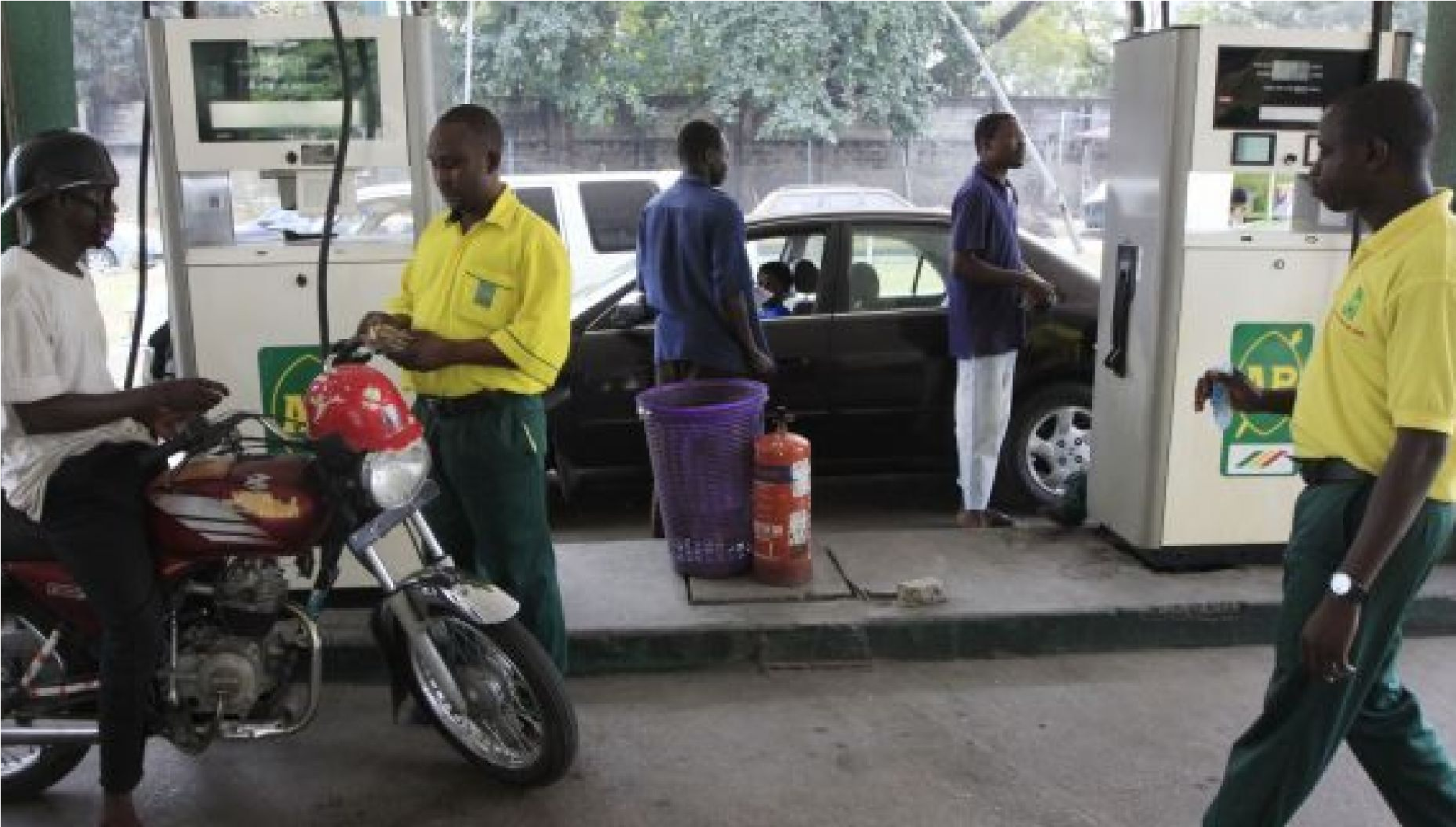
While Senegal is celebrating its first refined crude oil, Nigeria—Africa’s largest oil producer—has continued to struggle with its ailing refineries. Despite producing over 1.5 million barrels per day of crude oil, Nigeria still imports most of its refined petroleum products due to the non-functionality of its state-owned refineries.

Over the past two decades, the Nigerian government has spent billions of dollars on refinery rehabilitation, yet none of its four refineries have returned to full production. The Port Harcourt, Warri, and Kaduna refineries remain largely idle, forcing the country to rely on imported fuel, even as it boasts vast crude oil reserves.

Senegal’s ability to quickly transition into refining domestically produced crude has sparked conversations about what Nigeria could learn from its smaller West African neighbor. Experts argue that if Senegal—an emerging oil producer—can refine its crude successfully, Nigeria should be able to get its long-dormant refineries back to work.

“Senegal is currently at 100k barrels per day from 24 producing wells,” says energy expert, Kelvin Emmanuel. “Instead of join OPEC, it’s opting for building a midstream sector to refine its own share of crude and most likely sign a right of first refusal with the operating partner’s cost and profit oil, so it can stop importing white fuels with scarce FX, improve its balance of trade and payments and strengthen its macro-economic fundamentals.”

Many stakeholders are urging the Nigerian government to emulate Senegal’s model by seeking public-private partnerships to make its refineries functional again.

Senegal’s move to refine its own crude oil is expected to generate billions of dollars in revenue, accelerate economic transformation, and lower fuel costs for consumers. The country aims to reinvest oil revenues into infrastructure, healthcare, and education, ensuring broad economic benefits beyond the energy sector.

“Oil and gas production in Senegal will lead to exports and domestic consumption, but is far off the levels reached by global and African producers such as Nigeria,” SAR stated.