DD
MM
YYYY

PAGES

DD
MM
YYYY

spot_img

PAGES

Home Blog Page 22

The Shadow Banking Risks Inside Stablecoin Ecosystems

0

Banks are increasingly pushing for stablecoin regulation to extend beyond issuance and reserve requirements into secondary markets, arguing that meaningful financial stability risk does not end at the point where a token is minted.

Their position reflects a broader concern: stablecoins function less like static digital cash instruments and more like circulating monetary assets embedded within a fast-moving, globally interconnected trading ecosystem.

At the core of the debate is a structural gap in most emerging regulatory frameworks.

Policymakers in the United States, European Union, and parts of Asia have largely focused on issuers—entities that mint stablecoins and hold reserve assets such as cash and short-term government securities. These rules typically emphasize full backing, redemption rights, and transparency of reserves.

However, banks and traditional financial institutions argue that this issuer-centric approach ignores the systemic risks that arise once stablecoins enter secondary markets such as decentralized exchanges, centralized trading platforms, lending protocols, and cross-border payment rails.

From the banking sector’s perspective, stablecoins derive their real-world financial impact not at issuance but in circulation. Once in secondary markets, stablecoins can trade at deviations from par, be rehypothecated across multiple layers of DeFi protocols, or become collateral in leveraged positions.

This creates liquidity dynamics that resemble short-term wholesale funding markets, where stress can propagate quickly and amplify volatility. Banks contend that without oversight of these downstream environments, regulators are effectively supervising only the “front door” of a system whose risks are generated in its interior.

A key concern is fragmentation. Stablecoins often circulate across multiple jurisdictions and platforms, many of which operate outside traditional banking supervision. In such environments, price stability—ostensibly the defining feature of stablecoins—can break down during periods of market stress.

Even small deviations from the peg can trigger automated liquidations in DeFi systems, leading to cascading sell-offs and liquidity squeezes. Banks argue that these dynamics resemble shadow banking mechanisms observed in traditional finance prior to the 2008 crisis, where risks accumulated in less regulated corners of the system before spilling into core markets.

Another issue is arbitrage and market infrastructure. Stablecoin pegs are maintained not only by reserve backing but also by active arbitrage across exchanges.

If secondary markets are lightly regulated, then price discovery mechanisms can be distorted by opaque trading practices, insufficient disclosures, or uneven access to liquidity. Banks argue that this undermines the credibility of stablecoins as settlement assets, especially if they are to be integrated into tokenized securities markets or used in institutional payment systems.

Critics of the banks’ position, however, argue that extending regulation into secondary markets could stifle innovation and push activity further into unregulated offshore venues. Decentralized finance proponents maintain that market-based mechanisms, rather than heavy regulatory oversight, are what ensure stablecoin efficiency and global accessibility.

They warn that attempting to regulate every layer of stablecoin circulation could replicate the inefficiencies of traditional banking systems and limit competition. Despite these tensions, regulators are increasingly acknowledging that stablecoins behave like system-wide instruments rather than isolated products.

The challenge is determining where responsibility ends: at issuance, at exchange, or across the full lifecycle of a tokenized dollar equivalent. Banks are effectively arguing for a “full-stack” regulatory approach, where oversight extends from reserve management to trading venues, custodial services, and DeFi liquidity pools.

The debate reflects a broader transition in financial architecture. Stablecoins sit at the intersection of banking, payments, and decentralized markets. Whether regulation follows the narrow issuer model or expands into secondary markets will shape not only the stability of digital assets but also the competitive balance between traditional finance and emerging crypto-native systems.

SpaceX Extends Post-IPO Surge by 6% as Investors Bet on Musk’s AI Ambitions, but Valuation Debate Intensifies

0

SpaceX shares climbed again in premarket trading Monday, extending the momentum from what has already become the largest initial public offering in history. The stock rose about 6% before the opening bell, trading near $170, after surging 19% on its Nasdaq debut Friday and closing at $161, well above its IPO price of $135.

The rally has propelled SpaceX’s market capitalization beyond $2 trillion, placing Elon Musk’s company among the most valuable technology firms in the world and underscoring investors’ appetite for artificial intelligence-linked stocks.

Yet the strong debut has also sharpened a debate on Wall Street: whether SpaceX’s valuation is supported by fundamentals or reflects the latest phase of the AI investment frenzy sweeping global markets.

SpaceX entered public markets carrying a unique combination of businesses. The company remains the operator of the Starlink satellite internet network and one of the world’s leading reusable rocket manufacturers. However, investor attention has increasingly shifted toward its artificial intelligence ambitions following Musk’s decision to merge the company with AI startup xAI earlier this year.

The merger transformed the investment narrative around SpaceX from a pure-play space and satellite communications company into a broader AI infrastructure and computing platform.

That positioning comes at a time when capital markets are aggressively rewarding companies seen as beneficiaries of the AI revolution. Investors have poured billions into AI-related stocks, driving valuations higher across the semiconductor, cloud computing, data center, and software sectors.

The successful IPO also arrives amid an unprecedented wave of AI-related listings and fundraising activity. OpenAI recently confidentially filed for an IPO, Anthropic has begun preparations for its own public offering, while major technology companies continue to increase spending on AI infrastructure.

Against that backdrop, SpaceX’s market debut has become a key test of how much investors are willing to pay for companies positioned at the center of the AI ecosystem.

Capital Spending Raises Questions

While investors have embraced the growth story, analysts remain divided on whether the valuation can be justified. One of the primary concerns centers on the company’s rapidly rising capital expenditures.

SpaceX spent $10.1 billion on capital expenditures during the three months ended March, more than doubling the $4.1 billion recorded during the same period a year earlier. A substantial portion of that spending has been directed toward artificial intelligence infrastructure.

The scale of those investments has prompted concerns among some analysts and investors that SpaceX is becoming increasingly dependent on a business model that requires enormous amounts of capital while offering uncertain long-term returns.

The issue echoes concerns voiced across the broader technology sector. Major AI companies are spending tens of billions of dollars on data centers, chips, networking equipment, and energy infrastructure as they race to build more powerful AI systems. Some believe that the industry is moving from a traditionally asset-light software model toward a much more capital-intensive structure, raising questions about future profitability and returns on investment.

Bears See Significant Downside

Research firm CFRA initiated coverage of SpaceX on Friday with a “sell” rating and a 12-month price target of $115 per share. That target implies a decline of nearly 29% from Friday’s closing level.

CFRA cited what it described as SpaceX’s “extremely ambitious growth strategy, elevated valuation expectations, and significant capital intensity.”

The firm’s concerns reflect a growing view among some market observers that current valuations may already price in years of future growth and execution success. Morningstar analyst Nicolas Owens has expressed an even more cautious stance. In a June 8 research note, Morningstar estimated SpaceX’s fair value at just $63 per share and described the stock as significantly overvalued.

Such assessments highlight the widening gap between bullish market sentiment and more conservative valuation models.

Bulls Point To Strategic Advantages

Not all analysts share the pessimistic outlook. New Street Research initiated coverage with a $165 price target, broadly in line with current trading levels, suggesting that the firm sees room for continued growth. Supporters of the stock argue that SpaceX possesses a combination of assets that few competitors can match.

The company controls one of the world’s largest satellite communications networks through Starlink, maintains a dominant position in commercial launch services, and now has a direct pathway into the rapidly expanding AI infrastructure market through xAI. They also note that Musk has repeatedly succeeded in building businesses that initially appeared overvalued but ultimately grew into their market capitalizations.

For bullish investors, the company’s appeal lies not in its current earnings but in its ability to dominate several transformative industries simultaneously, including space transportation, satellite connectivity, artificial intelligence, and advanced computing infrastructure.

SpaceX’s IPO is being closely watched by investors evaluating upcoming public offerings from other AI leaders, including OpenAI and Anthropic. A strong aftermarket performance could strengthen confidence in high-growth AI listings and encourage more technology firms to tap public markets.

Conversely, any sharp reversal could trigger questions about whether AI-related valuations have become detached from business fundamentals.

The timing is noteworthy because investors are already grappling with concerns about rising capital expenditures across the technology sector. Companies from Google and Microsoft to Amazon and Meta are spending unprecedented sums to build AI infrastructure, while profitability remains an open question for many AI initiatives.

BOJ Stays on Track for Two Rate Hikes This Year Despite U.S.-Iran Peace Deal, Former Top Economist Says

0

The Bank of Japan is expected to deliver two interest rate hikes this year as planned, even if a peace agreement between the United States and Iran eases some energy price pressures, according to Seisaku Kameda, the central bank’s former chief economist.

With inflation rising due to the prolonged Middle East conflict, the BOJ is widely anticipated to raise its short-term policy rate to 1% from 0.75% at its two-day meeting concluding on Tuesday. That increase was originally projected for April but was delayed by the outbreak of the U.S.-Iran war.

Kameda, who remains closely connected to current policymakers, told Reuters that while a successful ceasefire and reopening of the Strait of Hormuz could moderate some inflationary forces, it would not fundamentally alter the BOJ’s commitment to normalizing monetary policy.

“But it won’t change the BOJ’s plan to push up still low real borrowing costs and normalize monetary policy by raising its policy rate at a pace of about twice a year,” he said.

He expects the next hike to come in October or December, following the current meeting. After Tuesday’s decision, the BOJ’s schedule includes meetings in July and September.

The central bank is navigating a complex environment. Inflation has been pushed higher by energy costs linked to the Iran war, which disrupted global oil flows through the Strait of Hormuz. At the same time, Japan’s economy has shown resilience, giving the BOJ room to gradually withdraw from years of ultra-loose policy without derailing growth.

Kameda, now executive economist at Sompo Institute Plus and involved in drafting BOJ forecasts from 2020 to 2022, noted that the central bank views the current rate path as essential for anchoring inflation expectations and supporting sustainable growth. Deputy Governor Shinichi Uchida, who will lead the post-meeting briefing on June 16 in Governor Kazuo Ueda’s absence due to medical treatment, is expected to maintain “constructive ambiguity” on future moves.

“Uchida is good at communicating with constructive ambiguity. With so much uncertainty over the outlook, he will signal the BOJ’s readiness to respond nimbly,” he said.

War’s Lasting Impact on Policy Timing

The U.S.-Iran conflict forced the BOJ to adjust its timeline earlier this year. What began as a relatively benign inflation environment quickly turned more challenging as oil prices spiked and global supply chains faced disruption. Kameda said the war’s energy shock made an April hike impractical, pushing the BOJ to act more cautiously while monitoring second-round effects on wages and broader prices.

A U.S.-Iran peace framework announced recently has helped ease some immediate concerns, with oil prices falling on hopes of normalized flows through the Strait of Hormuz. However, Kameda stressed that even a smooth resolution would not remove the need for gradual tightening. Real interest rates in Japan remain deeply negative, and the BOJ sees normalization as critical for financial stability and to avoid entrenching low inflation expectations.

Economists polled by Reuters expect the BOJ to reach 1.25% by the end of the year, with the June hike followed by another in the fourth quarter. This pace would represent a significant but measured withdrawal from decades of extraordinary monetary easing.

Japan’s economy has shown surprising resilience despite global headwinds. Strong corporate investment, a recovering tourism sector, and wage growth have supported activity, giving the central bank confidence to tighten policy. However, risks remain. A prolonged or renewed escalation in the Middle East could keep energy prices elevated, squeezing household budgets and corporate margins. At the same time, a stronger yen, which often accompanies rate hikes, could weigh on exporters.

The BOJ’s challenge is to thread the needle: raising rates enough to manage inflation without undermining growth or triggering financial market volatility. Markets will be watching Uchida’s tone closely for any hints on timing and the balance of risks.

Kameda’s assessment suggests continuity. The central bank is committed to a gradual normalization path, using the current environment of moderate growth and contained, but persistent, inflation to move away from negative rates and yield curve control. Economists note that the peace developments in the Middle East may provide a more favorable backdrop, but they do not change the underlying need to adjust policy settings that have been in place for years.

However, this marks another step in Japan’s long journey away from deflationary stagnation toward a more normal monetary framework. While the Iran war introduced unexpected volatility, the BOJ appears determined to stay the course. Tuesday’s decision and Uchida’s briefing will offer the clearest signal yet of how quickly that journey will proceed in the second half of 2026.

The Role of Democratic Institutions in Germany’s Corporate Strategy

0

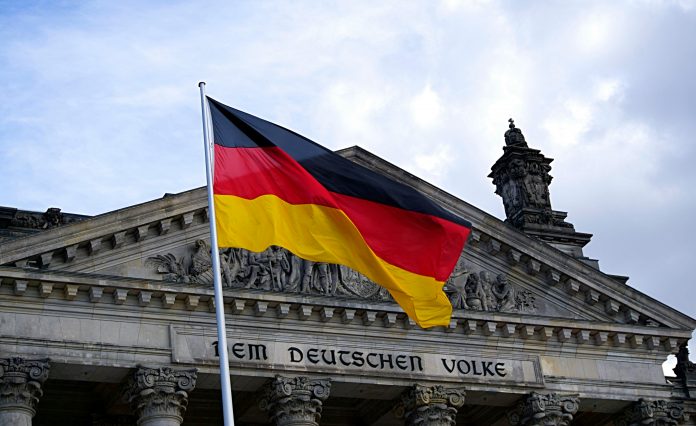
German managers increasingly view stable democracy as foundational to corporate success, linking institutional reliability with investment confidence, innovation, and long-term planning.

In a period marked by geopolitical fragmentation, energy transition pressures, and supply-chain recalibration, executives across manufacturing, automotive, and finance sectors emphasize that democratic stability is not merely a political ideal but an economic asset.

Their perspective reflects Germany’s export-oriented model, which depends heavily on predictable rules, independent courts, and trust in governance frameworks that reduce uncertainty for capital allocation decisions.

This stance is reinforced by recent macroeconomic volatility and the rising perception of systemic risk in global markets. German firms, many of which operate multinational supply chains, are particularly sensitive to disruptions arising from political instability, authoritarian policy shifts, or regulatory unpredictability.

Managers argue that democratic institutions provide a safeguard against arbitrary decision-making, ensuring continuity in trade policy, labor regulation, and environmental standards. In their view, such continuity is essential for maintaining competitiveness in capital-intensive industries like automotive engineering, chemicals, and industrial machinery.

Beyond economics, there is also a strategic dimension to the argument.

Stable democracies are seen as more resilient in managing social tensions, fostering inclusive dialogue between labor unions, industry groups, and policymakers. This reduces the likelihood of disruptive strikes or abrupt regulatory overhauls. Germany’s historical experience reinforces a cultural preference for rule-based governance and institutional checks and balances.

Managers often point to the European Union as an extension of this stability framework, where supranational coordination further reduces risk and enhances market integration. German business leaders see stable democracy not as an abstract civic preference but as a core input into productive capacity and international competitiveness.

The predictability of legal systems, transparency in governance, and accountability of political institutions are treated as macroeconomic fundamentals, comparable to infrastructure or energy supply. As global competition intensifies, firms increasingly differentiate between jurisdictions based not only on cost structures but also on institutional credibility.

This has implications for investment flows, with capital gravitating toward regions where democratic norms reduce policy risk. In Germany’s case, the alignment between corporate governance culture and democratic institutions creates a reinforcing loop that strengthens both economic performance and political legitimacy.

However, this perspective also implies vulnerability: any erosion of democratic norms could quickly translate into higher risk premiums, reduced foreign direct investment, and weakened industrial confidence. For managers, the message is clear—economic success is inseparable from the health of democratic institutions, making political stability a strategic necessity rather than a background condition.

Moreover, the ongoing energy transition and geopolitical tensions in Europe have sharpened this perception among executives. The restructuring of energy supply chains following the Russia–Ukraine conflict highlighted how quickly non-democratic or unstable arrangements can translate into economic shock.

German managers increasingly factor geopolitical resilience into corporate strategy, including diversification away from single-source dependencies such as China. The European Union’s regulatory framework is seen as a stabilizing force that amplifies national democratic institutions, particularly through shared standards on data, competition, and environmental policy.

This convergence of political and economic governance reinforces ESG-oriented investment criteria, where governance quality becomes a measurable component of firm valuation. Democracy is no longer treated as background noise but as a forward-looking determinant of risk-adjusted returns and long-term corporate survival in a fragmented global economy for German industrial competitiveness in future terms.

Monero Activity Surge Triggers Major USDT Freeze by Tether, as HyperEVM Powers Record $4.4B USDC Transfer Between Circle and Coinbase

0

The cryptocurrency industry continues to grapple with the challenge of balancing financial privacy and regulatory compliance. A recent development involving Tether, the issuer of the world’s largest stablecoin, USDT, has reignited this debate.

Tether reportedly froze approximately $72 million worth of USDT connected to wallets that authorities and blockchain investigators believe were linked to a surge in activity surrounding Monero, one of the most privacy-focused cryptocurrencies in the market.

The move highlights the increasing scrutiny of privacy coins and the growing role stablecoin issuers play in enforcing financial regulations across the digital asset ecosystem.

Monero has long been recognized as the leading privacy cryptocurrency. Unlike Bitcoin and many other digital assets, Monero uses advanced cryptographic techniques to obscure transaction details, including sender and receiver addresses as well as transaction amounts.

While privacy advocates argue that these features provide legitimate financial confidentiality, regulators have repeatedly expressed concerns that such anonymity can facilitate illicit activities, including money laundering, ransomware payments, and sanctions evasion.

The freeze reportedly followed an unusual increase in transactions linked to Monero-related activity. Blockchain analytics firms identified patterns suggesting that substantial amounts of value were being transferred between exchanges, over-the-counter trading desks, and wallets associated with privacy-focused trading operations.

Although Monero transactions themselves are difficult to trace, investigators often monitor the points where privacy coins interact with more transparent assets such as USDT. Stablecoins frequently serve as bridges between cryptocurrencies and traditional financial systems, making them key targets for compliance monitoring.

Tether’s decision to freeze the funds demonstrates the company’s increasing willingness to cooperate with law enforcement agencies and regulatory authorities. Tether has expanded its compliance efforts, implementing wallet-freezing mechanisms that allow it to block access to USDT held in specific addresses when criminal activity is suspected.

The company has repeatedly stated that such actions are taken in coordination with official investigations and are designed to protect the integrity of the financial system. The incident also underscores the unique nature of centralized stablecoins.

While cryptocurrencies are often associated with decentralization and censorship resistance, USDT operates under a model where the issuer retains significant control over the token supply.

This includes the ability to freeze or blacklist addresses, a feature that can help combat fraud and financial crime but also raises concerns among users who prioritize financial sovereignty. Critics argue that such powers undermine the decentralized ethos of cryptocurrency, while supporters view them as necessary safeguards for mainstream adoption.

For the broader market, the freeze may have implications for privacy-focused assets and exchanges that support them. Regulatory pressure on privacy coins has intensified globally, with several exchanges delisting Monero and similar assets to avoid compliance risks.

Actions like Tether’s could further discourage institutions from engaging with privacy-centric cryptocurrencies, potentially reducing liquidity and accessibility for these assets. The episode highlights the evolving relationship between blockchain technology and regulation.

As digital assets become increasingly integrated into global finance, authorities are demanding stronger compliance measures from crypto companies. Stablecoin issuers, exchanges, and infrastructure providers are expected to play a larger role in identifying suspicious transactions and preventing the misuse of blockchain networks.

Tether’s freezing of $72 million in USDT linked to a Monero-related surge reflects the industry’s ongoing struggle to balance privacy, security, and regulatory oversight. As governments and financial institutions continue to shape the future of digital assets, the tension between anonymity and accountability is likely to remain one of cryptocurrency’s most important and controversial issues.

HyperEVM Powers Record $4.4B USDC Transfer Between Circle and Coinbase

Circle’s record $4.4 billion USDC transfer to Coinbase via HyperEVM marks one of the largest single-day stablecoin settlement movements in recent crypto market history. It underscores how deeply integrated on-chain liquidity routing and exchange infrastructure have become, particularly as institutional participants increasingly rely on stablecoins like USDC for rapid value transfer and treasury operations.

At the center of this transaction is Circle, the issuer of USDC, which has steadily positioned its stablecoin as a core settlement asset across centralized exchanges, decentralized finance protocols, and cross-chain liquidity networks.

Coinbase, as one of the largest regulated crypto exchanges globally, continues to serve as a primary liquidity hub for USDC flows, especially those involving large-scale institutional transfers and arbitrage positioning.

The reported use of HyperEVM as the routing layer highlights the growing importance of high-performance execution environments designed to reduce latency and optimize cross-chain settlement efficiency.

This scale of movement also signals deeper liquidity consolidation across major centralized venues, where stablecoins function as the default bridge between fiat banking systems and digital asset markets.

Such transfers are not merely transactional but reflect broader capital allocation strategies, where institutions move large USDC positions to exchanges like Coinbase in anticipation of trading activity, hedging needs, or yield optimization opportunities.

From a market structure perspective, transactions of this magnitude often draw attention to the plumbing of stablecoin ecosystems, including minting and redemption flows, custody arrangements, and cross-chain bridging mechanisms.

Circle’s infrastructure and Coinbase’s exchange rails effectively function as two critical endpoints in this system, while HyperEVM acts as an intermediary execution and routing layer that enhances throughput and composability.

The $4.4 billion USDC movement reflects the maturation of stablecoin-based financial infrastructure, where scale, speed, and interoperability are becoming defining competitive advantages. It also reinforces the strategic role of Coinbase as a regulated on-ramp for institutional crypto capital.

While highlighting Circle’s continued dominance in stablecoin issuance and settlement standards across global markets. Meanwhile, the use of HyperEVM suggests an emerging trend toward modular execution environments that separate settlement logic from execution layers, allowing for higher throughput and more efficient capital routing across chains.

Such developments are particularly relevant in a macro environment where liquidity fragmentation across chains and venues has historically constrained capital efficiency. As stablecoins increasingly serve as neutral settlement instruments, large-scale transfers like this one provide insight into how digital dollar liquidity is distributed across centralized and decentralized systems.

Over time, the convergence of exchange infrastructure, issuer balance sheets, and high-performance execution layers may further blur the distinction between traditional financial plumbing and blockchain-native settlement networks.

The $4.4 billion USDC transfer underscores the accelerating institutionalization of stablecoin liquidity flows across global crypto markets.

It reflects how Circle and Coinbase continue to function as core infrastructure providers within the digital asset economy, especially as regulatory clarity and institutional adoption expand. This dynamic also highlights the importance of interoperability solutions like HyperEVM in enabling seamless cross-chain settlement,

Reducing friction between execution environments, and supporting increasingly complex capital allocation strategies executed by institutional traders. Hedge funds, and algorithmic market makers who depend on high-throughput infrastructure to move large volumes of USDC efficiently across exchanges, decentralized protocols, and custodial systems while maintaining speed, transparency,