

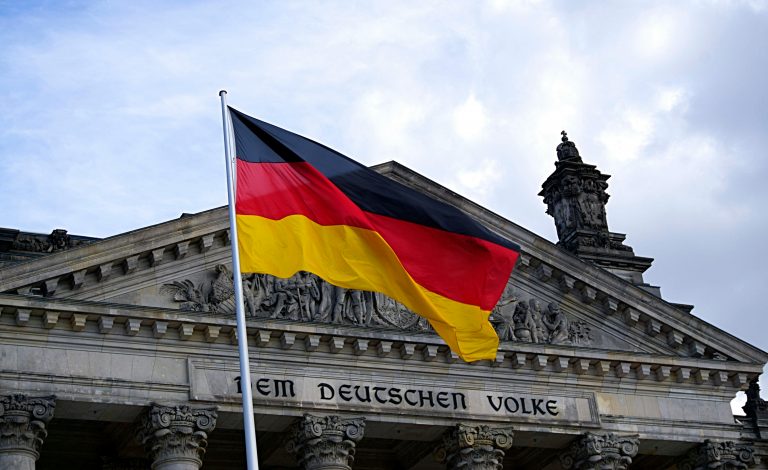
German managers increasingly view stable democracy as foundational to corporate success, linking institutional reliability with investment confidence, innovation, and long-term planning.
In a period marked by geopolitical fragmentation, energy transition pressures, and supply-chain recalibration, executives across manufacturing, automotive, and finance sectors emphasize that democratic stability is not merely a political ideal but an economic asset.
Their perspective reflects Germany’s export-oriented model, which depends heavily on predictable rules, independent courts, and trust in governance frameworks that reduce uncertainty for capital allocation decisions.
Register for the next Tekedia Mini-MBA.
Register for Tekedia AI in Business Masterclass.
Join Tekedia Capital Syndicate and co-invest in great global startups.
This stance is reinforced by recent macroeconomic volatility and the rising perception of systemic risk in global markets. German firms, many of which operate multinational supply chains, are particularly sensitive to disruptions arising from political instability, authoritarian policy shifts, or regulatory unpredictability.
Managers argue that democratic institutions provide a safeguard against arbitrary decision-making, ensuring continuity in trade policy, labor regulation, and environmental standards. In their view, such continuity is essential for maintaining competitiveness in capital-intensive industries like automotive engineering, chemicals, and industrial machinery.
Beyond economics, there is also a strategic dimension to the argument.
Stable democracies are seen as more resilient in managing social tensions, fostering inclusive dialogue between labor unions, industry groups, and policymakers. This reduces the likelihood of disruptive strikes or abrupt regulatory overhauls. Germany’s historical experience reinforces a cultural preference for rule-based governance and institutional checks and balances.

Managers often point to the European Union as an extension of this stability framework, where supranational coordination further reduces risk and enhances market integration. German business leaders see stable democracy not as an abstract civic preference but as a core input into productive capacity and international competitiveness.
The predictability of legal systems, transparency in governance, and accountability of political institutions are treated as macroeconomic fundamentals, comparable to infrastructure or energy supply. As global competition intensifies, firms increasingly differentiate between jurisdictions based not only on cost structures but also on institutional credibility.
This has implications for investment flows, with capital gravitating toward regions where democratic norms reduce policy risk. In Germany’s case, the alignment between corporate governance culture and democratic institutions creates a reinforcing loop that strengthens both economic performance and political legitimacy.

However, this perspective also implies vulnerability: any erosion of democratic norms could quickly translate into higher risk premiums, reduced foreign direct investment, and weakened industrial confidence. For managers, the message is clear—economic success is inseparable from the health of democratic institutions, making political stability a strategic necessity rather than a background condition.
Moreover, the ongoing energy transition and geopolitical tensions in Europe have sharpened this perception among executives. The restructuring of energy supply chains following the Russia–Ukraine conflict highlighted how quickly non-democratic or unstable arrangements can translate into economic shock.
German managers increasingly factor geopolitical resilience into corporate strategy, including diversification away from single-source dependencies such as China. The European Union’s regulatory framework is seen as a stabilizing force that amplifies national democratic institutions, particularly through shared standards on data, competition, and environmental policy.
This convergence of political and economic governance reinforces ESG-oriented investment criteria, where governance quality becomes a measurable component of firm valuation. Democracy is no longer treated as background noise but as a forward-looking determinant of risk-adjusted returns and long-term corporate survival in a fragmented global economy for German industrial competitiveness in future terms.