DD
MM
YYYY

PAGES

DD
MM
YYYY

spot_img

PAGES

Home Blog Page 22

AI Is Replacing Saas Faster Than Expected, Curative CEO Says After Canceling $600,000 Salesforce Contract

0

Artificial intelligence is beginning to replace traditional enterprise software at some companies, adding fresh momentum to the debate over whether generative AI could fundamentally reshape the software-as-a-service (SaaS) industry.

Fred Turner, founder and chief executive of U.S. health insurer Curative, said his company has dramatically reduced its reliance on third-party software after building internal AI-powered alternatives, including replacing a Salesforce customer relationship management (CRM) system that previously cost the company $600,000 annually.

Speaking on the “20VC with Harry Stebbings” podcast, Turner said he believes the so-called “SaaSpocalypse” is real, referring to concerns that AI coding tools will enable companies to build customized software rather than subscribe to expensive SaaS platforms.

Asked whether he subscribes to the theory that SaaS is dying, Turner replied simply: “Yes.”

Explaining his position, he pointed to Curative’s own experience.

“I see the number of contracts that we’re canceling,” Turner said. “We just recently canceled our Salesforce contract because we have an internal CRM that was vibecoded.”

According to Turner, the company developed the replacement CRM in just two months, illustrating how AI-assisted software development is shortening development cycles that once took many months or even years. Curative now plans to reduce its overall SaaS spending by about 80% this year, redirecting much of that expenditure toward artificial intelligence infrastructure and AI models instead.

The development has added to the growing divide within the technology industry over AI’s long-term impact on enterprise software vendors. Earlier this year, fears that capable AI coding agents would allow businesses to build bespoke internal applications instead of licensing commercial software triggered a broad selloff in SaaS stocks.

Companies including Salesforce, Asana, DocuSign, ServiceNow, Adobe and Workday saw their shares fall sharply, in some cases by between 20% and 50%, as investors questioned whether AI would erode the subscription-based software business model that has dominated enterprise technology for more than a decade.

The concern centers on advances in AI-assisted programming, often called “vibe coding,” where developers use large language models to generate, modify, and maintain software with natural language prompts. Supporters believe that the technology dramatically lowers development costs and makes custom-built applications economically viable for companies that previously depended on packaged software.

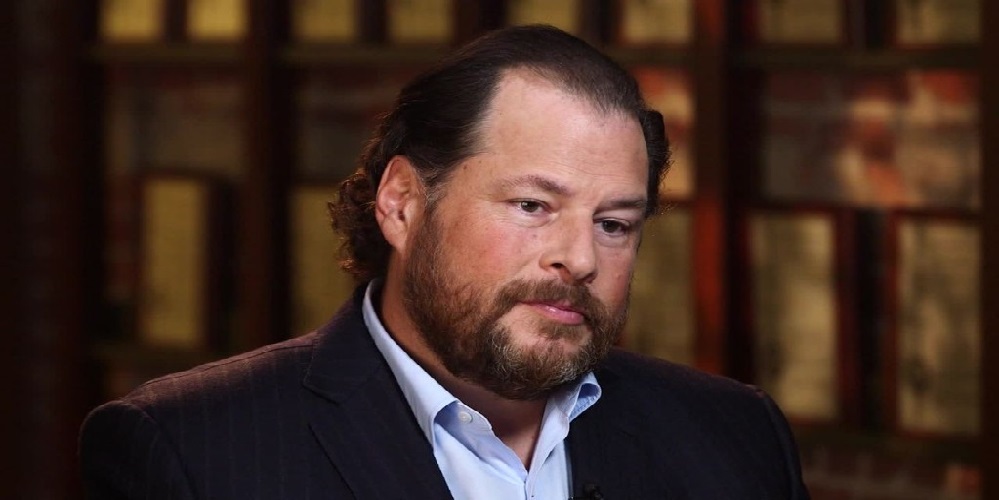
Salesforce Chief Executive Marc Benioff has strongly rejected predictions of a SaaS collapse.

Speaking during the company’s February earnings call, Benioff said demand for Salesforce products remains robust, arguing that AI agents actually increase the value of enterprise software platforms rather than replace them.

“If there is a ‘SaaSpocalypse,’ it may be eaten by the ‘SaaS-quatch’ because there are a lot of companies using a lot of SaaS because it just got better with agents,” Benioff said.

Salesforce has also highlighted that more than 150,000 organizations continue to use its platforms and argues that enterprise applications provide capabilities that internally built systems often struggle to replicate, particularly around security, compliance and governance.

A Salesforce spokesperson told Business Insider that the company’s platform is designed with trust and governance at its core and is built to handle complex healthcare regulations such as the U.S. Health Insurance Portability and Accountability Act (HIPAA).

Turner acknowledged that replacing commercial software with internally developed AI systems is not without challenges.

“Maintenance is definitely one of the most challenging pieces,” he said, noting that keeping custom software updated remains an ongoing operational burden.

At the same time, Curative’s investment in AI has expanded rapidly.

Turner said the company’s spending on Anthropic’s AI models has increased dramatically over the past six to seven months as it finds new applications for generative AI across its business.

“Our Anthropic cost over the last six or seven months has 6x’d every month, from a base of a couple of tens of thousands of dollars, now up to millions of dollars a month,” Turner said.

“Eventually, we’re going to have to stop that spending increase because it’ll get unreasonable, but we just keep finding new things to do with it.”

Even with rapidly rising AI costs, Turner argued the economics remain compelling because the productivity gains significantly outweigh the additional expenditure. He cited Gwen, Curative’s internally developed AI agent used to negotiate contracts with physicians and healthcare providers.

Before deploying the AI system, completing each contract reportedly cost Curative between $1,500 and $2,000. Gwen has reduced that average cost to about $70 per contract, according to Turner.

The lower costs have also enabled Curative to expand its operations rather than simply reduce expenses.

“What we’ve done is said, ‘Well, now that we have the agent, we can do 10 times as many contracts this year as we could do last year,'” Turner said.

“So, we’re going to do 10 times, and then we’re going to try and do 20 times, and we would just do a lot more volume than you could possibly have done with a human team.”

The corporate technology spending is shifting toward a new pattern. Rather than eliminating software budgets altogether, many organizations are reallocating spending from traditional SaaS subscriptions toward AI infrastructure, foundation models and custom AI applications. While some executives view generative AI as an opportunity to replace standardized enterprise software with tailored internal systems, established software vendors believe that enterprise-grade security, compliance, scalability and integration capabilities remain difficult to replicate.

This view places AI as an enhancement to SaaS rather than a replacement.
Starlink Direct-to-Cell Service and Its Impact on Telecom Companies

0

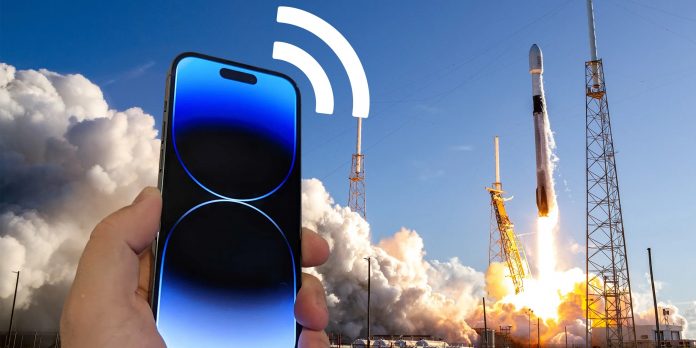
Elon Musk’s latest ambition could redefine the future of global communications. Reports that SpaceX has committed nearly $17 billion toward advancing direct-to-cell satellite technology have sparked intense discussions across the telecommunications industry.

The vision is simple yet revolutionary: enabling ordinary smartphones to connect directly to satellites in orbit, eliminating dependence on traditional ground-based cellular infrastructure.

Speaking about the initiative, Musk stated that the technology “will allow SpaceX to deliver high bandwidth connectivity directly from the satellites to the phones.” If fully realized at scale, this innovation could fundamentally reshape how humanity accesses the internet and mobile services.

For more than a century, the expansion of communication networks has followed a familiar blueprint. Governments and private companies built towers, laid fiber-optic cables, and expanded coverage incrementally from one geographic location to another.

The model transformed societies, enabling the rise of the digital economy, e-commerce, social media, and global information exchange. Yet despite massive investments, billions of people around the world still experience unreliable connectivity or remain entirely offline.

Remote villages, deserts, mountain regions, oceans, and disaster-stricken areas often suffer from weak or nonexistent network coverage because constructing terrestrial infrastructure in such locations is expensive and logistically challenging.

This has created a persistent digital divide, leaving many communities excluded from opportunities in education, healthcare, finance, and commerce. SpaceX’s direct-to-cell initiative seeks to address this problem from an entirely different perspective.

Instead of expanding communication networks from the ground upward, the company is attempting to build them from space downward. By deploying advanced satellites equipped with cellular capabilities, smartphones could potentially receive signals directly from orbit without requiring dedicated satellite dishes or specialized hardware.

The implications are enormous. Emergency communication could become dramatically more resilient.

During hurricanes, earthquakes, wars, or infrastructure failures, terrestrial towers are often among the first systems to collapse. A satellite-based network would remain largely unaffected by events on the ground, providing a critical lifeline for affected populations.

Direct satellite connectivity could eventually eliminate many coverage dead zones that plague existing mobile networks. Travelers crossing oceans, hikers in remote wilderness areas, and residents of isolated communities may gain continuous access to messaging, internet services, and emergency communications regardless of their location.

The technology also presents significant economic consequences for the telecommunications industry. Traditional telecom companies have invested hundreds of billions of dollars into building and maintaining cellular towers, fiber networks, and related infrastructure.

If satellite-based communication becomes sufficiently affordable and scalable, it could challenge the long-standing business model that has defined the industry for decades.

Delivering high-bandwidth internet directly from satellites to standard smartphones is an engineering challenge of extraordinary complexity.

Issues related to spectrum allocation, latency, satellite capacity, regulatory approvals, and international cooperation must all be addressed before the vision can be fully realized. Moreover, cellular towers are unlikely to disappear overnight.

Urban environments with dense populations still require massive data capacity that terrestrial infrastructure currently handles more efficiently. Instead, the immediate future may involve a hybrid model in which satellite networks complement traditional telecommunications systems, extending coverage where ground infrastructure is limited or unavailable.

The broader significance of SpaceX’s initiative cannot be understated. It represents a shift in thinking about connectivity itself. For generations, humanity built communication networks by conquering geography one tower at a time. Musk’s approach seeks to bypass geography altogether.

If successful, direct-to-cell satellite communication could mark the beginning of a new era in which access to information is no longer determined by physical infrastructure on Earth, but by constellations of satellites orbiting above it. In doing so, SpaceX may not merely improve global connectivity—it could fundamentally redefine it.

Samsung Shares Surge As Tech Giant Launches Robotics Division, Deepens Push Into Humanoid AI

0

Samsung Electronics shares jumped on Tuesday after the South Korean technology giant unveiled a dedicated robotics division, bolstering its ambition to become a major player in the rapidly emerging physical artificial intelligence market as global technology companies race to commercialize humanoid robots.

The stock rose 6.76%, outperforming South Korea’s benchmark Kospi index, which gained about 4%, as investors welcomed the company’s latest effort to diversify beyond its traditional semiconductor and consumer electronics businesses into what many analysts see as one of the next major growth frontiers in AI.

Samsung said it has established a new business unit called RX (Robotics eXperience), which will consolidate the company’s robotics operations under a single organization responsible for everything from core technology research to commercialization.

The new division will spearhead Samsung’s mid- to long-term robotics strategy, accelerating development of AI-powered machines while integrating the company’s expertise in semiconductors, sensors, displays, batteries and software into next-generation robotic platforms.

The importance of the initiative is underscored by the decision to place the division directly under Chief Executive TM Roh, a move that signals robotics is becoming a core pillar of Samsung’s future growth strategy rather than a standalone research effort.

Betting On Physical AI

The launch comes as technology companies increasingly shift their focus from generative AI software toward physical AI, where artificial intelligence enables robots to perceive, reason, navigate and perform complex tasks autonomously in the real world. Unlike generative AI models that process text, images and code, physical AI combines advanced AI models with robotics, sensors and edge computing to create machines capable of interacting safely with people and their surroundings.

Industry leaders now see robotics as the next major wave of AI commercialization, extending artificial intelligence beyond digital assistants into factories, logistics centers, hospitals, offices and eventually homes. Nvidia Chief Executive Jensen Huang has repeatedly described robotics as the next multitrillion-dollar AI opportunity, while companies including Tesla, Figure AI, Boston Dynamics, Agility Robotics, Apptronik and numerous Chinese robotics startups are investing heavily in humanoid robots.

Samsung’s latest move places it firmly within that rapidly intensifying global race.

The new division builds on a series of investments Samsung has made over the past two years to strengthen its robotics capabilities. In late 2024, the company increased its stake in South Korean robotics specialist Rainbow Robotics, becoming the company’s largest shareholder. The acquisition gave Samsung access to advanced robotics technologies and engineering talent while providing a platform to accelerate development of humanoid and industrial robots.

Earlier this month, Roh announced plans to invest approximately 60 trillion won ($40.7 billion) in South Korea’s Yeongnam region, highlighting robotics and AI as strategic priorities. Of that amount, 19 trillion won will be invested in Gumi, in partnership with Samsung SDS, to develop physical AI infrastructure and establish manufacturing facilities dedicated to humanoid robots.

The investment is expected to support production capabilities, AI model development, robotics software, advanced sensing technologies and next-generation manufacturing systems.

Samsung also plans to establish dedicated robotics research bases in the United States, China and Japan, giving the company access to leading AI researchers, robotics engineers and innovation ecosystems while strengthening collaboration with universities, research institutes and technology partners.

Diversifying Beyond Chips and Smartphones

The robotics initiative is part of Samsung’s broader plan to reduce its dependence on its highly cyclical memory chip business, which has historically accounted for a substantial share of earnings but remains vulnerable to swings in global semiconductor demand. Although Samsung remains one of the world’s largest smartphone and memory chip manufacturers, the company has increasingly identified AI, robotics, automotive electronics, digital health and advanced semiconductor technologies as key long-term growth drivers.

The push also comes as Samsung seeks new revenue streams amid intensifying competition in smartphones and mounting pressure in AI semiconductors from rivals such as SK Hynix and Micron, both of which have strengthened their positions in high-bandwidth memory chips used to power AI systems.

Robotics offers Samsung an opportunity to leverage technologies it already dominates, including advanced processors, memory chips, image sensors, OLED displays, batteries and connectivity solutions, creating significant synergies across its existing businesses.

Industry analysts expect the global robotics market to expand rapidly over the coming decade, driven by aging populations, labor shortages, rising manufacturing automation and breakthroughs in artificial intelligence.

Humanoid robots are increasingly being tested for applications ranging from factory assembly and warehouse logistics to healthcare, hospitality and domestic assistance, with AI dramatically improving their ability to understand instructions, make decisions and adapt to changing environments.

For Samsung, creating a standalone robotics division signals a shift from investing in robotics technologies to building a commercially scalable business capable of competing in one of the technology sector’s fastest-growing markets. The strong share price reaction suggests investors view the move as a significant step that positions Samsung to capitalize on what many expect will be the next major phase of the AI revolution.

Entrepreneurship Is Not a Vacation Job

0

Every year, thousands of people announce that they are starting a company. Social media celebrates entrepreneurs as heroes, venture capital rounds become headlines, unicorns become legends, and successful founders are presented as symbols of freedom, wealth, and influence. The narrative is attractive: identify an idea, build a product, raise money, scale rapidly, ring the bell on a stock exchange, and retire wealthy. Unfortunately, that is not how entrepreneurship works for most people. Entrepreneurship is not a vacation job. It is one of the most demanding professions in the world, and before anyone decides to enter it, the person must understand one simple reality: building a company is a commitment to solving problems every day for many years.

The glamorous parts of entrepreneurship like the conferences, interviews, fundraising announcements, awards, and photographs with investors, represent only a very small part of the journey. The larger reality is uncertainty, sacrifice, rejection, operational pressure, financial strain, and relentless execution. Behind every successful company are years of difficult decisions, failed experiments, unhappy customers, delayed payments, broken systems, recruitment challenges, regulatory issues, and moments when the founders themselves were unsure whether the company would survive. Entrepreneurship is therefore not primarily about excitement. It is about endurance.

A company exists because there is a friction in the market. A market friction is anything that prevents buyers and sellers from creating and exchanging value efficiently. It may be high cost, lack of trust, poor logistics, fragmented information, weak infrastructure, inefficient regulation, limited access to financing, or an unsatisfactory customer experience. The entrepreneur’s job is to identify that friction, understand it deeply, and build a better system around it. If there is no meaningful friction to solve, there is no meaningful company to build.

This is why entrepreneurship should not begin merely with passion. Passion is useful, but passion alone does not create a sustainable business. The market does not reward enthusiasm; it rewards value. A founder may be passionate about a product, but if customers do not consider that product useful enough to pay for, the company will struggle. Successful entrepreneurs become obsessed not merely with their ideas but with the problems confronting customers. They spend time understanding why a market is not working, what customers currently do, what they dislike, what they value, and what they are willing to pay to improve.

Many people enter entrepreneurship because they dislike their jobs, want more freedom, or believe they will have more control over their time. In reality, running a company is usually harder than working for one. An employee may receive a predictable salary at the end of the month, but the entrepreneur must ensure that everyone else is paid before thinking about personal compensation. An employee may worry about completing an assigned task, while the entrepreneur worries about payroll, taxes, customers, products, technology, regulation, recruitment, strategy, competition, fundraising, and survival at the same time.

The entrepreneur carries every problem in the company. When the business succeeds, many people celebrate. When it struggles, the founder bears the emotional and financial weight. Entrepreneurship is therefore less about freedom than about responsibility. It is the responsibility to customers who depend on the product, employees who depend on salaries, investors who expect stewardship, suppliers who expect payment, and communities that expect the company to create value.

Founders also discover that building a company can be lonely. There will be moments when investors do not believe in the vision, customers refuse to buy, employees resign, competitors raise large sums, and the economic environment becomes hostile. At such moments, there are no applause and no headlines. There is only the founder and the next decision. That is why emotional resilience is one of the most important entrepreneurial assets. Technology can be copied, products can be redesigned, capital can be raised, and teams can be rebuilt, but the ability to continue executing after repeated setbacks is what separates enduring companies from forgotten ones.

Another great misunderstanding is the belief that raising capital is equivalent to building a successful company. It is not. Investment provides time, but customers build companies. Revenue sustains companies. Execution grows companies. Capital can accelerate a working model, but it cannot permanently rescue a weak one. Many startups have raised millions of dollars and still disappeared because they failed to create durable value for customers. Capital amplifies execution; it does not replace it. The first responsibility of the entrepreneur is not to raise money but to build something useful enough that people will pay for it.

Building a company also requires more than creating a product. A product may attract customers, but systems retain them. As a business grows, the founder must build systems around hiring, culture, finance, governance, customer service, compliance, technology, partnerships, and operational discipline. A company that depends entirely on the founder cannot scale. The founder must gradually move from being the person who solves every problem to being the person who builds an institution capable of solving problems consistently.

This transition is difficult because the skills required to start a company are not always the same skills required to lead a growing one. The early-stage founder may succeed through speed, improvisation, and personal sacrifice. The later-stage leader must learn delegation, governance, process design, capital allocation, talent management, and strategic discipline. A founder who cannot make that transition may eventually become the greatest constraint on the company.

Entrepreneurship also demands continuous learning. Markets change, technologies evolve, regulations emerge, competitors improve, and customer expectations shift. An entrepreneur who stops learning gradually loses the ability to lead. The best founders are perpetual students. They read widely, listen carefully, study customers, observe competitors, review data, and adapt quickly. They understand that yesterday’s advantage can become tomorrow’s weakness.

The objective is not merely to invent something once. It is to continuously improve the organization’s capacity to solve customer problems. Innovation is not only the creation of a new idea; it is the commercialization of that idea in a way that creates sustainable value. Many people invent, but fewer commercialize successfully. The hard work of entrepreneurship lies in moving from the idea state to the revenue state.

Despite all these difficulties, entrepreneurship remains one of humanity’s most important activities. Entrepreneurs create jobs, develop technologies, expand markets, improve productivity, and raise living standards. Every great company began because someone decided that a market friction deserved a better solution. From electricity and automobiles to computers, smartphones, vaccines, financial platforms, and logistics systems, entrepreneurs have repeatedly redesigned civilization by solving practical problems.

Societies become prosperous not merely because they possess natural resources but because they create institutions that enable entrepreneurs to convert ideas into scalable enterprises. When entrepreneurs succeed, they do more than create personal wealth. They create opportunities for employees, suppliers, investors, and communities. They build platforms upon which others can create value.

That is why entrepreneurship should never be entered casually. It is not a fashionable career choice. It is not an escape from employment. It is not a shortcut to wealth. It is a profession that demands extraordinary commitment. Anyone considering the journey should ask whether there is a real problem worth solving, whether customers care about that problem, and whether the founder is prepared to spend years building the solution.

There will be difficult days. There will be disappointments, uncertainty, rejection, and sacrifice. But when a company genuinely reduces a market friction and consistently creates value for customers, the market can reward it. The entrepreneur’s mission is not merely to launch a business. It is to redesign a market by making a friction disappear.

Entrepreneurship is not a vacation job. It is one of the hardest jobs in the world. Yet for those who are prepared to endure, learn, build, and serve, it can also be one of the most meaningful.

Treat Bitcoin as a Long-Term Investment Project And Not a Speculative Asset – Binance CEO Changpeng Zhao Urges

0

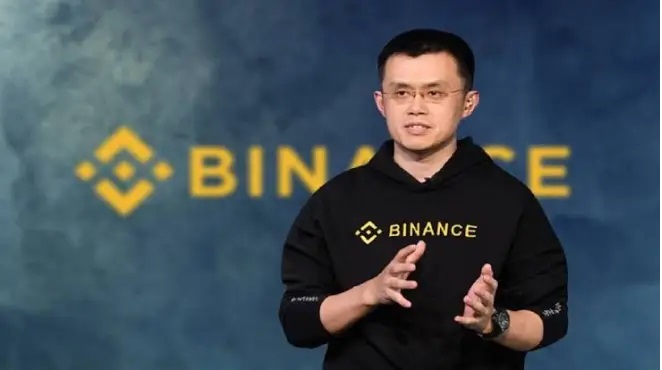
Binance founder Changpeng Zhao, widely known as “CZ”, recently shared a compelling perspective on Bitcoin that resonates deeply with long-term crypto believers.

In a straightforward message, CZ addressed a common question from Bitcoin investors: when to exit their investments. In a short clip posted on X, he argues that Bitcoin should not be approached with a short-term exit strategy in mind.

He draws parallels to the internet and AI, foundational technologies that people integrate permanently rather than abandon or sell out of.

In his words,

“I think many people today view crypto as an investment asset, they don’t view it as a fundamental technology. People buy Bitcoin and they talk about when to exit. You don’t exit the internet, you don’t exit AI. You use it as a technology. I think that is a common misconception I see that people just view crypto as a speculative investment asset.

“They should look through that and look at the underlying technology. Crypto blockchain is here to stay. I will recommend that people look at the investment opportunity in the long term”

CZ’s statement cuts through the noise of short-term crypto investment mentality. He addresses a common mistake among investors, where they buy cryptocurrencies like Bitcoin solely to profit from price increases and constantly think about the best time to sell.

He argues that this mindset overlooks the broader purpose of blockchain technology. CZ believes blockchain technology is similarly positioned to become a lasting part of the global digital economy.

In his view, cryptocurrencies should be appreciated not just for their potential to generate returns but also for the innovation they enable, including decentralized finance, digital ownership, and more efficient financial systems

It is worth noting that just as the internet and artificial intelligence represent foundational shifts in technology and society that one integrates into life rather than timing for a sale, Bitcoin stands as a similar paradigm-changing asset.

This view frames Bitcoin not as a quick flip or speculative token, but as a core holding in the evolving digital economy. Early internet adopters didn’t cash out their connectivity, they built upon it.

Similarly, AI is becoming embedded in tools, industries, and daily workflows rather than something to trade out of at a peak. CZ suggests Bitcoin belongs in the same category, a revolutionary protocol for value, scarcity, and decentralization that continues to gain adoption over time.

Notably, Strategy Executive Chairman Michael Saylor has remained one of Bitcoin’s most outspoken advocates, consistently describing the cryptocurrency as a long-term store of value rather than a speculative trade.

Under his leadership, Strategy has accumulated one of the world’s largest corporate Bitcoin holdings, reinforcing the company’s conviction that Bitcoin is the premier treasury reserve asset in the digital age.

Saylor’s investment philosophy centers on the belief that Bitcoin is a scarce, decentralized asset capable of preserving purchasing power over time. Rather than attempting to time the market or sell during price rallies, he has repeatedly argued that Bitcoin should be accumulated and held for the long term, comparing it to owning prime digital property.

His stance has resonated with a growing number of institutional investors, asset managers, corporations, and retail investors who increasingly view Bitcoin as a strategic asset worthy of long-term allocation.

For many in the space, this philosophy reinforces the “HODL” approach: holding through volatility because the underlying innovation and network effects outweigh temporary price swings.

With Bitcoin’s fixed supply of 21 million coins and growing institutional interest, the case for long-term conviction grows stronger. CZ’s comments come at a time when Bitcoin continues to attract attention from traditional finance, governments, and technology sectors.

Whether as a store of value, inflation hedge, or settlement layer, the idea of treating it like foundational technology rather than a mere investment encourages a more patient, strategic mindset.

In a market often driven by fear and greed cycles, CZ’s reminder serves as a grounding principle. Bitcoin’s journey mirrors the internet’s path, marked by hype, crashes, and eventual mainstream integration.

Those who recognize this pattern may find greater confidence in participating for the long haul rather than hunting for the perfect exit.